Bhagya

Samacheer Kalvi 6th Science Solutions Term 2 Chapter 6 Human Organ Systems

You can Download Samacheer Kalvi 6th Science Book Solutions Guide Pdf, Tamilnadu State Board help you to revise the complete Syllabus and score more marks in your examinations.

Tamilnadu Samacheer Kalvi 6th Science Solutions Term 2 Chapter 6 Human Organ Systems

Samacheer Kalvi 6th Science Human Organ Systems Textual Evaluation

I. Choose the appropriate answer:

Question 1.
Circulatory system transports these throughout the body
(a) Oxygen
(b) Nutrient
(c) Hormones
(d) All of these
Answer:
(d) All of these

Question 2.
Main organ of respiration in human body is
(a) Stomach
(b) Spleen
(c) Heart
(d) Lungs
Answer:
(d) Lungs

Question 3.
Breakdown of food into smaller molecules in our body is known as
(a) Muscle contraction
(b) Respiration
(c) Digestion
(d) Excretion
Answer:
(c) Digestion

Samacheer Kalvi 6th Science Solutions Term 2 Chapter 6 Human Organ Systems

II. Fill in the blanks:

  1. A group of organs together make up an _______ system.
  2. The part of the skeleton that protects the brain is _______
  3. The process by which the body removes waste is _______
  4. The _______ is the largest sense organ in our body.
  5. The endocrine glands produce chemical substances called _______

Answers:

  1. organ
  2. skull
  3. Excretion
  4. skin
  5. hormones

Samacheer Kalvi 6th Science Solutions Term 2 Chapter 6 Human Organ Systems

III. True or False. If False, give the correct statement:

Question 1.
Blood is produced in the bone marrow.
Answer:
False, Red Blood Corpuscles are produced in the bone marrow.

Question 2.
All the waste products of the body are excreted through the circulatory system.
Answer:
False, All the waste products of the body are excreted through the excretory system.

Question 3.
The other name of food pipe is alimentary canal.
Answer:
False. The other name of food pipe is called oesophagus.

Question 4.
Thin tube like structures which are the component of circulatory system are called blood vessels.
Answer:
False, The tube like structure which are the component of circulatory system are called blood capillaries.

Question 5.
The brain, the spinal cord and nerves form the nervous system.
Answer:
True

Samacheer Kalvi 6th Science Solutions Term 2 Chapter 6 Human Organ Systems

IV. Match the following:

1. Ear Cardiac muscle
2. Skeletal System Flat muscle
3. Diaphragm Sound
4. Heart Air sacs
5. Lungs Protection of internal organs

Answer:

1. Ear Sound
2. Skeletal System Protection of internal organs
3. Diaphragm Flat muscle

4. Heart

Cardiac muscle
5. Lungs Air sacs

Samacheer Kalvi 6th Science Solutions Term 2 Chapter 6 Human Organ Systems

V. Arrange in Correct sequence:

Question 1.
Stomach → Large intestine → Oesophagus → Pharynx → Mouth → Small Intestine → Rectum → Anus.
Answer:
Mouth → Pharynx → Oesophagus → Stomach → Small Intestine → Large intestine → Rectum → Anus.

Question 2.
Urethra → Ureter → Urinary Bladder → Kidney.
Answer:
Kidney → Ureter → Urinary Bladder → Urethra.

Samacheer Kalvi 6th Science Solutions Term 2 Chapter 6 Human Organ Systems

VI. Analogy:

Question 1.
Arteries : Carry blood from the heart:: _______ :carry blood to the heart.
Answer:
Veins.

Question 2.
Lungs: Respiratory system:: _______ : Circulatory system.
Answer:
Heart

Question 3.
Enzymes: Digestive glands:: _______ : Endocrine glands.
Answer:
Hormones

Samacheer Kalvi 6th Science Solutions Term 2 Chapter 6 Human Organ Systems

VII. Give very short answer:

Question 1.
Write about the skeletal system.
Answer:
The skeletal system consists of bones, cartilages, and joints. Bones provide a framework for the body. Bones along with muscles help in movements such as walking, running, chewing and dancing, etc.

Question 2.
Write the functions of the epiglottis.
Answer:
The function of Epiglottis is to prevent the entry of food into the windpipe.

Question 3.
What are the three types of blood vessels?
Answer:
The three types of blood vessels are arteries, veins and capillaries.

Question 4.
Define the term “Trachea”.
Answer:
The trachea is commonly called a windpipe. It is a tube supported by cartilaginous rings that connect the pharynx and larynx to the lungs, allowing the passage of air. The trachea divides into right and left bronchi and enter into the lungs.

Question 5.
Write any two functions of digestive system?
Answer:
The functions of the digestive system are:

  1. It is involved in the conversion of complex food substances into simple forms.
  2. It absorbs digested food.

Question 6.
Name the important parts of the eye.
Answer:
The important parts of the eye are the cornea, iris, lens, and pupil.

Question 7.
Name the five important sense organs?
Answer:
The five important sense organs are the eyes, ears, nose, tongue, and skin.

Samacheer Kalvi 6th Science Solutions Term 2 Chapter 6 Human Organ Systems

VIII. Give a short answer:

Question 1.
Write a short note on the rib cage.
Answer:
Rib cage
The rib cage is made up of 12 pairs of curved, flat rib bones. It protects the delicate vital organs such as heart and lungs.

Question 2.
List out the functions of the human skeleton.
Answer:

  1. Bones along with muscles help in movements such as walking, running, and dancing, etc.
  2. Skullbone protects the brain and the structures of the face.
  3. The vertebral column protects the spinal cord.
  4. The rib cage protects vital organs such as the heart and lungs.

Question 3.
Differentiate between the voluntary muscles and involuntary muscles.
Answer:
Voluntary muscles:

  1. They are attached to the bones.
  2. They can be controlled by our will. Example: Muscles of the arm.

Involuntary muscles:

  1. They are found in the walls of the digestive tract, urinary bladder, arteries, and other internal organs.
  2. They cannot be controlled by our will.

Samacheer Kalvi 6th Science Solutions Term 2 Chapter 6 Human Organ Systems

IX. Answer in detail:

Question 1.
List out the functions of the Endocrine system and Nervous system.
Answer:
(a) Functions of the endocrine system.

  1. It regulates various functions of the body.
  2. It maintains the internal environment.

(b) Functions of the nervous system.

  1. The conduction of signals from sensory receptors.
  2. The interpretation of the sensory signals and the formulation of responses.
  3. The conduction of signals from the brain and spinal cord to effectors, such as muscle and gland cells.

Question 2.
Label the diagram given below to show the four main parts of the urinary system and answer the following questions.
Samacheer Kalvi 6th Science Solutions Term 2 Chapter 6 Human Organ Systems 1
A. Which organ removes extra salts and ws
B. Where is the urine stored?
C. What is the tube through which urine is body?
D. What are the tubes that transfer urine fi the urinary bladder called?
Answers:
Samacheer Kalvi 6th Science Solutions Term 2 Chapter 6 Human Organ Systems 2
A. Kidney removes extra salts and water from the blood.
B. Urine is stored in urinary bladder.
C. Urine is excreted out of the body through urethra.
D. Ureter transfers urine from the kidneys to the urinary bladder.

Samacheer Kalvi 6th Science Solutions Term 2 Chapter 6 Human Organ Systems

X. Questions based on Higher Order Thinking Skills.

Question 1.
What will happen if the diaphragm shows no movement?
Answer:
If the diaphragm shows no movement (that means it does not work), then the lungs will not be able to expand or contract, and the person will be unable to breathe. Air would move back and forth, just as it circulates through a still room, but not at sufficient volume or speed, to keep the person alive.

Question 2.
Why is the heart divided into two halves by a thick muscular wall?
Answer:
The oxygenated and deoxygenated blood are separately circulated. So the heart is divided into two halves by a thick muscular wall.

Question 3.
Why do we sweat more in summer?
Answer:
People sweat more in summer than in winter because the temperature is hotter and the body overheats more easily. For human beings, the average body temperature should be 37°C. To regulate this temperature, during summer, the body sweats which evaporates quickly bringing down the body temperature.

Question 4.
Why do we hiccup and cough sometimes when we swallow food?
Answer:
Normally, the entry of food into the windpipe is prevented by a flap-like structure called Epiglottis. But when we eat in a hurry, the flab gets lesser time to close the windpipe. Thus some of the food particles enter into the windpipe. It creates a hindrance in the movement of air in the windpipe and results in coughing or hiccup.

Samacheer Kalvi 6th Science Solutions Term 2 Chapter 6 Human Organ Systems

Samacheer Kalvi 6th Science Human Organ Systems Intext Activities

Activity 1

Question 1.
Sit absolutely still. Observe the movements taking place in your body. You must K be blinking your eyes from time to time. Observe the movements in your body as you I breathe. Write down the movements in your notebook.

We are able to move a few parts of our body easily in various directions and some, ft only in one direction. Why we are not able to move some parts in all directions?
Answer:
We are able to bend or rotate our body in places where two parts of our body seem to be joined together – like the elbow, shoulder or neck. These places are called joints. If ft our body has no joints, it would not be possible for us to move in any way at all.

Bones cannot be bent. But we can bend our elbow. It is not one long bone from ft the upper arm to our wrist. It is different bones joined together at the elbow. Similarly, there are many bones present in each part of the body.

We can bend or move our body only at those points where bones meet. There are different types of joints in our body to help us carry out different movements and activities. Let us see the function/movements of some of the joints in our body.

Fixed joints which do not allow movement are called a fixed joint.

Gliding joints allow only a limited amount of movement of the sliding nature of cartilage. For example, the joints of the backbone.

The hinge joint allows movement only in one plane. For example, fingers, knees. Elbow joint is composed of the hinge joint. These joints allow movement in one plane and up to 180° only. Hence, we cannot move our elbows backward.

Piyotal joint allows movement in all planes, i.e. up and down, side and other planes. For example, head.

Ball and socket joint allows movement in all directions. The rounded end of one bone fits into the cavity (hollow space) of the other bone. Such a joint only allows movements in all directions. For example, the joint between the upper arm.

Activity 2

To show that we can bend or move our body only at those points where the bones meet.
Samacheer Kalvi 6th Science Solutions Term 2 Chapter 6 Human Organ Systems 3
Materials required; A wooden scale and string.
Method Ask your friend to tie a wooden scale and your arm together. So that the elbow is at the centre. Even if you try hard, you cannot bend your elbow.
Conclusion: A single bone cannot bend. The different bones joined together at the elbow, help the elbow to bend.

Samacheer Kalvi 6th Science Solutions Term 2 Chapter 6 Human Organ Systems

Activity 3

Question 1.
Move your lower arm up and down gently. Feel the contraction and relaxation of your biceps and triceps muscles. The muscles present in the upper arm helps in the contraction of front biceps muscles (become short and thick), and also relaxation of rear triceps muscles (become long and thin). You can feel the muscles on top that go stiff. When the arm is moved downwards, the front muscles relax and the rear muscles contract.
Answer:
Activities to be done by the students themselves

Samacheer Kalvi 6th Science Solutions Term 2 Chapter 6 Human Organ Systems

Activity 5

Air? To prove that exhaled air is rich in carbon- dioxide
Materials required Two glass jars with lime water and a straw

Procedure: Leave the first jar with lime water undisturbed, blow air into the second jar with the help of a straw

Observation: Lime water turns milky in a few seconds in the second jar. The CO? gas alone can change the lime water into milky white.

Conclusion: Carbon-di-oxide is present in the air that we exhale.

Activity 6

Question 1.
Place the middle and index fingers of your right hand on the inner side of your left wrist. Can you feel a throbbing movement? Why do you feel the throbbing? This throbbing is called the pulse and it is due to the blood flowing in the arteries. Count the number of pulses in one minute.

Samacheer Kalvi 6th Science Solutions Term 2 Chapter 6 Human Organ Systems 4

How many pulse beats could you count in one minute? The number of beats per minute is called the Pulse rate. A resting person usually has a pulse rate between 72 to 80 beats per minute.

Find other places in your body where you can feel the pulse. Record your own pulse beats and your classmates as beats per minute; Compare the values.
Answer:
Activities to be done by the students themselves

Samacheer Kalvi 6th Science Solutions Term 2 Chapter 6 Human Organ Systems

Samacheer Kalvi 6th Science Human Organ Systems Additional Questions

I. Choose the correct answer:

Question 1.
A group of organs that work together to perform a particular function is known as _______
(a) Skeletal system
(b) Muscular system
(c) Nervous system
(d) Organ system
Answer:
(d) Organ system

Question 2.
………. is the largest and strongest bone in the human face.
(a) Hyoid bone
(b) Stapes
(c) Cranial bones
(d) Lower jaw bone
Answer:
(d) Lower jaw bone

Question 3.
_______ bone is the largest and strongest bone in the human face.
(a) Nasal
(b) Temporal
(c) Lower jaw
(d) Parietal
Answer:
(c) Lower jaw

Question 4.
The heart is surrounded by a double-layered membrane called
(a) Pleura
(b) Alveolar membrane
(c) Pericardium
(d) Iris
Answer:
(c) Pericardium

Question 5.
_______ is a major organ for the digestion of food materials.
(a) Heart
(b) Oesophagus
(c) Stomach
(d) Kidney
Answer:
(c) Stomach

Question 6.
The _______ is a complex organ which is placed inside the cranium.
(a) Kidney
(b) Heart
(c) Lungs
(d) Brain
Answer:
(d) Brain

Question 7.
The skin helps us to synthesize using sunlight.
(a) vitamin A
(b) vitamin B
(c) vitamin C
(d) vitamin D
Answer:
(d) vitamin D

Question 8.
_______ gland is located in the neck region.
(a) Pituitary
(b) Thyroid
(c) Adrenal
(d) Thymus
Answer:
(b) Thyroid

Question 9.
The pituitary gland is located at _______ in our body.
(a) Neck region
(b) base of brain
(c) Abdomen region
(d) above the kidney
Answer:
(b) base of brain

Question 10.
The functional units of the kidney are called _______
(a) Nephrons
(b) Neuron
(c) bladder
(d) urethra
Answer:
(a) Nephrons

Samacheer Kalvi 6th Science Solutions Term 2 Chapter 6 Human Organ Systems

II. Fill in the blanks.

  1. The adult human skeletal system consists of _______ bones
  2. _______ help in connecting bone to bone.
  3. Vertebral column is formed by a number of serially arranged small bones called _______
  4. The rib cage is made up of _______ of curved flat rib bones.
  5. The digestive gland associated with the alimentary canal is _______
  6. _______ are located within the chest cavity.
  7. The lungs are covered by a double-layered _______
  8. The heart is _______ chambered.
  9. The heart is surrounded by a double-layered membrane called _______
  10. _______ are produced in the bone marrow.
  11. Nervous system is we,11 developed in human and is composed of _______ or _______
  12. _______ is the controlling centre of the body.
  13. The outer ear in human beings is made up of an external flap called _______
  14. _______ gland is located above the kidney.
  15. Our body contains _______ % of water.
  16. Our stomach consists of _______ acid.

Answers:

  1. 206
  2. Ligaments
  3. vertebrae
  4. 12 pairs
  5. salivary gland
  6. Lungs
  7. pleura
  8. four
  9. pericardium
  10. Red Blood Corpuscles
  11. neurons or nerve cells
  12. Brain
  13. pinna
  14. Adrenal
  15. 70
  16. Hydro choleric

Samacheer Kalvi 6th Science Solutions Term 2 Chapter 6 Human Organ Systems

III. Find whether the following sentences are true or false. If false Correct the statement.

Question 1.
The nervous system consists of bones, cartilages, and joints.
Answer:
False. The Skeletal system consists of bones, cartilages, and joints.

Question 2.
The lower jaw bone is the smallest and strongest bone in the human face.
Answer:
False. The lower jaw bone is the largest and strongest bone in the human face.

Question 3.
The smallest bone in our body is stapes.
Answer:
True.

Question 4.
Intake of oxygen from the air and releasing of carbon-di-oxide from the lungs occur through nostrils is called internal respiration.
Answer:
False. Intake of oxygen from the air and releasing of carbon-di-oxide from the lungs occur through nostrils is called external respiration.

Question 5.
The walls of the heart is made up of cardiac muscle.
Answer:
True.

Questions 6.
Blood is a fluid connective tissue.
Answer:
True.

Question 7.
The kidney is located in the thoracic cavity between the two lungs.
Answer:
False. The heart is located in the thoracic cavity between the two lungs.

Question 8.
A resting person usually has a pulse rate between 72 to 80 beats per minute.
Answer:
True.

Question 9.
The pulmonary artery carries blood from the lungs to the left atrium.
Answer:
False. Pulmonary Vein carries blood from the lungs to the left atrium.

Question 10.
The heart forms an effective barrier against infection by microbes and pathogens.
Answer:
False. A skin forms an effective barrier against infection by microbes and pathogens.

Question 11.
The nitrogenous wastes are removed from the body by the endocrine system.
Answer:
False. The nitrogenous wastes are removed from the body by the excretory system.

Samacheer Kalvi 6th Science Solutions Term 2 Chapter 6 Human Organ Systems

IV. Analogy:

Question 1.
Skull protects : Brain.
Rib cage protects : _______
Answer:
heart and liver.

Questions 2.
The smallest bone of our body : Stapes.
The longest bone of our body : _______
Answer:
Femur.

Question 3.
A newborn baby has bones : More than 300.
An adult has bones : _______
Answer:
206.

Questions 4.
Skeletal muscle : Muscle of arm.
Cardiac muscle: _______
Answer:
Walls of heart.

Question 5.
Heart: Pericardium membrane.
Lungs : _______
Answer:
Pleura membrane.

Question 6.
Carries blood from the right ventricle to lungs : Pulmonary artery.
Carries blood from the lungs to left atrium : _______
Answer:
Pulmonary vein.

Question 7.
Carry oxygenated blood : Arteries.
Carry deoxygenated blood : _______
Answer:
Vein.

Question 8.
Neurons : Nervous system.
Nephrons: _______
Answer:
Excretory system.

Samacheer Kalvi 6th Science Solutions Term 2 Chapter 6 Human Organ Systems

V. Match the following :

A
Samacheer Kalvi 6th Science Solutions Term 2 Chapter 6 Human Organ Systems 5
Answer:

  1. – f
  2. – d
  3. – e
  4. – a
  5. – c
  6. – b

B
Samacheer Kalvi 6th Science Solutions Term 2 Chapter 6 Human Organ Systems 6
Answer:

  1. – c
  2. – e
  3. – a
  4. – b
  5. – d

C
Samacheer Kalvi 6th Science Solutions Term 2 Chapter 6 Human Organ Systems 7
Answer:

  1. – c
  2. – d
  3. – e
  4. – b
  5. – a

Samacheer Kalvi 6th Science Solutions Term 2 Chapter 6 Human Organ Systems

VI. Give a short answer

Question 1.
List the major organ system of our body.
Answer:
The human body has eight major organ systems. They are:

  • Skeletal system
  • Digestive system
  • Circulatory system
  • Endocrine system
  • Muscular system
  • Respiratory system
  • Nervous system
  • Excretory system.

Question 2.
Axial skeleton – Explain.
Answer:
The axial skeleton forms the upright axis of the body which includes, skull, vertebral column, and Rib cage.

Questions 3.
What are the bones found in the skull?
Answer:
Hyoid bone and the auditory ossicles like Malleus, Incus, and Stapes are found in the skull.

Questions 4.
What are the three types of muscles?
Answer:
They are skeletal muscle, smooth muscle, and cardiac muscles.

Question 5.
How does muscle work?
Answer:
Muscles pf the body can only pull and they cannot push. Two muscles are required to move a bone at a joint. When one muscle contracts the other muscle relaxes. Thus muscles do work.

Questions 6.
List the parts of the digestive system.
Answer:
Parts of the digestive systems are Mouth, Buccal cavity, Pharynx, Oesophagus, Stomach, Small intestine, Large intestine, Anus.

Question 7.
List the glands associated with digestion.
Answer:
Salivary glands, Gastric glands, Liver, Pancreas, and Intestinal glands are associated glands for digestion.

Questions 8.
List the parts of the respiratory system.
Answer:
Respiratory system consists of nostrils, nasal cavity, pharynx, larynx, trachea, bronchi and lungs.

Question 9.
What is the internal respiration?
Answer:
Taking in oxygen and giving out CO2 The circulatory system transports O2 and CO2, to and from all parts of the body. Hemoglobin in the red blood cells transport O2 and CO2 This is called internal respiration.

Samacheer Kalvi 6th Science Solutions Term 2 Chapter 6 Human Organ Systems

Question 10.
Define – blood.
Answer:
Blood is a fluid connective tissue of red colour containing plasma and blood cells. There are three types of blood cells namely, Red blood corpuscles (RBCs), White Blood corpuscles (WBCs), and Blood Platelets. RBCs are produced in the bone marrow.

Question 11.
What is the pulse rate?
Answer:
The number of beats per minute is called a pulse rate.

Question 12.
Name the three regions of the brain.
Answer:
The three regions of the brain are the forebrain, mid brain, and hind brain.

Question 13.
List the endocrine glands found in our body.
Answer:
The pituitary gland, Pineal gland, Thyroid gland, Thymus gland, Pancreas, Adrenal gland, Gonads are found in our endocrine system.

Samacheer Kalvi 6th Science Solutions Term 2 Chapter 6 Human Organ Systems

VIII. Answer in detail:

Question 1.
(a) How do muscles work.
(b) How the circulatory system is important for human life?
Answer:
(a) Muscles work.

  1. Muscles of the body can only pull and they can not push.
  2. Two muscles are required to move a bone at a joint.
  3. When one muscle contracts, the other muscle relaxes.
  4. For example to move the lower arm up and down biceps and triceps muscles are required.
  5. When we raise our lower hand the biceps in front become short by contraction and the triceps at the backstretch to pull up the arm.
  6. When we lower our arm the triceps at the back contract and biceps stretch to pull the arm down.

(b) Circulatory system – importance :

  1. It is one of the important system consisting of heart, blood vessels and blood.
  2. It transports respiratory gases, nutrients, hormones and waste materials within the body.
  3. If protects the body from harmful pathogens.
  4. Regulates body temperature.
  5. The heart pumps blood continuously throughout our lifetime.

Question 2.
Describe the construction of eye with a neat diagram.
Answer:
Eyes help us to see things around us i.e., their colour, shape, size whether they are near or far, moving or at rest. The eyelids and eyelashes keep the eyes safe. The eye has three main parts namely cornea, iris and pupil.
Samacheer Kalvi 6th Science Solutions Term 2 Chapter 6 Human Organ Systems 8

Question 3.
Tabulate the names of glands of the endocrine system and their locations.
Answer:
Glands:

  1. Pituitary gland
  2. Pineal Gland
  3. Thyroid Gland
  4. Thymus Gland
  5. Pancreas (Islets of Langerhans)
  6. Adrenal Gland
  7. Gonads

Location:

  1. At the base of the brain
  2. At the base of the brain
  3. Neck
  4. Chest
  5. Abdomen
  6. Above the kidney
  7. Pelvic cavity

Samacheer Kalvi 6th Science Solutions Term 2 Chapter 6 Human Organ Systems

Question 4.
Draw and label the parts of the kidney.
Answer:
Samacheer Kalvi 6th Science Solutions Term 2 Chapter 6 Human Organ Systems 9

Question 5.
List the parts of excretory system and write their functions.
Answer:

  1. Renal artery: Brings blood containing oxygen and urea from the aorta to the kidneys.
  2. Renal vein: Brings filtered blood from the kidneys to the inferior vena cave.
  3. kidneys: Regulate the chemical composition of fluids in the body.
  4. Ureter: Carries urine from the kidneys to the urinary bladder.
  5. Urinary bladder: An expandable, muscular sac that retains urine until it is discharged from the body.
  6. Urethra: The tube through which urine is discharged from the body, it is surrounded by muscles that allow us to control urination.

Question 6.
Give any five endocrine glands and their location.
Answer:

(Glands) (Location)
Pituitary gland At the base of the brain
Pineal Gland At the base of the brain
Thyroid Gland Neck
Thymus Gland Chest
Pancreas (Islets of Langerhans) Abdomen
Adrenal Gland Above the kidney
Gonads Pelvic cavity

Samacheer Kalvi 6th Science Solutions Term 2 Chapter 6 Human Organ Systems Read More »

Samacheer Kalvi 6th Science Solutions Term 1 Chapter 4 The Living World of Plants

You can Download Samacheer Kalvi 6th Science Book Solutions Guide Pdf, Tamilnadu State Board help you to revise the complete Syllabus and score more marks in your examinations.

Tamilnadu Samacheer Kalvi 6th Science Solutions Term 1 Chapter 4 The Living World of Plants

Samacheer Kalvi 6th Science The Living World of Plants Textual Evaluation

I. Choose the appropriate answer

Question 1.
Pond is an example of ______ ecosystem.
(a) Marine
(b) Freshwater
(c) Deserts
(d) Mountain
Answer:
(b) Freshwater

Question 2.
The important function of stomata is ……….
(a) conduction
(b) Transpiration
(c) Photosynthesis
(d) Absorption
Answer:
(c) Photosynthesis

Question 3.
Organ of absorption is ______
(a) Root
(b) Stem
(c) Leaf
(d) Flower
Answer:
(a) Root

Question 4.
The habitat of water hyacinth is
(a) Aquatic
(b) Terrestrial
(c) Desert
(d) Mountain
Answer:
(a) Aquatic

Samacheer Kalvi 6th Science Solutions Term 1 Chapter 4 The Living World of Plants

II. True or False

Question 1.
Plants can live without water.
Answer:
False. Plants cannot live without water.

Question 2.
All plants have chlorophyll.
Answer:
True.

Question 3.
Plants have three parts: the root, the stem and leaves.
Answer:
False. Plants have several parts: Such as the root, the stem, leaves, flowers, fruits and seeds.

Question 4.
Mountain is an example for freshwater habitat.
Answer:
False. Rivers, ponds, lakes and pools are the example for freshwater habitat. (OR) Mountain is an example for Terrestrial habitat.

Question 5.
Root is modified into spines.
Answer:
False. Leaves are modified into spines.

Question 6.
Green plants need sunlight.
Answer:
True.

Samacheer Kalvi 6th Science Solutions Term 1 Chapter 4 The Living World of Plants

III. Fill in the Blanks.

  1. Earth’s surface is covered by __________ % of water.
  2. The driest places on Earth are __________
  3. Fixation and absorption are the main functions of __________
  4. Primary organs of photosynthesis are __________
  5. Tap root system is present in __________ plants.

Answers:

  1. More than 70%
  2. deserts
  3. root
  4. leaves
  5. dicotyledonous

Samacheer Kalvi 6th Science Solutions Term 1 Chapter 4 The Living World of Plants

IV. Match the following.
Samacheer Kalvi 6th Science Solutions Term 1 Chapter 4 The Living World of Plants 1
Answer:
Samacheer Kalvi 6th Science Solutions Term 1 Chapter 4 The Living World of Plants 2

V. Arrange in correct sequence.

Question 1.
Leaves – Stem Root – Flower.
Answer:
Root, Stem, Leaves, Flower.

Question 2.
Transpiration-Conduction-Absorption-Fixation
Answer:
Fixation-Absorptiori-Conduction-Transpiration

Samacheer Kalvi 6th Science Solutions Term 1 Chapter 4 The Living World of Plants

VI. Very short answer.

Question 1.
Classify the plants on the basis of their habitats.
Answer:
The two major habitats.
(a) Aquatic habitat
(b) Terrestrial habitat

(a) Aquatic habitat classified into two. They are

  1. Fresh water habitat
  2. Marine water habitat

(b) Terrestrial habitat classified into three.

  1. Forest habitat
  2. Grassland habitat
  3. Desert habitat.

Question 2.
Identify the Desert plants from the following-
Cactus, Hydrilla, Mango and Rose
Answer:
Cactus plants – grow in deserts, and are able to store water in their stem.

Question 3.
Define the term habitat.
Answer:
A dwelling place of an animal, plant, or another organism, to live and reproduce is called a habitat.

Question 4.
Relate the terms leaves and photosynthesis.
Answer:
The green leaves are essential for preparing food. Because it contains a green pigment called chlorophyll. The preparation of food is known as photosynthesis. Photosynthesis is essential for plant growth.

Samacheer Kalvi 6th Science Solutions Term 1 Chapter 4 The Living World of Plants

VII. Short Answer.

Question 1.
Why do you call jasmine plant, a twiner?
Answer:
Jasmine plant has a weak stem. It cannot stand straight on its own. It must climb on any support to survive. So jasmine plant is called as twiner.

Question 2.
Compare the taproot and fibrous root systems.
Answer:
Taproot:
Single root-grow straight with smaller roots arise from the taproot.
eg. Dicot plants- Bean, mango

Fibrous root:
Cluster of roots arising from base of the stem, tin and uniform in size.
eg. Monocots, grass, paddy

Question 3.
Distinguish between terrestrial and aquatic habitats.
Answer:
Terrestrial habitats:

  1. They are found on land
  2. They include desert, grassland, forest, farms, towns and cities
  3. They are classified into 3 types, such as Desert habitat, Grassland habitat & Forest habitat.
  4. Eg. Rubber tree, teak tree, neem tree

Aquatic habitats:

  1. They are found in water.
  2. They include the areas, permanently as well as occasionally covered by water.
  3. They are classified into 2 types, such as Fresh water habitat, & Marine water habitat.
  4. Eg. Lily, lotus, marine algae, sea grasses.

Question 4.
List out the plants present in your school garden.
Answer:
Shoe Flower, Ferns, Crotons, Roses, Lilies, Cactus, Coconut Trees, Royal Palm, Clitoria, Cycas, Agave, Allamanda, Tomato, Brinjal, Lady’s Finger etc in Terrace garden.

Samacheer Kalvi 6th Science Solutions Term 1 Chapter 4 The Living World of Plants

VIII. Answer in detail.

Question 1.
Make a list of the functions of root and stem.
Answer:
Roots:

  1. Fixation – Fixes plants to the soil.
  2. Absorption – Absorbs water and minerals from the soil and conduct them to other parts.
  3. Storage – Some plants store food in the roots. Eg. Carrot

Functions of the stem:
Support: Supports the branches leaves flowers and the fruits
Conduction:

  1. Transports water and minerals from roots to upper aerial plants parts
  2. Transports the prepared food from leaves to all parts
  3. Some stems like sugarcane store food.

Samacheer Kalvi 6th Science Solutions Term 1 Chapter 4 The Living World of Plants

Question 2.
Study the given concept map. Connect them correcting by drawing arrow marks. Complete the map by filling the blanks.
Samacheer Kalvi 6th Science Solutions Term 1 Chapter 4 The Living World of Plants 3
Answer:
Samacheer Kalvi 6th Science Solutions Term 1 Chapter 4 The Living World of Plants 4

Guess it :
Ginger: Is it a Root or stem?
Samacheer Kalvi 6th Science Solutions Term 1 Chapter 4 The Living World of Plants 5
Answer:
Ginger is often mistaken for a root. In fact, it is actually an underground stem from a tropical herb plant Zingiber Officinale.

Samacheer Kalvi 6th Science Solutions Term 1 Chapter 4 The Living World of Plants

Samacheer Kalvi 6th Science The Living World of Plants Intext Activities

Activity – 1

Water absorption by Root
Aim:- To observe the absorption of water by root

Question 1.
What do you need?
Answer:
A carrot, a glass of water, and blue ink.

Question 2.
What to do?
Answer:
Place a carrot in a glass of water with a few drops of blue ink. Leave the carrot in water for two to three days. Then cut the carrot into half lengthwise and observe.

Question 3.
What do you learn?
Answer:
Blue colour appears in carrot which indicates the upward movement of water in the carrot showing that root conducts water.

Activity – 2

Conduction of water
Aim:- To observe conduction of water by stem.

Question 1.
What do you need?
Answer:
A small twig of balsam plant, a glass of water, and a few drops of red ink.

Question 2.
What to do?
Answer:
Place the small twig in the water with red ink.

Question 3.
What do you see?
Answer:
The stem becomes reddish.

Question 4.
What do you learn?
Answer:
This is because red coloured water is being absorbed by the stem upwards.

Samacheer Kalvi 6th Science Solutions Term 1 Chapter 4 The Living World of Plants

Activity – 3

Question:
The teacher will divide students into four groups. Each group leader will pull a plant part from a “hat” (roots, stems, leaves, and flowers). The teacher will take students around campus to search for their assigned plant parts. They have to locate different types of plants discussed in the classroom. The learner will return to the class, follow a process sheet given to create a poster with their group, and identify correctly each type of root, stem, or leaf observed. The flower group will create a poster by identifying correctly each part of the flower. Each group will share their posters within the class.
Answer:
Activity did by the students themselves.

Activity – 4

Question 1.
Read the following story along with your friend
Once, I was a happy monkey. I lived in a beautiful thick forest with my mother and two brothers. We ran and played in the lush grass. On one hot day, I fell fast asleep in the cool shade of a tree. Suddenly the bright sun woke me up. I opened my eyes and could not believe what I saw everything has changed. Everything had been destroyed. I stood and looked at the stumps that used to be trees. Nothing was left apart from hard dry ground and only streets and buildings. I saw a deer that looked very sad, “where have all the trees gone and where are all the other animals?” I asked her.

She explained how humans had chopped down all the trees but had not planted new ones to replace them. After a while, I said goodbye to the deer. My home had gone. I didn’t know where my family was, and I was hungry and thirsty, day and night. I walked in search of water, food, and a safe place to sleep. Whenever I stopped, to rest humans drove me away with sticks and angry voices. I could feel my body getting weak and tired. One day when I had almost given all the hope, I came across a cool and dark forest. As I walked through it, I found plenty of food and water. The forest was safe for me. There were no signs of humans visiting it.

  • Why did the deer feel sad?
  • Who chopped the trees?
  • Which is the safest place for monkeys to live?
  • What is a habitat?

Answer:

  • The deer felt sad because humans had chopped down all the trees and there was no place to live.
  • People had chopped the trees.
  • A forest is the safest place for monkeys to live.
  • The dwelling place of an animal, plant, or other organism is called a habitat.

Samacheer Kalvi 6th Science Solutions Term 1 Chapter 4 The Living World of Plants

Activity – 5
Visit a nearby nursery. Choose any ten varieties of plants and place them under the appropriate habitats.
Answer:
Samacheer Kalvi 6th Science Solutions Term 1 Chapter 4 The Living World of Plants 6
Samacheer Kalvi 6th Science Solutions Term 1 Chapter 4 The Living World of Plants 7

Activity – 6
Field Investigation

Name of the student :
Date :
Location :
Plant types to be observed
1. A tendril climber
2. A twiner
3. A plant with thorn
Tabulate the modification that you have observed in these plants.
Answer:
Field Investigation
Name of the student: Ramesh
Date : 28 – 07 – 2018
Location: Thekkady
Samacheer Kalvi 6th Science Solutions Term 1 Chapter 4 The Living World of Plants 8

Samacheer Kalvi 6th Science Solutions Term 1 Chapter 4 The Living World of Plants

Hots
The Cactus plant is green in colour and performs photosynthesis. Which part of the plant does photosynthesis?
Answer:
The stem part of the cactus plant performs photosynthesis.

Samacheer Kalvi 6th Science The Living World of Plants Additional Questions

I. Choose the appropriate answer.

Question 1.
______ is a natural science concerned with the study of life and living organisms.
(a) Chemistry
(b) Biology
(c) Zoology
(d) Physics
Answer:
(b) Biolog

Question 2.
The part of a stem from where a leaf arises is
(a) node
(b) internode
(c) terminal bud
(d) lateral bud
Answer:
(a) node

Question 3.
Main axis of the shoot system Is called ______
(a) stem
(b) root
(c) Leaf
(d) buds
Answer:
(a) stem

Question 4.
The green colour of the leaf is due to the presence of
(a) chloronchyma
(b) chlorophyll
(c) lamina
(d) stomata
Answer:
(b) chlorophyll

Question 5.
World habitat day is observed on the first Monday of ______
(a) October
(b) November
(c) September
(d) December
Answer:
(a) October

Question 6.
______ is one of the fast-growing plants during the active growth phase.
(a) Mango
(b) Neem
(c) Hibiscus
(d) Bamboo
Answer:
(d) Bamboo

Question 7.
______ is the longest river in the world.
(a) Sutlej
(b) Yellow
(c) the Nile
(d) Congo
Answer:
(c) the Nile

Question 8.
Length of Nile river is ______
(a) 6560 km
(b) 6650 km
(c) 6506 km
(d) 5606 km
Answer:
(b) 6650 km

Question 9.
Air spaces in stems and petioles of ______ plant are useful for floating in the water.
(a) lotus
(b) waterlily
(c) water hyacinth
(d) agave
Answer:
(a) lotus

Question 10.
The first land plants are ______
(a) neem and pine
(b) hibiscus and lotus
(c) banyan and peepal
(d) mosses and liverworts
Answer:
(d) mosses and liverworts

Question 11.
The ______ forest in South America produces half of the world’s oxygen supply.
(a) Taiga
(b) Congo rain
(c) Amazon rain
(d) Dry deciduous
Answer:
(c) Amazon rain

Samacheer Kalvi 6th Science Solutions Term 1 Chapter 4 The Living World of Plants

II. True or False – If False gives the correct answer.

Question 1.
The living world comprises plants and animals.
Answer:
True.

Question 2.
Root has nodes and internodes.
Answer:
False. The stem has nodes and internodes.

Question 3.
Taproot consists of a cluster of roots arising from the base of the stem.
Answer:
False. The fibrous root consists of a cluster of roots arising from the base of the stem.

Question 4.
The buds at the axils of the leaves are called terminal buds.
Answer:
False. The buds at the axils of the leaves are called auxiliary buds.

Question 5.
In the case of sugarcane, food is stored in the stem region.
Answer:
True.

Question 6.
The longest river in India is the Ganges river.
Answer:
True

Question 7.
The Amazon rain forest in Canada produces half of the world’s oxygen supply.
Answer:
False.
The Amazon rain forest in South America produces has of the world’s oxygen supply.

Samacheer Kalvi 6th Science Solutions Term 1 Chapter 4 The Living World of Plants

III. Fill in the blanks.

  1. Plants can prepare _______
  2. _______ are positively geotropic in nature.
  3. Mango plant is a _______ plant.
  4. _______ plants store food in their roots.
  5. The aerial part of the plant body above the ground is known as _______
  6. The part of the stem between two successive nodes is called _______
  7. The flat portion of the leaf is called _______
  8. The green colour of the leaf is due to the presence of a green coloured pigment called _______
  9. _______ plant’s leaves grow up to 3 metres across.
  10. _______ are free-floating Algae.
  11. _______ desert is called as Great Indian desert.
  12. River Ganges is _______ km long.
  13. Marine plants perform about _______ of all photosynthesis that occurs on the planet.

Answers:

  1. food
  2. Roots
  3. dicotyledonous
  4. Carrot and beetroot
  5. shoot system
  6. internode
  7. Leaf Lamina
  8. Chlorophyll
  9. Victoria amazonica
  10. Phytoplanktons
  11. Thar
  12. 2525
  13. 40%

Samacheer Kalvi 6th Science Solutions Term 1 Chapter 4 The Living World of Plants

IV. Complete the given analogy.

Question 1.
The aerial part above the ground: Shoot system
The underground part of the axis of a plant: _______
Answer:
Root system

Question 2.
Dicotyledonous plants: Bean, Mango
Monocotyledonous plants : _______
Answer:
Grass, paddy

Question 3.
Carrot, beetroot: store food in roots.
Sugarcane : _______
Answer:
Stores food in shoot

Question 4.
Photosynthesis : _______
Transpiration : Stomata.
Answer:
chlorophyll

Question 5.
Flowering plant : Sunflower
Non-flowering plant : _______
Answer:
Riccial

Question 6.
Mango : Angiosperm
Cycas : _______
Answer:
Gymnosperm

Question 7.
Water lily : Freshwater habitat
Marine Algae : _______
Answer:
Marine water habitat

Question 8.
Rainfall 25 – 200 cm : Forest habitat
Rainfall below 25 cm : _______
Answer:
Desert habitat

Question 9.
Sweet Peas : Tendril Climber
Clitoria : _______
Answer:
Twiners

Question 10.
Leaves are modified into spines : Opuntia
Stem has sharp thorns : _______
Answer:
Bougainvillea

Samacheer Kalvi 6th Science Solutions Term 1 Chapter 4 The Living World of Plants

V. Match the following.

  1. Tap root – (a) Grass
  2. Aquatic plant – (b) Teak tree
  3. Desert plant – (c) Neem
  4. Grassland – (d) Opuntia
  5. Terrestrial plant – (e) Water lily

Answer:

  1. – (c)
  2. – (e)
  3. – (d)
  4. – (a)
  5. – (b)

VI. Short Answers.

Question 1.
What are the uses of plants?
Answer:
Plants are used as food, medicine, wood, and shelter.

Question 2.
Classify plants on the basis of flowers.
Answer:
Plants can be classified into 2 on the basis of flowers

  1. Non-flowering plants – Eg. Riccia
  2. Flowering plants – Eg. Mango

Question 3.
What are the properties of root?
Answer:

  1. The root lies below the surface of the soil.
  2. It does not have nodes and internodes.
  3. It has a root cap at the tip.
  4. Roots are positively geotropic in nature.

Question 4.
Notes on cactus.
Answer:

  1. Cactus – desert plant ( where there is less or no rainfall)
  2. Stem – store water
  3. Leaves – modified to spines
  4. Roots – well developed, go deep down into soil to get water.

Question 5.
Answer:

  1. The shoot system is the aerial part of the plant body above the ground.
  2. It consists of stems, leaves, flowers, and fruits.
  3. It grows towards the sunlight.
  4. It has nodes and internodes.

Question 6.
List the functions of leaves.
Answer:

  1. The green leaves prepare food by the process of photosynthesis.
  2. They help in respiration
  3. They carryout transpiration.

Question 7.
Classify the plants on the basis of (i) flower and (ii) position of seed.
Answer:
Based on the flower:
They are classified into

  1. Flowering plants
  2. Non-flowering plants

Based on the position of seed:
They are classified into

  1. Gymnosperms
  2. Angiosperms

Question 8.
List the characters of aquatic plants.
Answer:
In aquatic plants, roots are very much reduced in size. Stem and leaves have air chambers that allow floating in the water.

Question 9.
Give some examples of freshwater habitat and marine water habitat plants.
Answer:
Freshwater habitat: Water hyacinth, water lily, lotus.
Marine water habitat: Marine Algae, Seagrasses, Marsh grass, Phytoplanktons.

Question 10.
Name the part which is modified into tendril in Sweet Peas and Bitter Gourd?
Answer:
In Sweet Peas: Leaflets are modified.
In Bitter Gourd: Auxiliary buds are modified.

Question 11.
Define Thorns.
Answer:
Leaves of some plants become wholly or partially modified into sharply pointed structures called thorns or spines.

Question 12.
Name the part which is modified into Thorns or Spines in Agave, Opuntia, and Bougainvillea.
Answer:
In Agave: The leaf apex and margins are modified into thorns.
In Opuntia: The leaves are modified into spines.
In Bougainvillea: The stem has sharp thorns.

Samacheer Kalvi 6th Science Solutions Term 1 Chapter 4 The Living World of Plants

VII. Long Answer.

Question 1.
Describe the Structure of Leaf.
Answer:

  1. The leaf is a green, flat expanded structure.
  2. It has a stalk called a petiole.
  3. The flat portion of the leaf is called leaf lamina or leaf blade.
  4. On the lamina, there is a main vein called the midrib.
    Samacheer Kalvi 6th Science Solutions Term 1 Chapter 4 The Living World of Plants 9
  5. The portion of the leaf connected in the nodal region of the stem is known as the leaf base.
  6. The green colour is due to the presence of a green coloured pigment called chlorophyll.
  7. On the lower side of the leaf, there are tiny pores or openings known as stomata.

Question 2.
Draw a diagram of a plant and label its parts.
Answer:
Samacheer Kalvi 6th Science Solutions Term 1 Chapter 4 The Living World of Plants 10

Samacheer Kalvi 6th Science Solutions Term 1 Chapter 4 The Living World of Plants Read More »

Samacheer Kalvi 6th Science Solutions Term 2 Chapter 3 Changes Around Us

You can Download Samacheer Kalvi 6th Science Book Solutions Guide Pdf, Tamilnadu State Board help you to revise the complete Syllabus and score more marks in your examinations.

Tamilnadu Samacheer Kalvi 6th Science Solutions Term 2 Chapter 3 Changes Around Us

Samacheer Kalvi 6th Science Changes Around Us Textual Evaluation

I. Choose the appropriate answer:

Question 1.
When Ice melts to form water, change occurs In its
(a) position
(b) colour
(c) state
(d) composition
Answer:
(c) state

Question 2.
Formation of curd from milk is
(a) a reversible change
(b) a fast change
(c) an irreversible change
(d) an undesirable change
Answer:
(c) an irreversible change

Question 3.
Formation of curd from milk Is
(a) a reversible change
(b) a fast change
(c) an irreversible change
(d) an undesirable change
Answer:
(c) an irreversible change

Question 4.
Out of the following an example of a desirable change is
(a) rusting
(b) change of seasons
(c) earthquake
(d) flooding
Answer:
(b) change the seasons

Question 5.
Air pollution leading to Acid rain Is a
(a) reversible change
(b) fast change
(c) natural change
(d) human-made change
Answer:
(d) human-made change

Samacheer Kalvi 6th Science Solutions Term 2 Chapter 3 Changes Around Us

II. Fill in the blanks:

  1. Magnet attracts iron needle. This is ______ change (a reversible/anirreversible)
  2. Boiling of egg results in _______ change, (a reversible / an irreversible)
  3. Changes that are harmful to us are _______ (desirable / undesirable)
  4. Plants convert Carbon-di-oxide and water into starch. This is an example of _______ change, (natural / human made).
  5. Bursting of fire crackers is a _______ change whereas germination of seeds is a _______ change, (slow / fast)

Answers:

  1. reversible
  2. an irreversible
  3. undesirable
  4. natural
  5. fast, slow

Samacheer Kalvi 6th Science Solutions Term 2 Chapter 3 Changes Around Us

III. True or False. If False, give the correct statement:

Question 1.
Growing of teeth in an infant is slow change.
Answer:
True

Question 2.
Burning of match stick is a reversible change.
Answer:
False, Burning of match stick is an irreversible change.

Question 3.
Change of New moon to Full moon is human made.
Answer:
False, Change of new moon to full moon is natural change.

Question 4.
Digestion of food is a physical change.
Answer:
False, Digestion of food is a chemical change.

Question 5.
In a solution of salt in water, water is the solute.
Answer:
False, In a solution of salt in water, water is the solvent

Samacheer Kalvi 6th Science Solutions Term 2 Chapter 3 Changes Around Us

IV. Analogy:

Question 1.
Curdling of milk : irreversible change :: Formation of clouds : ________ change.
Answer:
reversible

Question 2.
Photosynthesis : ________ change :: burning of coal: Human – made change.
Answer:
natural

Question 3.
Dissolving of glucose: reversible change:: Digestion of food: ________ change
Answer:
irreversible

Question 4.
Cooking of food : desirable change :: decaying of food : ________ change
Answer:
undesirable

Question 5.
Burning of matchstick : ________ change: Rotation of the Earth : Slow change
Answer:
Fast

Samacheer Kalvi 6th Science Solutions Term 2 Chapter 3 Changes Around Us

V. Circle the odd one out. Give reason for your choice:

Question 1.
Growth of a child, Blinking of eye, Rusting, Germination of a seed.
Answer:
Rusting
Reason: Rusting is undesirable change. Others three are desirable changes.

Question 2.
Glowing of a bulb, lighting of a Candle, breaking of a coffee mug, curdling of milk.
Answer:
breaking of a coffee mug.
Reason : Breaking of a coffee mug is undesirable change. Other three are desirable changes.

Question 3.
Rotting of an egg, condensation of water vapour, trimming of hair, Ripening of fruit.
Answer:
Rotting of an egg.
Reason : Rotting of an egg is undesirable change. Other three are desirable changes.

Question 4.
Inflating a balloon, popping a balloon, fading of wall paint, burning of kerosene.
Answer:
Inflating a balloon.
Reason : Inflating a balloon is reversible change. Other three are irreversible changes.

Samacheer Kalvi 6th Science Solutions Term 2 Chapter 3 Changes Around Us

VI. Give very short answer:

Question 1.
What kind of change is associated with the decaying of plants?
Answer:
Decaying of plants is associated with slow change and chemical change.

Question 2.
You are given some candle wax. Can you make a candle doll from it? What kind of change is this?
Answer:
Yes, I can. It is a physical (reversible) change.

Question 3.
Define a slow change.
Answer:
Changes which take place over a long period of time (hours/days/months/years) are known as Slow changes.
Examples: the growth of nails and hair, change of seasons, germination of seed.

Question 4.
What happens when cane sugar is strongly heated? Mention any two changes in it.
Answer:

  1. Sugar is basically Sucrose.
  2. The molecular formula of Sugar is C12 H22O11 (or) C12(H2O)11.
  3. When sugar is heated, it loses all water molecules and decomposes to carbon.
  4. Chemical change;
  5. Irreversible change

Question 5.
What is the solution?
Answer:
When a solute is dissolved in a solvent, it forms a solution.
Solute + Solvent → Solution

Samacheer Kalvi 6th Science Solutions Term 2 Chapter 3 Changes Around Us

VII. Give a short answer:

Question 1.
What happens when the paper is burnt? Explain.
Answer:
Burning of paper takes place within a short period of time (seconds or minutes) So, it is a fast change.

Question 2.
Can deforestation be considered a desirable change? Explain.
Answer:
No, it is an undesirable change, and it is a human-made change. Deforestation leads to decreasing rainfall and leads to global warming.

Question 3.
What type of changes is associated with the germination of a seed? Explain
Answer:
Germination of seed is associated with slow change because the changes take place over a long period of time. So it is show change.

Samacheer Kalvi 6th Science Solutions Term 2 Chapter 3 Changes Around Us

VIII. Answer In detail:

Question 1.
Give one example in each case that happens around you.
a. Slow and fast change
b. Reversible and irreversible change
c. Physical and chemical change
d. Natural and man-made change
e. Desirable and undesirable change
Answer:

S.No. Changes Examples
a. Slow change growth of nail and hair
Fast change burning of a paper
b. Reversible change melting of ice
Irreversible change change of milk into curd.
c. Physical change drying of cloth
Chemical change rusting of iron
d. Natural change rotation of earth
Man-made change construction of building
e. Desirable change cooking of food
Undesirable change deforestation.

Samacheer Kalvi 6th Science Solutions Term 2 Chapter 3 Changes Around Us

IX. Questions Based on Higher Order Thinking Skills.

Question 1.
When a candle is lit the following changes are observed.
a. Wax melts.
b. Candle keeps burning
c. The size of the candle decreases.
d. The molten wax solidifies
e. Which of the changes can be reversed? Justify your answer.
Answer:
a. Wax melting is a reversible change.
d. “The molten wax solidifies” is a reversible change.

These two changes can be reversible to get back the original state. So the above two changes are reversible changes.

Samacheer Kalvi 6th Science Solutions Term 2 Chapter 3 Changes Around Us

Samacheer Kalvi 6th Science Changes Intext Activities

Fill in the gaps:
Answer:

Initial stage Changing stage
Seed Sapling
Day Night
Rock Soil
raw fruit ripe fruit

Samacheer Kalvi 6th Science Solutions Term 2 Chapter 3 Changes Around Us

Activity 1

Question 1.
What happens when you blow air into a balloon?
Samacheer Kalvi 6th Science Solutions Term 2 Chapter 3 Changes Around Us 1
Is there change in size? [ ] Yes [ ] No
Answer:
[✓] Yes

Is there change in shape? [ ] Yes [ ] No
Answer:
[✓] Yes

Is there any other change? [ ] Yes [ ] No
Answer:
[✓] No

Samacheer Kalvi 6th Science Solutions Term 2 Chapter 3 Changes Around Us

Activity 2

Question 1.
Look at the pictures and discuss about the duration for the changes to take place.
Samacheer Kalvi 6th Science Solutions Term 2 Chapter 3 Changes Around Us 2
Answer:

  1. Child growing – Slow change
  2. Rusting of iron – Slow change
  3. Bulb glowing – Fast change
  4. Bursting of fire crackers – Fast change

Samacheer Kalvi 6th Science Solutions Term 2 Chapter 3 Changes Around Us

Activity 3

Question 1.
Try to make a boat and an aeroplane one by one using the same piece of paper. This means the change of shape discussed here is reversible.
Samacheer Kalvi 6th Science Solutions Term 2 Chapter 3 Changes Around Us 3
Answer:
The change is reversible, because we make boat and aeroplane in the same piece of paper.
Activity to be done by the students themselves

Activity 4

Question 1.
What kind of changes are they?
(a) Burning of a candle.
(b) Piercing a balloon with a pin.
Samacheer Kalvi 6th Science Solutions Term 2 Chapter 3 Changes Around Us 4
Answer:
(a) Reversible change
(b) Irreversible change.

Activity 5

Question 1.
Take an apple and cut it into two halves. Cut one half into pieces and share it with your friends.
Samacheer Kalvi 6th Science Solutions Term 2 Chapter 3 Changes Around Us 5
Is there any change in the composition of Apple while cutting?
No, only the shape and size have changed. This can be called a Physical change.
Leave the other half on the table for some time. You can see brown patches formed on the cut surface because of the reaction between some substances in the apple and the air around it. This is a Chemical change.
Answer:
Activity to be done by the students themselves

Samacheer Kalvi 6th Science Solutions Term 2 Chapter 3 Changes Around Us

Activity 6

Take half a cup of water, add one spoon full of sugar, and stir well.
Samacheer Kalvi 6th Science Solutions Term 2 Chapter 3 Changes Around Us 6

  1. What do you observe?
  2. What happened to the sugar?
  3. Where is it gone?
  4. The solute in the above solution is __________
  5. The solvent in the above solution is __________
  6. Have you seen a glass of water and a glass of sugar solution looking alike?

Answer:

  1. I observe the sugar solution is there.
  2. The sugar is dissolved in the water.
  3. The sugar particle is mixed with water molecules.
  4. The solute is sugar.
  5. The solvent is water
  6. Yes.

Samacheer Kalvi 6th Science Solutions Term 2 Chapter 3 Changes Around Us

Activity 7

Question 1.
Look at the pictures and write whether they are Physical or Chemical changes.
Samacheer Kalvi 6th Science Solutions Term 2 Chapter 3 Changes Around Us 7
Answer:
i. Chemical change
ii. Physical change
iii. Physical change
iv. Chemical change

Activity 8

Question 1.
Look at the pictures and write whether they are desirable or undesirable changes.
Samacheer Kalvi 6th Science Solutions Term 2 Chapter 3 Changes Around Us 8
Answer:
i. forest fire – undesirable change
ii. decaying of fruit – undesirable change
iii. egg to chicken – desirable change
iv. wind mills – desirable change

Samacheer Kalvi 6th Science Solutions Term 2 Chapter 3 Changes Around Us

Activity 9

Question 1.
Identify the type of changes.
Natural / Human made
Samacheer Kalvi 6th Science Solutions Term 2 Chapter 3 Changes Around Us 9
Answer:
i. Floods – Natural change
ii. Carpentry – Human made change
iii. Planting of seedlings – Human made change
iv. Land slides – Natural change

Samacheer Kalvi 6th Science Solutions Term 2 Chapter 3 Changes Around Us

Samacheer Kalvi 6th Science Changes Additional Questions

I. Choose the correct answer:

Question 1.
Growth of seed into sapling is _______ change
(a) slow
(b) chemical
(c) reversible
(d) undesirable
Answer:
(a) slow

Question 2.
The softening of vegetables by cooking is a (an)
(a) Fast change
(b) Chemical change
(c) Artificial change
(d) Reversible change
Answer:
(c) Artificial change

Question 3.
Which of the following is not a man-made change?
(a) Burning of fuels
(b) Drying of clothes
(c) Tearing of paper
(d) Change of day and nigh
Answer:
(d) Change of day and night

Question 4.
Sublimation of Iodine is a
(a) Chemical change
(b) Physical change
(c) Natural change
(d) Undesirable change
Answer:
(b) physical change

Question 5.
Raining is a _______ change
(a) human made
(b) undesirable
(c) slow
(d) natural
Answer:
(d) natural

Samacheer Kalvi 6th Science Solutions Term 2 Chapter 3 Changes Around Us

II. Fill in the blanks:

  1. _______ changes which take place within a short period of time. (Fast/Slow)
  2. When ‘Touch me not’ plant is touched by us, _______ changes occur. (reversible/irreversible)
  3. Tearing of sheet of paper into pieces is _______ By the process of Heating of water, change. (physical / chemical).
  4. By the process of Heating of water, _______ is obtained (ice/steam)
  5. _______ is the substance that is dissolved in a solvent. (Solute/Solvent)
  6. The changes in which new substance with new chemical properties are formed are _______ changes. (physical / chemical).
  7. Deforestation is _______ change. (Natural/human made)

Answers:

  1. Fast
  2. reversible
  3. physicall
  4. steam
  5. Solutel
  6. chemical
  7. human made

Samacheer Kalvi 6th Science Solutions Term 2 Chapter 3 Changes Around Us

III. Find whether the following sentences are true or false. If false Correct the statement:

Question 1.
The difference between initial state and the final state is called change.
Answer:
True.

Question 2.
Gas exists in three states as solid, liquid and gas.
Answer:
False. Water exists in three states as solid, liquid, gas.

Question 3.
Water into steam on heating is called freezing.
Answer:
False. Water into steam on heating is called vaporisation.

Question 4.
When solute is dissolved in a solvent it forms a solution.
Answer:
True.

Question 5.
Chemical change is a temporary change .
Answer:
False. Chemical change is a permanent change, (or) Physical change is a temporary change.

Question 6.
Natural changes which take place in nature on their own, are beyond the control of human being.
Answer:
True.

Question 7.
Construction of building is a Natural change.
Answer:
False. Construction of building is a human made change.

Samacheer Kalvi 6th Science Solutions Term 2 Chapter 3 Changes Around Us

IV. Analogy:

Question 1.
Germination of seed : slow change.
Breaking of glass : _______
Answer:
Fast change

Question 2.
Irreversible change : Making idly front batter.
Reversible change: _______
Answer:
Stretching of Rubber band

Question 3.
Melting of ice : Physical change.
Popping of popcorn : _______
Answer:
Chemical change

Question 4.
Melting : ice into water on heating,
freezing: _______
Answer:
water into ice on cooling.

Question 5.
Changing of phases of the moon : Natural changes.
Cultivation of paddy : _______
Answer:
Human made change.

Samacheer Kalvi 6th Science Solutions Term 2 Chapter 3 Changes Around Us

V. Match the following:

i. Lighting (a) Physical change
ii. Touch me not plant leaves showing (b) camphor
iii. Sugar dissolving (c) Water
iv. Sublimation (d) Reversible change
v. Universal solvent (e) Fast change

Answer:
i. – e
ii. – d
iii – a
iv. – b
v. – c

Samacheer Kalvi 6th Science Solutions Term 2 Chapter 3 Changes Around Us

VI. Give short answer:

Question 1.
Mention any three examples of fast change?
Answer:

  1. Bursting of balloon
  2. Breaking of glass
  3. Burning of paper

Question 2.
What is reversible change? Give example.
Answer:
Changes which can be reversed, to get back the original state, are known as reversible
changes. Eg.: Melting of ice, stretching of rubber band.

Question 3.
Give some examples for physical change.
Answer:

  1. Melting of ice
  2. The solution of salt (or) sugar
  3. Stretching of rubber band

Question 4.
Whatjs freezing? Give example.
Answer:
The conversion of liquid into solid by cooling is called freezing. Ex. Water into ice cubes.

Question 5.
Define sublimation.
Answer:
The change of state from solid to gas directly is called sublimation.

Question 6.
Water is known as universal solvent. Why?
Answer:
Water dissolves a wide range of substances. So it is called as universal solvent.

Question 7.
What is the meaning of natural changes? Give example.
Answer:
Changes which take place in nature on their own and are beyond the control of human beings are known as natural changes. Ex.: Rotation of earth, Raining.

Question 8.
What is artificial changes? Give example.
Answer:
The changes which are brought about by human beings are known as human made or artificial changes. Ex.: Construction of bridges, Road construction, Cooking.

Samacheer Kalvi 6th Science Solutions Term 2 Chapter 3 Changes Around Us

VII. Answer in detail:

Question 1.
Tabulate the difference between physical and chemical changes.
Answer:

S.No. Physical Changes Chemical Examples
1. No new substance formed New substance formed
2. No change in the chemical composition

There is change in the chemical composition.

3. It is a temporary change. It is a permanent change
4. It is reversible It is irreversible.
5. Ex.: Melting of ice, dissolving of salt, Tearing of paper. Ex.: Rusting of iron, Burning of wood, Paper.


Samacheer Kalvi 6th Science Solutions Term 2 Chapter 3 Changes Around Us Read More »

Samacheer Kalvi 12th Chemistry Solutions Chapter 15 Chemistry in Everyday Life

Students can Download Chemistry Chapter 15 Chemistry in Everyday Life Questions and Answers, Notes Pdf, Samacheer Kalvi 12th Chemistry Book Solutions Guide Pdf helps you to revise the complete Tamilnadu State Board New Syllabus and score more marks in your examinations.

Tamilnadu Samacheer Kalvi 12th Chemistry Solutions Chapter 15 Chemistry in Everyday Life

Samacheer Kalvi 12th Chemistry Chapter 15 Chemistry in Everyday Life Textual Evaluation Solved

Samacheer Kalvi 12th Chemistry Chemistry in Everyday Life Multiple Choice Questions

Question 1.
Which of the following is an nalgesic?
(a) Streptornycin
(b) Chloromycetin
(c) Asprin
(d) Penicillin
Answer:
(c)Asprin

Question 2.
Dettol is the mixture of ……………
(a) Chioroxylenol and bithionol
(b) Chioroxylenol and a – terpineol
(c) phenol and iodine
(d) terpineol and bithionol
Answer:
(b) Chioroxylenol and a – terpineol

Samacheer Kalvi 12th Chemistry Solutions Chapter 15 Chemistry in Everyday Life

Question 3.
Antiseptics and disinfectants either kill or prevent growth of microorganisms. Identify which of the following statement is not true.
(a) dilute solutions of boric acid and hydrogen peroxide are strong antiseptics
(b) Disinfectants harm the living tissues
(c) A 0.2% solution of phenol is an antiseptic while 1% solution acts as a disinfectant
(d) Chlorine and iodine are used as strong disinfectants
Answer:
(a) dilute solutions of boric acid and hydrogen peroxide are strong antiseptics

Question 4.
Saccharin, an artificial sweetener is manufactured from ……………..
(a) cellulose
(b) toluene
(c) cyclohexene
(d) starch
Answer:
(b) toluene

Question 5.
Drugs that bind to the receptor site and inhibit its natural function are called …………….
(a) antagonists
(b) agonists
(c) enzymes
(d) molecular targets
Answer:
(a) antagonists

Question 6.
Aspirin is a/an ……………..
(a) acetylsalicylic acid
(b) benzoyl salicylic acid
(c) chlorobenzoic acid
(d) anthranilic acid
Answer:
(a) acetylsalicylic acid

Question 7.
Which one of the following structures represents nylon 6,6 polymer?
Samacheer Kalvi 12th Chemistry Solutions Chapter 15 Chemistry in Everyday Life-1
Answer:
Samacheer Kalvi 12th Chemistry Solutions Chapter 15 Chemistry in Everyday Life-2

Question 8.
Natural rubber has ………..
(a) alternate cis – and trans – configuration
(b) random cis – and trans-configuration
(c) all cis – configuration
(d) all trans – configuration
Answer:
(c) all cis – conflguration

Question 9.
Nylon is an example of …………..
(a) polyamide
(b) polythene
(c) polyester
(d) poly saccharide
Answer:
(a) polyamide

Samacheer Kalvi 12th Chemistry Solutions Chapter 15 Chemistry in Everyday Life

Question 10.
Terylene is an example of …………..
(a) polyamide
(b) polythene
(c) polyester
(d) poly saccharide
Answer:
(c) polyester

Question 11.
Which is the monomer of neoprene in the following?
Samacheer Kalvi 12th Chemistry Solutions Chapter 15 Chemistry in Everyday Life-3
Answer:
Samacheer Kalvi 12th Chemistry Solutions Chapter 15 Chemistry in Everyday Life-4

Question 12.
Which one of the following is a bio-degradable polymer?
(a) HDPE
(b) PVC
(c) Nylon 6
(d) PHBV
Answer:
(d) PHBV

Question 13.
Non stick cook wares generally have a coating of a polymer, whose monomer is ………….
(a) ethane
(b) prop – 2 – enenitrile
(c) chioroethene
(d) 1, 1, 2, 2 – tetrafluoroethane
Answer:
(d) 1, 1, 2, 2 – tetrafluoroethane

Question 14.
Assertion: 2 – methyl – I ,3 – butadiene is the monomer of natural rubber
Reason: Natural rubber is formed through aniònic addition polymerisation.
(a) If both assertion and reason are true and reason is the correct explanation of assertion
(b) if both assertion and reason are true but reason is not the correct explanation of assertion
(c) assertion is true but reason is false
(d) both assertion and reason are false
Answer:
(c) assertion is true but reason is false

Samacheer Kalvi 12th Chemistry Solutions Chapter 15 Chemistry in Everyday Life

Question 15.
An example of antifertility drug is ………….
(a) novesirol
(b) seldane
(c) salvarsan
(d) Chioramphenicol
Answer:
(a) novestrol

Question 16.
The drug used to induce sleep is …………..
(a) paracetamol
(b) bithional
(c) chioroquine
(d) equanil
Answer:
(d) equanil

Question 17.
Which of the following is a co – polymer?
(a) Orlon
(b) PVC
(c) Teflon
(d) PHBV
Answer:
(d) PHBV

Question 18.
The polymer used in making blankets (artificial wool) is ……………
(a) polystyrene
(b) PAN
(c) polyester
(d) polythene
Answer:
(b) PAN

Samacheer Kalvi 12th Chemistry Solutions Chapter 15 Chemistry in Everyday Life

Question 19.
Regarding cross-linked or network polymers, which of the following statement is incorrect?
(a) Examples are Bakelite and melamine
(b) They are formed from bi and tri-functional monomers
(c) They contain covalent bonds between various linear polymer chains
(d) They contain strong covalent bonds in their polymer chain
Answer:
(d) They contain strong covalent bonds in their polymer chain

Question 20.
A mixture of chioroxylenol and terpinecol acts as ……………
(a) antiseptic
(b) antipyretic
(c) antibiotic
(d) analgesic
Answer:
(a) antiseptic

II. Answer the following questions

Question 1.
Which chemical is responsible for the antiseptic properties of dettol?
Answer:

  • Two main constituents of dettol is chloroxylenol and terpineol.
  • But among these two chloroxylenol plays an important role as an antiseptic.

Question 2.
What are antibiotics?
Answer:
Antibiotics is a chemical substance produced by one microorganism, that selectively inhibits the growth of another micro organism. Example : penicillins and cephalosporins.

Question 3.
Name one substance which can act as both analgesic and antipyretic.
Answer:
Aspirin can act as both analgesic and antipyretic,

Samacheer Kalvi 12th Chemistry Solutions Chapter 15 Chemistry in Everyday Life

Question 4.
Write a note on synthetic detergents.
Answer:
1. Synthetic detergents are formulated products containing either sodium salts of alkyl hydrogen suiphates or sodium salts of long chain alkyL benzene suiphonic acids.

2. Synthetic detergents are three types. They are

  • anionic detergents – sodium lauryl sulphate.
  • Cationic detergents – n – hexadecyltrimethyl ammonium chloride.
  • Non-ionic detergents – Pentaerythrityl stearate.

3. Synthetic detergents can be used even in hard water, while soaps cannot be used in hard water.

4. The cleansing action of detergents are similar to the cleansing action of soaps.

5. When detergents are dissolved in water its hydrocarbon part attaches itself to grease and oil particles. Whereas its ionic part remains attached to water. Therefore when dirty clothes are agitated in solution of detergents then dirty particles sticks to the hydrocarbon part of detergents and at the same time the water loving ionic part pulls away this dirt from clothes.

Question 5.
How do antiseptics differ from disinfectants?
Answer:
Antiseptics

  1. Antiseptics are chemical substance which prevent the growth of micro organizers and may even kill them but are not harmful to living tissues.
  2. They are generally applied to living tissues such as wounds, cuts bulks and diseased surfaces.
  3. All the antiseptics are disinfectants.
  4. They are not ingested or swallowed.
  5. e.g., Povidone – iodine, Benzalkonium – Chloride

Disinfectants

  1. Disinfectants are chemical substances which kill microorganism or stop their growth but are harmful to human tissues.
  2. Disinfectants are applied to inanimated objects such as floors, drainage system, instruments etc.
  3. All the disinfectants are not antiseptics.
  4. They can be injected or swallowed.
  5. e.g. Alcohol, chlorine compunds.

Samacheer Kalvi 12th Chemistry Solutions Chapter 15 Chemistry in Everyday Life

Question 6.
What are food preservatives?
Answer:

  • Food preservatives are substances capable of inhibiting, retarding or arresting the process of fermentation, acidification or other decomposition of food by growth of microorganisms.
  • Ex.: Acetic acid, Sodium metasulphite, Sodium benzoate.

Question 7.
Why do soaps not work ¡n hard water?
Answer:
Soaps are sodium or potassium salts of long – chain falty acids. Hard water contains calcium and magnesium ions. When soaps are dissolved in hard water, these ions displace sodium or potassium from insoluble calcium or magnesium salts of fatty acids. These insoluble salts separate as scum.
Samacheer Kalvi 12th Chemistry Solutions Chapter 15 Chemistry in Everyday Life-5
This is the reason why soaps do not work in hard water.

Samacheer Kalvi 12th Chemistry Solutions Chapter 15 Chemistry in Everyday Life

Question 8.
What are drugs? How are they classified?
Answer:

  • A drug is a substance that is used to modify or explore physiological systems or pathological states for the benefit of the recipient.
  • It is used for the purpose of diagnosis, prevention cure/relief of disease.

Drugs are classified based on their properties such as

  • Chemical structure
  • Pharmacological effect
  • Target system
  • Site of action

Question 9.
How do the tranquilizers work in the body?
Answer:

  1. They are neurologically active drugs.
  2. Tranquilizer acts on the central nervous system by blocking the neurotransmitter dopamine in the brain.
  3. This drug is used for treatment of stress anxiety, depression, sleep disorders and severe mental diseases like schizophrenia.

Samacheer Kalvi 12th Chemistry Solutions Chapter 15 Chemistry in Everyday Life

Question 10.
Write the structural formula of aspirin.
Answer:
Samacheer Kalvi 12th Chemistry Solutions Chapter 15 Chemistry in Everyday Life-6

Question 11.
Explain the mechanism of cleansing action of soaps and detergents.
Answer:
Mechanism of cleansing action of soaps and detergents:
1. The cleansing action of both soaps and detergents from their ability to lower the surface tension of water, to emulsify oil or grease and to hold them in a suspension in water.

2. This ability is due to the structure of soaps and detergents.

3. In water a sodium soap dissolves to form soap anions and sodium cations. For example, the following chemical equation shows the ionisation of sodium palmitate.
Samacheer Kalvi 12th Chemistry Solutions Chapter 15 Chemistry in Everyday Life-7

4. A soap anion consists of a long hydrocarbon chain with a carboxylate group on one end. The hydrocarbon chain, which is hydrophobic, is soluble in oils or grease. The ionic part is the carboxylate group which is hydrophilic, is soluble in water.
Samacheer Kalvi 12th Chemistry Solutions Chapter 15 Chemistry in Everyday Life-8

5. In water, detergent dissolves to form detergent anions and sodium cations. For example the following chemical equations show the ionisation of sodium alkyl sulphate and sodium alkyl benzene sulphate.
Samacheer Kalvi 12th Chemistry Solutions Chapter 15 Chemistry in Everyday Life-9

6. The following explains the cleansing action of a soap or detergent on a piece of cloth with a greasy stain.

  • A soap or detergent anion consists of a hydrophobic part and a hydrophilic part.
  • Soap or detergent reduces the surface tension of water. Therefore the surface of the cloth is wetted thoroughly.
  • The hydrophobic parts of the soap or detergents anions are soluble in grease.
  • The hydrophilic parts of the anions are soluble in water.
  • Scrubbing or mechanical agitation helps to pull the grease away from the cloth and the grease is broken into smaller droplets.
  • Repulsion between the droplets causes the droplets to be suspended in water, fonning an emulsion.
  • Thus the droplets do not coagulate or,redeposit on the cloth. Rinsing washes away the droplets.

Samacheer Kalvi 12th Chemistry Solutions Chapter 15 Chemistry in Everyday Life

Question 12.
Which sweetening agent are used to prepare sweets for a diabetic patient?
Answer:
Sweetening agent used to prepare sweets for a diabetic patient are Saccharin, Aspartame, alitame etc…

Question 13.
What are narcotic and non – narcotic drugs. Give examples.
Answer:
1. Narcotic drug is an addictive drug that reduces pain, induces sleep and may alter mood or behaviour. Example: Morphine and codeine.

2. Non – narcotic drug are chemical substance (medications) used to control pain and inflammation. They are available at drugstores without a prescription or by prescription when given at higher doses. Example: Acetaminophen and paracetamol.

Question 14.
What are anti-fertility drugs? Give examples.
Answer:
Anti-fertility drugs are synthetic hormones that suppress ovulation/fertilization.
Ex.: Synthetic oestrogen – i) Ethynylestradiol ii) Menstranol
Synthetic Progesterone – i) Norethindrone ii) Norethynodrel

Question 15.
Write a note on copolymer.
Answer:

  1. A polymer containing two or more different kinds of monomer units is called a co-polymer.
  2. Co – polymers have properties quite different from the homopolymers.
  3. The structural units of co-polymers are derived from the different monomers may be present in regular, alternation or in random order or strings of several units of one kind may alternate with strings of another.
  4. For example, Buna – S, Buna – N, Nylon – 6,6 etc. Buna – S contains styrene and butadiene monomer units.

Samacheer Kalvi 12th Chemistry Solutions Chapter 15 Chemistry in Everyday Life

Question 16.
What are biodegradable polymers? Give examples.
Answer:

  • Natural polymers which degrade on their own or by microorganisms after a certain period of time are called biodegradable polymers.
  • Ex.: Poly hydroxybutyrate (PHB), Polyglycolic acid (PGA), Polylactic acid (PLA)

Question 17.
How is terylene prepared?
Answer:
The monomers are ethylene glycol and terephthalic acid or dimethýlterephthalate. When these monomers are mixed and heated at 500K in the presence of zinc acetate and antimony trioxide catalyst, terylene (or dacron) is formed.
Samacheer Kalvi 12th Chemistry Solutions Chapter 15 Chemistry in Everyday Life-10

Question 18.
Write a note on the vulcanization of rubber.
Answer:

  1. When natural rubber is heated with sulphur it becomes strong and elastic. This process is known as vulcanization of rubber.
  2. Natural rubber is mixed with 3-5% sulphur and heated at 100-150°C.
  3. This causes the cross-linking of the cis-1,4- polyisopre’ne chains through disulphide (-S-S-) bonds.
  4. The physical properties of rubber can be altered by controlling the amount of sulphur that is used for vulcanization.
  5. If 1 – 3% sulphur is added the rubber is soft and stretchy.
  6. If 3 -10% sulphur is added the rubber is somewhat harder but flexible.

Samacheer Kalvi 12th Chemistry Solutions Chapter 15 Chemistry in Everyday Life-11

Question 19.
Classify the following as linear, branched or cross-linked polymers …………………..

  1. Bakelite
  2. Nylon
  3. polythene

Answer:

  1. Bakelite – cross-linked polymer
  2. Nylon – Linear polymer
  3. Polythene – Linear polymer

Question 20.
Differentiate thermoplastic and thermosetting.
Answer:
Difference between thermoplastic and thermosetting:
Thermoplastic

  1. They soften on heating and harden on cooling, and they can be remoulded.
  2. They consists of linear long çhain polymers and low molecular weights polymers.
  3. All the polymer chains are held together by weak Van der Waals forces.
  4. They are weak, soft and less brittle.
  5. They are formed by adding a polymerisation
  6. They are soluble in organic solvents.
  7. Example: PVC, polythene, polystrene etc.

Thermosetting

  1. They do not soften on heating and they cannot be remoulded.
  2. They consist of a three-dimensional network structure and high molecular weight polymers.
  3. All the polymer chains are linked by strong covalent.
  4. They are strong, hard and more brittle.
  5. They are formed by condensation polymerisation.
  6. They are insoluble in organic solvents.
  7. Example: Bakelite, melamine etc.

Samacheer Kalvi 12th Chemistry Chemistry in Everyday Life Additional Questions

Samacheer Kalvi 12th Chemistry Chemistry in Everyday Life 1 mark Questions and Answers

I. Choose the best answer.

Question 1.
The substance that is used to modify the physiological system for the benefit of the recipient is called …………….
(a) a drug
(b) a dye
(c) a food preservative
(d) soap
Answer:
(a) a drug

Samacheer Kalvi 12th Chemistry Solutions Chapter 15 Chemistry in Everyday Life

Question 2.
Which one interacts with macromolecular targets such as proteins to produce a therapeutic and useful biological response?
(a) Detergent
(b) cleansing agent
(c) medicine
(d) food preservative
Answer:
(c) medicine

Question 3.
The ratio between the maximum tolerated dose of a drug and a minimum curative dose is called …………..
(a) iso electric point
(b) therapeutic index
(c) critical point
(d) iso thermal point
Answer:
(b) therapeutic index

Question 4.
Which one of the following does not belong to penicillin group?
(a) Ampicillin
(b) Amoxicillin
(c) catecholamine
(d) mithicillin
Answer:
(c) catecholamine

Question 5.
Which of the following does belongs to penicillin group drugs?
(a) Mithicillin
(b) opiates
(c) steroids
(d) catecholamine
Answer:
(a) Mithicillin

Samacheer Kalvi 12th Chemistry Solutions Chapter 15 Chemistry in Everyday Life

Question 6.
Which one of the following is an antibiotic?
(a) erythromycin
(b) atenolol
(c) amlodipine
(d) propranolol
Answer:
(a) erythromycin

Question 7.
Which one of the following is not an antibiotic?
(a) amoxicillin
(b) cefixime
(c) amlodipine
(d) ampiciflin
Answer:
(c) amlodipine

Question 8.
Which one of the following is an example tbr antihypertensive drug?
(a) atenolol
(b) amoxicillin
(c) cefixime
(d) tetracycline
Answer:
(a) atenolol

Question 9.
Which of the following does not belongs to antihypertensive drug?
(a) atenolol
(b) amlodipine
(c) propranolol
(d) erythromycin
Answer:
(d) erythromycin

Question 10.
Which one of the following inhibits the initiation of protein synthesis?
(a) streptomycin
(b) erythromycin
(c) atenolol
(d) amlodipine
Answer:
(a) streptomycin

Question 11.
Which one of the following prevents the incorporation of new amino acids to the protein?
(a) atenolol
(b) streptomycin
(c) erythromycin
(d) tetracycline
Answer:
(c) erythromycin

Question 12.
Which one of the following inhibits the bacterial growth?
(a) p – amino benzoic acid
(b) sulphanilamide
(c) folic cid
(d) sodium benzoate
Answer:
(b) sulphanilamide

Samacheer Kalvi 12th Chemistry Solutions Chapter 15 Chemistry in Everyday Life

Question 13.
Which of the following is needed by many bacteria to produce folic acid?
(a) PABA
(b) DHPS
(c) TNB
(d) GTN
Answer:
(a) PABA

Question 14.
Which of the following is called PABA?
Answer:
(a) p – nitro benzanilic acid
(b) p – amino butyric acid
(c) p – amino benzene suiphonic acid
(d) p – amido benzene suiphonyl chloride
Answer:
(c) p – amino benzene suiphonic acid

Question 15.
Which one of the following binds to the receptor site should inhibit its natural function?
(a) antacids
(b) antioxidant
(c) antibiotics
(d) antagonists
Answer:
(d) antagonists

Question 16.
Which of the following is used in the reduced sleepiness?
(a) caffeine
(b) morphine
(c) suiphanilide
(d) p – aminobenzene sulphonic acid
Answer:
(a) caffeine

Question 17.
Which one of the following is used as painkiller?
(a) lodoform
(b) chloropicrin
(c) morphine
(d) coffeine
Answer:
(c) morphine

Question 18.
Which of the following is not an example of antacid?
(a) Histamine
(b) cimetidine
(c) ranitidine
(d) erythromycin
Answer:
(d) erythromycin

Question 19.
Which one of the following is used as an antacid?
(a) magnesium hydroxide
(b) aluminium hydroxide
(c) ranitidine
(d) all the above
Answer:
(d) all the above

Samacheer Kalvi 12th Chemistry Solutions Chapter 15 Chemistry in Everyday Life

Question 20.
Which one of the following is used to treat stress, anxiety, depression, sleep disorder and schizopherenia?
(a) Tranquilizer
(b) antibiotic
(c) analgesic
(d) opioids
Answer:
(a) Tranquilizer

Question 21.
Which one of the following is an example for tranquilizer?
(a) cimetidine
(b) diazepam
(c) histamine
(d) PABA
Answer:
(b) diazepam

Question 22.
Identify the medine that is used to treat stress, anxiety. depression and schizophrenia.
(a) valium
(b) cimetidinc
(c) chiorofom
(d) adenosine
Answer:
(a) valium

Question 23.
Which one of the following is used to reduce fever and prevent platelet coagulation?
(a) antibiotic
(b) antiseptic
(c) antioxidant
(d) antipyretic
Answer:
(d) antipyretic

Question 24.
Which one of the following is an anti inflamatory drug?
(a) morphine
(b) coheinc
(c) aspirin
(d) histidine
Answer:
(c) aspirin

Question 25.
Which one of the following is used to cure headache, muscle strain, arthritis?
(a) acetaminophen
(b) ibuprofen
(c) aspirin
(d) all the above
Answer:
(d) all the above

Question 26.
Which one of the foLlowing is used in the prevention of heart attacks?
(a) aspirin
(b) ibuprofen
(c) paracetamol
(d) morphine
Answer:
(a) aspirin

Question 27.
Which one of the following is an example of an àntipyretic?
(a) acetyl salicylic acid
(b) methyl salicylate
(c) paraldehyde
(d) diethyl ether
Answer:
(a) acetyl salicylic acid

Question 28.
Which one of the following is a non steroidal anti inflammatory drug?
(a) aspirin
(b) morphine
(c) haloperidol
(d) ibuprofen
Answer:
(d) ibuprofen

Question 29.
Which of the following is a major tranquilizer?
(a) diazepam
(b) valium
(c) clozapine
(d) alprazolm
Answer:
(c) clozapine

Question 30.
Which of the following is a minor tranquilizer?
(a) haloperidol
(b) clozapine
(c) morphine
(d) valium
Answer:
(d) valium

Samacheer Kalvi 12th Chemistry Solutions Chapter 15 Chemistry in Everyday Life

Question 31.
Consider the following statements
(i) Tranquilizers act on the central nervous system by blocking the neurotransmitter dopamine in the brain.
(ii) Histamines stimulate the secretion of HCI by activating the receptor in the stomach wall.
(iii) The antibiotic cimetidine inhibits the bacterial growth.
Which of the above statement is/are not correct?
(a) (i) only
(b) (¡) & (ii)
(c) (iii) only
(d) (ii) only
Answer:
(c) (iii) only

Question 32.
Consider the following statements
(i) Acetaminophen reduces fever by causing the hypothalamus to override a prostaglandin
(ii) opioids relieve pain and produce sleep and are addictive
(iii) Aspirin finds useful in the pain of terminal cancer.
Which of the above statement is/arc not correct?
(a) (i) only
(b) (ii) only
(c) (ii) & (iii)
(d) (iii) only
Answer:
(d) (iii) only

Question 33.
Which of the following are addictive and poisonous drug?
(a) ibuprofen
(b) aspirin
(c) morphine
(d) paracetamol
Answer:
(c) morphine

Question 34.
Which of the following are used for post operative pain and pain of terminal cancer?
(a) morphine, codeine
(b) ibuprofen, aspirin
(c) methyl salicylate, salicylic acid
(d) histidine, ranitidine
Answer:
(a) morphine, codeine

Question 35.
Which one of the following is an local anaesthetic?
(a) lidocaine
(b) Propofol
(c) iso flurane
(d) ibuprofen
Answer:
(a) lidocaine

Samacheer Kalvi 12th Chemistry Solutions Chapter 15 Chemistry in Everyday Life

Question 36.
Which one of the following is an example of general anaesthetic?
(a) propofol
(b) isoflurane
(c) ranitidine
(d) omeprazole
Answer:
(b) isoflurane

Question 37.
Identify the intraveneous general anaesthetics?
(a) milk of magnesia
(b) lidocaine
(c) omeprazole
(d) iso fharane
Answer:
(d) iso fharane

Question 38.
Which one of the following is an inhalational general anaesthetic?
(a) procain
(b) iso fiurane
(c) lidocaine
(d) rabeprazole
Answer:
(b) iso fiurane

Question 39.
Which one of the following is an antacid?
(a) omeprazole
(b) rabeprazole
(c) milk of magnesia
(d) all the above
Answer:
(d) all the above

Samacheer Kalvi 12th Chemistry Solutions Chapter 15 Chemistry in Everyday Life

Question 40.
Consider the following statements.
(i) Propofol cause a controlled and reversible loss of consciousness by affecting central nervous system.
(ii) Ibuprofen is used for major surgical procedures.
(iii) Lidocaine is used to relieve burning sensation in the chest / throat area.
Which of the above statement is/are not correct?
(a) (i) only
(b) (i) & (ii)
(c) (ii) & (iii)
(d) (i) & (iii)
Answer:
(c) (ii) & (iii)

Question 41.
Which one of the following is not an antacid?
(a) propofol
(b) ranitidine
(c) omeprazole
(d) rabeprazole
Answer:
(a) propofol

Question 42.
Which one of the following is used to provide relief from the allergic effects?
(a) cetrizine
(b) ampicillin
(c) erythromycin
(d) milk of magnesia
Answer:
(a) cetrizine

Question 43.
Which one of the following inhibits bacterial cell wall biosynthesis?
(a) eryLhromycin
(b) azithromycin
(c) penicillin
(d) cetrizine
Answer:
(c) penicillin

Question 44.
Which of the following is used to treat respiratory tract infections, genital, gastrointestinal tract and skin infections?
(a) ampicillin
(b) penicillin
(c) terfenadine
(d) azithromycin
Answer:
(d) azithromycin

Samacheer Kalvi 12th Chemistry Solutions Chapter 15 Chemistry in Everyday Life

Question 45.
Which one of the following is used to treat urinary tract infection and respiratory infections?
(a) doxycycline
(b) karamycin
(c) ciprolloxacin
(d) ibuprofen
Answer:
(c) ciprolloxacin

Question 46.
Which of the following is used in the treatment of cholera, acne vulgaris?
(a) fluoro quinolone
(b) aminoglycosides
(c) tetracycline
(d) macrolides
Answer:
(c) tetracycline

Question 47.
Which one of the following is used to treat infections caused by gram negative bacteria?
(a) kanamycin
(b) gentamycin
(c) neomycin
(d) all the above
Answer:
(d) all the above

Question 48.
Which one of the following inhibits bacterial enzyme DNA gyrase?
(a) doxy cycline
(b) kanamycin
(c) ciprofloxacin
(d) aspirin
Answer:
(c) ciprofloxacin

Question 49.
Which one of the following is an antiseptic?
(a) Hydrogen peroxide
(b) alcohol
(c) menstranol
(d) chlorine compounds
Answer:
(a) Hydrogen peroxide

Samacheer Kalvi 12th Chemistry Solutions Chapter 15 Chemistry in Everyday Life

Question 50.
Which one of the following is used to reduce the risk of infection during surgery?
(a) povidone – iodine
(b) ethynyles tradiol
(c) norethindrone
(d) acetyl salicylic acid
Answer:
(a) povidone – iodine

Question 51.
Consider the following statements
(i) Oestrogen, menstranol are synthetic hormones that suppresses ovulation / fertilisation,
(ii) Norethindrone used in birth control pills.
(iii) Chlorine compounds are used to reduce the risk of infection during surgery.
Which of the above statement is/are not correct?
(a) (i) only
(b) (ii) & (iii)
(c) (iii) only
(d) (i) & (iii)
Answer:
(c) (iii) only

Question 52.
Which one of the following is used as a preservative for the preparation of pickles and preservation of vegetables?
(a) sodium acetate
(b) acetic acid
(c) sodium carbonate
(d) salicylic acid
Answer:
(b) acetic acid

Question 53.
Which one is used as preservatives for fresh vegetables and fruits?
(a) Palmitic acid
(b) Palm oil
(c) sodium meta suiphite
(d) sulphur dioxide
Answer:
(c) sodium meta suiphite

Question 54.
Which one of the following is used as an emulsifier?
(a) sodium meta suiphite
(b) sucrose ester of palmiticacid
(c) sodium benzoate
(d) sodium bi carbonate
Answer:
(b) sucrose ester of palmiticacid

Samacheer Kalvi 12th Chemistry Solutions Chapter 15 Chemistry in Everyday Life

Question 55.
Which method is used to preserve food?
(a) pasteurisation & irration
(b) chilling and freezing
(c) drying and dehydration
(d) all the above
Answer:
(d) all the above

Question 56.
Which one of the following act as an antioxidant?
(a) Palmîtic acid
(b) butyl hydroxy toluene
(c) sodium benzoate
(d) Ascorbic acid
Answer:
(b) butyl hydroxy toluene

Question 57.
Consider the following statements.
(i) Addition of vitamins and minerals reduces the mall nutrient.
(ii) Flouring agents reduces the aroma of the food.
(iii) Antioxidants produce the formation of potentially toxic oxidation products of lipids.
Which of the above statement is/are not correct?
(a) (i) only
(b) (ii) only
(c) (ii) & (iii)
(d) (i) & (iii)
Answer:
(c) (ii) & (iii)

Question 58.
Which of the following is not a sugar substituent?
(a) Sorbitol
(b) mannitol
(c) xylitol
(d) cresol
Answer:
(d) cresol

Question 59.
Which of the following is not a sugar substituent?
(a) Butyl hydroxy toluene
(b) Butylated hydroxy anisole
(c) Aspartame
(d) Ascorbic acid
Answer:
(c) Aspartame

Samacheer Kalvi 12th Chemistry Solutions Chapter 15 Chemistry in Everyday Life

Question 60.
Identify the artificial sweeteners.
(a) Saccharin, sucralose
(b) culutaric acid, glycollic acid
(c) BHT, BHA
(d) GTN, TNG
Answer:
(a) Saccharin, sucralose

Question 61.
Glyceryl ester of long chain fatty acids are called …………..
(a) soap
(b) detergent
(c) antiseptic
(d) antibiotic
Answer:
(a) soap

Question 62.
Which one of the following describes the quality of soap?
(a) TFT value
(b) TFM value
(c) PPM value
(d) TFP value
Answer:
(b) TFM value

Question 63.
Sodium salt of long chain allyl benzene sulphomc acids are called ……………….
(a) soap
(b) detergent
(c) disinfectant
(d) antiseptic
Answer:
(b) detergent

Question 64.
Which one of the following is an anionic detergent?
(a) n – hexa decyl tri methyl ammonium chloride
(b) Peifla erythntyl stearate
(c) Sodium lauryl sulphate
(d) 3 – hydroxy – 2, 2 bis (hydroxy methyl) propyl heptonoate
Answer:
(c) Sodium lauryl sulphate

Question 65.
Which of the following is an example of catìonic detergent?
(a) Sodium lauryl sulphate
(b) sodium pahnitate
(c) sodium dodecyl benzene suiphonate
(d) n – hexa decyl timethyl ammonium chloride
Answer:
(d) n – hexa decyl timethyl ammonium chloride

Question 66.
Which one of the following is an example of non-ionic detergent?
(a) sodium lauryl sulphate
(b) n – hexa decyl trimethyl ammonium chloride
(c) Penta erythrityl stearate
(d) N, N, N – trimethyl hexa decan – 1 – aminium chloride
Answer:
(c) Penta erythrityl stearate

Question 67.
Which one of the following is a natural polymer?
(a) cellulose, silk
(b) PVC, Polythene
(c) Buna – N, Buna – S
(d) Bakelite, Nylon 6,6
Answer:
(a) cellulose, silk

Samacheer Kalvi 12th Chemistry Solutions Chapter 15 Chemistry in Everyday Life

Question 68.
Which one of the following is a synthetic rubber?
(a) Neoprene
(b) cellulose
(c) silk
(d) poly isoprene
Answer:
(a) Neoprene

Question 69.
Which one of the following is a semisynthetic polymer?
(a) poly isoprene
(b) viscose rayon
(c) nylon
(d) terylene
Answer:
(b) viscose rayon

Question 70.
Which one of the following is not a cross linked polymer?
(a) poly propylene
(b) bakelite
(c) melamine
(d) urea formaldehyde
Answer:
(a) poly propylene

Question 71.
Identify the thermo setting plastic?
(a) nylon 6, 6
(b) neoprene
(c) melamine
(d) bakelite
Answer:
(c) melamine

Question 72.
Which of the following is a thermoplastic?
(a) bakelite
(b) melamine
(c) urea formaldehyde
(d) polystrene
Answer:
(d) polystrene

Samacheer Kalvi 12th Chemistry Solutions Chapter 15 Chemistry in Everyday Life

Question 73.
Which one of the following is an elastomer?
(a) nylon 6,6
(b) terylene
(c) buna – S
(d) bakelite
Answer:
(c) buna – S

Question 74.
Which one of the following is an example for addition polymer?
(a) polyethylene
(b) PVC
(c) teflon
(d) all the above
Answer:
(d) all the above

Question 75.
Which one of the following is an example of condensation polymer?
(a) poly ethylene
(b) polyester
(c) PVC
(d) teflon
Answer:
(b) polyester

Question 76.
Which one of the following is not an additional polymer?
(a) poly ethylene
(b) PVC
(c) Nylon 66
(d) teflon
Answer:
(c) Nylon 66

Question 77.
Consider the following statements
(i) Nylon-6, 6 are polymerchains form fibres by hydrogen bonding.
(ii) Thermoplastic become hard on heating and soft on cooling and cannot be remoulded.
(iii) Cellulose and silk are synthetic polymers.
Which of the above statement is/are not correct? ,
(a) (i) only
(b) (ii) & (iii)
(c) (iii) only
(d) (i) & (iii)
Answer:
(b) (ii) & (iii)

Samacheer Kalvi 12th Chemistry Solutions Chapter 15 Chemistry in Everyday Life

Question 78.
Which one of the following is used as an free radical initiator in the preparation of polystrene?
(a) hydrogen peroxide
(b) methyl chloride
(c) Benzoyl peroxide
(d) Benzyl peroxide
Answer:
(c) Benzoyl peroxide

Question 79.
Which mechanism is followed in the synthesis of polystrene?
(a) free radical polymerisation
(b) cationic polymensation
(c) Anionic polymerisation
(d) SN1 mechanism

Question 80.
Which one of the polymer is used as insulation for cables, making toys?
(a) HDPE
(b) LDPE
(c) teflon
(d) orlon
Answer:
(b) LDPE

Question 81.
Which one of the following catalyst is used in the preparation of high density polyethylene?
(a) benzoyi peroxide
(b) zeigler natta catalyst
(c) ammonium per sulphate
(d) hydrogen peroxide
Answer:
(b) zeigler natta catalyst

Question 82.
Identify the zeiglar natta catalyst.
(a) TiCI4 + (C2H5)3AI
(b) (C2H5)4Pb + TiCl4
(c) AICl3 + HCI
(d) ZnCI2 + Cone. HCI
Answer:
(a) TiCI4 + (C2H5)3AI

Samacheer Kalvi 12th Chemistry Solutions Chapter 15 Chemistry in Everyday Life

Question 83.
Which of the following is used to make bottles and pipes?
(a) LDPE
(b) Terylene
(c) PVC
(d) HDPE
Answer:
(a) LDPE

Question 84.
Which polymer is used in preparing non-sticking utensils?
(a) orlon
(b) PAN
(c) teflon
(d) HDPE
Answer:
(c) teflon

Question 85.
Which one of the following is used as a substitute of wool for making blankets, sweaters?
(a) orlon
(b) terylene
(c) polyester
(d) nylon
Answer:
(a) orlon

Question 86.
What are the raw materials required for the manufacture of Nylon 6, 6?
(a) caprolactam + hydrazine
(b) adipic acid + hexa methylene diamine
(c) methanal + ammonia
(d) phenol + methanal
Answer:
(b) adipic acid + hexa methylene diamine

Question 87.
Which one of the following is not a condensation polymer?
(a) nylon 6, 6
(b) nylon 6
(c) polyethylene
(d) terylene
Answer:
(c) polyethylene

Samacheer Kalvi 12th Chemistry Solutions Chapter 15 Chemistry in Everyday Life

Question 88.
Which one is used in the manufacture of nylon-6?
(a) adipic acid + hexamethylene diamine
(b) succinic acid + hexamethylene tetramine
(c) ∈-amino carproic acid
(d) adipic acid + hexamethylene tetramine
Answer:
(c) ∈-amino carproic acid

Question 89.
Which one of the following is the other name of nylon 6, 6?
(a) poly urethane
(b) urotropine
(c) poly caprolactum
(d) poly hexametheylene adipamide
Answer:
(d) poly hexametheylene adipamide

Question 90.
Which one of the following is used in the manufacture of tyrecards fabrics?
(a) nylon 6, 6
(b) nylon 6
(c) orlon
(d) dacron
Answer:
(b) nylon 6

Question 91.
What are the raw materials required for the manufacture of terylene?
(a) ethylene glycol + terephthalic acid
(b) phthalic auhydride + phenol
(c) adipic acid + hexamethylene diamine
(d) phenol + methanal
Answer:
(a) ethylene glycol + terephthalic acid

Samacheer Kalvi 12th Chemistry Solutions Chapter 15 Chemistry in Everyday Life

Question 92.
Name the catalyst used in the preparation of terylene?
(a) zeiglar natta catalyst
(b) zincacetate + antimony oxide
(c) benzoyi peroxide
(d) ammonium persuiphate
Answer:
(b) zincacetate + antimony oxide

Question 93.
Which one of the following is used as glass reinforcing material in safety helmets?
(a) nylon
(b) bakelite
(c) terylene
(d) orlon
Answer:
(c) terylene

Question 94.
What are the raw materials required for the manufacture of bakelite?
(a) ethane 1, 2 – diol + benzene 1, 4 – dicarboxylic acid
(b) phenol + methanal
(c) adipic acid + hexamethylene diamine
(d) isoprene + methanal
Answer:
(b) phenol + methanal

Question 95.
Linear polymer of phenol formal dehyde is called
(a) novolac
(b) bakelite
(c) terylene
(d) orlon
Answer:
(a) novolac

Question 96.
Which one of the following is used to prepare combs and pens?
(a) navolac
(b) soft bakelite
(c) hard bakelite
(d) neoprene
Answer:
(a) navolac

Samacheer Kalvi 12th Chemistry Solutions Chapter 15 Chemistry in Everyday Life

Question 97.
Which one of the following thermo setting plastic is used in paints?
(a) melamine
(b) hard bakelite
(c) navolac
(d) soft bakelite
Answer:
(c) navolac

Question 98.
Which one of the following is used for making unbreakable crockery?
(a) phenol formal dehyde
(b) melamine formal dehyde
(c) urea formal dehyde
(d) navolac
Answer:
(b) melamine formal dehyde

Question 99.
What are the raw materials required to prepare Buna – S rubber?
(a) phenol + methanal
(b) melamine + methanal
(c) styrene + butadiene
(d) adipic acid + methanal
Answer:
(c) styrene + butadiene

Question 100.
Which one of the following element is used in vulcanization of rubber?
(a) oxygen
(b) nitrogen
(c) carbon
(d) sulphur
Answer:
(d) sulphur

Question 101.
Which one of the following is a natural rubber?
(a) Buna-S
(b) Buna-N
(c) cis – 1, 4 – poly isoprene
(d) neoprene
Answer:
(c) cis – 1, 4 – poly isoprene

Question 102.
The raw material is used in the manufacture of ieoprene?
(a) isoprene
(b) chloroprene
(c) 1, 3 – buta diene
(d) vinyl chloride
Answer:
(b) chloroprene

Samacheer Kalvi 12th Chemistry Solutions Chapter 15 Chemistry in Everyday Life

Question 103.
Which one of the following rubber is used in the manufacture of chemical container and conveyer belts?
(a) Buna – N
(b) neo prene
(c) Buna – S
(d) poly isoprene
Answer:
(b) neo prene

Question 104.
The raw materials required for the manufacture of Buna – N are …………..
(a) acrylonitrile + Buta – 1, 3 – diene
(b) chloro prene + buta – 1, 3 – diene
(c) terephthalic acid + ethane 1, 2 – diol
(d) phenol + methanal
Answer:
(a) acrylonitrile + Buta – 1, 3 – diene

Question 105.
Which of the following are required to prepare Buna – S?
(a) vinyl cyanide + 1, 3 – butadiene
(b) chioro prene + buta -1, 3 – diene
(c) buta – 1, 3 – diene + styrene
(d) isoprene + styrene
Answer:
(c) buta – 1, 3 – diene + styrene

Question 106.
Which of the following used in medical field such as surgical sutures, 1asma substitute?
(a) PHBV
(b) PLA
(c) PCE
(d) all the above
Answer:
(d) all the above

Question 107.
Which one of the following is not an example of biodegradable plastic?
(a) polyhydroxy butyrate
(b) poly glycollic acid
(c) polythene
(d) poly caprolactone
Answer:
(c) polythene

Samacheer Kalvi 12th Chemistry Solutions Chapter 15 Chemistry in Everyday Life

Question 108.
Which of the following is an example for bio degradable plastic?
(a) polystyrene
(b) poly vinyl chloride
(c) bakelite
(d) polylactic acid
Answer:
(d) polylactic acid

Question 109.
Which one of the following is used in orthopaedic devices and in controlled release of drugs?
(a) PHB
(b) PHBV
(c) PGA
(d) PLA
Answer:
(b) PHBV

Question 110.
Glycine and e-amino caproic acid polymenses to give …………..
(a) glycyl amine
(b) nylon 6, 6
(c) Nylon – 2 Nylon 6
(d) orlon
Answer:
(c) Nylon – 2 Nylon 6

Question 111.
Which one of the following is used in making automobiles and foot wear?
(a) Bun – S
(b) Buna – N
(c) natural rubber
(d) neoprene
Answer:
(a) Bun – S

Question 112.
Which one of the following is used as an insulator and making conveyor belts?
(a) terylene
(b) orlon
(c) neoprene
(d) Buna – N
Answer:
(c) neoprene

Samacheer Kalvi 12th Chemistry Solutions Chapter 15 Chemistry in Everyday Life

Question 113.
Which type of nylon is used in making brushes, synthetic fibres, parachute, ropes and carpets?
(a) nylon – 2
(b) nylon – 6
(c) nylon 6,6
(d) nylon – 2, nylon 6
Answer:
(c) nylon 6,6

Question 114.
Which one is used in making non-breakable cups and laminated sheets?
(a) bakelite
(b) urea formaldehyde
(c) PHBV
(d) teflon
Answer:
(b) urea formaldehyde

Question 115.
Which of the polymer is used in making fibres, safety belts, lyre cords and ropes?
(a) terylene
(b) orlon
(c) Nylon
(d) bakelite
Answer:
(a) terylene

Question 116.
Identify the monomer of nylon – 2.
(a) adipic + Hexamethylene tetramine
(b) caprolactam
(c) vinyl chloride
(d) chioroprene
Answer:
(b) caprolactam

Question 117.
Which of the following is a fibre?
(a) nylon
(b) neoprene
(c) PVC
(d) bakelite
Answer:
(a) nylon

Question 118.
Identify the food preservative which is most commonly used by food producers?
(a) sodium cloride
(b) sodium sulphate
(c) baking soda
(d) benzoic acid
Answer:
(a) sodium cloride

Samacheer Kalvi 12th Chemistry Solutions Chapter 15 Chemistry in Everyday Life

Question 119.
Which of the following act as an antiseptic and disinfectant respectiely?
(a) 0.2% phenol, 1% phenol
(b) 1% phenol, 0.2% phenol
(c) 2% phenol, 20% phenol
(d) 20% phenol, 2% phenol
Answer:
(a) 0.2% phenol, 1% phenol

Question 120.
Identify the narcotic which is used as an analgesic.
(a) phenol
(b) equanil
(c) morphine
(d) cetrizine
Answer:
(c) morphine

Question 121.
What type of drug pencillin is?
(a) anaesthetic
(b) antibiotic
(c) antipyretic
(d) analgesic
Answer:
(b) antibiotic

Question 122.
Ranitidine is used as an …………
(a) antioxidant
(b) antiseptic
(c) antacid
(d) antibiotic
Answer:
(c) antacid

Question 123.
Aspirin is chemically named as ………….
(a) methyl salicylate
(b) ethyl salicylate
(c) o – hydroxy benzoic acid
(d) acetyl salicylic acid
Answer:
(d) acetyl salicylic acid

Samacheer Kalvi 12th Chemistry Solutions Chapter 15 Chemistry in Everyday Life

Question 124.
Which of the following can be used an analgesic without causing addiction and any modification?
(a) morphine
(b) n – acetyl paraminophenol
(c) diazepam
(d) tetra hydro catenol
Answer:
(c) diazepam

Question 125.
Tranquilisers are substances used for the treatment of ……………..
(a) cancer
(b) AIDS
(c) mental diseases
(d) blood infection
Answer:

Question 126.
Which of the following represents a synthetic detergent?
Samacheer Kalvi 12th Chemistry Solutions Chapter 15 Chemistry in Everyday Life-12
Answer:
Samacheer Kalvi 12th Chemistry Solutions Chapter 15 Chemistry in Everyday Life-13

Question 127.
Which of the following represents a soap?
(a) C17H35COOk
(b) C17H35COOH
(c) C15H31COOOH
(d) (C17H35COO)2Ca
Answer:
(a) C17H35COOk

Question 128.
Which of the following drug is an analgesic?
(a) iodex
(b) valium
(c) analgin
(d) quinine
Answer:
(c) analgin

Question 129.
An antipyretic is …………
(a) chioro quinine
(b) paracetamol
(c) morphine
(d) ranitidine
Answer:
(b) paracetamol

Question 130.
Streptomycin is effective in the treatment of ……………
(a) tuberculosis
(b) malaria
(c) typhoid
(d) cholera
Answer:
(a) tuberculosis

Question 131.
A drug effective in the treatment of pneumonia, bronchitis etc is ………………….
(a) streptomycin
(b) aspirin
(c) penicillin
(d) paracetamol
Answer:
(c) penicillin

Samacheer Kalvi 12th Chemistry Solutions Chapter 15 Chemistry in Everyday Life

Question 132.
The substances which affect the central nervous system and induce sleep are called ………………..
(a) tranquilizers
(b) analgesics
(c) antioxidants
(d) antipyretic
Answer:
(a) tranquilizers

Question 133.
The correct structure of the drug paracetamol is ……………
Samacheer Kalvi 12th Chemistry Solutions Chapter 15 Chemistry in Everyday Life-14
Answer:
Samacheer Kalvi 12th Chemistry Solutions Chapter 15 Chemistry in Everyday Life-15

Quesiton 134.
Which of the following acts as an antioxidant in edible oils?
(a) Vitamin B
(b) Vitamin C
(c) Vitamin D
(d) Vitamin E
Answer:
(d) Vitamin E

Question 135.
Which of the following is an antidiabatic drug?
(a) insulin
(b) inulin
(c) chioroquine
(d) aspirin
Answer:
(a) insulin

Question 136.
Which of the following terms means pain killer?
(a) antibiotics
(b) analgesic
(c) antiseptic
(d) antioxidant
Answer:
(b) analgesic

Samacheer Kalvi 12th Chemistry Solutions Chapter 15 Chemistry in Everyday Life

Question 137.
The artificial sweetener containing chlorine that has the appearance and taste as the sugar and is stable at cooking temperature is …………….
(a) aspartame
(b) saccharin
(c) sucralose
(d) alitame
Answer:
(c) sucralose

Question 138.
The role of phosphate in detergent powder is …………..
(a) control pH level of the detergent water mixture
(b) remove Ca2+ and Mg2+ ions from water that causes hardness of water
(c) provide whiteness to the fabric
(d) more soluble in soft water
Answer:
(b) remove Ca2+ and Mg2+ ions from water that causes hardness of water

Question 139.
Which among the following is not an antibiotic?
(a) erythromycin
(b) oxytocin
(c) penicillin
(d) tetracycline
Answer:
(b) oxytocin

Question 140.
Commonly used antiseptic ‘dettoP is a mixture of …………..
(a) O – chloro phenozylenol + terpeneol
(b) O – cresol + terpenol
(c) phenol + terpeneol
(d) chioroxylenol + terpeneol
Answer:
(d) chioroxylenol + terpeneol

II. Fill in the blanks.

  1. The specific treatment of a disease using medicine is known as ……………..
  2. The drug which interacts with macro molecular targets such as proteins to produce a therapautic and useful biological response is called ………………
  3. ……………..is a substance that is used to modifS’ or explore physiological systems for the benefit of the recepient.
  4. Higher the value of …………….. safer is the drug
  5. The medicines that have ability to kill the pathogenic bacteria are grouped as ……………..
  6. Proteins which act as biological catalysts are called …………….. and those which are important for communication systems are called ……………..
  7. Many bacteria need …………….. in order to produce an important coenzyme, folic acid
  8. When adenosine binds to the adenosine receptors, it induces ……………..
  9. Morphine that used as a pain killer suppress the …………….. that causes pain.
  10. Histames stimulate the secretion of …………….. by activating the receptor in the stomach wall.
  11. …………….. acts on the central nervous system by blocking the neuro transmitter dopamine in the brain.
  12. …………….. reduce the pain without causing impairment of consciousness.
  13. …………….. are drugs that used to reduce fever and prevent platelet coagulation
  14. …………….. relieve pain and produces steeps and they are additive.
  15. …………….. neutralise the acid in the stomach that causes acidity.
  16. …………….. cause a controlled and reversible loss of consciousness by affecting central nervous SyStem.
  17. …………….. anaesthetics are often used for major surgical procedures.
  18. …………….. provide relief from allergic effects.
  19.  …………….. inhibits bacterial cell wall biosynthesis.
  20. …………….. inhibits bacterial enzyme DNA gyrase.
  21. …………….. stop or slow down the growth of microorganisms applied to living tissues.
  22. …………….. stop or slow down the growth of microorganisms used on inanimate objects.
  23. The substances which are not naturally a part of the food and added to improve the quality of food are called ……………..
  24. Flavouring agents added to food enhance the …………….. of the food.
  25. …………….. are substances which retard the oxidative deteriorations of food.
  26. Synthetic compounds which imprint a sweet sensation and possess no or negligible nutritional value are called ……………..
  27. Chemically soap is a …………….. or …………….. salt of higher fatty acids.
  28. …………….. is a sodium salt alkyl hydrogen sulphate or alkyl benzene suiphonic acid.
  29. The quality of soap is described interrns of …………….. and the …………….. quantity in the soap better is its quality
  30. …………….. become soft on heating and hard on cooling and they can be remoulded.
  31. …………….. donot become soft on heating but set to an infusible mass upon heating.
  32. In the manufacture of Teflon. the monomer used is ……………..
  33. …………….. is used as a substitute of wool for making blankets, sweaters
  34. …………….. is a monomer which polymerises to give nylon – 6.
  35. Para hydroxyl methyl phenols poíymerises to give a linear polymer called ……………..
  36. The monomer of natural rubber is ……………..
  37. For the vulcanization of natural rubber …………….. is used and heated to 100° 150°C.
  38. …………….. polymers are used in medical field such as surgical sutures, plasma substitute.
  39. A drug that binds to the receptor site should inhibit its natural function is called ……………..
  40. …………….. reduces fever by causing the hypothalamus to override a prostaglandin-induced increase in temperature.

Answer:

  1. chemotheropy
  2. medicine
  3. Drug
  4. therapeutic index
  5. antibiotics
  6. enzymes, receptors
  7. PABA
  8. sleepiness
  9. neuro transmitters
  10. HCI
  11. Tranquilizers
  12. Analgesics
  13. Antipyretic
  14. Narcotic Analgegics (or) opioids
  15. Antacids
  16. General anaesthetics
  17. Inhalational general
  18. Antihistamines
  19. Antimicrobials
  20. Fluoroquinolones
  21. Antiseptic
  22. Disinfectants
  23. food additives
  24. aroma
  25. Antioxidant
  26. artificial sweatness
  27. sodium, potassium
  28. Detergent
  29. TFM, TFM
  30. Thermoplastic
  31. Thermosetting
  32. tetra fluoroethylene
  33. orIon (or) PAN
  34. Caprolactam
  35. novolac
  36. cis – isoprene (OR) 2 – methyl buta- 1, 3 – diene
  37. sulphur
  38. Biodegradable
  39. antagonists
  40. Non steroidal anti inflammatory drugs (or) NSAIDS

III. Match the following

Question 1.
Samacheer Kalvi 12th Chemistry Solutions Chapter 15 Chemistry in Everyday Life-16
Answer:
(a) 2 4 1 3

Question 2.
Samacheer Kalvi 12th Chemistry Solutions Chapter 15 Chemistry in Everyday Life-17
Answer:
(a) 2 4 1 3

Question 3.
Samacheer Kalvi 12th Chemistry Solutions Chapter 15 Chemistry in Everyday Life-18
Answer:
(a) 4 3 1 2

Question 4.
Samacheer Kalvi 12th Chemistry Solutions Chapter 15 Chemistry in Everyday Life-19
Answer:
(a) 3 4 2 1

Question 5.
Samacheer Kalvi 12th Chemistry Solutions Chapter 15 Chemistry in Everyday Life-20
Answer:
(a) 3 2 4 1

Question 6.
Samacheer Kalvi 12th Chemistry Solutions Chapter 15 Chemistry in Everyday Life-21
Answer:
(a) 2 3 4 1

Question 7.
Samacheer Kalvi 12th Chemistry Solutions Chapter 15 Chemistry in Everyday Life-22
Answer:
(b) 3 4 1 2

Question 8.

Samacheer Kalvi 12th Chemistry Solutions Chapter 15 Chemistry in Everyday Life-23
Answer:
(a) 2 4 1 3

Question 9.
Samacheer Kalvi 12th Chemistry Solutions Chapter 15 Chemistry in Everyday Life-64
Answer:
(a) 3 4 1 2

Question 10.
Samacheer Kalvi 12th Chemistry Solutions Chapter 15 Chemistry in Everyday Life-65
Answer:
(a) 2 4 1 3

Question 11.

Answer:
(a) 2 4 1 3

Question 12.
Samacheer Kalvi 12th Chemistry Solutions Chapter 15 Chemistry in Everyday Life-24
Answer:
(a) 3 4 1 2

Question 13.
Samacheer Kalvi 12th Chemistry Solutions Chapter 15 Chemistry in Everyday Life-25
Answer:
(a) 4 1 2 3

Question 14.
Samacheer Kalvi 12th Chemistry Solutions Chapter 15 Chemistry in Everyday Life-26
Answer:
(a) 2 4 1 3

Question 15.
Samacheer Kalvi 12th Chemistry Solutions Chapter 15 Chemistry in Everyday Life-27
Answer:
(b) 2 3 4 1

Question 16.
Samacheer Kalvi 12th Chemistry Solutions Chapter 15 Chemistry in Everyday Life-28
Answer:
(a) 2 3 4 1

IV. Assertion and reasons.

Question 1.
Assertion(A): Higher the value of therapeutic index, safer the drug.
Reason (R): Therapeutic index is defined as the ratio between the maximum tolerated dose of a drug and the minimum curative dose.
(a) Both A and R are correct and R Is the correct explanation of A.
(b) Both A and R are correct but R dOes not explains A.
(c) A is correct but R is wrong.
(d) A is.wrong but R is correct.
Answer:
(a) Both A and R are correct and R Is the correct explanation of A.

Question 2.
Assertion(A): In all living systems, the biochemical reactions are catalysed by enzymes. This principle is applied to kill many pathogens.
Reason (R): The enzyme actions are highly essential for normal functioning of the system.
(a) Both A and R are correct and R explains A.
(b) Both A and R are correct but R does not explain A.
(c) A is correct but R is wrong.
(d) A is wrong but R is correct.
Answer:
(a) Both A and R are correct and R explains A.

Question 3.
Assertion(A): The drugs acts as an inhibitor to the enzyme catalyst.
Reason (R): A drug molecule that has a similar geometry (shape) as the substrate is administered, it can also bind to the enzyme and inhibit its activity.
(a) Both A and R are correct and R explains A.
(b) Both A and R are correct but R does not explain A.
(c) A is correct but R is wrong.
(d) A is wrong but R is correct.
Answer:
(a) Both A and R are correct and R explains A.

Samacheer Kalvi 12th Chemistry Solutions Chapter 15 Chemistry in Everyday Life

Question 4.
Assertion(A): Aspirin is an antipyretic and useful in the prevention of heart attacks.
Reason (R): Aspirin reduces fever and also prevent platelet coagulation.
(a) Both A and R are correct and R is the correct explanation of A.
(b) Both A and R are correct but R does not explain A.
(c) A is correct but R is wrong.
(d) A is wrong but R is correct.
Answer:
(a) Both A and R are correct and R is the correct explanation of A.

Question 5.
Assertion(A): Opioids produces coma and even death.
Reason (R): Opioids releive pain and produce sleep and drugs are addictive and also poisonous in nature.
(a) Both A and R are correct and R explains A.
(b) Both A and R are correct but R does not explain A.
(c) A is correct but R is wrong.
(d) A is wrong but R is correct.
Answer:
(a) Both A and R are correct and R explains A.

Question 6.
Assertion(A): Milk of magnesia and aluminium hydroxide are usually used as antacids.
Reason (R): Mg(OH)2 and Al(OH)3 are weak bases and they neutralise the acid in the stomach that causes acidity.
(a) Both A and R are correct and R explains A.
(b) Both A and R are correct but R does not explain A.
(c) A is correct but R is wrong.
(d) A is wrong but R is correct.
Answer:
(a) Both A and R are correct and R explains A.

Samacheer Kalvi 12th Chemistry Solutions Chapter 15 Chemistry in Everyday Life

Question 7.
Assertion(A): Procaine and Lidocaine are local anaesthetics and cause loss of sensation in the area in which it is applied without losing consciousness.
Reason (R): They block pain perception that is transmitted via peripheral nerve fibres to the brain.
(a) Both A and R are correct and R explains A.
(b) Both A and R are correct but R does not explain A.
(c) A is correct but R is wrong.
(d) A is wrong but R is correct.
Answer:
(a) Both A and R are correct and R explains A.

Question 8.
Assertion(A): Antioxidant such as butyl hydroxy toluene (BHT) and butylated hydroxy anisole (BHA) are added as good additives.
Reason (R): Antioxidants retard the oxidative deterioration of food which contain fat and oils is easily oxidised and turn rancid.
(a) Both A and R are correct and R is the correct explanation of A.
(b) Both A and R are correct but R does not explain A.
(c) A is correct but R is wrong.
(d) A is wrong but R is correct.
Answer:
(a) Both A and R are correct and R is the correct explanation of A.

Question 9.
Assrtion(A): Saccharin, sucralose are artificial sweeteners.
Reason (R): Synthetic compounds which imprint a sweet sensation and possess no or negligible nutritional value are called artificial sweeteners.
(a) Both A and R are correct and R does not explains A.
(b) Both A and R are correct and R explains A.
(c) A is correct but R is wrong.
(d) A is wrong but R is correct.
Answer:
(b) Both A and R are correct and R explains A.

Question 10.
Assertlon(A): Sulphur dioxide and suiphites are also used as food additive.
Reason (R): They act as antimicrobial agents, antioxidant and enzyme inhibitors.
(a) Both A and R are correct but R does not explains A.
(b) Both A and R are correct and R explains A.
(c) A is correct but R is wrong.
(d) A is wrong but R is correct.
Answer:
(b) Both A and R are correct and R explains A.

Question 11.
Asscrtion(A): During soap preparation, common salt is added to the reaction mixture.
Reason (R): Common salt decreases the solubility of soap and it helps to precipitate out from the aqueous solution.
(a) Both A and R are correct and R explains A.
(b) Both A and R are correct but R does not explain A.
(c) A is correct but R is wrong.
(d) A is wrong but R is correct.
Answer:
(a) Both A and R are correct and R explains A.

Samacheer Kalvi 12th Chemistry Solutions Chapter 15 Chemistry in Everyday Life

Question 12.
Assertion(A): Higher the TFM quantity in the soap, better is its quality.
Reason (R): The quality of the soap is described in terms of total fatty matter (TFM value). Grade I soap should have 76% minimum TFM value.
(a) Both A and R are correct and R explains A.
(b) Both A and R are correct but R does not explain A.
(c) A is correct but R is wrong.
(d) A is wrong but R is correct.
Answer:
(a) Both A and R are correct and R explains A.

Question 13.
Assertion(A): Natural rubber becomes strong and elastic when heated with sulphur.
Reason (R): Natural rubber is mixed with 3 – 5% sulphur and heated at 100 – 150°C causes cross linking of the cis – 1, 4 – polyisoprene chains through disulphide – s – s bonds.
(a) Both A and R are correct and R explains A.
(b) Both A and R are correct but R does not explain A.
(c) A is correct but R is wrong.
(d) A is wrong but R is correct.
Answer:
(a) Both A and R are correct and R explains A.

Question 14.
Assertion(A): Artificial sweeteners are added to the food to control the intake of calories.
Reason (R): Most of the artificial sweeteners are inert and do not metabolise in the body,
(a) Both A and R are correct and R explains A.
(b) Both A and R are correct but R does not explain
(c) A is correct but R is wrong.
(d) A is wrong but R is correct.
Answer:
(a) Both A and R are correct and R explains A.

Question 15.
Assertion(A): Penicillin (G) is an antihistamine.
Reason (R): Penicillin G is effective against gram positive as well as gram negative bacteria.
(a) Both A and R are correct and R explains A.
(b) Both A and R are correct but R does not explain A.
(c) A is correct but R is wrong.
(d) A is wrong but R is correct.
Answer:
(d) A is wrong but R is correct.

Question 16.
Assertlon(A): Enzymes have active sites that hold substrate molecule for a chemical reaction.
Reason (R): Drugs compete with natural substate by attaching covalently to the active site of enzyme.
(a) Both A and R are correct and R explains A.
(b) Both A and R are correct but R does not explain A.
(c) A is correct but R is wrong.
(d) A is wrong but R is correct.
Answer:
(c) A is correct but R is wrong.

Question 17.
Assertion(A): Transparent soaps are made by dissolving soaps in ethanol.
Reason (R): Ethanol made things invisible.
(a) Both A and R are correct and R explains A.
(b) Both A and R are correct but R does not explain A.
(c) A is correct but R Is wrong.
(d) A is wrong but R is correct.
Answer:
(c) A is correct but R Is wrong.

Samacheer Kalvi 12th Chemistry Solutions Chapter 15 Chemistry in Everyday Life

Question 18.
Assertion(A): Sodium chloride is added to precipitate soap after saponification.
Reason (R): Hydrolysis of esters of long chain fatty acids by alkali produces soap in colloidal form.
(a) Both A and R are correct and R explains A.
(b) Both A and R are correct but R does not explain A.
(c) A is correct but R is wrong.
(d) A is wrong but R is correct.
Answer:
(a) Both A and R are correct and R explains A.

Question 19.
Assertlon(A): Aspirin has antipyretic properties.
Reason (R): Aspirin gives relief from pain.
(a) Both A and R are correct and R explains A.
(b) Both A and R are correct but R does not explain A.
(c) A is correct but R is wrong.
(d) A is wrong but R is correct.
Answer:
(a) Both A and R are correct and R explains A.

Question 20.
Assertlon(A): Bithional is added to soap as an antiseptic.
Reason (R): Bithional is a suipha drug and destroy bacteria.
(a) Both A and R are correct and R explains A.
(b) Both A and R are correct but R does not explain A.
(c) A is correct but R is wrong.
(d) A is wrong but R is correct.
Answer:
(a) Both A and R are correct and R explains A.

VI. Find out the correct pair.

Question 1.
Ampicillin, amoxicillin, methiceillin, cetrizine, cephalosporin.
Answer:
Cetrizine. It is an antihistamine whereas others belongs to penicillin group.

Question 2.
Aluminium hydroxide, magnesium hydroxide, erythromycin, cimetidine, ranitidine.
Answer:
Erythromycin. It is antimicrobial whereas others are antacids.

Samacheer Kalvi 12th Chemistry Solutions Chapter 15 Chemistry in Everyday Life

Question 3.
Halo peridol, clozapine, aiprazolam, aspirin, diazepam.
Answer:
Aspirin. It is an analgesic and antipyretic whereas others are anaesthetics.

Question 4.
Acetamino phenol, ibuprofen, aspirin, morphine.
Answer:
Morphine. It is an opioids (narcotic analgesic) whereas others are non narcotic analgesics.

Question 5.
Morphine, heroin, hydrocodone, codeine, ibuprofen.
Answer:
Ibuprofen. It is a non narcotic analgesic whereas others are narcotic analgesics.

Question 6.
Procaine, lidocaine, cemitidine, propofol, iso flurane.
Answer:
Ccmitidine. It is an antacid whereas others are anaesthetics.

Question 7.
Omeprazole, rabeprazole, iso flurane, ranitidine, cemitidine.
Answer:
Isoflurane. It is an anaesthetic whereas others are antacids.

Question 8.
Cetrizine, levocetrizine, trefenadine, ampicillin, desloratatide.
Answer:
Ampicillin. It is antimicrobial whereas others are antihistamines.

Quesiton 9.
Penicillin, ampicillin, cephalosorins, hydrogen peroxide, carbapenems.
Answer:
Hydrogen peroxide. it is an antiseptic where as other are antimicrobials.

Question 10.
Hydrogen peroxide, povidone – iodine, chlorine compounds, benzalkonium chloride.
Answer:
Chlorine compounds. It is a disinfectant whereas others arc antiseptic.

Question 11.
Ethynylestradiol, menstranol, hydrogen peroxide, norethindrone, norethynodrel.
Answer:
Hydrogen peroxide. It is an antiseptic and a disinfectant whereas otheres are antifertility drugs.

Samacheer Kalvi 12th Chemistry Solutions Chapter 15 Chemistry in Everyday Life

Question 12.
Sodium benzoate, salt of sorbic acid, acetic acid, sodium bi carbonate, sodium meta suiphite.
Answer:
Sodium bi carbonate. It is a baking soda whereas others are food preservatives.

Question 13.
BIIT, BHA, SO2, Vitamin E, sorbitol.
Answer:
Sorbitol. It is a sugar substituent where as others are antioxidants.

Question 14.
Saccharin, butyl hydroxy toluene, aspartane, sucralose, alitaine.
Answer:
Butyl hydroxy toluene, It is an antioxidant where as others are artificial sweetening agents.

Question 15.
Cellulose, polyester, silk.
Answer:
Polyester. It is a synthetic polymer whereas others are natural polymer.

Question 16.
PVC, polythene, LDPE, cellulose, HDPE, bakelite
Answer:
Cellulose, It is a natural polymer whereas others are synthetic polymers.

Question 17.
Polythcne, PVC, Bakelite, polystrene.
Answer:
Bakelite. It is thermosetting plastic whereas others are thermoplastic.

Question 18.
Nylon 66, polyethylene, PVC, teflon.
Answer:
Nylon 66. It is a condensation polymer whereas others are addition polymers.

Question 19.
Neoprene, bakelite, Buna – S, Buna – N.
Answer:
Bakelite. It is a thermosetting plastic whereas others are synthetic rubber.

Question 20.
Nylon 66, Nylon 6, terylene, teflon, bakelite, melamine.
Answer:
Teflon. It is an additional polymer whereas others are condensation polymers.

Samacheer Kalvi 12th Chemistry Chemistry in Everyday Life 2 mark Questions and Answers

Question 1.
Define the term

  1. medicine
  2. chemotherapy

Answer:
1. Medicine:
The drug which interacts with macromolecular targets such as proteins to produce a therapeutic and useful biological response is called medicine.

2. Chemotherapy:
The specific treatment of a disease using medicine is known as chemotherapy.

Question 2.
Define the term therapeutic index.
Answer:
1. Therapeutic index is defined as the ratio between the maximum tolerated dose of a drug (above which it becomes toxîc) and the minimum curative dose (below which the drug is ineffective).

2. Higher the value of therapeutic index, safer is the drug.

Question 3.
Write about the classification of drugs based on the target system.
Answer:
1. In this classification, the drugs are grouped based on the biological system that they target in the recepient. For example, the antibiotics streptomycin and erthyromycin inhibit the protein synthesis in bacteria and are classified in the same group.

2. However their mode of action is different. Streptomycin inhibits the initiation of protein synthesis, while erythromycin prevents the incorporation of new amino acids to the protein.

Question 4.
Explain about the classification of drug based on the site of action.
1. The drug molecule interacts with biomolecules such as enzymes, receptors which are referred as drug targets. The drug is classified based on the drug target with which it binds.

2. This classification is highly specilic compared to others. These compounds often have a common mechanism of action, as the target is the same.

Samacheer Kalvi 12th Chemistry Solutions Chapter 15 Chemistry in Everyday Life

Question 5.
What are

  1. antagonists
  2. agonists.

Answer:

  1. The drugs which binds to the receptor site and inhibit its natural function are called antagonists.
  2. There are drugs which mimic the natural messenger by switching on the receptor. Those type of drugs are called agonists.

Question 6.
What is the difference between an agonist and antagonist?
Answer:

  1. Agonist and antagonist act in opposite directions. Agonist is a substance which combines with cell receptor to produce some reaction that is typical for that substance.
  2. On the other hand antagonist is the chemical which opposes or reduces the natural function.

Question 7.
Explain the action of agonist and antagonist with proper example.
Answer:
When adenosine binds to the adenosine receptors, it induces sleepiness. So adenosine is an agonist. On the other hand, the antogonist drug coffeine binds to the adenosine receptor and makes it inactive. This results in the reduced sleepiness (wakefulness).

Question 8.
Why ranitine is a better antacid than magnesium hydroxide?
Answer:
To treat acidity, weak base such as magnesium hydroxide is used. But this weak base make the stomach alkaline and trigger the production of much acid. This treatment only relieves the symptoms and does not control the cause. But ranitine stimulate the secretion of HCI by activating the receptor in the stomach wall which binds the receptor and inactivate them. So ranitine is a better antacid than magnesium hydroxide.

Question 9.
What is meant by non-steroidal anti inflammatory drugs? Give example.
Answer:
Non – steroidal anti inflammatory drugs reduces fever by causing the hypothalamus to override a prostaglandin – induced increase in temperature. eg., ibuprofen.

Question 10.
What are narcotic analgesics? Give examples.
Answer:

  1. Narcotic analgesics are opioids that relieve pain and produce sleep. These drugs are addictive. In poisonous dose, these produces coma and ultimately death. eg, morphine, codeine,
  2. These drugs are used for short term or long term relief of severe pain. Mainly used for post operative pain. Pain of terminal cancer.

Samacheer Kalvi 12th Chemistry Solutions Chapter 15 Chemistry in Everyday Life

Question 11.
What are general anaesthetics? Give example.
Answer:

  1. General anaesthetics are drugs cause a controlled and reversible loss of consciousness by affecting central nervous system. e.g., propofol, iso flurane.
  2. They are often used for major surgical procedures.

Question 12.
What are local anaesthetics? Give example. Mention its uses.
Answer:

  1. Local anaesthetics cause loss of sensation in the area in which it is applied without losing consciousness. They block pain perception that is transmitted via peripheral nerve fibre to the brain. e.g., procaine, lidocaine
  2. They are often used during minor surgical procedures.

Question 13.
Draw the structure of propofol? Mention its use.
Answer:
Propofol structure:
Samacheer Kalvi 12th Chemistry Solutions Chapter 15 Chemistry in Everyday Life-29

Question 14.
What are antihistamines? Give example and mention its use.
Answer:

  1. Antihistamines block histamine release from histamine – 1 receptors.
  2. eg., cetirizine, terfenadine, levocetirizine.
  3. It is used to provide relief from the allergic effects.

Samacheer Kalvi 12th Chemistry Solutions Chapter 15 Chemistry in Everyday Life

Question 15.
What are antimicrobials? Mention its function and its uses.
Answer:

  1. Antimicrobials inhibits bacterial cell wall biosynthesis.
  2. e.g., penicillin, ampicillin.
  3. It is used to treat skin infections, dental infections, ear infections, respiratory tract infections. Pneumonia, urinary tract infections and gonorrhoea.

Question 16.
Draw the structure of penicillin? Give its use.
Answer:
Samacheer Kalvi 12th Chemistry Solutions Chapter 15 Chemistry in Everyday Life-30
Penicillin is used to treat all type of infections pneumonia, urinary tract infections.

Question 17.
Draw the structure of ampicillin
Answer:
Samacheer Kalvi 12th Chemistry Solutions Chapter 15 Chemistry in Everyday Life-31

Question 18.
Write a note about macrolids.
Answer:

  1. Macrolids targets bacterial ribosomes and prevent protein production. e.g., erythromycin, azithromycin
  2. It is used to treat respiratory tract infections, genital, gastro intestinal tract and skin infections.

Question 19.
What are fluoroquinolones? Give its function and uses.
Answer:

  1. Fluoro quinolones inhibits bacterial enzyme DNA gyrase.
  2. e.g., clinafloxacin, ciprofloxacin
  3. It is used to treat urinary tract infections, skin infections and respiratory infections, pulmonary infections in cystic fibrosis.

Samacheer Kalvi 12th Chemistry Solutions Chapter 15 Chemistry in Everyday Life

Question 20.
What are tetracydines? Mention its function and uses.
Answer:

  1. Tetracyclines inhibit the bacterial protein synthesis via interaction with the 30 S subunit of the bacterial ribosome. eg., doxycycline, minocycline.
  2. It is used in the treatment of peptic ulcer disease, infections of the respiratory tract, cholera.

Question 21.
What are aminoglycosides? Give its function and uses.
Answer:

  1. Aminoglycosides bind to the 30 S subunit of the bacterial ribosome, thus stopping bacteria from making proteins.
  2. It is used to treat infections caused by gram negative bacteria.

Question 22.
What are food additives? Give example.
Answer:

  1. The substances which are not naturally a part of the food and added to improve the quality of food are called food additives.
  2. e.g., Aroma compounds, antioxidants, preservatives, stabilizers, food colours, buffering substances are food additives.

Question 23.
Explain about antioxidants.
Answer:

  1. Antioxidants are substances which retard the oxidative deteriotations of food. Food containing fats and oils is easily oxidised and turn rancid, .
  2. To prevent the oxidation of fats and oils, chemical BHT (butyl hydroxy toluene), BHA (butylated hydroxy anisole) are added as antioxidants.
  3. These materials readily undergo oxidation by reacting with free radicals generated by the oxidation of oils there by stop the chain reaction of oxidation of food.
  4. Sulphur dioxide, suiphites are also used as antioxidant and also act as antimicrobial agents and enzyme inhibitors.

Question 24.
What are sugarsubstituents? Give example.
Answer:
The compounds that are used like sugars for sweetening, but are metabolised without the influence of insulin are called sugar substituents. e.g., sorbitol, xylitol, mannitol.

Samacheer Kalvi 12th Chemistry Solutions Chapter 15 Chemistry in Everyday Life

Question 25.
What are artificial sweetening agents? Give example.
Answer:
Synthetic compounds which imprint a sweet sensation and possess no or negligible nutritional value are called artificial sweeteners. e.g., saccharin, aspartame, sucralose, alitame.

Question 26.
Define TFM value.
Answer:

  1. The quality of a soap is described in terms of total fatty matter (TFM value). It is defined as the total amount of fatty matter that can be separated from a sample after spliting with mineral acids.
  2. Higher the TFM value in the soap, better is its quality.
  3. As per BIS standards, Grade I soaps should have 76% minimum TFM value.

Quesiton 27.
Write a note about natural rubber and give Its structure.
Answer:
1. Rubber is a naturally occuring polymer. It is obtained from the latex that excludes from cuts in the bark of rubber tree.

2. The monomer unit of natural rubber is cis – iso prene (2 – methyl buta – 1,3 – diene). Thousands of isoprene units are linearly linked together in natural rubber. NaturaL rubber is not so strong (or) elastic. The properties of natural rubber can be modified by the process called vulcanization.
Samacheer Kalvi 12th Chemistry Solutions Chapter 15 Chemistry in Everyday Life-32

Question 28.
How is neoprene prepared? Give its use.
Answer:
1. The free radical polymerisation of the monomer 2 – chloro buta 1,3 – diene (chioroprene) gives neoprene.
Samacheer Kalvi 12th Chemistry Solutions Chapter 15 Chemistry in Everyday Life-33

2. It is used in the manufacture of chemical container, conveyer belts.

Question 29.
How Is Buna – N prepared? Give its use.
Answer:
1. Buna – N is prepared by the polymerisation of acrylonitile and buta – 1, 3 – diene
Samacheer Kalvi 12th Chemistry Solutions Chapter 15 Chemistry in Everyday Life-34

2. It is used in the manufacture of hoses and tank linings.

Samacheer Kalvi 12th Chemistry Solutions Chapter 15 Chemistry in Everyday Life

Question 30
How would you prepare Buna – S? Give its use.
Answer:
Buna – S is prepared by the polymerisation of buta – 1, 3 – diene and styrene in the ratio of 3 : 1 in the presence of sodium.
Samacheer Kalvi 12th Chemistry Solutions Chapter 15 Chemistry in Everyday Life-35

Uses:
It is used in making pneumatic tires in shoe heels and soles, and in gaskets.

Question 31.
How will you prepare PHBV? Give its use?
Answer:
1. The biodegrable polymer PHBV (Poly hydroxy butyrate-co hydroxyl valerate) is prepared by the polymerisation of monomers 3 – hydroxy butanoic acid and 3 – hydroxy pentanoic acid.
Samacheer Kalvi 12th Chemistry Solutions Chapter 15 Chemistry in Everyday Life-36

2. It is used in orthopacdic devices añd in controlled release of drugs.

Question 32.
How would you prepare Nylon – 2 – Nylon – 6 polymers?
Answer:
Nylon – 2 – Nylon 6 is a co polymer which contains polyamide linkages. It is obtained by the condensation polymerisation of monomers glycine and E-amino caproic acid.
Samacheer Kalvi 12th Chemistry Solutions Chapter 15 Chemistry in Everyday Life-37

Question 33.
What are natural and synthetic polimers? Give two examples of each type.
Answer:
Natural polymers:
Polymers which are found in nature, i.e., in animal and plants are called natural polymers. For example, proteins, starch, cellulose etc.

Synthetic polymers:
Man – made polymers are called synthetic polymers. For example plastics, synthetic fibres.

Question 34.
Distinguish between the terms homopolymer and copolymer and give an example of each.
Answer:
Homopolyers:
Polymers whose repeating structural units are dervied from only one type of monomer units are called homopolymers. For example, polythene, PVC, PAN etc.

Copolymers:
Polymers whose repeating units are derived from two or more types of monomer molecules are called co-polymers. For example, l3una – S, Buna – N, Nylon 6, 6 etc.

Samacheer Kalvi 12th Chemistry Solutions Chapter 15 Chemistry in Everyday Life

Question 35.
How can you differentiate between addition and condensation polymerisation?
Answer:
Addition polymerisation:
In this type of polymerisation, a large number of molecules of same or different monomers simply add to the other unit, leading to the formation of macromolecule. Addition polymerisation generally occurs among molecules containing double and triple bonds.

Condensation polymerisation:
In this type of polymerisation two or more bifunctional molecules undergo a series of independent condensation reactions usually with the elimination of simple molecules like water, alcohol, ammonia etc.

Question 36.
What are the monomeric repeating units of Nylon – 6 and Nylon 6, 6?
Answer:
Nylon 6 – Caprolactam. Nylon 6,6 – Adipic acid and Hexamethylenediamine

Question 37.
Write the names and structure of the monomers of the following polymers:

  1. Buna – S
  2. Buna – N
  3. Dacron
  4. Neoporene

Answer:
1. Butadiene, CH2 = CH – CH = CH2 ; Styrene, C6H5 – CH = CH2

2. Butadiene, CH2 = CH – CH = CH2 ; Acrylonitrile, Samacheer Kalvi 12th Chemistry Solutions Chapter 15 Chemistry in Everyday Life-38

3. Terephthalic acid,Samacheer Kalvi 12th Chemistry Solutions Chapter 15 Chemistry in Everyday Life-39 ; Ethylene glycol (Ethane – 1, 2 – diol)Samacheer Kalvi 12th Chemistry Solutions Chapter 15 Chemistry in Everyday Life-40

4. Chloroprene,Samacheer Kalvi 12th Chemistry Solutions Chapter 15 Chemistry in Everyday Life-41 ; 2 – Chloro – 1, 3 – butadine is the monomer of neoprene.

Question 38.
How is dacron obtained from ethylene glycol and terephthalic acid?
Answer:
Dacron is obtained by condensation polymerisation of ethylene glycol and terephthalic acid with the elimination of water molecules:
Samacheer Kalvi 12th Chemistry Solutions Chapter 15 Chemistry in Everyday Life-42

Question 39.
What is a biodegradable polymer? Give an example of a biodegradable aliphatic polyester.
Answer:
Polymers which disintegrate by themselves over a period of time due to environmental degradation by bacteria, etc. are called biodegradable polymers. Example: PHBV (poly hydroxy butrate – co – β hydroxyvalcrate)

Question 40.
What is the difference between elastomers and fibres? Give one example of each.
Answer:
Elastomers

  1. These are rubber like solids with elastic properties.
  2. These are held by the weak inter – molecular forces.
  3. Example: Buna-S and Buna-N.

Fibres

  1. These are th thread forming solids which possess high tensile strength and high modulus.
  2. These are held together by strong intermolecular forces like hydrogen bonding.
  3. Example: Nylon 6, 6 and polyesters (terylene)

Question 41.
What are thermoplastics and thermosetting polymers? Give one example of each.
Answer:
Thermoplastics:
Thermoplastics are linear polymers which can be repeatedly softened on heating and hardened on cooling and hence can be used again and again without any change in chemical composition and mechanical strength.

Thermosetting polymers:
Thermosetting polymers, are permanently setting polymers. On heating in a mould, they get hardened and set and cannot be softened again. This hardening on heating is due to cross linking between different polymeric chains which give rise to a three dimensional network solid. Example – Bakelite.

Samacheer Kalvi 12th Chemistry Solutions Chapter 15 Chemistry in Everyday Life

Question 42.
Differentiate between addition and condensation polymers based on the mode of polyrnerisation. Give one example of each type. 1
Answer:
Addition polymers

  1. They are formed by adding monomers to a growing polymer chaìn without loss of any molecule.
  2. They are formed from unsaturated compounds.
  3. Example: Polyethene, polypropene.

Condensation polymers

  1. They are formed by combining monomers together with the loss of small molecules like H2O, NH3, CO2 etc.
  2. Monomers have di or polyfunctional groups.
  3. Example: Nylon – 6, 6, Nylon – 6, Terylene.

Question 43.
Distinguish between ‘chain growth potymerisatlon and step growth polymerisation’ and give one example of each.
Answer:
Chain growth polymerisation

  1. Only one repeating unit is added at a time.
  2. Reaction is fast and polymer is formed at once. Example – polythene.

Step growth polymerisatlon

  1. Any two species present can react.
  2. Polymer is formed in gradual steps. Examply – Nylon-6, 6.

Question 44.
How are biopolymers more beneficial than synthetic polymers?
Answer:
Durability of synthetic polymers is advantageous, however it presents a serious waste disposable problem. In renewal of the disposable problem, biodegradable polymers are useful to us. Biopolymers arc safe in use. They disintegrate by themselves in biological system during a certain period of time by enzymatic hydrolysis and to some extent by oxidation and hence, are biodegradable. As a result, they do not cause any pollution.

Question 45.
Give the method of preparation of polyacrylonitrile?
Answer:
The addition polymerisation of acrylonitrile in the presence of a peroxide catalyst leads to the formation of polycrylonitrile. It is used as a substitute for wool in making fibres such as orlon or acrilan.
Samacheer Kalvi 12th Chemistry Solutions Chapter 15 Chemistry in Everyday Life-43

Samacheer Kalvi 12th Chemistry Chemistry in Everyday Life 3 mark Questions and Answers

Question 1.
Draw the structures of

  1. Suiphanilamide
  2. p – nltro benzoic acid

Answer:
1. Suiphanilamide
Samacheer Kalvi 12th Chemistry Solutions Chapter 15 Chemistry in Everyday Life-44

2. p – nitro benzoic acid:
Samacheer Kalvi 12th Chemistry Solutions Chapter 15 Chemistry in Everyday Life-45

Question 2.
Draw the structure of

  1. Adenosine (Agonist)
  2. Caffeine (Antagonist)

Answer:
1. Adenosinc (Agonist)
Samacheer Kalvi 12th Chemistry Solutions Chapter 15 Chemistry in Everyday Life-46

2. Caffeine (Antagonist)
Samacheer Kalvi 12th Chemistry Solutions Chapter 15 Chemistry in Everyday Life-47

Question 3.
Explain about

  1. Analgesics
  2. Antlinflammatory drugs
  3. Antipyretlcs

Answer:
1. Analgesics:
They alleviate pain by reducing local inflammatory response. They reduce the pain without causing impairment of consciousness.
Example: Paracetamol (Crocin).

2. Anti inflammatory drug:
They are used for short term pain relief and for modest pain like head ache, muscle strain, bruising or arthritis.
Example: Ibuprofen, Aspirin.

3. Antipyretics:
These drugs have many effects such as reducing fever, and preventing platelet coagulation.
Example: Aspirin.

Samacheer Kalvi 12th Chemistry Solutions Chapter 15 Chemistry in Everyday Life

Question 4.
Explain about anaesthetics with their types.
Answer:
1. Local anaesthetics: It causes loss of sensation in the area in which it is applied without losing consciousness. They block pain perception that is transmitted via peripheral nerve fibres to the brain. Example: Procaine, Li do Caine. They are often used during minor surgical procedures.

2. General anaesthetics:
They cause a controlled and reversible loss of consciousness by affecting central nervous system.
Example: Propofol, Isoflurane. They are often used for major surgical procedures.

Question 5.
Draw the structure of

  1. procaine
  2. Lidocaine

Answer:
1. Procaine
Samacheer Kalvi 12th Chemistry Solutions Chapter 15 Chemistry in Everyday Life-48

2. Lidocaine
Samacheer Kalvi 12th Chemistry Solutions Chapter 15 Chemistry in Everyday Life-49

Question 6.
Explain about antacids?
Answer:

  1. Antacids neutralise the acid in the stomach that causes acidity.
  2. They are used to relieve burning sensation in the chest, throat area caused by acid reflux. Example – Milk of magnesia, alumminium hydroxide, Ranitidine, Cemitidino, Omeprazole, Rabeprazole.

Question 7.
Distinguish between Antiseptic and Disinfectants.
Answer:
1. Antiseptic:
They are the drugs used to stop (or) slow down the growth of micro organism and they are applied to living tissue (body). Example: H2O2.

2. Disinfectant:
They are the drugs used to stop or slow the growth of micro organism and they are applied on inanimate objects (non living surfaces). Example: Chlorine compounds.

Question 8.
What are the advantages of food additives?
Answer:

  1. Uses of preservatives reduce the product spoilage and extend the shelf-life of food.
  2. Addition of vitamins and minerals reduces the mall nutrient.
  3. Flavouring agents enhance the aroma of the food.
  4. Antioxidants prevent the formation of potentially toxic oxidation products of lipids and other food constituents.

Samacheer Kalvi 12th Chemistry Solutions Chapter 15 Chemistry in Everyday Life

Question 9.
Differentiate soap and detergents?
Answer:
Soap

  1. Soaps are sodium or potassium salt of long chain fatty acid.
  2. Soaps are made from animal (or) plant fats and oils.
  3. Soaps have lesser cleansing action.
  4. Soaps are bio degradable.
  5. Soaps are less effective in hard water.
  6. They have a tendency to form a scum in hard water.
  7. Example: Sodium palmitate.

Detergent

  1. Detergent is sodium salt of alkyl hydrogen sulphate or alkyl benzene suiphonic acid.
  2. Detergents are made from petrochemicals.
  3. Detergents have more cleansing action.
  4. Detergents are non – bio degradable.
  5. Detergents are more effective even in hard water.
  6. They do not form scum with hard water.
  7. Example: Sodium lauryl sulphate.

Question 10.
What is LDPE? Give its preparation and uses.
Answer:
1. LDPE is low density poiy ethylene. It is formed by heating ethene at 2000 to 300°C under oxygen as a catalyst. This reaction follows free radical mechanism. The peroxide formed from oxygen acts as a free radical initiator.
Samacheer Kalvi 12th Chemistry Solutions Chapter 15 Chemistry in Everyday Life-50

2. LDPE is used as insulation for cables, making toys.

Question 11.
What is HDPE? Cive its preparation and use.
Answer:

  1. IIDPE is high density polyethylene. it is prepared by the polymerisation of ethylene at. 373k and 6 to 7 atm. using zeiglar Natta Catalyst)
  2. Samacheer Kalvi 12th Chemistry Solutions Chapter 15 Chemistry in Everyday Life-51
  3. It is used to make bottles, pipes.

Question 12.
What is Orlon? Give its preparation and use.
Answer:
1. Orlon is poiy acrylonitrite (PAN). It is prepared by the addition of polymerisation of vinyl cyanide using a peroxide initiator.

2.Samacheer Kalvi 12th Chemistry Solutions Chapter 15 Chemistry in Everyday Life-52

3. It is used as a substitute of wool for making blankets, sweaters etc.

Question 13.
How will you prepare Nylon 6,6.? Give its use.
Answer:
1. Nylon 6,6 can be prepared by mixing equimolar adipic acid and hexamethylene diaminc. With the elimination of water to form amide bonds.

2. Samacheer Kalvi 12th Chemistry Solutions Chapter 15 Chemistry in Everyday Life-53

3. It is used in textiles, manufacture of cards.

Question 14.
How will you prepare Nylon – 6? Give its use.
1. Capro tactum on heating at 533k in an inert atmosphere with traces of water gives E amino caproic acid which polymerises to give Nylon 6.

2.Samacheer Kalvi 12th Chemistry Solutions Chapter 15 Chemistry in Everyday Life-54

3. It is used in the manufacture of tyre cards, fabrics.

Question 15.
What is bakeite? How is it prepared? Give its uses.
Answer:
1. Bakelite is a thermo setting plastic. It is prepared from the monomers such as phenol and formaldehyde. The condensalion polymerisation take place in the presence of acid or base catalyst.

2. Phenol reacts with methanal to form ortho or para hydroxyl methyl phenols which on further reaction with phenol gives linear polymer called novolac. Novolac on further healing with formaldehyde undergoes cross linkages to form bakelite.

3.Samacheer Kalvi 12th Chemistry Solutions Chapter 15 Chemistry in Everyday Life-55

4.
Samacheer Kalvi 12th Chemistry Solutions Chapter 15 Chemistry in Everyday Life-56

  1. Novolac is used in paints.
  2. Soft bakelites are used in making glue for binding laminated wooden planks and in varnishes.
  3. Hard bakelites are used to prepare combs, pens.

Question 16.
How Is melamlue prepared? Give its use?
Answer:
Melamine and formaldehyde are the monomers. They undergo condensation polymerisation to form melamine formaldehyde resin.
Samacheer Kalvi 12th Chemistry Solutions Chapter 15 Chemistry in Everyday Life-57
Uses : It is used in making unbreakable crockery.

Question 17.
How is urea formaldehyde prepared?
Answer:
It is formed by condensation polymerisation of the monomers urea and formaldehyde. Uses – it is used in decorative laminates, textiles, wrinkle resistant fabrics, paper and glue wood.
Samacheer Kalvi 12th Chemistry Solutions Chapter 15 Chemistry in Everyday Life-58

Question 18.
Mention one use of each of the following:

  1. Ranitidine
  2. Paracetamol
  3. Tincture of iodine.

Answer:

  1. Rnitidine is used as an antacid.
  2. Paracetamol is used to bring down the body temperature during high fever.
  3. Tincture of iodine is used as an antiseptic. It is 2-3% solution of iodine in alcohol and water.

Question 19.
Describe the following with suitable examples:

  1. Preservatives
  2. Artificial sweetening agents.

Answer:
1. Preservatives:
Preservatives are the substances which are used to prevent spoilage of food due to microbial growth. Examples – Sodium benzoate, Common salt.

2. Artificial sweetening agents:
These are the chemical substances which are used to create sweet taste in food items in place of sugar.

Samacheer Kalvi 12th Chemistry Solutions Chapter 15 Chemistry in Everyday Life

Question 20.
Give one important use of each of the following:

  1. Bithional
  2. Chioramphenicol
  3. Streptomycin
  4. Paracetamol

Answer:

  1. Bithional is added to soap so as to impart antiseptic properties to the soap.
  2. Chioramphenicol is a broad spectrum antibiotic used in curing typhoid, meningitis.
  3. Streptomycin is used for the treatment of T.B (Tuberculosis).
  4. Paracetamol is an antipyretic used in bringing down temperature in high fever.

Question 21.
What are detergents? How are they classified? Why are detergents preferred over soaps?
Answer:
Detergents are suiphonate or hydrogen sulphate salts of long chain hydrocarbons containing 12-18 carbon atoms.
Types of detergents

  1. Cationic detergents
  2. Anionic detergents
  3. Non-ionic detergents

Advantages of detergents over soaps: Unlike soaps they work well even with hard water. They can work well even in acidic water. They are more effective than soaps.

Question 22.

  1. What class of drug is Ranitidine?
  2. If water contains dissolved Ca2+ ions, out of soaps and synthetic detergents, which will you use for cleaning clothes?
  3. Which of the following is an antisepctic? 0.2% phenol, 1% phenol.

Answer:

  1. It is an antacid.
  2. In this case we use synthetic detergents because it give foam with hard water.
  3. 0.2% solution of phenol acts as antiseptic.

Samacheer Kalvi 12th Chemistry Solutions Chapter 15 Chemistry in Everyday Life

Question 23.
Define the following by giving one example of each:

  1. Antiseptics
  2. Antioxidants
  3. Narcotic analgesics

Answer:

  1. Antiseptics are the chemicals applied to the living tissues either to kill or prevent the growth of micro organisms. Example : dettol.
  2. Antioxidants are the compounds which retards the action of oxygen on food and reduces its rate of decomposition by oxidation. Example: BHA.
  3. Narcotic analgesics are the chemicals used for the relief of pst operative pain. Example – morphine.

Question 24.
In order to wash clothes which cleaning agent what will you prefer and why: soap or synthetic detergents? Give one advantage of soaps and synthetic detergents each.
Answer:
Soaps have straight hydrocarbon chains and are easily degraded by bacteria present in the sewage water and hence, do not cause water pollution. Most of the detergents are non – biodegradable and hence cause water pollution of rivers and waterways. So, one will prefer soap.

Question 25.
Name the action of the following on the human body.

  1. Aspirin
  2. Penicillin
  3. Phenacetin
  4. Morphine
  5. Analgin
  6. Luminal
  7. Seconal
  8. Streptomycin

Answer:

  1. Aspirin is an analgesic which is used for relieving pain. It also prevents heart attack.
  2. Penicillin is an antibiotic used against large number of infections caused by various cocci, gram positive bacteria, etc. It is an effective drug for pneumonia, bronchitis, sore throat.
  3. Phenacetin is an antipyretic drug used to bring down the temperature of body in high fever.
  4. Morphine is an strong analgesic. It is a narcotic drug. It cause addiction. It gives relief from acute pain, induce sleep and unconsciousness in higher doses.
  5. Analgin is an antipyretic and analgesic. It brings down the temperature of body in fever and give relief from pain.
  6. Luminal produces sleep and it is a habit forming drug. It is also called a sedative tranquilliser.
  7. Seconal is an antidepressant (tranquiliser). Sometimes the patients are highly depressed and loses self – confidence. This drug produces feeling of well being and improved efficiency.
  8. Streptomycin is used as an antibiotic. It is used to cure tuberculosis.

Samacheer Kalvi 12th Chemistry Chemistry in Everyday Life 5 mark Questions

Question 1.
Explain free radical polymerisation with example.
Answer:
1. When alkenes are heated with free radical initiator such as benzoyl peroxide, they undergo polymerisation reaction. For example, styrene polymerises to polystrene when it is heated with a peroxide initator. The mechanism involves the following steps.

2. Initiation – Formation of free radical.
Samacheer Kalvi 12th Chemistry Solutions Chapter 15 Chemistry in Everyday Life-59

3. Propagation step.
Samacheer Kalvi 12th Chemistry Solutions Chapter 15 Chemistry in Everyday Life-60

4. Chain growth will continue with the successive addition of several thousands of monomer units.

5. Termination:
The above chain reaction can be stopped by stopping the supply of monomer or by coupling of two chains or reaction with an impurity such as oxygen.
Samacheer Kalvi 12th Chemistry Solutions Chapter 15 Chemistry in Everyday Life-61

Question 2.
How are polymers classified on the basis of forces operating between their molecules? To which of these classes does nylon-6,6 belong?
Answer:

  1. Elastomers: The polymer chains are held together by weak intermolecular forces. Example – Buna – S, Buna – N, Neoprene.
  2. Fibres: They have strong forces of attraction. Example – Polymides, (Nylon 6,6), polyesters.
  3. Thermoplastics: They are long chain molecules capable of repeatedly softening on heating and hardening on cooling. Example – Polythene, polystyrene.
  4. Thermosetting plastics: They do not become soft on heating and cannot be remoulded. Example – Bakelite, Nylon – 6,6, belong to fibres.

Samacheer Kalvi 12th Chemistry Solutions Chapter 15 Chemistry in Everyday Life-62

Common Errors

1. Medicines – Molecular fonnula are not given only structural fotmula are drawn.

Rectifications

1. It is written by counting the C, H, O, N in the compound. For example. Aspirin on Acetyt salicylic acid.
Samacheer Kalvi 12th Chemistry Solutions Chapter 15 Chemistry in Everyday Life-63

Samacheer Kalvi 12th Chemistry Solutions Chapter 15 Chemistry in Everyday Life Read More »
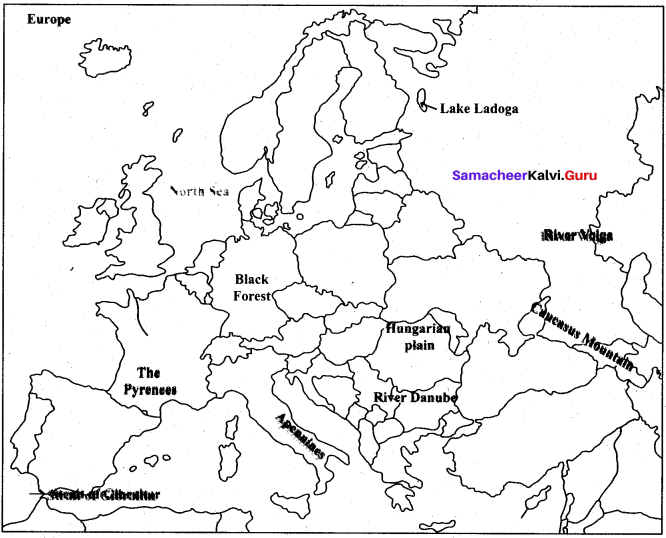
Samacheer Kalvi 6th Science Solutions Term 2 Chapter 7 Parts of Computer

You can Download Samacheer Kalvi 6th Science Book Solutions Guide Pdf, Tamilnadu State Board help you to revise the complete Syllabus and score more marks in your examinations.

Tamilnadu Samacheer Kalvi 6th Science Solutions Term 2 Chapter 7 Parts of Computer

Samacheer Kalvi 6th Science Parts of Computer Textual Evaluation

I. Choose the correct answer:

Question 1.
Which one of the following is an output device?
(a) Mouse
(b) Keyboard
(c) Speaker
(d) Pendrive
Answer:
(c) Speaker

Question 2.
Name the cable that connects CPU to the Monitor
(a) Ethernet
(b) Power cord
(c) HDMI
(d) USB
Answer:
(b) Power cord

Question 3.
Which one of the following is an input device?
(a) Speaker
(b) Keyboard
(c) Monitor
(d) Printer
Answer:
(b) Keyboard

Question 4.
Which one of the following is an example for wireless connections?
(a) Wi-Fi
(b) Electric wires
(c) VGA
(d) USB
Answer:
(a) Wi-Fi

Question 5.
Pen drive is _______ device
(a) Output
(b) Input
(c) Storage
(d) Connecting cable
Answer:
(c) Storage

Samacheer Kalvi 6th Science Solutions Term 2 Chapter 7 Parts of Computer

II. Match the following:

  1. VGA – Input device
  2. Bluetooth – Connecting cable
  3. Printer – LDMI
  4. Keyboard – Wireless connection
  5. HDMI – Output device

Answer:

  1. VGA – Connecting cable
  2. Bluetooth – Wireless connection
  3. Printer – Output device
  4. Keyboard – Input device
  5. HDMI – LDMI

Samacheer Kalvi 6th Science Solutions Term 2 Chapter 7 Parts of Computer

III. Give short answer:

Question 1.
Name the parts of a computer.
Answer:
Input unit (keyboard, mouse, scanner), Central Processing Unit (CPU),
The output unit (monitor, printer, speaker) are the part of the computer.

Question 2.
Bring out any two differences between input and output devices.
Answer:
Input device:

  1. It helps to send the data and commands for processing.
  2. Example: Keyboard, Mouse, Scanner, Barcode reader, web-camera, Microphone-mic

Output device:

  1. The output unit converts commands received by the computer in the form of binary signals into easily understandable characters.
  2. Example: Monitor, Printer, Speaker, Scanner

Samacheer Kalvi 6th Science Solutions Term 2 Chapter 7 Parts of Computer

Samacheer Kalvi 6th Science Parts of Computer Intext Activities

Activity 1

(Look at the magic of connecting cables to a desktop computer with 4,3,2,1 formula, start from 4 proceed till 1. Now your computer is ready to use). By connecting the various parts of a computer we can assemble a computer. For the construction activity, students have to use the 4-3-2-1 formula. A system consists of a mouse, keyboard, monitor, CPU, power cables, and connecting cables Students has to connect the four parts of a computer in row 4, using the cables in row 3, through the power cables in row 2 to construct a system.

Samacheer Kalvi 6th Science Solutions Term 2 Chapter 7 Parts of Computer 1

Samacheer Kalvi 6th Science Solutions Term 2 Chapter 7 Parts of Computer

Samacheer Kalvi 6th Science Parts of Computer Additional Questions

I. Choose the correct answer:

Question 1.
The _______ is used to move the pointer on a computer screen.
(a) Pendrive
(b) Microphone
(c) Mouse
(d) Scanner
Answer:
(c) Mouse

Question 2.
The page on the monitor can be moved up and down using the
(a) Scroll ball
(b) Left button
(c) Right button
Answer:
(a) Scroll ball

Question 3.
Memory can be expanded externally with the help of _______
(a) Compact Disc
(b) Mouse
(c) Keyboard
(d) Light pen
Answer:
(a) Compact disc

Question 4.
The microcomputer is also known as ………
(a) Desktop computer
(b) Personal computer
(c) Laptop
(d) Tablet
Answer:
(b) Personal computer

Question 5.
To connect the speaker to the computer is used.
(a) mic cable
(b) Audio jack
(c) power cord
(d) Data cable
Answer:
(b) Audio jack

Samacheer Kalvi 6th Science Solutions Term 2 Chapter 7 Parts of Computer

II. Fill in the blanks.

  1. The data is processed in the _______
  2. The output unit converts, commend received by the computer in the form of _______
  3. The Computer system which has _______ monitor emits less heat.
  4. _______ computer comes under the microcomputer.
  5. As the computer is connected with one another, it is also called as _______
  6. To connect the Mic to the CPU _______ is used.

Answers:

  1. CPU
  2. binary signals
  3. TFT
  4. personal
  5. system
  6. mic wire/cord

Samacheer Kalvi 6th Science Solutions Term 2 Chapter 7 Parts of Computer

III. Give a short answer:

Question 1.
Give some examples of input devices.
Answer:
Keyboard, Mouse, Scanner, Barcode Reader, Microphone, Web camera, Light pen are some input devices.

Question 2.
What are the two types of keys on the keyboard?
Answer:
Keyboard has two types of keys namely number keys and alphabet keys.

Question 3.
Give the uses of the right and left buttons of the mouse.
Answer:
The right button is used to select files and to open the folder. Left button is used to carry out corrections in the file.

Question 4.
What are the parts of the CPU?
Answer:
CPU has three parts, namely

  1. Memory unit
  2. Arithmetic logic unit. (ALU)
  3. Control unit.

Question 5.
Define Memory unit.
Answer:
The memory unit in the computer saves all data and information temporarily.

Question 6.
Give some examples of the output devices.
Answer:
Monitor, Printer, Speaker, Scanner are some of the output devices.

Samacheer Kalvi 6th Science Solutions Term 2 Chapter 7 Parts of Computer

Question 7.
Name of types of monitors.
Answer:
There are two types of monitors, namely

  1. Cathode Ray Tube monitors (CRT)
  2. Thin Film Transistor monitors (TFT)

Question 8.
How is the computer classified?
Answer:
A Computer can be classified as follows:

  1. Mainframe Computer
  2. Mini Computer
  3. Micro or Personal Computer
  4. Super Computer

Question 9.
What are the types of Personal Computer?
Answer:
Personal computers can be classified into three types.

  1. Desktop
  2. Laptop
  3. Tablet.

Question 10.
What is the use of Ethernet?
Answer:
Ethernet cable helps to establish internet connectivity.

Question 11.
Give two examples of a wireless connection.
Answer:
Blue tooth and WiFi are used to connect the internet without using cables.

Question 12.
What is the use of Bluetooth?
Answer:
Mouse, Keyboard can be connected to the computer using Bluetooth. Using Bluetooth, the data can be shared with nearby devices.

Question 13.
What is the use of Wi-Fi?
Answer:
Net connectivity can be obtained using the WiFi without any connecting cables. Any data from anywhere can be shared using WiFi.

Samacheer Kalvi 6th Science Solutions Term 2 Chapter 7 Parts of Computer

IV. Answer in detail:

Question 1.
What are the types of connecting cables? Describe them.
Answer:
Types of Cables:

  • Video Graphics Array (VGA)
  • High Definition Multimedia Interface (HDMI)
  • Universal Serial Bus (USB)
  • Data cable
  • Power Cord
  • Mic cable
  • Ethernet cable

1. VGA cable It is used to connect the computer monitor with the CPU.
2. USB cable /cord Devices like Printer, Pendrive, Scanner, Mouse, Keyboard, web camera, and Mobile phone devices are connected with the computer using a USB cord or cable.
3. HDMI cable transmits high quality and high bandwidth streams of audio and video. It connects the monitor, projector with the computer.
4. Data cable transmits data and it is used to connect a tablet, mobile phone to the CPU for data transfer.
5. Audio jack The audio jack is used to connect the speaker to the computer.
6. Power cord temporarily connects an appliance to the main electricity supply.
7. Mic cable To connect the Mic to the CPU, Mic wire/cord is used.
8. Ethernet Ethernet cable helps to establish internet connectivity.

Samacheer Kalvi 6th Science Solutions Term 2 Chapter 7 Parts of Computer Read More »

Samacheer Kalvi 11th Computer Science Solutions Chapter 16 Inheritance

Students can Download Computer Science Chapter 16 Inheritance Questions and Answers, Notes Pdf, Samacheer Kalvi 11th Computer Science Book Solutions Guide Pdf helps you to revise the complete Tamilnadu State Board New Syllabus and score more marks in your examinations.

Tamilnadu Samacheer Kalvi 11th Computer Science Solutions Chapter 16 Inheritance

Samacheer Kalvi 11th Computer Science Inheritance Text Book Back Questions and Answers

PART – 1
I. Choose The Correct Answer

Question 1.
Which of the following is the process of creating new classes from an existing class?
(a) Polymorphism
(b) Inheritance
(c) Encapsulation
(d) super class
Answer:
(b) Inheritance

Question 2.
Which of the following derives a class student from the base class Shool?
(a) school: student
(b) class student: public School
(c) student: public school
(d) class school : public student
Answer:
(b) class student: public – School

Question 3.
The type of inheritance that reflects the transitive nature is ………………
(a) Single Inheritance
(b) Multiple Inheritance
(c) Multilevel Inheritance
(d) Hybrid Inheritance
Answer:
(c) Multilevel Inheritance

Samacheer Kalvi 11th Computer Science Solutions Chapter 16 Inheritance

Question 4.
Which visibility mode should be used when you want the features of the base class to be available to the derived class but not to the classes that are derived from the derived class?
(a) Private
(b) Public
(c) Protected
(d) All of these
Answer:
(a) Private

Question 5.
Inheritance is process of creating new class from ………………
(a) Base class
(b) abstract
(c) derived class
(d) Function
Answer:
(a) Base class

Question 6.
A class is derived from a class which is a derived class itself, then this is referred to as ……………….
(a) multiple inheritance
(b) multilevel inheritance
(c) single inheritance
(d) double inheritance
Answer:
(b) multilevel inheritance

Question 7.
Which amongst the following is executed in the order of inheritance?
(a) Destructor
(b) Member function
(c) Constructor
(d) Object
Answer:
(c) Constructor

Samacheer Kalvi 11th Computer Science Solutions Chapter 16 Inheritance

Question 8.
Which of the following is true with respect to inheritance?
(a) Private members of base class are inherited to the derived class with private
(b) Private members of base class are not inherited to the derived class with private accessibility
(c) Public members of base class are inherited but not visible to the derived class
(d) Protected members of base class are inherited but not visible to the outside class
Answer:
(b) Private members of base class are not inherited to the derived class with private accessibility

Question 9.
Based on the following class declaration answer the questions (from 9.1 to 9.4)
class vehicle
{ int wheels;
public:
void input_data(float,float);
void output_data();
protected:
int passenger;
};
class heavyvehicle : protected vehicle {
int diesel_petrol;
protected:
int load;
protected:
int load;
public:
voidread_data(float,float)
voidwrite_data(); };
class bus: private heavy vehicle {
charTicket[20];
public:
voidfetch_data(char); voiddisplay_data(); };
};

Question 9.1.
Which is the base class of the class heavy_vehicle?
(a) Bus
(b) heavy_vehicle
(c) vehicle
(d) both (a) and (c)
Answer:
(c) vehicle

Question 9.2.
The data member that can be accessed from the function displaydata()
(a) passenger
(b) load
(c) Ticket
(d) All of these
Answer:
(d) All of these

Question 9.3.
The member function that can be accessed by an objects of bus Class is
(a) input_data()
(b) read_data(), output_data()write_data()
(c) fetch_data()
(d) All of these display_data()
Answer:
(d) All of these display_data()

Samacheer Kalvi 11th Computer Science Solutions Chapter 16 Inheritance

Question 9.4.
The member function that is inherited as public by Class Bus
(a) input_data()
(b) read_data(), output_data()write_data()
(c) fetch_data()
(d) All of these display_data()
Answer:
(d) All of these display_data()

Question 10.
class x
{int a;
public :
x()
{}
};
class y
{ x x1;
public :
y()
{}
};
class z : public y, x
{ intb;
public:
z(){}
} z1;
What is the order of constructor for object z1 to be invoked?
(a) z, y, x, x
(b) x, y, z, x
(c) y, x, x, z
(d) x, y, z
Answer:
(c) y, x, x, z

PART – 2
II. Answers to all the questions

Question 1.
What is inheritance?
Answer:
It is a process of creating new classes called derived classes, from the existing or base classes.

Question 2.
What is a base class?
Answer:
A class that is used as the basis for inheritance is called a superclass or base class.

Question 3.
Why derived class is called a power-packed class?
Answer:
The derived class is a power-packed class, as it can add additional attributes and methods and thus enhance its functionality.

Samacheer Kalvi 11th Computer Science Solutions Chapter 16 Inheritance

Question 4.
In what multilevel and multiple inheritances differ though both contain many base class?
Answer:
The derived class is a power-packed class, as it can add additional attributes and methods and thus enhance its functionality.

Question 5.
What is the difference between public and private visibility mode?
Answer:
Private visibility mode:
When a base class is inherited with private visibility mode the public and protected members of the base class become ‘private’ members of the derived class.

Public visibility mode:
When a base class is inherited with public visibility mode, the protected members of the base class will be inherited as protected members of the derived class and the public members of the base class will be inherited as public members of the derived class.

PART – 3
III. Answers to all the questions

Question 1.
What are the points to be noted while deriving a new class?
Answer:
The following points should be observed for defining the derived class.

  • The keyword class has to be used.
  • The name of the derived class is to be given after the keyword class.
  • A single colon.
  • The type of derivation (the visibility mode), namely private, public, or protected. If no visibility mode is specified, then by default the visibility mode is considered private.
  • The names of all base classes(parent classes) separated by a comma.

Question 2.
What are the differences between the members present in the private visibility mode and the members present in the public visibility mode?
Answer:
Members present in the private visibility mode:

  • Can be accessed only by the class members.
  • By default the members will be in private visibility mode.
  • When classes are inherited, private members are not inherited.

Members present in the public visibility mode:

  • Can be accessed by outside members also.
  • Members, to be in public visibility mode has to be specified explicitly.
  • When classes are inherited, the public members are inherited as private, protected and public members of the derived class.

Samacheer Kalvi 11th Computer Science Solutions Chapter 16 Inheritance

Question 3.
What is the difference between polymorphism and inheritance though both are used for the reusability of code?
Answer:
Inheritance:

  • Promotes code sharing and reduces development cost.
  • Inheritance is implemented in classes.
  • Inheritance type may be a single inheritance, multiple inheritances, multilevel inheritance, hierarchical inheritance, and hybrid inheritance.

Polymorphism:

  • Reduces the complexity of the program.
  • Polymorphism is a common interface for multiple forms.
  • Polymorphism is basically implemented on function.
  • Polymorphism may be a compile Time polymorphism (overloading) or run-time polymorphism (overriding).

Question 4.
What do you mean by overriding?
Answer:
When a derived class member function has the same name as that of its base class member function, the derived class member function shadows/hides the base class’s inherited function. This situation is called function overriding.

Question 5.
Write some facts about the execution of constructors and destructors in inheritance. Some Facts About the execution of constructor in inheritance
Answer:
Some facts about the execution of constructors in inheritance.

  • Base class constructors are executed first, before the derived class constructors execution.
  • A derived class can not inherit the base class constructor but it can call the base class constructor by using.
  • If there are multiple base classes, then it starts executing from the leftmost base class.
  • In multilevel inheritance, the constructors will be executed in the order of inheritance.

Some facts about the execution of the destructor in inheritance.

  • Own (Derived) class constructors are executed first, before the base class destructors execution.
  • A derived class can not inherit the destructor.
  • In multilevel inheritance, the destructors will be executed in the reverse order of inheritance.

PART – 4
IV. Answers to all the questions

Question 1.
Explain the different types of inheritance.
Answer:
Types of Inheritance: There are different types of inheritance viz., Single inheritance, Multiple inheritance, Multilevel inheritance, hybrid inheritance, and hierarchical inheritance.

  1. Single Inheritance: When a derived class inherits only from one base class, it is known as single inheritance.
  2. Multiple Inheritance: When a derived class inherits from multiple base classes it is known as multiple inheritances.
  3. Hierarchical inheritance: When more than one derived class is created from a single base class, it is known as Hierarchical inheritance.
  4. Multilevel Inheritance: The transitive nature of inheritance is itself reflected by this form of inheritance. When a class is derived from a class which is a derived class then it is referred to as multilevel inheritance.
  5. Hybrid inheritance: When there is a combination of more than one type of inheritance, it is known as hybrid inheritance.
  6. Hence, it may be a combination of Multilevel and Multiple inheritances or Hierarchical and Multilevel inheritance or Hierarchical, Multilevel and Multiple inheritances.

Samacheer Kalvi 11th Computer Science Solutions Chapter 16 Inheritance

Question 2.
Explain the different visibility modes through pictorial representation.
Answer:
An important feature of Inheritance is to know which member of the base class will be acquired by the derived class. This is done by using visibility modes. The accessibility of base class by the derived class is controlled by visibility modes. The three visibility modes are private, protected, and public.

The default visibility mode is private. Though visibility modes and access specifiers look similar, the main difference between them is Access specifiers control the accessibility of the members within the class whereas visibility modes control the access of inherited members within the class.

Private visibility mode:
When a base class is inherited with private visibility mode the public and protected members of the base class become ‘private’ members of the derived class
Samacheer Kalvi 11th Computer Science Solutions Chapter 16 Inheritance 1
Protected visibility mode:
When a base class is inherited with protected visibility mode the protected and public members of the base class become ‘protected members ‘ of the derived class.
Samacheer Kalvi 11th Computer Science Solutions Chapter 16 Inheritance 2
When a base class is inherited with public visibility mode, the protected members of the base class will be inherited as protected members of the derived class and the public members of the base class will be inherited as public members of the derived class.
Samacheer Kalvi 11th Computer Science Solutions Chapter 16 Inheritance 3

Question 3.
#include
#include
#include
using name spacestd;
class publisher
{
char pname[15];
char hoffice[15];
char address[25];
double turnover;
protected:
char phone[3][10];
void register();
public:
publisher();
∼ publisher);
void enter data();
void disp data();
};
class branch
{
charbcity[15];
char baddress[25];
protected:
intnoofemp;
public:
charbphone[2][10];
branch();
∼ branch();
void have data();
void give data();
};
class author: public branch, publisher
{
intaut_code;
charaname[20];
float income;
public:
author();
~author();
voidgetdata();
voidputdata();
};

Answer the following questions based on the above-given program:
Question 3.1.
Which type of Inheritance is shown in the program?
Answer:
Multiple inheritances.

Question 3.2.
Specify the visibility mode of base classes.
Answer:
Private for the publisher.
Public for a branch.

Question 3.3.
Give the sequence of Constructor/Destructor Invocation when object of the class author is created.
Answer:
branch(); // constructor of branch class
publisher (); // constructor of publisher class
author (); // constructor of author class
∼author (); // destructor of author class
∼publisher (); // destructor of publisher class
∼branch (); // destructor of branch class

Question 3.4.
Name the base class(/es) and derived class (/es).
Answer:
Base class(/es): branch and publisher
Derived class (/es): author.

Question 3.5.
Give a number of bytes to be occupied by the object of the following class:
(a) publisher
(b) branch
(c) author
Samacheer Kalvi 11th Computer Science Solutions Chapter 16 Inheritance 4

Question 3.6.
Write the names of data members accessible from the object of class author.
Answer:
The data members that can be accessed is bphone[2][10].

Question 3.7.
Write the names of all member functions accessible from the object of the class author.
Answer:
Member functions that can be accessed are:
1. public member functions of branch have_data();
give_data();

2. public member functions of author:
getdata();
putdata();

Question 3.8.
Write the names of all members accessible from member functions of class author.
Answer:
Samacheer Kalvi 11th Computer Science Solutions Chapter 16 Inheritance 5

Question 4.
Consider the following C++ code and answer the questions
Answer:
class Personal
{
int Class,Rno;
char Section;
protected:
char Name[20];
public:
personal();
void pentry();
voidPdisplay();
};
class Marks:private Personal
{
float M{5};
protected:
char Grade[5];
public:
Marks();
void M entry();
void M display 0;
};
class Result:public Marks
{
float Total, Agg;
public:
char FinalGrade, Commence[20];
Result();
void R calculate();
void R display();
}:

Question 4.1.
Which type of Inheritance is shown in the program?
Answer:
Multilevel inheritance.

Question 4.2.
Specify the visibility mode of base classes.
Answer:
Private for personal public for marks.

Samacheer Kalvi 11th Computer Science Solutions Chapter 16 Inheritance

Question 4.3.
Give the sequence of Constructor/Destructor Invocation when the object of class Result is created.
Answer:
Personal (); // constructor of class personal
Marks (); // constructor of class marks
Result (); // destructor of class Result
Marks (); // destructor of class marks
Personal (); // destructor of class personal

Question 4.4.
Name the base class(/es) and derived class (/es).
Answer:
Base class of marks: → Personal
Base class of Result: → Marks
Derived classes: → Marks and Results

Question 4.5.
Give a number of bytes to be occupied by the object of the following class:
(a) Personal
(b) Marks
(c) Result
Answer:
Samacheer Kalvi 11th Computer Science Solutions Chapter 16 Inheritance 6

Question 4.6.
Write the names of data members accessible from the object of class Result.
Answer:
Data members accessible are:

  1. The private, public, and protected data members of personal cannot be accessed.
  2. The public data members of marks: Nil (i/7) Public data members of Result char Final Grade; char commence [20];

Question 4.7.
Write the names of all member functions accessible from the object of class Result. Member functions accessible are:
Answer:
1. The private, public and protected member functions of personal cannot be accessed.

2. The public member functions of marks
void mentry();
void
mdisplay();

3. Public member functions of Result
void Rcalculate();
void Rdisplay();

Question 4.8.
Write the names of all members accessible from member functions of class Result.
Answer:
Data members accessible
char Grade[5];
float Total;
float Age;
char Final Grade;
char Commence[20];

Member functions accessible
void mentry();
void mdisplay();
void Rcalculate();
void Rdisplay();

Question 5.
Write the output of the following program
Answer:
Samacheer Kalvi 11th Computer Science Solutions Chapter 16 Inheritance 7
Output:
I am class A
I am class B
X = 30 Y = 20
Bye Bye
Bye

Question 6.
Debug the following program.
Answer:
Output:
…………………
15
14
13
Program:
…………………
Samacheer Kalvi 11th Computer Science Solutions Chapter 16 Inheritance 8

Samacheer Kalvi 11th Computer Science Arrays and Structures Additional Questions and Answers

PART – 1
I. Choose the correct answer

Question 1.
When a derived class inherits only from one base class, it is known as ………………
(a) multiple inheritances
(b) multilevel inheritance
(c) hierarchical inheritance
(d) single inheritance
Answer:
(d) single inheritance

Question 2.
A class that inherits from a superclass is called ………………
(a) derived class
(b) superclass
(c) base class
(d) parent class
Answer:
(a) derived class

Question 3.
When more than one derived classes are created from a single base class, it is called ………………
(a) inheritance
(b) hybrid inheritance
(c) hierarchical inheritance
(d) multiple inheritances
Answer:
(c) hierarchical inheritance

Question 4.
……………… pointer is a constant pointer that holds the memory address of the current object.
(a) member function
(b) this pointer
(c) comma operator
(d) data member
Answer:
(b) this pointer

Samacheer Kalvi 11th Computer Science Solutions Chapter 16 Inheritance

Question 5.
The ……………… are invoked in reverse order.
(a) constructor
(b) destructor
(c) pointer
(d) operator
Answer:
(b) destructor

PART – 2
II. Very Short Answers

Question 1.
Write a short note on hierarchical inheritance.
Answer:
When more than one derived class is created from a single base class, it is known as Hierarchical inheritance.

Question 2.
Write the syntax for derived and base class.
Answer:
class derived class name : visibility_mode baseclassname
{

// members of derivedclass

};

Question 3.
Explain the significance of different visibility modes with a program.
Answer:
Implementation of Single Inheritance using public visibility mode
Samacheer Kalvi 11th Computer Science Solutions Chapter 16 Inheritance 9
Output:
Total area: 35

Question 4.
When a base class is inherited with protected visibility mode the protected and public members of the base class become protected members of the derived class.
Answer:
Samacheer Kalvi 11th Computer Science Solutions Chapter 16 Inheritance 10

PART – 3
III. Short Answers

Question 1.
What are inheritance and access control?
Answer:
When you declare a derived class, a visibility mode can precede each base class in the base list of the derived class. This does not alter the access attributes of the individual members of a base class but allows the derived class to access the members of a base class with restriction. Classes can be derived using any of the three visibility modes:

  1. In a public base class, public and protected members of the base class remain public and protected members of the derived class.
  2. In a protected base class, public and protected members of the base class are protected members of the derived class.
  3. In a private base class, public and protected members of the base class become private members of the derived class.
  4. In all these cases, private members of the base class remain private and cannot be used by the derived class.
  5. However, it can be indirectly accessed by the derived class using the public or protected member function of the base class since they have the access privilege for the private members of the base class.

Samacheer Kalvi 11th Computer Science Solutions Chapter 16 Inheritance

Question 2.
Write the derived class using any of the three visibility mode.
Answer:
Classes can be derived using any of the three visibility mode:

  1. In a public base class, public and protected members of the base class remain public and protected members of the derived class.
  2. In a protected base class, public and protected members of the base class are protected members of the derived class.
  3. In a private base class, public and protected members of the base class become private members of the derived class.

PART – 4
IV. Explain in Detail

Question 1.
Explain single inheritance with example.
Answer:
When a derived class inherits only from one base class, it is known as single inheritance.
Samacheer Kalvi 11th Computer Science Solutions Chapter 16 Inheritance 11
Output
Enter roll no and name .. 1201 KANNAN
Enter lang, eng, phy, ehe, esc,mat marks.. 100 100 100 100 100 100
Roll no :- 1201
Name :- KANNAN
Marks Obtained
Language.. 100
English .. 100
Physics .. 100
Chemistry .. 100
Comp.sci .. 100
Maths .. 100

Question 2.
Explain this pointer.
Answer:
‘this’ pointer is a constant pointer that holds the memory address of the current object. It identifies the currently calling object.lt is useful when the argument variable name in the member function and the data member name are same.
Samacheer Kalvi 11th Computer Science Solutions Chapter 16 Inheritance 12
Output:
5 5
5 5
Process exited after 0.1 seconds with return value 0
Press any key to continue…

Question 3.
Write the output of the following program.
Samacheer Kalvi 11th Computer Science Solutions Chapter 16 Inheritance 13
Answer:
Output:
My profession is: Teacher
My age is: 20
I can walk
I can talk.
I can teach computer.
My profession is: Footballer
My age is: 19
I can walk
I can talk.
I can play football.

Samacheer Kalvi 11th Computer Science Solutions Chapter 16 Inheritance Read More »
Samacheer Kalvi 11th Computer Science Solutions Chapter 13 Introduction to Object-Oriented Programming Techniques

Students can Download Computer Science Chapter 13 Introduction to Object-Oriented Programming Techniques Questions and Answers, Notes Pdf, Samacheer Kalvi 11th Computer Science Book Solutions Guide Pdf helps you to revise the complete Tamilnadu State Board New Syllabus and score more marks in your examinations.

Tamilnadu Samacheer Kalvi 11th Computer Science Solutions Chapter 13 Introduction to Object-Oriented Programming Techniques

Samacheer Kalvi 11th Computer Science Introduction to Object-Oriented Programming Techniques Text Book Back Questions and Answers

PART – 1
I. Choose The Correct Answer

Question 1.
The term is used to describe a programming approach based on classes and objects is ……………….
(a) OOP
(b) POP
(c) ADT
(d) SOP
Answer:
(a) OOP

Question 2.
The paradigm which aims more at procedures ……………….
(a) Object Oriented Programming
(b) Procedural programming
(c) Modular programming
(d) Structural programming
Answer:
(b) Procedural programming

Samacheer Kalvi 11th Computer Science Solutions Chapter 13 Introduction to Object-Oriented Programming Techniques

Question 3.
Which of the following is a user defined data type?
(a) class
(b) float
(c) int
(d) object
Answer:
(a) class

Question 4.
The identifiable entity with some characteristics and behaviour is ……………….
(a) class
(b) object
(c) structure
(d) member
Answer:
(b) object

Question 5.
The mechanism by which the data and functions are bound together into a single unit is known as ……………….
(a) Inheritance
(b) Encapsulation
(c) Polymorphism
(d) Abstraction
Answer:
(b) Encapsulation

Question 6.
Insulation of the data from direct access by the program is called as ……………….
(a) Data hiding
(b) Encapsulation
(c) Polymorphism
(d) Abstraction
Answer:
(a) Data hiding

Question 7.
Which of the following concept encapsulate all the essential properties of the object that are to be created?
(a) Class
(b) Encapsulation
(c) Polymorphism
(d) Abstraction
Answer:
(d) Abstraction

Question 8.
Which of the following is the most important advantage of inheritance?
(a) data hiding
(b) code reusability
(c) code modification
(d) accessibility
Answer:
(b) code reusability

Samacheer Kalvi 11th Computer Science Solutions Chapter 13 Introduction to Object-Oriented Programming Techniques

Question 9.
“Write once and use it multiple time” can be achieved by ……………….
(a) redundancy
(b) reusability
(c) modification
(d) composition
Answer:
(b) reusability

Question 10.
Which of the following supports the transitive nature of data?
(a) Inheritance
(b) Encapsulation
(c) Polymorphism
(d) Abstraction
Answer:
(a) Inheritance

PART – 2
II. Answers to all the questions

Question 1.
How is modular programming different from procedural programming paradigm?
Answer:
Modular programming:

  • Emphasis on algorithm rather than data.
  • Programs are divided into individual modules.
  • Each modules are independent of each other and have their own local data.
  • Modules can work with its own data as well as with the data passed to it.

Procedural programming:

  • Programs are organized in the form of subroutines or sub programs.
  • All data items are global.
  • Suitable for small sized software application.
  • Difficult to maintain and enhance the program code as any change in data type needs to be propagated to all subroutines that use the same data type.

Question 2.
Differentiate classes and objects.
Answer:
Class:

  • Class is a blue print or template from which objects are created.
  • Class doesn’t allocate memory when it is created.
  • Class is a logical entity.

Object:

  • Object is an instance of a class.
  • Objects allocate memory when it is created.
  • Object is a physical entity.

Samacheer Kalvi 11th Computer Science Solutions Chapter 13 Introduction to Object-Oriented Programming Techniques

Question 3.
What is polymorphism?
Answer:
Polymorphism is the ability of a message or function to be displayed in more than one form.

Question 4.
How is encapsulation and abstraction are interrelated?
Answer:
Abstraction means giving only essential things and hiding unnecessary details. Encapsulation is the binding of data members and methods together in a capsule to avoid accidental changes to data from external users, i.e., encapsulation is the bundling of related algorithms and data.

Question 5.
Write the disadvantages of OOP.
Answer:

  1. Size: Object Oriented Programs are much larger than other programs.
  2. Effort: Object Oriented Programs require a lot of work to create.
  3. Speed: Object Oriented Programs are slower than other programs, because of their size.

PART – 3
III. Answers to all the questions

Question 1.
What is paradigm? Mention the different types of paradigm.
Answer:
Paradigm means organizing principle of a program. It is an approach to programming. There are different approaches available for problem solving using computer. They are Procedural programming, Modular Programming and Object Oriented Programming.

Question 2.
Write a note on the features of procedural programming.
Answer:
Important features of procedural programming

  1. Programs are organized in the form of subroutines or sub programs
  2. All data items are global
  3. Suitable for small sized software application
  4. Difficult to maintain and enhance the program code as any change in data type needs to be propagated to all subroutines that use the same data type. This is time consuming.
  5. Example: FORTRAN and COBOL.

Samacheer Kalvi 11th Computer Science Solutions Chapter 13 Introduction to Object-Oriented Programming Techniques

Question 3.
List some of the features of modular programming.
Answer:
Important features of Modular programming:

  1. Emphasis on algorithm rather than data
  2. Programs are divided into individual modules
  3. Each modules are independent of each other and have their own local data
  4. Modules can work with its own data as well as with the data passed to it.
  5. Example: Pascal and C.

Question 4.
What do you mean by modularization and software reuse?
Answer:

  1. Modularization : where the program can be decomposed into modules.
  2. Software re – use : where a program can be composed from existing and new modules.

Question 5.
Define information hiding.
Answer:
Encapsulation is the most striking feature of a class. The data is not accessible to the outside world, and only those functions which are wrapped in the class can access it. This encapsulation of data from direct access by the program is called data hiding or information hiding.

PART – 4
IV. Answers to all the questions

Question 1.
Write the differences between Object Oriented Programming and Procedural Programming
Answer:
Object Oriented Programming:

  • Emphasizes on data rather than algorithm.
  • Data abstraction is introduced in addition to procedural abstraction.
  • Data and its associated operations are grouped in to single unit.
  • Programs are designed around the data being operated.
  • Example: C++, Java, VB.Net, Python

Procedural Programming:

  • Programs are organized in the form of subroutines or sub programs.
  • All data items are global.
  • Suitable for small sized software application.
  • Difficult to maintain and enhance the program code as any change in data type needs to be propagated to all subroutines that use the same data type.
  • Example: FORTRAN and COBOL

Question 2.
What are the advantages of OOPs?
Answer:
Re – usability : “Write once and use it multiple times” you can achieve this by using class. Redundancy: Inheritance is the good feature for data redundancy. If you need a same functionality in multiple class you can write a common class for the same functionality and inherit that class to sub class.

Easy Maintenance : It is easy to maintain and modify existing code as new objects can be created with small differences to existing ones.

Security : Using data hiding and abstraction only necessary data will be provided thus maintains the security of data.

Samacheer Kalvi 11th Computer Science Solutions Chapter 13 Introduction to Object-Oriented Programming Techniques

Question 3.
Write a note on the basic concepts that supports OOPs?
Answer:
The Object Oriented Programming has been developed to overcome the drawbacks of procedural and modular programming. It is widely accepted that object – oriented programming is the most important and powerful way of creating software.

The Object – Oriented Programming approach mainly encourages:

  1. Modularization: where the program can be decomposed into modules.
  2. Software re – use: where a program can be composed from existing and new modules.

Main Features of Object Oriented Programming:

  1. Data Abstraction.
  2. Encapsulation.
  3. Modularity.
  4. Inheritance.
  5. Polymorphism.

Encapsulation:
The mechanism by which the data and functions are bound together into a single unit is known as Encapsulation. It implements abstraction. Encapsulation is about binding the data variables and functions together in class. It can also be called data binding. Encapsulation is the most striking feature of a class.

The data is not accessible to the outside world, and only those functions which are wrapped in the class can access it. These functions provide the interface between the object’s data and the program. This encapsulation of data from direct access by the program is called data hiding or information hiding.

Data Abstraction:
Abstraction refers to showing only the essential features without revealing background details. Classes use the concept of abstraction to define a list of abstract attributes and function which operate on these attributes. They encapsulate all the essential properties of the object that are to be created. The attributes are called data members because they hold information. The functions that operate on these data are called methods or member function.

Modularity:
Modularity is designing a system that is divided into a set of functional units (named modules) that can be composed into a larger application.

Inheritance:
Inheritance is the technique of building new classes (derived class) from an existing Class (base class). The most important advantage of inheritance is code reusability.

Polymorphism:
Polymorphism is the ability of a message or function to be displayed in more than one form.

Samacheer kalvi 11th Computer Science Introduction to Object-Oriented Programming Techniques Additional Questions and Answers

PART – 1
I. Choose the correct answer

Question 1.
In procedural programming all data items are ……………….
(a) Cobol
(b) global
(c) fortan
(d) class
Answer:
(b) global

Question 2.
Class represents a group of similar ……………….
(a) objects
(b) modules
(c) arrays
(d) data
Answer:
(a) objects

Samacheer Kalvi 11th Computer Science Solutions Chapter 13 Introduction to Object-Oriented Programming Techniques

Question 3.
………………. is an example of object oriented programming.
(a) Python
(b) Java
(c) VB.Net
(d) All the above
Answer:
(d) All the above

Question 4.
………………. refers to showing only the essential features without revealing background details.
(a) Redundancy
(b) Encapsulation
(c) Abstraction
(d) Inheritance
Answer:
(c) Abstraction

Question 5.
………………. is about binding the data variables and functions together in class.
(a) Data abstraction
(b) Modularization
(c) Redundancy
(d) Encapsulation
Answer:
(d) Encapsulation

PART – 2
II. Very Short Answers

Question 1.
What is procedural programming?
Answer:
Procedural means a list of instructions were given to the computer to do something. Procedural programming aims more at procedures. This emphasis on doing things.

Question 2.
What is a class?
Answer:
A Class is a construct in C++ which is used to bind data and its associated function together into a single unit using the encapsulation concept. Class is a user defined data type. Class represents a group of similar objects.

Samacheer Kalvi 11th Computer Science Solutions Chapter 13 Introduction to Object-Oriented Programming Techniques

Question 3.
What is modularity?
Answer:
Modularity is designing a system that is divided into a set of functional units (named modules) that can be composed into a larger application.

Question 4.
What are the main features of OOP?
Answer:
Main Features of Object Oriented Programming:

  1. Data Abstraction
  2. Encapsulation
  3. Modularity
  4. Inheritance
  5. Polymorphism

Question 5.
What is redundancy?
Answer:
Inheritance is the good feature for data redundancy. If you need a same functionality in multiple class you can write a common class for the same functionality and inherit that class to sub class.

PART – 3
III. Short Answers

Question 1.
Write about objects.
Answer:
Objects: Represents data and its associated function together into a single unit. Objects are the basic unit of OOP. Basically an object is created from a class. They are instances of class also called as class variables. An identifiable entity with some characteristics and behaviour is called object.

Samacheer Kalvi 11th Computer Science Solutions Chapter 13 Introduction to Object-Oriented Programming Techniques

Question 2.
What is Encapsulation and data binding?
Answer:
The mechanism by which the data and functions are bound together into a single unit is known as Encapsulation. Encapsulation is the most striking feature of a class. The data is not accessible to the outside world, and only those functions which are wrapped in the class can access it. These functions provide the interface between the object’s data and the program. This encapsulation of data from direct access by the program is called data hiding or information hiding.

PART – 4
IV. Explain in Detail

Question 1.
Explain about features of object oriented programming.
Answer:
Main Features of Object Oriented Programming

  1. Data Abstraction
  2. Encapsulation
  3. Modularity
  4. Inheritance
  5. Polymorphism

Encapsulation:
1. The mechanism by which the data and functions are bound together into a single unit is known as Encapsulation. It implements abstraction.

2. Encapsulation is about binding the data variables and functions together in class. It can also be called data binding.

3.. Encapsulation is the most striking feature of a class. The data is not accessible to the outside world, and only those functions which are wrapped in the class can access it. These functions provide the interface between the object’s data and the program. This encapsulation of data from direct access by the program is called data hiding or information hiding.

Data Abstraction:
Abstraction refers to showing only the essential features without revealing background details. Classes use the concept of abstraction to define a list of abstract attributes and function which operate on these attributes.

They encapsulate all the essential properties of the object that are to be created. The attributes are called data members because they hold information. The functions that operate on these data are called methods or member function.

Modularity:
Modularity is designing a system that is divided into a set of functional units (named modules) that can be composed into a larger application.

Inheritance:
Inheritance is the technique of building new classes (derived class) from an existing Class (base class). The most important advantage of inheritance is code reusability.

Polymorphism:
Polymorphism is the ability of a message or function to be displayed in more than one form.

Samacheer Kalvi 11th Computer Science Solutions Chapter 13 Introduction to Object-Oriented Programming Techniques Read More »
Samacheer Kalvi 11th Computer Science Solutions Chapter 15 Polymorphism

Students can Download Computer Science Chapter 15 Polymorphism Questions and Answers, Notes Pdf, Samacheer Kalvi 11th Computer Science Book Solutions Guide Pdf helps you to revise the complete Tamilnadu State Board New Syllabus and score more marks in your examinations.

Tamilnadu Samacheer Kalvi 11th Computer Science Solutions Chapter 15 Polymorphism

Samacheer Kalvi 11th Computer Science Polymorphism Text Book Back Questions and Answers

PART – 1
I. Choose The Correct Answer

Question 1.
Which of the following refers to a function having more than one distinct meaning?
(a) Function Overloading
(b) Member overloading
(c) Operator overloading
(d) Operations overloading
Answer:
(a) Function Overloading

Question 2.
Which of the following reduces the number of comparisons in a program?
(a) Operator Overloading
(b) Operations overloading
(c) Function overloading
(d) Member overloading
Answer:
(c) Function overloading

Samacheer Kalvi 11th Computer Science Solutions Chapter 15 Polymorphism

Question 3.
void dispchar(char ch = ‘$\ int size=10)
{

for(int i = 1;i< = size;i ++)
cout << ch;

}
How will you invoke the function dispchar() for the following input?
To print $ for 10 times
(a) dispchar();
(b) dispchar(ch,size);
(c) dispchar($,10);
(d) dispchar(T, 10 times);
Answer:
(c) dispchar($,10);

Question 4.
Which of the following is not true with respect to function overloading?
(a) The overloaded functions must differ in their signature.
(b) The return type is also considered for overloading a function.
(c) The default arguments of overloaded functions are not considered for overloading.
(d) Destructor function cannot be overloaded.
Answer:
(d) Destructor function cannot be overloaded.

Question 5.
Which of the following is invalid prototype for function overloading
(a) void fun (intx);
void fun (char ch);
(b) void fun (intx);
void fun (inty);
(c) void fun (double d);
void fun (char ch);
(d) void fun (double d);
void fun (inty);
Answer:
(a) void fun (intx);
void fun (char ch);

Question 6.
Which of the following function(s) combination cannot be considered as overloaded function(s) in the given snippet?
void print(char A,int B); // F1
void printprint(int A, float B); // F2
void Print(int P=10); // F3
void printQ; // F4
(a) F1, F2, F3, F4
(b) F1, F2, F3
(c) F1, F2, F4
(d) F1, F3, F4
Answer:
(d) F1, F3, F4

Question 7.
Which of the following operator is by default overloaded by the compiler?
(a) *
(b) +
(c) + =
(d) = =
Based on the following program answer the questions (8) to (10)
#include
using namespace std;
class Point {
private:
int x, y; .
public:
Point(int x1,int y1)
{

x=x1;y=y1;

}
void operator+(Point & pt3);
void show() {cout << “x =” << x << “y =” << y; }
};
void Point: :operator + (Point & pt3)
{

x+=pt3.x;
y += pt3.y;

}
int main()
{

Point pt1(3, 2),pt2(5, 4);
pt1+pt2;
pt1.show();
return 0;
}

Answer:
(b) +

Samacheer Kalvi 11th Computer Science Solutions Chapter 12 Arrays and Structures

Question 8.
Which of the following operator is overloaded?
(a) +
(b) Operator
(c) : :
(d) =
Answer:
(a) +

Question 9.
Which of the following statement invoke operator overloading?
(a) pt1 + pt2;
(b) Point pt1(3, 2),pt2(5, 4);
(c) ptl.show();
(d) return 0;
Answer:
(d) return 0;

Question 10.
What is the output for the above program?
(a) x = 8, y = 6
(b) x = 14, y = 14
(c) x = 8, y = 6
(d) x = 5, y = 9
Answer:
(d) x = 5, y = 9

PART – 2
II. Answers to all the questions

Question 1.
What is function overloading?
Answer:

  • The ability of the function to process the message or data in more than one form is called function overloading.
  • In other words, function overloading means two or more functions in the same scope share the same name but their parameters are different.

Samacheer Kalvi 11th Computer Science Solutions Chapter 12 Arrays and Structures

Question 2.
List the operators that cannot be overloaded.
Answer:
Operator that are not overloaded is as follows:

  1. scope operator (::)
  2. sizeof
  3. member selector.
  4. member pointer selector *
  5. ternary operator ?:

Question 3.
class add{int x; public: add(int)}; Write an outline definition for the constructor.
Answer:
add (int temp)
{

x = temp;

}

Question 4.
Does the return type of function help in overloading a function?
Answer:
No. The return type of a function does not help in overloading a function. Only arguments are considered.

Question 5.
What is the use of overloading a function?
Answer:
Function overloading is not only implementing polymorphism but also reduces the number of comparisons in a program and makes the program execute faster. It also helps the programmer by reducing the number of function names to be remembered.

PART – 3
III. Answers to all the questions

Question 1.
What are the rules for function overloading?
Answer:
Rules for function overloading:

  • The overloaded function must differ in the number of its arguments or data types.
  • The return type of overloaded functions is not considered for overloading the same data type.
  • The default arguments of overloaded functions are not considered as part of the parameter list in function overloading.

Question 2.
How does a compiler decide as to which function should be invoked when there are many functions? Give an example.
Answer:
When you call an overloaded function (when there are many functions with same name), the compiler determines the most appropriate definition to use by comparing the argument types used to call the function with the parameter types specified in the definitions. The process of selecting the most appropriate overloaded function or operator is called overload resolution.
Example:
#include using namespace std; void print (int i)
{

cout<< “It is integer” <<i<< endl;

}

void print (string c)

{

cout<< “It is string”<< c << endl;

}
int main ()
{

print (10);
print (“Good”);
return 0;

}
Output:
It is integer 10
It is string Good

Samacheer Kalvi 11th Computer Science Solutions Chapter 12 Arrays and Structures

Question 3.
What is operator overloading? Give some example of operators which can be overloaded.
Answer:
The term operator overloading refers to giving additional functionality to the normal C++ operators like It is also a type of polymorphism in which an operator is overloaded to give user-defined meaning to it.

For example, ‘+’ operator can be overloaded to perform addition on various data types, like for Integer, String (concatenation), etc.

Question 4.
Discuss the benefit of constructor overloading?
Answer:

  • Function overloading can be applied for constructors, as constructors are special functions of classes.
  • A class can have more than one constructor with a different signature.
  • Constructor overloading provides the flexibility of creating multiple type of objects for a class.

Question 5.
class sale ( int cost, discount; public: sale(sale &); Write a non-inline definition for constructor specified;
Answer:
class sale
{

int cost, discount;
public:
sale (sale&);

};
// non inline constructor
sale: : sale(sale&s)
{

cost = s.cost;
discount = s.discount;

}

PART – 4
IV. Answers to all the questions

Question 1.
What are the rules for operator overloading?
Answer:
Rules for operator overloading:

  • The precedence and associativity of an operator cannot be changed.
  • No new operators can be created, only existing operators can be overloaded.
  • Cannot redefine the meaning of an operator’s procedure, we cannot change how integers are added. Only additional functions can be to an operator.
  • Overloaded operators cannot have default arguments.
  • When binary operators are overloaded, the left-hand object must be an object of the relevant class.

Samacheer Kalvi 11th Computer Science Solutions Chapter 12 Arrays and Structures

Question 2.
Answer the question (i) to (v) after going through the following class.
classBook
{
intBookCode ; char Bookname[20];float fees;
public:
Book() //Function 1
{
fees = 1000;
BookCode = 1;
strcpy (Bookname, “C++”);
}
void display(float C) //Function 2
{
cout << BookCode << “:”<< Bookname << “:”<< fees << endl;
~ Book() //Function 3
{
cout << “End of Book Object”<< endl;
}

Book (intSC, char S[ ], float F); //Function 4

};
1. In the above program, what are Function 1 and Function 4 combined together referred to?
2. Which concept is illustrated by Function3? When is this function called/ invoked?
3. What is the use of Function3?
4. Write the statements in main to invoke function1 and function2
5. Write the definition for Function4.
Answer:

  1. Constructor overloading (function 1 and function 4 are constructors with different signatures in the class book)
  2. Function 3 is destructor of the class. Function 3 is executed when the object of the class book goes out of scope.
  3. Function 3 is destructor of the class.
    • Destructor (function3) will free resources if any that the object may have acquired during its lifetime
    • Destructor function removes the memory of an object which was allocated by the constructor at the time of creating an object. Thus frees the unused memory.
  4. book b;
    b.display (4.5);
  5. Book: :Book (int sc.char.s[], float, F) // Function 4
    {
    Book Code = SC
    strcpy (Book name, S);
    fees = F;
    }

Question 3.
Write the output of the following program.
Answer:
include
using namespace std;
class Seminar
{
int Time;
public:
Seminar()
{

Time = 30; cout << “Seminar starts now” << endl;

}
void Lecture()
{
cout << “Lectures in the seminar on”<< endl;
}
Seminar(int Duration)
{

Time=Duration;cout<< “Welcome to Seminar”<<endl;

}
Seminar(Seminar &D)
{

Time=D.Time;cout<< “Recap of Previous Seminar Content”<<endl;

}
~Seminar()
{
cout<< “Vote of thanks”<<endl;
}
};
int main()
{

Seminar s1, s2(2), s3(s2);
s1.Lecture();
return 0;

}
Output:
Seminar starts now
Welcome to seminar
Recap of previous seminar content
Lectures in the seminar on
Vote of thanks
Vote of thanks
Vote of thanks

Question 4.
Debug the following program.
Answer:
Samacheer Kalvi 11th Computer Science Solutions Chapter 15 Polymorphism 1
Corrected Program
Samacheer Kalvi 11th Computer Science Solutions Chapter 15 Polymorphism 2
Output
Enter string: God
Enter string: Bless
The first string is: God
The Second-string is: Bless
The concatenated string is: God Bless

Question 5.
Answer the questions based on the following program
#include
#include
using namespace std;
class comp
{
public:
char[10];
void getstring(char str[10])
{
strcpy(s,str);
}
void operator = = (comp);
};
void comp::operator = = (comp ob)
{
if(strcmp(s,ob.s) = = 0)
cout << “\nStrings are Equal”;
else
cout<< “\nStrings are not Equal”;
}
int main()
{
comp ob, ob1;
char stringl[10], string2[10];
cout << “Enter First String:”; cin >> string1;
ob.getstring(string1);
cout<< “\n Enter Second String:”; cin >> string2;
ob1.getstring(string2);
ob = = obi;
return 0;
}

  1. Mention the objects which will have the scope till the end of the program.
  2. Name the object which gets destroyed in between the program.
  3. Name the operator which is overloaded and write the statement that invokes it.
  4. Write out the prototype of the overloaded member function.
  5. What types of operands are used for the overloaded operator?
  6. Which constructor will get executed? Write the output of the program.

Answer:

  1. Objects: ob and obi of main ()
  2. Object ob of void operator = = (comp ob);
  3. Overloaded operator: = =
    Statement that invokes: ob = = ob1;
  4. void operator = = (comp ob):
  5. Operands used are the objects of the class comp
  6. The default constructor generated by the compiler will be executed.[comp();]

Output 1
Enter first string: hello Enter second string: hello String are equal

Output 2
Enter first string: hello Enter second string: fine String are not equal.

Samacheer Kalvi 11th Computer Science Arrays and Structures Additional Questions and Answers

PART – 1
I. Choose the correct answer

Question 1.
The number and types of a function’s parameters are called the …………………
(a) overload resolution
(b) function’s signature
(c) function overloading
(d) operator overloading
Answer:
(b) function’s signature

Question 2.
The process of selecting the most appropriate overloaded function or operator is called …………………
(a) overload resolution
(b) prototype
(c) polymorphism
(d) operator overload
Answer:
(a) overload resolution

Question 3.
The return type of overloaded functions are not considered for overloading same …………………
(a) polymorphism
(b) prototype
(c) data type
(d) overloading
Answer:
(c) data type

Samacheer Kalvi 11th Computer Science Solutions Chapter 12 Arrays and Structures

Question 4.
………………… cannot have default arguments.
(a) Operator overloading
(b) Overloaded operators
(c) Function overloading
(d) prototype
Answer:
(b) Overloaded operators

Question 5.
The mechanism of giving special meaning to an operator is known as …………………
(a) operator overloading
(b) parameter
(c) function overloading
(d) polymorphism
Answer:
(a) operator overloading

Question 6.
Operator overloading provides new definitions for most of the ………………… operators.
(a) *
(b) + = =
(c) +
(d) C++
Answer:
(d) C++

Question 7.
The overloaded operator is given using the keyword ………………… followed by an operator symbol.
(a) operator
(b) data type
(c) object
(d) function
Answer:
(a) operator

PART – 2
II. Very Short Answers

Question 1.
Give the syntax for operator overloading.
Answer:
RetumType classname :: Operator Operator Symbol (argument list)
{

\\ Function body

}
Example: Deposit Deposit: : operator + (Deposit dl);

Samacheer Kalvi 11th Computer Science Solutions Chapter 12 Arrays and Structures

Question 2.
Write a program for function overloading.
C++ Program to demonstrate function overloading
Answer:
#include
using namespace std;
void print(int i)
{cout << “It is integer” << i <<endl;}
void print(double f)
{ cout << “It is float” << f <<endl;}
void print(string c)
{ cout << “It is string” << c <<endl;}
int main() {

print(10);
print(10.10);
print(“Ten”);
return 0;

}
Output:
It is integer 10
It is float 10.1
It is string Ten

PART – 3
III. Short Answers

Question 1.
What is function signature?
Answer:
The ability of the function to process the message or data in more than one form is called as function overloading. It implies that two or more functions in the same scope share the same name but their parameters are different. In this situation, the functions that share the same name are said to be overloaded and the process is called function overloading. The number and types of a function’s parameters are called the function’s signature.

Samacheer Kalvi 11th Computer Science Solutions Chapter 12 Arrays and Structures

Question 2.
Explain overload resolution.
Answer:
When you call an overloaded function, the compiler determines the most appropriate definition . to use, by comparing the argument types you have used to callthe function with the parameter types specified in the definitions. The process of selecting the most appropriate overloaded function or operator is called overload resolution.

PART – 4
IV. Explain in Detail

Question 1.
Give the output of the following program.
Answer:
Samacheer Kalvi 11th Computer Science Solutions Chapter 15 Polymorphism 3
Output:
value of x is 7
value of x is 9.132
value of x and y is 85,64

Question 2.
Write the coding for the following output using constructor overloading.
Output:
Constructor without parameters..
Parameterized constructor…
Copy Constructor…
Enter data… 20 30
Object a:
The numbers are..20 30
The sum of the numbers are.. 50
Object b :
The numbers are..10 20
The sum of the numbers are.. 30
Object c..
The numbers are..10 20
The sum of the numbers are.. 30
Answer:
#include
using namespace std;
class add
{
int num1, num2, sum;
public:
add()
{
cout << “\n Constructor without parameters…”;
num1 = 0;
num2 = 0;
sum = 0;
}
add (int s1, int s2 )
{
cout << “\n Parameterized constructor…”;
num1= s1;
num2=s2;
sum=0;
}
add (add &a)
{
cout << “\n Copy Constructor…”; ‘
num1 = a.num1;
num2 = a.num2;
sum = 0;
}
void getdata()
{
cout << “\n Enter data …”; cin>>num 1 >> num2;
}
void addition()
{
sum=num 1 + num2;
}
void putdata()
{
cout << “\n The numbers are..”;
cout < cout << “\n The sum of the numbers are..” << sum; }
};
int main()
{
add a, b (10, 20), c(b);
a. getdata();
a. addition();
b. addition();
c. addition();
cout << “\n Object a : “;
a. putdata();
cout << “\n Object b : “;
b. putdata();
cout << “\n Object c..”;
c. putdata();
return 0;
}

Question 3.
Write a program to find the area of a rectangle using constructor overloading in a class.
Answer:
Samacheer Kalvi 11th Computer Science Solutions Chapter 15 Polymorphism 4Output:
Enter the value of length and breadth 10 20
Non parameterized constructor
area of Rectangle is 60
Parameterized constructor with one argument
area of Rectangle 8
Parameterized constructor with two argument
area of Rectangle 10
copy constructor
area of Rectangle 10

Samacheer Kalvi 11th Computer Science Solutions Chapter 15 Polymorphism Read More »

Samacheer Kalvi 11th Computer Science Solutions Chapter 11 Functions

Students can Download Computer Science Chapter 11 Functions Questions and Answers, Notes Pdf, Samacheer Kalvi 11th Computer Science Book Solutions Guide Pdf helps you to revise the complete Tamilnadu State Board New Syllabus and score more marks in your examinations.

Tamilnadu Samacheer Kalvi 11th Computer Science Solutions Chapter 11 Functions

Samacheer Kalvi 11th Computer Science Functions Text Book Back Questions and Answers

PART – 1
I. Choose The Correct Answer

Question 1.
Which of the following header file defines the standard I/O predefined functions?
(a) stdio.h
(b) math.h
(c) string.h
(d) ctype.h
Answer:
(a) stdio.h

Question 2.
Which function is used to check whether a character is alphanumeric or not?
(a) isalpha()
(b) isdigit()
(c) isalnum()
(d) islower()
Answer:
(c) isalnum()

Question 3.
Which function begins the program execution?
(a) isalpha()
(b) isdigit()
(c) main()
(d) islower()
Answer:
(c) main()

Samacheer Kalvi 11th Computer Science Solutions Chapter 11 Functions

Question 4.
Which of the following function is with a return value and without any argument?
(a) x = display(int, int)
(b) x = display()
(c) y = display(float)
(d) display(int)
Answer:
(b) x = display()

Question 5.
Which is return data type of the function prototype of add(int, int);?
(a) int
(b) float
(c) char
(d) double
Answer:
(a) int

Question 6.
Which of the following is the scope operator?
(a) >
(b) &
(c) %
(d) ::
Answer:
(d) ::

PART – 2
II. Answer to all the questions

Question 1.
Define Functions.
Answer:
A large program can typically be split into small sub – programs (blocks) called as functions where each sub-program can perform some specific functionality. Functions reduce the size and complexity of a program, makes it easier to understand, test and check for errors.

Question 2.
Write about strlen() function.
Answer:
The strlen() takes a null terminated byte string source as its argument and returns its length. The length does not include the null(\0) character.

Question 3.
What are importance of void data type? void type has two important purposes:
Answer:

  1. To indicate the function does not return a value.
  2. To declare a generic pointer.

Samacheer Kalvi 11th Computer Science Solutions Chapter 11 Functions

Question 4.
What is Parameter and list its types?
Answer:
Arguments or parameters are the means to pass values from the calling function to the called function. The variables used in the function definition as parameters are known as formal parameters. The constants, variables or expressions used in the function call are known as actual parameters.

Types : Default arguments and Constant Arguments.

Question 5.
Write a note on Local Scope.
Answer:

  1. A local variable is defined within a block. A block of code begins and ends with curly braces { }.
  2. The scope of a local variable is the block in which it is defined.
  3. A local variable cannot be accessed from outside the block of its declaration.
  4. A local variable is created upon entry into its block and destroyed upon exit.

PART – 3
III. Answer to all the questions

Question 1.
What is Built – in functions?
Answer:
C++ provides a rich collection of functions ready to be used for various tasks. The tasks to be performed by each of these are already written, debugged and compiled, their definitions alone are grouped and stored in files called header files. Such ready – to – use sub programs are called pre – defined functions or built – in functions.

Question 2.
What is the difference between isupper() and toupper() functions?
Answer:
isupper():

  • This function is used to check the given character is uppercase.
  • This function will return 1 if true otherwise 0.

toupper():

  • This function is used to convert the given character into its uppercase.
  • This function will return the upper case equivalent of the given character. If the given character itself is in upper case, the output will be the same.

Question 3.
Write about strcmp() function.
Answer:
The strcmp() function takes two arguments: string1 and string2. It compares the contents of string1 and string2 lexicographically.
The strcmp() function returns a:

  1. Positive value if the first differing character in string1 is greater than the corresponding character in string2. (ASCII values are compared)
  2. Negative value if the first differing character in string1 is less than the corresponding character in string2.
  3. 0 if string1 and string2 are equal.

Samacheer Kalvi 11th Computer Science Solutions Chapter 11 Functions

Question 4.
Write short note on pow() function in C++.
Answer:
The pow() function returns base raised to the power of exponent. If any argument passed to pow() is long double, the return type is promoted to long double. If not, the return type is double. The pow() function takes two arguments:

  1. base – the base value
  2. exponent – exponent of the base

Example:
cout << pow(5, 2);

Output:
25

Question 5.
What are the information the prototype provides to the compiler?
Answer:
The prototype above provides the following information to the compiler:

  1. The return value of the function is of type long.
  2. Fact is the name of the function.
  3. The function is called with two arguments:
    • The first argument is of int data type.
    • The second argument is of double data type, int display(int, int) // function prototype//.

The above function prototype provides details about the return data type, name of the function and a list of formal parameters or arguments.

Question 6.
What is default arguments? Give example.
Answer:
In C++, one can assign default values to the formal parameters of a function prototype. The Default arguments allows to omit some arguments when calling the function.
1. For any missing arguments, complier uses the values in default arguments for the called function.

2. The default value is given in the form of variable initialization.
Example : void defaultvalue(int n1 = 10, n2 = 100);

3. The default arguments facilitate the function call statement with partial or no arguments.
Example :

  1. defaultvalue (x, y);
  2. defaultvalue (200, 150);
  3. defaultvalue (150);
  4. defaultvalue (x, 150);

4. The default values can be included in the function prototype from right to left, i.e., we cannot have a default value for an argument in between the argument list.
Example:

  1. void defaultvalue (int n1=10, n2);//invalid prototype.
  2. void defaultvalue (int n1, n2 = 10);//valid prototype.

PART – 4
IV. Answers to all the questions

Question 1.
Explain Call by value method with suitable example.
Answer:
This method copies the value of an actual parameter into the formal parameter of the function. In this case, changes made to formal parameter within the function will have no effect on the actual parameter.
Samacheer Kalvi 11th Computer Science Solutions Chapter 11 Functions
Output:
Example : Function call by value
Enter the Value for A : 5
The Value inside display function (a * a) : 25
The Value inside main function 5

Question 2.
What is Recursion? Write a program to find GCD using recursion.
Answer:
A function that calls itself is known as recursive function. And, this technique is known as recursion.
Samacheer Kalvi 11th Computer Science Solutions Chapter 11 Functions
Output:
Enter two numbers: 81 153
gcd : 9

Question 3.
What are the different forms of function return? Explain with example.
Answer:
The return statement:
Returning from the function is done by using the return statement. The return statement stops execution and returns to the calling function. When a return statement is executed, the function is terminated immediately at that point. The return statement is used to return from a function. It is categorized as a jump statement because it terminates the execution of the function and transfer the control to the called statement.
Syntax:
return expression/variable;

Example : retum(a + b); retum(a);
return; // to terminate the function

The Returning values:
The functions that return no value is declared as void. The data type of a function is treated as int, if no data type is explicitly mentioned. For example,
For Example:
int add (int, int);
add (int, int);
In both prototypes, the return value is int, because by default the return value of a function in C++ is of type int.

Returning Non – integer values:
A string can also be returned to a calling statement.
Samacheer Kalvi 11th Computer Science Solutions Chapter 11 Functions
Output:
Example: Function with Non Integer Return Chennai

The Returning by reference:
#include
using namespace std;
int main( )
{

int n 1 = 150;
int &n 1 ref = n1;
cout << “\nThe Value of N1 = “<< n1 << “and n 1 Reference =”<< n 1 ref;
n 1 ref++;
cout << “\n After nl increased the Value of N1 =”<< n1;
cout << “and n 1 Reference = ”<< n 1 ref;
retum(0);

}
Output:
The Value of N1 = 150 and nl Reference =150
After n1 increased the Value of N1 = 151 and n1 Reference =151

Samacheer Kalvi 11th Computer Science Solutions Chapter 11 Functions

Question 4.
Explain scope of variable with example.
Answer:
Scope refers to the accessibility of a variable.
There are four types of scopes in C++

  1. Local Scope
  2. Function Scope
  3. File Scope
  4. Class Scope

1. Local Scope:

  • A local variable is defined within a block. A block of code begins and ends with curly braces {}.
  • The scope of a local variable is the block in which it is defined.
  • A local variable cannot be accessed from outside the block of its declaration.
  • A local variable is created upon entry into its block and destroyed upon exit;
    Example:
    int main( )
    {
    int a,b;   //Local variable
    }

2. Function Scope:

  • The scope of variable within a function is extended to the function block and all sub-blocks therein.
  • The lifetime of a function scope variable is the lifetime of the function block.
    Example:
    int. sum(intx, int y);  //x and y has function scope.

3. File Scope:

  • A variable declared above all blocks and functions (including main()) has the scope of a file.
  • The lifetime of a file scope variable is the lifetime of a program.
  • The file scope variable is also called as global variable.
    Example:
    #include
    using namespace std;
    int x,y; //x and y are global variable
    void main()
    {
    ……..
    }

4. Class Scope:

  • Data members declared in a class has the class scope.
  • Data members declared in a class can be accessed by all member functions of the class.
    Example:
    Class example
    {

int x,y; //x and y can be accessed by print() and void():
void print();
Void total();

  };

Question 5.
Write a program to accept any integer number and reverse it.
Answer:
Samacheer Kalvi 11th Computer Science Solutions Chapter 11 Functions
Output:
Enter number : 1 2 3
Reverse number: 3 2 1

Samacheer kalvi 11th Computer Science Functions Additional Questions and Answers

PART – 1
I. Choose the correct answer

Question 1.
………………. is the name of the function.
(a) Pre – defined
(b) Built – in
(c) Library
(d) All the above
Answer:
(d) All the above

Question 2.
………………. is used to check whether the given character is an alphabet or not.
(a) isalnum()
(b) isalpha()
(c) isalph()
(d) isal()
Answer:
(b) isalpha()

Question 3.
The strcpy() function takes two arguments of ……………….
(a) target and source
(b) upper and lower
(c) base and exponent
(d) none of these
Answer:
(a) target and source

Samacheer Kalvi 11th Computer Science Solutions Chapter 11 Functions

Question 4.
………………. takes a null terminated byte string source as its argument and returns its length.
(a) strcpy()
(b) strlen()
(c) strcmp()
(d) strcat()
Answer:
(b) strlen()

Question 5.
The pow() function takes the two arguments of ……………….
(a) target and source
(b) upper and lower
(c) base and exponent
(d) source and exponent
Answer:
(c) base and exponent

Question 6.
………………. is the name of the function.
(a) fact
(b) task
(c) arguments
(d) none of these
Answer:
(d) none of these

Question 7.
The C++ program always have main() function to begin the program execution.
(a) 1
(b) 2
(c) 3
(d) null
Answer:
(a) 1

Question 8.
Arguments are also called as ……………….
(a) variable
(b) constant
(c) function
(d) parameters
Answer:
(d) parameters

Question 9.
In C++ the arguments can be passed to a function in ………………. ways.
(a) 2
(b) 1
(c) 3
(d) 7
Answer:
(a) 2

Question 10.
Inline functions execute faster but requires more ……………….
(a) variables
(b) pointers
(c) memory
(d) functions
Answer:
(c) memory

PART – 2
II. Very Short Answers

Question 1.
Write about reusability.
Answer:

  1. Few lines of code may be repeatedly used in different contexts. Duplication of the same code can be eliminated by using functions which improves the maintenance and reduce program size.
  2. Some functions can be called multiple times with different inputs.

Question 2.
What is user – defined functions?
Answer:
C++ also provides the facility to create new functions for specific task as per user requirement. The name of the task and data required (arguments) are decided by the user and hence they are known as User-defined functions.

Question 3.
What is constant arguments and write its syntax?
Answer:
The constant variable can be declared using const keyword. The const keyword makes variable , value stable. The constant variable should be initialized while declaring. The const modifier enables to assign an initial value to a variable that cannot be changed later inside the body of the function.
Syntax:
(const )

Samacheer Kalvi 11th Computer Science Solutions Chapter 11 Functions

Question 4.
What are the advantages of inline functions?
Answer:
Advantages of inline functions:

  1. Inline functions execute faster but requires more memory space.
  2. Reduce the complexity of using STACKS.

Question 5.
What is function scope?
Answer:
Function Scope:

  1. The scope of variables declared within a function is extended to the function block, and all sub – blocks therein.
  2. The life time of a function scope variable, is the life time of the function block. The scope of.

PART – 3
III. Short Answers

Question 1.
What is divide and conquer?
Answer:
Divide and Conquer

  1. Complicated programs can be divided into manageable sub programs called functions.
  2. A programmer can focus on developing, debugging and testing individual functions.
  3. Many programmers can work on different functions simultaneously.

Question 2.
Define library functions.
Answer:
C++ provides a rich collection of functions ready to be used for various tasks. The tasks to be performed by each of these are already written, debugged and compiled, their definitions alone are grouped and stored in files called header files. Such ready – to – use sub programs are called pre – defined functions or built – in functions or Library Functions.

Question 3.
What is isdigit()? Give example.
Answer:
This function is used to check whether a given character is a digit or not. This function will return 1 if the given character is a digit, and 0 otherwise.

Example:
using namespace std;
#include
#include int main( )
{

char ch;
cout << “\n Enter a Character:”; cin >> ch;
cout << “\n The Return Value of isdigit(ch) is << isdigit(ch);

}
Output – 1
Enter a Character: 3
The Return Value of isdigit(ch) is : 1

Output – 2
Enter a Character: A
The Return Value of isdigit(ch) is :0

Question 4.
Write a program using pow() and sin() function.
Answer:
The pow() function returns base raised to the power of exponent. The sin() function takes a single argument in radians.
#include
#include using namespace std;
int main ()
{

double base, exponent, result;
base = 5;
exponent = 4;
result = pow(base, exponent);
cout << “pow(“ << base << “A” << exponent <<”) =” << result;
double x = 25;
result = sin(x);
cout << “\nsin(“<< x <<”)=”<<result;
return 0;

}
Output:
pow (5^4) = 625
sin (25) = – 0.132352

Question 5.
What is return statement with example?
Answer:
The return statement stops execution and returns to the calling function. When a return statement is executed, the function is terminated immediately at that point. The return statement is used to return from a function. It is categorized as a jump statement because it terminates the execution of the function and transfer the control to the called statement.

Example:
return(a + b); return(a);
return; // to terminate the function

Samacheer Kalvi 11th Computer Science Solutions Chapter 11 Functions

Question 6.
What is scope resolution operation?
Answer:

  1. The scope operator reveals the hidden scope of a variable. The scope resolution operator (::) is used for the following purposes.
  2. To access a Global variable when there is a Local variable with same name. An example using Scope Resolution Operator.

PART – 4
IV. Explain in Detail

Question 1.
Explain about generating random numbers with suitable program.
Answer:
The srand() function in C++ seeds the pseudo random number generator used by the rand() function. The seed for rand() function is 1 by default. It means that if no srand() is called before rand(), the rand() function behaves as if it was seeded with srand( 1). The srand() function takes an unsigned integer as its parameter which is used as seed by the rand() function. It is defined inor header file.
#include
#include using namespace std; int main()
{

int random = rand(); /* No srand() calls before rand(), so seed = 1*/
cout << “\nSeed = 1, Random number =” << random;
srand(10);
/* Seed= 10 */
random = rand();
cout << “\n\n Seed =10, Random number =” << random;
return 0;

}
Output:
Seed = 1, Random number = 41
Seed =10, Random number 71

Question 2.
Explain about Inline functions with a suitable program.
Answer:
An inline function looks like normal function in the source file but inserts the function’s code directly into the calling program. To make a function inline, one has to insert the keyword inline in the function header.
Samacheer Kalvi 11th Computer Science Solutions Chapter 11 Functions
Output:
Enter the Principle Amount Rs. :60000
Enter the Number of Years : 10
Enter the Rate of Interest :5
The Simple Interest = Rs. 30000

Question 3.
Write about function prototype.
Answer:
C++ program can contain any number of functions. But, it must always have only one main() function to begin the program execution. We can write the definitions of functions in any order as we wish. We can define the main() function first and all other functions after that or we can define all the needed functions prior to main(). Like a variable declaration, a function must be declared before it is used in the program. The declaration statement may be given outside the main() function
Samacheer Kalvi 11th Computer Science Solutions Chapter 11 Functions
The prototype above provides the following information to the compiler:

  1. The return value of the function is of type long.
  2. Fact is the name of the function.
  3. The function is called with two arguments:
    • The first argument is of int data type.
    • The second argument is of double data type, int display(int, int)//function prototype//

The above function prototype provides details about the return data type, name of the function and a list of formal parameters or arguments.

Samacheer Kalvi 11th Computer Science Solutions Chapter 11 Functions

Question 4.
Explain about address method.
Answer:
This method copies the address of the actual argument into the formal parameter. Since the address of the argument is passed, any change made in the formal parameter will be reflected back in the actual parameter.
#include
using namespace std;
void display(int & x) //passing address of a//
{

x = x*x;
cout << “\n\n The Value inside display function (n1 x n1) :”<< x ;

}
int main()
{
intn 1;
cout << “\n Enter the Value for N1 cin >> n1;
cout << “\n The Value of N1 is inside main function Before passing:” << n1;
display(n1);
cout << “\n The Value of N1 is inside main function After passing (n1 x n1):”<< n1; retum(O);
}

Output:
Enter the Value for N1 : 45
The Value of N1 is inside main function Before passing : 45
The Value inside display function (n1 x n1) : 2025
The Value ofNl is inside main function After passing (n1 x n1): 2025

Samacheer Kalvi 11th Computer Science Solutions Chapter 11 Functions

Question 5.
Given data: Principal amount Rs. 50000

Number of years 5
Rate of interest 7

To find the simple interest of the above mentioned given data. Write a C++ program using inline functions.
Answer:
#include
using namespace std;
inline float simple interest(float p1, float n 1, float r 1)
{

float sil=(pl*nl*rl)/100;
retum(sil);

}
int main ()
{

float si,p,n,r;
cout << “\n Enter the Principle Amount Rs. :”; cin >> p;
cout << “\n Enter the Number of Years :”; cin >> n;
cout << “\n Enter the Rate of Interest :”; cin >> r;
si = simple interest(p, n, r);
cout << “\n The Simple Interest = Rs.” << si;
return 0;

}

Output:
Enter the Principle Amount Rs. : 50000
Enter the Number of Years : 5
Enter the Rate of Interest : 7
The Simple Interest = Rs. 17500

Samacheer Kalvi 11th Computer Science Solutions Chapter 11 Functions Read More »

Samacheer Kalvi 11th Computer Science Solutions Chapter 12 Arrays and Structures

Students can Download Computer Science Chapter 12 Arrays and Structures Questions and Answers, Notes Pdf, Samacheer Kalvi 11th Computer Science Book Solutions Guide Pdf helps you to revise the complete Tamilnadu State Board New Syllabus and score more marks in your examinations.

Tamilnadu Samacheer Kalvi 11th Computer Science Solutions Chapter 12 Arrays and Structures

Samacheer Kalvi 11th Computer Science Arrays and Structures Text Book Back Questions and Answers

PART – 1
I. Choose The Correct Answer

Question 1.
Which of the following is the collection of variables of the same type that an referenced by a common name?
(a) int
(b) float
(c) Array
(d) class
Answer:
(c) Array

Question 2.
Array subscripts always starts with which number?
(a) – 1
(b) 0
(c) 2
(d) 3
Answer:
(b) 0

Samacheer Kalvi 11th Computer Science Solutions Chapter 12 Arrays and Structures

Question 3.
int age[ ]={6, 90, 20, 18, 2}; How many elements are there in this array?
(a) 2
(b) 5
(c) 6
(d) 4
Answer:
(b) 5

Question 4.
cin >> n[3]; To which element does this statement accepts the value?
(a) 2
(b) 3
(c) 4
(d) 5
Answer:
(c) 4

Question 5.
By default, a string ends with which character?
(a) \o
(b) \t
(c) \n
(d) \b
Answer:
(a) \o

PART – 2
II. Answers to all the questions

Question 1.
What is Traversal in an Array?
Answer:
Accessing each element of an array at least once to perform any operation is known as “Traversal”. Displaying all the elements in an array is an example of “traversal”.

Question 2.
What is Strings?
Answer:
A string is defined as a sequence of characters where each character may be a letter, number or a symbol. Each element occupies one byte of memory. Every string is terminated by a null (‘\0’, ASCII code 0) character which must be appended at the end of the string.

Samacheer Kalvi 11th Computer Science Solutions Chapter 12 Arrays and Structures

Question 3.
What is the syntax to declare two – dimensional array.
Answer:
The declaration of a 2 – D array is
data – type array_name[row – size] [col – size];
In the above declaration, data-type refers to any valid C++ data – type, array _ name refers to the name of the 2 – D array, row – size refers to the number of rows and col-size refers to the number of columns in the 2 – D array.

PART – 3
III. Answers to all the questions

Question 1.
Define an Array. What are the types?
Answer:
“An array is a collection of variables of the same type that are referenced by a common name”. An array is also a derived datatype in C++.
There are different types of arrays used in C++. They are:

  1. One – dimensional arrays
  2. Two – dimensional arrays
  3. Multi – dimensional arrays

Question 2.
Write a note on Array of strings.
Answer:
An array of strings is a two – dimensional character array. The size of the first Index (rows) denotes the number of strings and the size of the second index (columns) denotes the maximum length of each string. Usually, array of strings are declared in such a way to accommodate the null character at the end of each string. For example, the 2 – D array has the declaration:
char name [7][10];
In the above declaration,
No. of rows = 7;
No. of columns =10;
We can store 7 strings each of maximum length 10 characters.

Samacheer Kalvi 11th Computer Science Solutions Chapter 12 Arrays and Structures

Question 3.
Write a C++ program to accept and print your name.
Answer:
#include
using namespace std;
int main()
{
charname[5];
cout<< “Enter your name:”; cin >>name;
cout<< “My name is”<< name;
}
Output:
Enter your name: PRIYA
My name is PRIYA

PART – 4
IV. Answers to all the questions 

Question 1.
Write a C++ program to find the difference between two matrix.
Answer:
Samacheer Kalvi 11th Computer Science Solutions Chapter 12 Arrays and Structures 1

Output
Enter 3*3 Array 1 Elements :
10 11 12
13 14 15
16 17 18

Enter 3*3 Array 2 Elements :
123
456
789

Subtracting array (array1 – array2)
Result of Array 1 – Array2 is :
9 9 9
9 9 9
9 9 9

Question 2.
How will you pass two dimensional array to a function explain with example.
Answer:
Passing 2”D array to a function
Samacheer Kalvi 11th Computer Science Solutions Chapter 12 Arrays and Structures 2

Output:
Displaying Values
3 4
9 5
7 1

PART – 1
I. Choose the correct answer

Question 1.
The data elements in the structure are also known as ………………..
(a) objects
(b) members
(c) data
(d) records
Answer:
(a) objects

Question 2.
Structure definition is terminated by
(a) :
(b) }
(c) ;
(d) ::
Answer:
(c) ;

Samacheer Kalvi 11th Computer Science Solutions Chapter 12 Arrays and Structures

Question 3.
What will happen when the structure is declared?
(a) it will not allocate any memory
(b) it will allocate the memory
(c) it will be declared and initialized
(d) it will be only declared
Answer:
(b) it will allocate the memory

Question 4.
What is the output of this program?
Answer:
#include
#include
using namespace std;
int main()
{

struct student
{
int n;
char name[10];
};
student s;
s.n = 123;
strcpy(s.name, “Balu”);
cout <<s.n;
cout<< s.name << endl;

return 0; }
(a) 123Balu
(b) BaluBalu
(c) Balul23
(d) 123 Balu
Answer:
(d) 123 Balu

Question 5.
A structure declaration is given below,
struct Time
{
int hours;
int minutes;
int seconds;
} t;
Using above declaration which of the following refers to seconds.
(a) Time.seconds
(b) Time::seconds
(c) seconds
(d) t. seconds
Answer:
(d) t. seconds

Question 6.
What will be the output of this program?
#include
using namespace std;
struct Shoe Type
{
string name;
double price;
};
int main()
{
ShoeType shoel, shoe2;
shoe 1.name = “Adidas”;
shoel.price = 9.99;
cout << shoel.name << “#” << shoel.price<<endl;
shoe2 – shoel;
shoe2.price = shoe2.price / 9;
cout << shoe2.name << “#”<< shoe2.price;
return 0;
(a) Adidas # 9.99; Adidas # 1.11
(b) Adidas # 9.99; Adidas # 9.11
(c) Adidas # 9.99; Adidas # 11.11
(d) Adidas # 9.11; Adidas # 11.11
Answer:
(a) Adidas # 9.99; Adidas # 1.11

Samacheer Kalvi 11th Computer Science Solutions Chapter 12 Arrays and Structures

Question 7.
Which of the following is a properly defined structure?
(a) struct {int num;}
(b) struct sum {int num;}
(c) struct sum int sum;
(d) struct sum {int num;};
Answer:
(d) struct sum {int num;};

Question 8.
A structure declaration is given below,
struct employee
{
int empno;
char ename[10];
} e[5];
Using above declaration which of the following statement is correct?
(a) cout << e[0].empno << e[0].ename;
(b) cout << e[0].empno << ename;
(c) cout << e[0]->empno << e[0] → ename;
(d) cout << e.empno << e.ename;
Answer:
(a) cout << e[0].empno << e[0].ename;

Question 9.
Which of the following cannot be a structure member?
(a) Another structure
(b) Function
(c) Array
(d) variable of double datatype
Answer:
(b) Function

Question 10.
When accessing a structure member, the identifier to the left of the dot operator is the name of …………………
(a) structure variable
(b) structure tag
(c) structure member
(d) structure function
Answer:
(c) structure member

PART – 2
II. Answer to all the questions

Question 1.
Define structure. What is its use?
Answer:
Structure is a user – defined which has the combination of data items with different data types. This allows to group of variables of mixed data types together into a single unit. The structure provides a facility to store different data types as a part of the same logical element in one memory chunk adjacent to each other.

Question 2.
To store 100 integer number which of the following is good to use?
Array or Structure. State the reason.
Answer:
Array is good to use.
Reasons:

  1. All 100 numbers are integer type.
  2. Array index helps to access the numbers quickly.

Samacheer Kalvi 11th Computer Science Solutions Chapter 12 Arrays and Structures

Question 3.
What is the error in the following structure definition?
struct employee {inteno ;chamame [20] ;char dept;}
Employee e1,e2;
Answer:
Errors:

  1. ‘i’ is missing.
  2. Spaces are missing at two places
  3. Structure name given wrongly.

Corrected structure:
struct employee {int eno; char ename [20];

char dept;}
employee e, e2;

Question 4.
Write a structure definition for the structure student containing examno, name and an array for storing five subject marks.
Answer:
struct student
{
long examno;
char name [50];
int marks [5];
};

Samacheer Kalvi 11th Computer Science Solutions Chapter 12 Arrays and Structures

Question 5.
Why for pacing a structure to a function call by reference is advisable to us?
Answer:
In this method of passing the structures to functions, the address of a structure variable /object is passed to the function using address of(&) operator. So any change made to the contents of structure variable inside the function are reflected back to the calling function.

PART – 3
III. Answer to all the questions

Question 1.
How will you pass a structure to a function?
Answer:
A structure variable can be passed to a function in a similar way of passing any argument that is of built – in data type.
If the structure itself is an argument, then it is called “call by value”. If the reference of the structure is passed as an argument then it is called, “call by reference”.

Samacheer Kalvi 11th Computer Science Solutions Chapter 12 Arrays and Structures

Question 2.
The following code sums up the total of all students name starting with ‘S’ and display it. Fill in the blanks with required statements.
Answer:
struct student {int exam no, lang, eng, phy, che, mat, csc, total; char name[15];};
int main()
{
student s[20];
for(int i = 0;i<20;i++)
{
………………….. //accept student details
}
for(int i=0;i<20;i++)
{
………………….. //check for name starts with letter “S”
………………….. // display the detail of the checked name
}
return 0;
}
Answer:
Samacheer Kalvi 11th Computer Science Solutions Chapter 12 Arrays and Structures 3

Question 3.
How to access members of a structure? Give example.
Answer:
Once objects of a structure type are declared, their members can be accessed directly. The syntax for that is using a dot(.) between the object name and the member name.
Example: student.name;
if the members are a pointer type, then is used to access the members.
Let name be a character pointer in student like char*name
It can be accessed student → name,
struct
{

long rollno;
int age;
float weight;
student;

}
The student can be referred as reference name to the above structure and the elements can be accessed like student.roll no, student.age, and student.weight.

Question 4.
Write the syntax and an example for structure.
Answer:
Structure is declared using the keyword ‘struct’. The syntax of creating a structure is given below.
struct structure_name {

type member_name 1;
type member_name2;

} reference_name;
An optional field reference_name can be used to declare objects of the structure type directly.
Example:
struct Student
{

long rollno;
int age;
float weight;

};

Samacheer Kalvi 11th Computer Science Solutions Chapter 12 Arrays and Structures

Question 5.
What is called anonymous structure? Give an example.
Answer:
A structure without a name/tag is called anonymous structure.
Example:
struct
{
long rollno;
int age;
float weight;
};
The student can be referred as reference name to the above structure and the elements can be accessed like student.rollno, student.age and student.weight.

PART – 4
IV. Answer to all the questions

Question 1.
Explain array of structures with example.
Answer:
A class may contain many students. So, the definition of structure for one student can also be extended to all the students. If the class has 20 students, then 20 individual structures are required. For this purpose, an array of structures can be used. An array of structures is declared in the same way as declaring an array with built – in data types like int or char.
Program that reads the details of 20 students and prints the same.
Samacheer Kalvi 11th Computer Science Solutions Chapter 12 Arrays and Structures 4

Output:
Enter the details of 20 students
Enter the details for student 1

Enter the age:
18
Enter the height:
160.5
Enter the weight:
46.5
Enter the details for student2
Enter the age:
18

Question 2.
Explain call by value with respect to structure.
Answer:
When a structure is passed as argument to a function using call by value method, any change made to the contents of the structure variable inside the function to which it is passed do not affect the structure variable used as an argument.
#include
using namespace std;
struct Employee
{
char name[50];
int age;
float salary;
};
void printData(Employee); // Function declaration
int main()
{

Employee p;
cout << “Enter Full name:”; cin >> p.name;
cout << “Enter age:”; cin >> p.age;
cout << “Enter salary:”; cin >> p.salary;
// Function call with structure variable as an argument
printData(p);
return 0;

}
void printData(Employee q)
{

cout << “\nDisplaying Information.” << endl;
cout << “Name:” << q.name << endl;
cout <<”Age:” << q.age << endl;
cout << “Salary:” << q.salary;

}

Output:
Enter Full name: Kumar
Enter age : 55
Enter salary : 34233.4
Displaying Information.
Name : Kumar
Age : 55
Salary : 34233.4
In the above example, a structure named Employee is declared and used. The values that are entered into the structure are name, age and salary of a Employee are displayed using a function named printData(). The argument for the above function is the structure Employee. The input can be received through a function named readData().

Samacheer Kalvi 11th Computer Science Solutions Chapter 12 Arrays and Structures

Question 3.
Write a C++ program to add two distances using the following structure definition, struct Distance!
int feet;
float inch;
}d1, d2, sum;
Answer:
int main()
{

cout << “Enter 1st distance:” << end1;
cout << “Enter feet:”; cin >> d1.feet;
cout << “Enter inch:”; cin >> d1.inch;
cout << “\n information for 2nd distance:” << end1;
cout << “Enter feet:”; cin >> d2.feet;
cout << “Enter inch:”; cin >> d2.inch;
sum.feet = d1 . feet + d2.feet;
sum.inch = d1.inch + d2.inch;
if (sum.inch > 12)
{
++ sum.feet;
sum.inch = 12;
}
cout << end1; “Sum of distance =” << sum.feet << “feet” << sum.inch << “inches”;
return 0;

}

Output:
Enter 1 st distance
Enter feet: 6
Enter inch: 3.4
Enter 2nd distance
Enter feet: 5
Enter inch: 10.2
Sum of distances = 12 feet 1.6 inches

Question 4.
Write a C++ program to declare and accept an array of professors. Display the details of the department= “COMP.SCI” and the name of the professors start with ‘A’. The structure “college” should contain the following members.
prof id as integer
name and Department as character array
Answer:
Samacheer Kalvi 11th Computer Science Solutions Chapter 12 Arrays and Structures 5
Output
Professor 1
Enter id of professor: 100
Enter name of the professor: John
Enter name of the department: CS

Professor 2
Enter id of professor: 101
Enter name of the professor: Janardhan
Enter name of the department: ECE

Professor 3
Enter id of professor: 102
Enter name of the professor: Albert
Enter name of the department: CS

Professor 4
Enter id of professor: 103
Enter name of the professor: Asha
Enter name of the department: CS

Professor 5
Enter id of professor: 104
Enter name of the professor: Han
Enter name of the department: EEE

Name of the professor starting with A
Professor 1
Enter id of professor: 102
Enter name of the professor: Albert
Enter name of the department: CS

Professor 2.
Enter id of professor: 103
Enter name of the professor: Asha
Enter name of the department: CS

Samacheer Kalvi 11th Computer Science Solutions Chapter 12 Arrays and Structures

Question 5.
Write the output of the following C++ program
Answer:
#include
#include
#include
#include
using namespace std;
struct books {
char name[20], author[20];
}a[50];
int main()
Samacheer Kalvi 11th Computer Science Solutions Chapter 12 Arrays and Structures 6
Output:
Details of Book No. 1
Book name : Programming
Book author : Dromy
Details of Book No. 2
Book Name : C++ Programming
Book Author : Bjame Stroustrup
1 Iprogrammingl Dromy
2| C++ Programming | Bjame Stroustmp

Question 6.
Write the output of the following C++ program
Answer:
Samacheer Kalvi 11th Computer Science Solutions Chapter 12 Arrays and Structures 7
Output
First student
roll no : 1
name : Brown
Phone no. : 123443
Second Student
roll no : 2
name : Sam
Phone no. : 1234567
Third Student
roll no : 3
name : Addy
Phone no. : 1234597844

Question 7.
Debug the error in the following program
Answer:
Samacheer Kalvi 11th Computer Science Solutions Chapter 12 Arrays and Structures 8
Corrected Program:
Samacheer Kalvi 11th Computer Science Solutions Chapter 12 Arrays and Structures 9

Samacheer kalvi 11th Computer Science Arrays and Structures Additional Questions and Answers

PART – 1
I. Choose the correct answer

Question 1.
The size of the array is referred to as its ………………..
(a) dimension
(b) direction
(c) location
(d) space
Answer:
(a) dimension

Question 2.
The subscript in bracket can be a variable, a constant or an expression to ………………..
(a) character
(b) integer
(c) long double
(d) float
Answer:
(b) integer

Samacheer Kalvi 11th Computer Science Solutions Chapter 12 Arrays and Structures

Question 3.
Displaying all the elements in an array is an example of ………………..
(a) memory allocation
(b) call by reference
(c) traversal
(d) none of these
Answer:
(c) traversal

Question 4.
Syntax of character array declaration is ………………..
(a) int array char name [size];
(b) char array [ ];
(c) char_name[size];
(d) char array – name[size];
Answer:
(d) char array – name[size];

Question 5.
During ……………….. the array of elements cannot be initialized more than its size.
(a) declaration
(b) initialization
(c) assigning
(d) execution
Answer:
(b) initialization

Question 6.
2 – D array memory representation have ……………….. types.
(a) 2
(b) 3
(c) 4
(d) only 1
Answer:
(a) 2

Question 7.
Pass an array to a function in C++, the function needs the array name as ………………..
(a) a function
(b) an argument
(c) global object
(d) string
Answer:
(b) an argument

Samacheer Kalvi 11th Computer Science Solutions Chapter 12 Arrays and Structures

Question 8.
Objects declared along with structure definition are called ………………..
(a) structure
(b) nested structure
(c) global objects
(d) memory
Answer:
(c) global objects

Question 9.
A structure without a name tag is called ………………..
(a) homogenous structure
(b) anonymous structure
(c) array of structure
(d) dynamic memory
Answer:
(b) anonymous structure

Question 10.
Array of structure is declared in the same way as declaring an array with ………………..
(a) built – in data type
(b) data type
(c) undefined
(d) none of these
Answer:
(a) built – in data type

PART – 2
II. Very Short Answers

Question 1.
What is the formula to calculate memory space allocated for an array?
Answer:
Number of bytes allocated for type of array x Number of elements.

Question 2.
Write a C++ program to check palindrome or not using array.
Answer:
Program to check palindrome or not
Samacheer Kalvi 11th Computer Science Solutions Chapter 12 Arrays and Structures 10
Output:
Enter a string : madam The String is palindrome

Question 3.
Write about returning structures from functions.
Answer:
A structure can be passed to a function through its object. Therefore, passing a structure to a function or passing a structure object to a function is the same because structure object represents the structure. Like a normal variable, structure variable(structure object) can be passed by value or by references / addresses. Similar to built-in data types, structures also can be returned from a function.

Question 4.
What is the output of the following program?
Answer:
Samacheer Kalvi 11th Computer Science Solutions Chapter 12 Arrays and Structures 11
Output:
Enter a string: welcome to C++ programming
You entered char array: welcome to C++ programming

Question 5.
What is global object?
Answer:
Objects declared along with structure definition are called global objects.

Samacheer Kalvi 11th Computer Science Solutions Chapter 12 Arrays and Structures

Question 6.
What is the condition of structure assignments?
Answer:
Structure assignment is possible only if both structure variables/objects are same type.

Question 7.
Why structures are usually passed by reference method?
Answer:
Structures are usually passed by reference method because it saves the memory space and executes faster.

Question 8.
What is the size of the following highlighted variable in terms of byte if it is compiled in dev C++?
Answer:
struct A{ float f[3]; char ch[5];long double d;};
struct B{Aa; int arr[2][3];}b[3]
Samacheer Kalvi 11th Computer Science Solutions Chapter 12 Arrays and Structures 12

Question 9.
Is the following snippet is fully correct. If not identify the error.
Answer:
struct suml{ int n1,n2;}s1;
struct sum2{int n1,n2}s2;
cin >> s1.n1 >> s1.n2; s2=s1;
Samacheer Kalvi 11th Computer Science Solutions Chapter 12 Arrays and Structures 13

Question 10.
Differentiate array and structure.
Answer:
Array:

  • An array is a collection of variables of same data type.
  • Array data are accessed using index.
  • Array allocates static memory
  • Array element access takes lesser time.

Structure:

  • A structure is a collection of variables of different data type.
  • Structure elements are accessed using operator.
  • Structures allocate dynamic memory.
  • Structure elements takes more time.

Samacheer Kalvi 11th Computer Science Solutions Chapter 12 Arrays and Structures

Question 11.
What are the different ways to initialize the structure members?
Answer:
Values can be assigned to structure elements similar to assigning values to variables.
Example
balu.rollno= “702016”;
balu.age= 18;
balu.weight= 48.5;
Also, values can be assigned directly as similar to assigning values to Arrays.
balu={702016, 18, 48.5};

Question 12.
What is wrong with the following C++ declarations?
Answer:
A. struct point (double x, y )
B. struct point { double x, double y };
C. struct point { double x; double y }
D. struct point { double x; double y;};
E. struct point { double x; double y;}
Samacheer Kalvi 11th Computer Science Solutions Chapter 12 Arrays and Structures 14

PART – 3
III. Short Answers

Question 1.
Write about initialization of 2 – D array.
Answer:
The array can be initialized in more than one way at the time of 2-D array declaration.
For example
int matrix[4][3] = {
{10,20,30},// Initializes row 0
{40,50,60},// Initializes row 1
{70,80,90},// Initializes row 2
{100,110,120}// Initializes row 3
}; .
int matrix[4][3] = {10, 20, 30, 40, 50, 60, 70, 80, 90, 100, 110, 120};
Array’s row size is optional but column size is compulsory.

Question 2.
What is row major order and column major order?
Answer:
In row – major order, all the elements are stored row by row in continuous memory locations, that is, all the elements in first row, then in the second row and so on. The memory representation of row major order is as shown below;
Row major order:
Samacheer Kalvi 11th Computer Science Solutions Chapter 12 Arrays and Structures 15
Column major order:
Samacheer Kalvi 11th Computer Science Solutions Chapter 12 Arrays and Structures 16

Question 3.
What is array of strings?
Answer:
An array of strings is a two – dimensional character array. The size of the first index (rows) denotes the number of strings and the size of the second index (columns) denotes the maximum length of each string. Usually, array of strings are declared in such a way to accommodate the null character at the end of each string. For example, the 2 – D array has the declaration: char Name[6][10];
In the above declaration, the 2 – D array has two indices which refer to the row size and column size, that is 6 refers to the number of rows and 10 refers to the number of columns.

Samacheer Kalvi 11th Computer Science Solutions Chapter 12 Arrays and Structures

Question 4.
Write a C++ program to access array elements using pointer with sample output.
Answer:
#include
using namespace std;
int main()
{

int data [5];
cout << “Enter elements:”;
for(int i = 0; i <5; ++i) cin >> data [i];
cout << “You entered:”;
for (int i = 0; i < 5;++i)
cout << endl << *(data +i);

}
return 0;
Output:
Enter elements:
1
2
3
5
4
You entered:
1
2
3
5
3

Question 5.
Write a program to assign data to members of a structure variable and display the contents.
Answer:
C++ Program that assigns data to members of a structure variable and displays the contents
Samacheer Kalvi 11th Computer Science Solutions Chapter 12 Arrays and Structures 17
Output:
Enter Full name:
Ezhil Enter age:
27
Enter salary:
40000.00
Displaying Information.
Name: Ezhil
Age: 27
Salary: 40000.00

Samacheer Kalvi 11th Computer Science Solutions Chapter 12 Arrays and Structures

Question 6.
What is called nested structure? Give example.
Answer:
The structure declared within another structure is called a nested structure. Nested structures act as members of another structure and the members of the child structure can be accessed as parent structure name. Child structure name. Member name, struct dob
{
int date;
char month[3];
int year;
} ;
Values can be assigned to this structure as follows.
dob = {25, “DEC”, 2017}

Question 7.
Rewrite the following program after removing the syntactical error(s),if any. Underline each, correction.
Answer:
Samacheer Kalvi 11th Computer Science Solutions Chapter 12 Arrays and Structures 18

Question 8.
What is the difference among the following two programs?
Answer:
(a) #include
struct point { double x; double y;};
int main() {
struct point test;
test.x = .25; testy = .75;
cout << test.x << test.y;
return 0;
}

(b) #include
struct { double x; double y;} Point;
int main(void) {
Point test={.25,.75};
return 0;
}

(a) Output

  1. 0.250.75
  2. Named structure point is created.

(b)

  1. No output: Error
  2. Anonymous structure point is created.

Question 9.
For the following structure definition write the user defined function to accept data through keyboard.
struct date{ int dd,mm,yy};
struct item {int item id;char name[10];float price;date datemanif;}
Answer:
void accept (item & i)
{

cout << “\n Enter the Item id”; cin >> i.id;
cout << “\n Enter the item name:”; cin >> i.name;
cout << “\n Enter the item price:”; cin >> i.price;
cout << “\n Enter the item manufacturing day:”; cin >> i.date.dd;
cout << “\n Enter the item manufacturing month:”; cin >> i.date.mm;
cout << “\n Enter the item manufacturing year:”; cin >> i.date.yy;

}

Samacheer Kalvi 11th Computer Science Solutions Chapter 12 Arrays and Structures

Question 10.
Write a user defined function to return the structure after accepting value through keyboard. The structure definition is as follows: struct Item{int item no;float price;};
Answer:
item accept (item i)
{

cout << “\n Enter the Item No:”; cin >> i.no;
cout << “\n Enter the Item Price:”; cin >> i.price;
return i;

}

PART – 4
IV. Explain in Detail

Question 1.
Write C++ program to find transpose of a matrix.
Answer:
C++ Program to find transpose of a matrix
Samacheer Kalvi 11th Computer Science Solutions Chapter 12 Arrays and Structures 19
Output:
Enter rows and columns of matrix:
2 3
Enter elements of matrix
Enter elements of a1 1 = 1
Enter elements of a1 2 = 2
Enter elements of a1 3 = 9
Enter elements of a2 1 = 0
Enter elements of a2 2 = 4
Enter elements of a2 3 = 7
Entered matrix:
1 2 9 0 4 7
Transpose of matrix:
10 2 4 9 7

Question 2.
Write C++ program to sort words in dictionary order.
C++ Program to find transpose of a matrix
Answer:
Samacheer Kalvi 11th Computer Science Solutions Chapter 12 Arrays and Structures 20
Output:
Enter 10 words:
Kalai
Artqueen
Visalatchi
Jaya
Dhanush
In lexicographical order:
Artqueen
Dhanush
Jaya
Kalai
Visalatchi

Question 3.
Explain memory representation of 2 – D array.
Answer:
Normally, the two – dimensional array can be viewed as a matrix. The conceptual view of a 2 – D array is shown below:
int A[4][3];
Samacheer Kalvi 11th Computer Science Solutions Chapter 12 Arrays and Structures 21
In the above example, the 2 – D array name A has 4 rows and 3 columns.
Like one – dimensional, the 2 – D array elements are stored in continuous memory. There are two types of 2 – D array memory representations. They are:

  1. Row – Major order
  2. Column – Major order

For example
intA[4][3] = {

{8,6,5},
{2,1,9},
{3,6,4},
{4,3,2},

Row major:
Samacheer Kalvi 11th Computer Science Solutions Chapter 12 Arrays and Structures 22
Column major order
Samacheer Kalvi 11th Computer Science Solutions Chapter 12 Arrays and Structures 23
Question 4.
Let an organisation have three employees. If we want to read and print all their details, write a C++program for the following structure definition
struct Employee
{

char name [50];
int age;
float salary;

};
Answer:
Samacheer Kalvi 11th Computer Science Solutions Chapter 12 Arrays and Structures 24

Output:
Enter the details of 3 employees:
Enter the details of Employee 1
Enter name:
Lilly

Enter age:
42

Enter salary:
40000.00

Enter the details of Employee 2
Enter name:
Aster

Enter age:
38

Enter salary:
60000.00

Enter the details of Employee 3
Enter name:
Jasmine

Enter age:
45

Enter salary:
80000.00

Displaying Information:
The details of Employee 1
Name : Lilly
Age : 42
Salary : 40000.00

The details of Employee 2
Name : Aster
Age : 38
Salary : 60000.00

The details of Employee 3
Name : Jasmine
Age : 45
Salary : 80000.00

Question 5.
Explain returning structures from functions with an example.
Answer:
A structure can be passed to a function through its object. Therefore, passing a structure to a function or passing a structure object to a function is the same because structure object represents the structure. Like a normal variable, structure variable (structure object) can be passed by value or by references / addresses. Similar to built – in data types, structures also can be returned from a function.
Samacheer Kalvi 11th Computer Science Solutions Chapter 12 Arrays and Structures 25
Output:
Enter Employee Id : 10
Enter Employee Name : Ajay
Enter Employee Age : 25
Enter Employee Salary : 15000
Employee Id : 10
Employee Name : Ajay
Employee Age : 25
Employee Salary : 15000

Question 6.
Write output of the following program.
Answer:
Samacheer Kalvi 11th Computer Science Solutions Chapter 12 Arrays and Structures 26Output:
Enter the age:
18
Enter the height:
160.5
Enter the weight:
46.5
The Date of birth Enter the day:
25
Enter the month:
NOV
Enter the year:
2017
The values entered for Age, height and weight are
18 160.5 46.5
His date of Birth is:
25 – NOV – 2017

Samacheer Kalvi 11th Computer Science Solutions Chapter 12 Arrays and Structures Read More »