Class 12

12th English Unit 6 Poem Incident of The French Camp Paragraph Book Back Answers Samacheer Kalvi

Incident of The French Camp Book Back Answers Class 12 English Guide Chapter 6 Tamilnadu Solutions

Students can Download English Lesson 6 Incident of the French Camp Questions and Answers, Summary, Activity, Notes, Samacheer Kalvi 12th English Book Solutions Guide Pdf helps you to revise the complete Tamilnadu State Board New Syllabus and score more marks in your examinations.

Get a Practical Study with the help of Samacheer Kalvi 12th English Grammar to make learning language much easy for you and score good grades in exams.

12th Standard English 6th Lesson Incident of The French Camp Questions and Answers

Warm Up
Have you played chess or watched the game carefully?

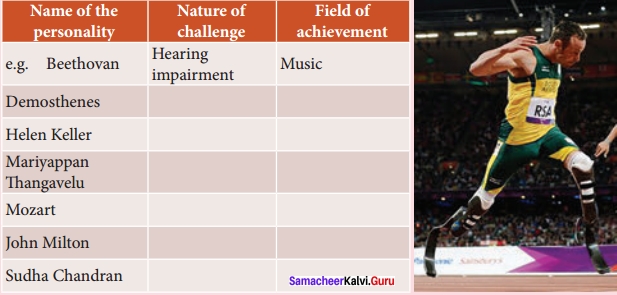
Now identify the chess pieces and complete the table below. Discuss the role of each piece in the game.

Samacheer Kalvi 12th English Solutions Poem Chapter 6 Incident of the French Camp img-1

King: The King can move one space in any direction. He can never move into check. He can never be adjacent to opponent king. It is the most important piece on the chess board. If he is checkmated, the game is over. The King can also castie and take the protection of Elephant.

Queen: The queen is often the most powerful piece in chess. She can move any number of spaces in any direction as long as she is not obstructed by any other power. If that obstacle is opponent, she can remove it.

Bishop: There are two bishops for each player situated next to the Queen and the king respectively. They can move along the diagonals of the chess board. It is bound to the colour square it is originally placed. If it is set in black square, throughout the game it can move diagonally in black square. If the opponent comes into contact in the black square, it can remove it.

The Knight: Between Bishop and the Rook, there are two knights. They can leap over other pieces in L shape. On encountering opponent, it can be eliminated in its ‘L’ path.

The Rook: There are two rooks for each player. They are located in each comer of the board next to the Knight. They move up and down the rank and file of the chess board and can move any number of spaces as long as their path is not obstmcted by their own army. If opponent’s pieces cross their way, they can remove them.

The Pawn: Each player has eight pawns. They provide the first line of defence to the King. Pawn has several unique attributes. It can move one or two paces forward. After the Initial move they can move only one step ahead. To capture enemy, Pawn moves only diagonally. Once the pawn reaches the end of enemy’s territory, even the queen lost in the battle can be reclaimed.

Samacheer Kalvi 12th English Incident of the French Camp Textual Questions

1. Fill in the blanks choosing the words from the box given and complete the summary of the poem.

determination result dramatic
pride admiration softened
wounded mound victory
conquered soared valiant

The poet Robert Browning narrates an incident at the French Camp in the war of 1809 between France and Austria, in a (1) ______ version. He describes the brave action of a (2) ______ soldier, whose heroic devotion to duty and his (3) ______ in it is inspiring and worthy of (4) ______ During the attack of the French army on Ratisbon, Napoleon was anxious about the (5) ______. Austrians were defending Ratisbon with great (6) ______ and courage. Napoleon was watching the war standing on a (7) ______ near the battlefield. All of a sudden a rider appeared from the closed smoke and dust. Riding at great speed, jumping and leaping, he approached the mound where Napoleon stood. As he came closer, the narrator noticed that the rider, a young boy, was severely wounded. But the rider showed no sign of pain and smiling in joy, jumped off the horse and gave the happy news of (8) ______ to the emperor. He exclaimed with pride that the French had (9) ______ Ratisbon and he himself had hoisted the flag of France. When Napoleon heard the news, his plans (10) ______ up like fire. His eyes (11) ______ when he saw that the soldier was severely wounded. Like a caring mother eagle, the emperor asked if he was wounded. The (12) ______ soldier replied proudly that he was killed and died
Answer:

  1. dramatic
  2. wounded
  3. pride
  4. admiration
  5. result
  6. determination
  7. mound
  8. victory
  9. conquered
  10. soared
  11. softened
  12. valiant

2. Based on your understanding of the poem, answer the following questions in one or two sentences each.

Samacheer Kalvi 12th English Solutions Poem Chapter 6 Incident of the French Camp img-2

You know, we French stormed Ratisbon:
A mile or so away,
On a little mound, Napoleon
Stood on our storming-day;
With neck out-thrust, you fancy how,
Legs wide, arms locked behind,
As if to balance the prone brow
Oppressive with its mind.

SamacheerKalvi.Guru

Just as perhaps he mused, ‘My plans
That soar, to earth, may fall,
Let once my army-leader Lannes
Waver at yonder wall’,
Out ’twixt the battery-smokes there flew
A rider, bound on bound
Full-galloping: nor bridle drew
Until he reached the mound.

Then off there flung in smiling joy,
And held himself erect
By just his horse’s mane, a boy:
You hardly could suspect –
(So tight he kept his lips compressed,
Scarce any blood came through)
You looked twice ere you saw his breast
Was all but shot in two.

You know, we French stormed Ratisbon:
A mile or so away,
On a little mound, Napoleon
Stood on our storming-day;
With neck out-thrust, you fancy how,
Legs wide, arms locked behind,
As if to balance the prone brow
Oppressive with its mind.

Just as perhaps he mused, ‘My plans
That soar, to earth, may fall,
Let once my army-leader Lannes
Waver at yonder wall’, –
Out ’twixt the battery-smokes there flew
A rider, bound on bound
Full-galloping: nor bridle drew
Until he reached the mound.

Then off there flung in smiling joy,
And held himself erect
By just his horse’s mane, a boy:
You hardly could suspect –
(So tight he kept his lips compressed,
Scarce any blood came through)
You looked twice ere you saw his breast
Was all but shot in two.

Question (a)
Who do you think is the narrator of the poem?
Answer:
The narrator of the poem is one of the French soldiers.

Question (b)
Where was the narrator when the incident happened?
Answer:
The narrator was standing by Napoleon Bonaparte when the incident happened.

Question (c)
Who took the city of Ratisbon by storm?
Answer:
The French army took the city of Ratisbon by storm.

Question (d)
Where was Napoleon standing on the day of the attack on the city of Ratisbon?
Answer:
Napoleon was standing on a mound near the battlefield (i.e.) Ratisbon city.

SamacheerKalvi.Guru

Question (e)
Describe the posture of Napoleon.
Answer:
Fie appeared to be in a pensive mood. Fie had his neck sticking out and his legs were wide apart. Fie had his arms joined behind his back and a cloud on his brow was quite visible.

Question (J)
Who came galloping on a horse to Napoleon?
Answer:
A boy-soldier came galloping on a horse to Napoleon.

Question (g)
What does the phrase ‘full galloping’ suggest?
Answer:
The phrase ‘full galloping’ suggests the rapid progress of the horse.

Question (h)
Why was the rider in a hurry?
Answer:
The rider was carrying first-hand information about the victory at Ratisbon. So, he was in a hurry.

Question (i)
What did the rider do when he reached Napoleon?
Answer:
The rider exclaimed with joy and pride that the French had conquered Ratisbon and he himself hoisted the flag of France.

Question (j)
Why did the rider keep his lips compressed?
Answer:
The rider was mortally wounded. He kept his lips tight to prevent blood from flowing out.

Question (k)
Where did the rider plant the French flag after Ratisbon was captured?
Answer:
After Ratisbon was captured, the rider planted the French flag in the market-place in Ratisbon.

SamacheerKalvi.Guru

Question (l)
What was Napoleon’s reaction to hearing the news of victory?
Answer:
Napoleon’s emotions started soaring up again on hearing the news of victory.

Question (m)
When did the narrator find that the boy was badly wounded?
Answer:
Riding at great speed, Fie approached the mound where Napoleon stood. As he came closer, the narrator noticed that the boy was badly wounded.

Question (n)
Why did Napoleon’s eyes become soft as a mother eagle’s eyes?
Answer:
Napoleon’s eyes softened like a mother eagle who has mixed feelings about the bravery of the eaglet and grief on the mortal injuries sustained by it during the fight with a tougher foe. He became sad because the boy-soldier was mortally wounded.

Question (o)
How did the young soldier face his end?
Answer:
The young soldier faced his end daringly and took pride in the fact that his wounds were mortal and he died with a smile.

3. Literary Devices

Mark the rhyme scheme of the poem. The rhyme scheme for the first stanza is as follows. “With neck out-thrust, you fancy how, a
Legs wide, arms locked behind, – b
As if to balance the prone brow – a
Oppressive with its mind. – b
Just as perhaps he mused, ‘My plans – c
That soar, to earth, may fall, – d
Let once my army-leader Lannes – c
Waver at yonder wall ’, – d
Out ’twixt the battery-smokes there flew – a
A rider, bound on bound – b
Full-galloping: nor bridle drew – a
Until he reached the mound. – b
Then off there flung in smiling joy, – c
And held himself erect – d
By just his horse’s mane, a boy: – c
You hardly could suspect – d
(So tight he kept his lips compressed, – a
Scarce any blood came through) – b
You looked twice ere you saw his breast – a
Was all but shot in two. b
‘Well’, cried he, ‘Emperor, by God’s grace – c
We’ve got you Ratisbon! – d
The Marshal’s in the market-place c
And you’ll be there anon, – d
To see your flag-bird flap his vans – a
Where I, to heart’s desire, – b
Perched him! ’ The Chief’s eye flashed; his plans – a
Soared up again like fire. – b
The Chief’s eye flashed, but presently – c
Softened itself, as sheathes – d
A film the mother eagle’s eye – c
When her bruised eaglet breathes: – d
‘You’re wounded! ’ ‘Nay ’, his soldier’s pride – a
Touched to the quick, he said: – b
‘I’m killed, Sire! ’And, his Chief beside – a
Smiling, the boy fell dead. – b

Appreciate The Poem

4. Read the lines given below and answer the questions that follow.

(a) “Legs wide, arms locked behind,
As if to balance the prone brow Oppressive with its mind.”

Question (i)
Whose action is described here?
Answer:
Napoleon Bonaparte’s action is described here.

SamacheerKalvi.Guru

Question (ii)
What is meant by prone brow?
“Prone brow” means brow accustomed or inclined down to contemplate on serious matters.

Question (iii)
What is his state of mind?
Answer:
His mind is oppressed with anxious thoughts regarding the outcome of the war at Ratisbon.

(b) “You’re wounded! ’ ‘Nay ’, his soldier’s pride
Touched to the quick, he said: ”

Question (i)
Why did the boy contradict Napoleon’s words?
Answer:
The boy contradicted Napoleon’s words because the word “wounded” hurt his sense of pride and patriotism and his voluntary sacrifice of life for his country.

Question (ii)
Why was his pride touched?
Answer:
The boy was naturally proud to have perched the French flag and got shot by the enemy. He had hurried to hold on to his life to disclose the news of the conquest of Ratisbon to the French king. When he said, “you’re wounded”, he interpreted it as an insult to his bravery and patriotism. So, his pride was touched.

(c) “A film the mother eagles eye
When her bruised eaglet breathes”

Question (i)
Who is compared to the mother eagle in the above lines?
Answer:
Napoleon Bonaparte is compared to mother eagle.

Question (ii)
Explain the comparison.
Answer:
A mother eagle will be proud when the eagle takes on a stronger predator. When the eaglet is hurt, the mother eagle will be naturally sad as no mother will want the young one to perish in combat. The king, like a mother, is sad about the impending death of a valiant boy-soldier.

Additional Questions

(а) “Just as perhaps he mused, ‘My plans
That soar, to earth, may fall,”

Question (i)
Who does ‘he’ refer to?
Answer:
‘He’ refers to Napoleon Bonaparte.

Question (ii)
What may hamper the soaring plans of Napoleon?
Answer:
The negative outcome of the battle at Ratisbon may hamper his soaring plans.

SamacheerKalvi.Guru

Question (iii)
What is the figure of speech employed in these lines?
Answer:
‘plans that soar’ – Metaphor.

(b) “Full-galloping: nor bridle drew
Until he reached the mound.”

Question (i)
Why was the rider in a hurry?
Answer:
The rider was carrying an urgent message to Napoleon Bonaparte.

Question (ii)
Where did the soldier stop? Why?
The soldier stopped at the mound. Napoleon Bonaparte was expecting news about the outcome of the battle at Ratisbon.

(c) “The Chief’s eye flashed; his plans
Soared up again like fire.”

Question (i)
Who is described as the chief?
Answer:
Napoleon Bonaparte is described as the chief.

Question (ii)
Identify the figure of speech employed.
Answer:
Simile

(d) Explain the following lines with reference to the context.

Question (i)
“Then off there flung in smiling joy,
And held himself erect”
Answer:
Reference: These words are from the poem ‘Incident of the French Camp” written by Robert Browning.
Context and Explanation: The narrator says these words while describing the arrival of a boy soldier at the mound where Napoleon was anxiously awaiting news about the battle at Ratisbon. Amidst the smoke of cannon fire, a horse sped fast carrying a boy-soldier. He jumped off the horse with a beaming face. It seemed that he had brought good news.

Question (ii)
‘I’m killed, Sire! ’And, his Chief beside,
Smiling, the boy fell dead.”
Answer:
Reference: These lines are from the poem ‘Incident of the French Camp” written by Robert Browning.
Context and Explanation: The poet says these words while explaining the hurt reaction of the boy-soldier. The boy-soldier who brought the news of the conquest of Ratisbon was all but ‘ split into two. When emperor Napoleon expressed his grief on his wounded status, the boy soldier said, “Nay I’m killed, sire.”

SamacheerKalvi.Guru

Question (iii)
“To see your flag-bird flap his vans Where I, to heart’s desire,
Perched him!
Answer:
Reference: These lines are from the poem ‘Incident of the French Camp” written by Robert Browning.
Context and Explanation: The narrator says these through the boy-soldier while explaining his role in the final stages of the storming of Ratisbon. He said proudly that he himself hoisted the French Flag to his heart’s content at the Market place in Ratisbon.

Additional Question

Question (i)
“As if to balance the prone brow
Oppressive with its mind.”
Answer:
Reference: These words are from the poem ‘Incident of the French Camp” written by Robert Browning.
Context and Explanation: The narrator says these words about the ambitious emperor of France who was anxiously waiting for the news about the outcome of the battle at Ratisbon. His inclined brow appeared as if it was trying to balance the heart laden with worry.

Question (ii)
“Let once my army-leader Lannes
Waver at yonder wall’
Answer:
Reference: These lines are from the poem ‘Incident of the French Camp” written by Robert Browning.
Context and Explanation: The poet says these words while Napoleon awaited anxiously the news about the outcome of the storming of Ratisbon. As his ambition rested on the outcome, he was restless. He wanted Marshall Lannes to send a signal from Ratisbon to allay his fears.

Question (iii)
“A film the mother eagle’s eye When her bruised eaglet breathes:
Answer:
Reference: These lines are from the poem ‘Incident of the French Camp” written by Robert Browning.
Context and Explanation: The narrator witnesses the reaction of Napoleon to the fact that the boy-soldier who had brought news of success was mortally wounded. Like a mother eagle who is proud and sad about the eagle who has fought a fierce predator and dying, is moved to tears.

Question (iv)
“‘You’re wounded! ’ ‘Nay’, his soldiers ride Touched to the quick,”
Answer:
Reference: These lines are from the poem ‘Incident of the French Camp” written by Robert Browning.
Context and Explanation: The poet says these words describing the interaction between the ‘ mortally wounded soldier and Napoleon Bonaparte. The boy soldier’s chest was split into two. He had tightly closed his lips to stem the blood about to flow. The emperor said that he was wounded. As his pride was hurt, he disagreed with him.

Question (v)
“A film the mother eagle’s eye When her bruised eaglet breathes:
Answer:
Reference: These lines are from the poem ‘Incident of the French Camp” written by Robert Browning.
Context and Explanation: The narrator said these words as to what befell the valiant boy- a soldier who brought the news to ease the heart of Napoleon. He didn’t accept the sympathy of Napoleon. Being valiant he was on the verge of embracing death.

5. Answer the following questions in about 100-150 words each.

Question (a)
The young soldier matched his emperor in courage and patriotism. Elucidate your answer.
Answer:
Emperor Napoleon was an astute planner planning the moves of the battle observing each step the French army made. Emperor Napoleon being a bold and wise warrior always had two plans, one to advance forward if the battle brings victory and the next as to what to be done in case the battle is lost. He was not resting at a tent during the battle. He was very close to the place of battle planning the strategic steps.

Similarly, the boy-soldier was also equally brave. Unlike the emperor, the boy soldier flung himself in the midst of battle and risked his life. He did not bother about his death. He doggedly carried out the mission of hoisting the French national flag. Instead of being carried away for first aid, he hurried on horseback to communicate the news of the conquest of Ratisbon despite his chest being split into two. So, it is obvious the boy- soldier’s patriotism and gallantry are equal to that of Napoleon.

Question (b)
What is the role of the young soldier in the victory of the French at Ratisbon?
Answer:
The young soldier was one of the soldiers in the infantry division leading the battle. On storming Ratisbon, unmindful of the cannon fire, he climbed the flag post with the French flag and hoisted it. He received the bullets in turn for his service to the emperor and French army. He did not succumb to the bullets immediately, he galloped on horseback to convey the news to emperor Napoleon Bonaparte himself. He held on to life till he reached Napoleon and conveyed the happy news. He waited with abated breath to know the reaction of his great leader. When he expressed his sadness, his pride was hurt. He denied the emperor’s sympathy and said emphatically that he was killed. He fell down beside emperor Napoleon with a smiling face and died.

SamacheerKalvi.Guru

Question (c)
Napoleon was a great source of inspiration to his army. Justify.
Answer:
Napoleon was a powerful orator and was able to muster the support of young soldiers who could gladly throw away their lives for the glory of France and for fulfilling the ambitious plans of territorial expansion of Napoleon Bonaparte. He inspired unprecedented courage among the soldiers. They never worried about the strength of the enemy army or their pile of armaments. They faced the battles with the single-minded determination to ‘do or die’ or do and die. They kissed death for the glorification of France and for making Napoleon proud of their heroism, sacrifices, and patriotism.

Listening Activity

Some words have been left out in the poem below. First, read the poem. Then, fill in the missing words on listening to the reading or the recording of it in full. You may listen again if required.

The Drum
I hate that drum’s discordant sound, parading round, and round, and round: To thoughtless youth it pleasures yields, And lures from cities and from fields, sell their liberty for charms Of tawdry lace, and glittering arms; And when Ambition’s voice commands, To march, and fight, and fall, in foreign lands. I hate that drum’s discordant sound, parading round, and round, and round; To me it talks of ravag’d plains, And burning towns, and ruin’d swains, And all that Misery’s hand bestows, To fill the catalogue of human woes.

I hate that drum’s (1) ______ sound,
Parading round, and round, and round:
To thoughtless (2) ______ it pleasure yields,
And lures from cities and from fields, sell their (3) ______ for charms
Of tawdry lace and glittering arms;
And when (4) ______ voice commands,
To march, and fight, and fall, in (5) ______
I hate that drum’s discordant sound, parading round, and round, and round; To me, it talks of
(6) ______ plains, And burning towns, and ruin’d swains, And all that Misery’s hand bestows, To
fill the (7) ______ of human woes.
Answer:

  1. discordant
  2. youth
  3. liberty
  4. ambition’s
  5. foreign lands
  6. ravag’d
  7. catalogue

Incident of the French Camp About The Poet
Samacheer Kalvi 12th English Solutions Poem Chapter 6 Incident of the French Camp img-3

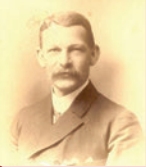
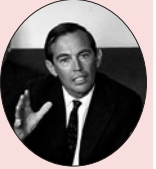
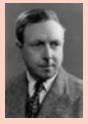
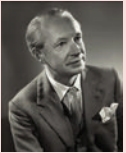
Robert Browning (7 May 1812-12 December 1889) was one of the famous Victorian poets known for his marvellous dramatic monologues like “Last Ride Together”. His poems are known for their irony, characterization, dark humour, social commentary, historical settings, and challenging vocabulary and syntax. He developed a unique form of conversational, unrhythmic verse. The collection ‘Dramatis Personae’ and the book-length epic poem “The Ring and the Book” made him a leading British poet. By 1881 in recognition of his outstanding contribution to literature, a literary society called Browning Society was established.

Incident of the French Camp Summary in English

Introduction
The poem “Incident of the French camp describes an act of chivalry, gallantry, patriotism, and sacrifice on the part of a young French soldier. The poem narrates an actual event in the war between France and Austria led by Napoleon in 1809.

Napoleon was standing on a little mound, eagerly looking towards Ratisbon. His mind was oppressed with anxious thoughts. He was apprehensive that all his ambitious plans would come to nothing if Lannes failed to storm Ratisbon. His neck was outthrust. Napoleon was deep in thought. He awaited a signal from his army chief Lannes. At that moment, a rider came almost flying on horseback. The horse was on full gallop understanding the significance of the rider’s mission. The rider did not draw the bridle (i.e.) check the speed of the horse until he reached the mound where Napoleon Bonaparte was standing.

A slip of youth, a boy soldier jumped off the horse with a beaming face. The boy was not even tall enough to touch the mane of the horse. He kept his lips tight lest blood could pour forth. He stood erect. His chest was blown in half in the battle.

The boy-soldier conveyed the news that they had got him Ratisbon. Marshal Lannes was in the market place waiting for him. He should hurry up. The boy- soldier added that to his heart’s desire perched French bird-flag himself.

The chief’s eyes flashed with fresh ambition. But suddenly it softened seeing the mortal wound of the soldier. Like a mother eagle who is pained by the prowess of the eaglet who challenged a stronger foe but got hurt in the fight. The emperor’s eyes got misty with tears. He caringly said, “you are wounded.” The soldier’s pride was hurt. He replied in an ego-hurt voice, “Nay, I’m killed, sire.” With a smile, characteristic of valiant heroes, the boy-soldier fell down dead.

Conclusion
Wars are fought and won. But those who sacrifice their lives are ordinary mortals who never get an iota of share in the glory of success.

SamacheerKalvi.Guru

Incident of the French Camp Summary in Tamil

முன்னுரை:
இக்கவிதை ஓர் இளம் பிரென்சுப் படைவீரனின் வீரதீர சாகசத்தையும், உயிர்த் தியாகத்தையும் சித்தரிப்பதாக அமைந்துள்ளது. ஆஸ்திரியா நாட்டுக்கும், பிரான்சுக்கும் இடையே 1809ஆம் ஆண்டு போர் நடைபெற்ற போது நிகழ்ந்த ஓர் உண்மை நிகழ்ச்சியை இக் கவிதை சொல்கிறது.
நெப்போலியன் ஒரு குன்றின் மீது நின்று கொண்டு ரேடிஸ்பனை நோக்கிப் பார்த்துக் கொண்டிருந்தார். அவர் மனம் பயம் கலந்த பல சிந்தனைகளால் அலைக்கழிக்கப்பட்டுக் கொண்டிருந்தது. ராட்டிஸ்பன் நகரத்தைச் சூறையாடும் முயற்சியில் அவரது தளபதி லான்ஸ் வெற்றி பெறவில்லை என்றால் அவரது கனவுத் திட்டங்கள் அனைத்து தவிடு பொடியாகிவிடும். கழுத்தை நீட்டி ஆவலோடு நெப்போலியன் பார்த்துக்கொண்டிருந்தான். ஆழ்ந்த சிந்தனையில் அவர் மூழ்கியிருந்தார். அப்போது ஓர் இளம் சிப்பாய் குதிரை மீது அமர்ந்து கடிவாளத்தைக் கூடப் பிடிக்காமல் காற்றாய் பறந்து வந்தான். குதிரை தனது முதலாளியின் பயண நோக்கத்தை உணர்ந்ததாலோ என்னவோ, முழு வேகத்தில் ஓடியது. நெப்போலியன் இருக்குமிடம் வரும் வரை குதிரையின் வேகம் குறையவேயில்லை.

மீசை முளைக்காத சிறு பாலகன் குதிரையில் இருந்து கீழே குதித்தான். குதிரை பிடறி முடியளவு கூட அவன் உயரமாக வளர்ந்திருக்கவில்லை . அவன் முகம் பிரகாசித்தது, தனது உதடுகளை இறுக்க மூடியிருந்தான். அவற்றைத் திறந்தால் இரத்தம் கொட்டியிருக்கும். நிமிர்ந்து கம்பீரமாக அவன் நின்றான். அவனது நெஞ்சை குண்டுகள் இரண்டாகப் பிளந்திருந்தன. “மன்னா, தங்களுக்காக ராட்டிஸ்பன் நகரைக் கைப்பற்றிவிட்டோம். மார்ஷல் லேன்ஸ் உங்களுக்காக சந்தைத் திடலில் காத்துக் கொண்டிருக்கிறார். நானே என் உள்ளம் குளிர நமது நாட்டுக் கொடியை கம்பத்தில் ஏற்றினேன்” என்றான். இப்போது மன்னன் நெப்போலியனின் கண்கள் பனித்தன. தாய்க் கழுகு, தனது குஞ்சு வலுவான எதிரியோடு போராடி எவ்வாறு பெருமைப் பட்டாலும் கண் கலங்குமோ அதைப் போன்ற மனநிலையில் நெப்போலியன் சொன்னார். “நீ காயமடைந்து விட்டாய்”. இதைக் கேட்ட சிப்பாய் பாலகன் அவமானத்தால் குறுகிப் போய்ச் சொன்னான், “இல்லை மன்னா! நான் கொல்லப்பட்டேன்”. அடுத்த நொடி புன்னகைத் தவளும் முகத்தோடு அவன் நெப்போலியன் அருகிலேயே விழுந்து மடிந்தான்.

முடிவுரை:
போர்கள் நடக்கின்றன. வெற்றியும், தோல்வியும் சகஜம். ஆனால், போர்க்களத்தில் மரணமடையும் சாதாரண சிப்பாய்களின் புகழ் வெளிச்சத்துக்கு வருவதே இல்லை

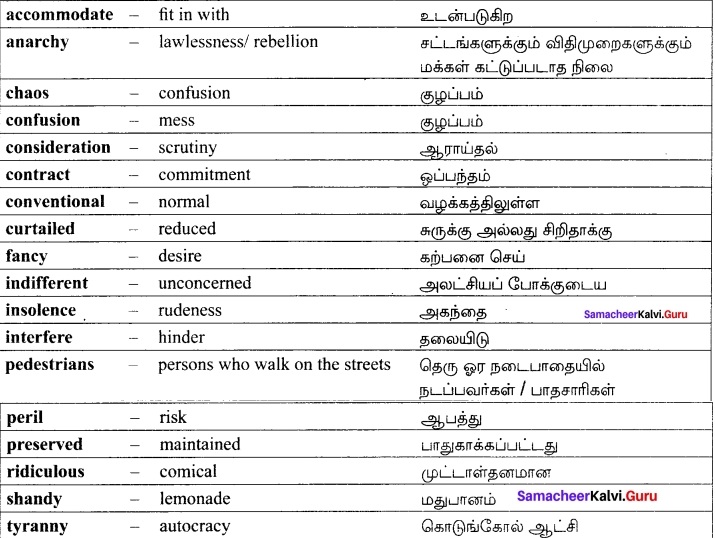
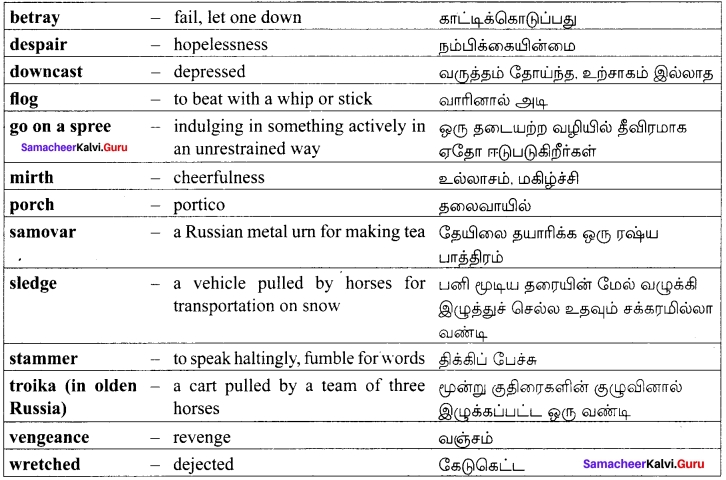
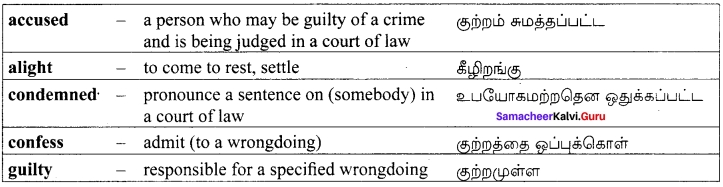
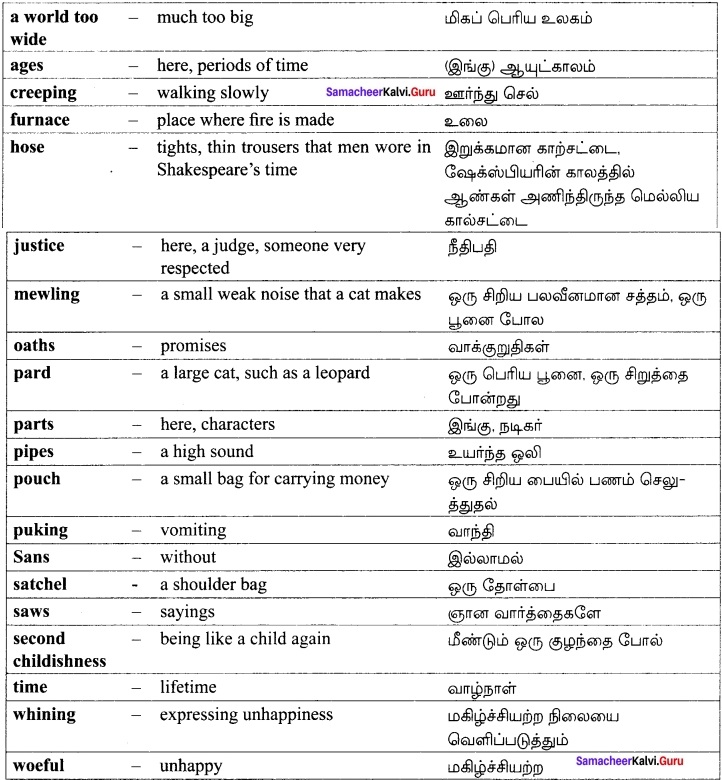
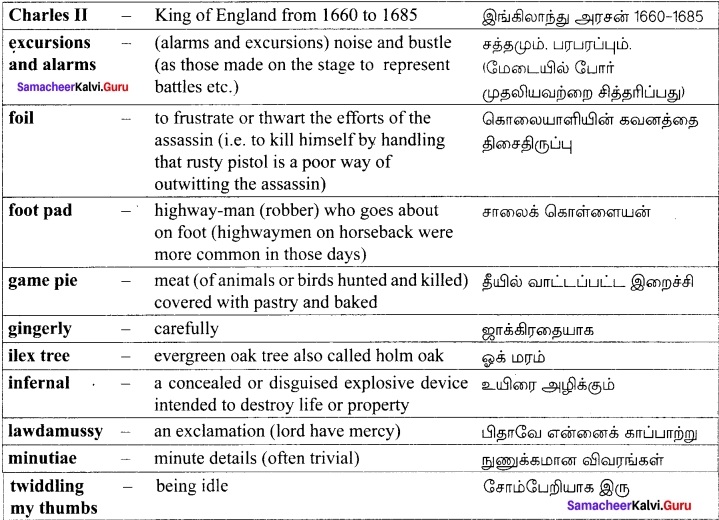
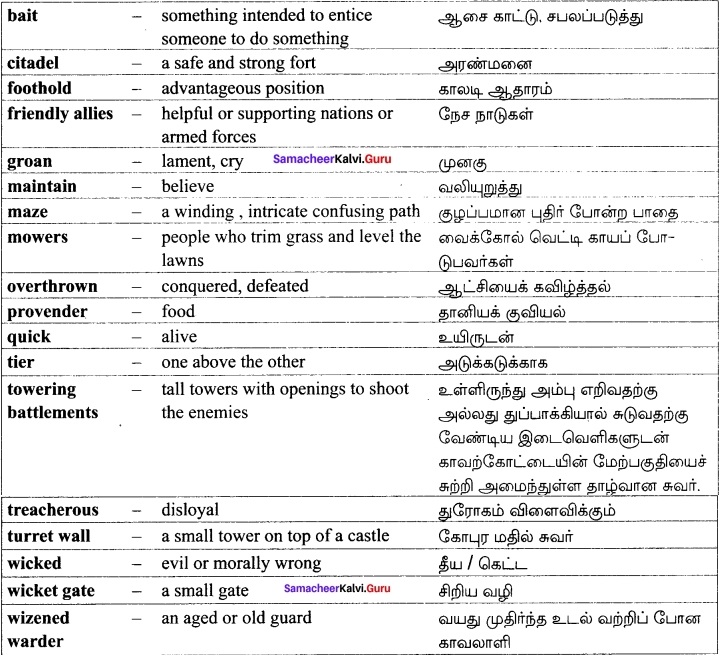
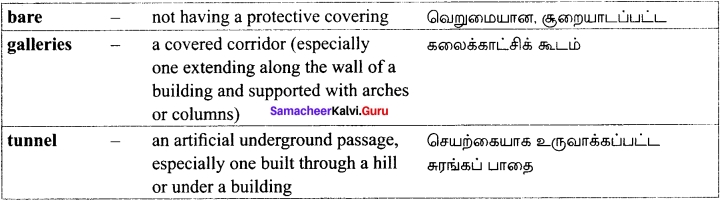
Incident of the French Camp Glossary

Textual:

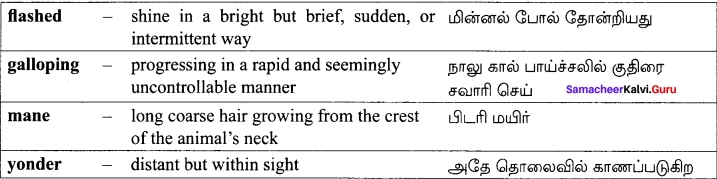
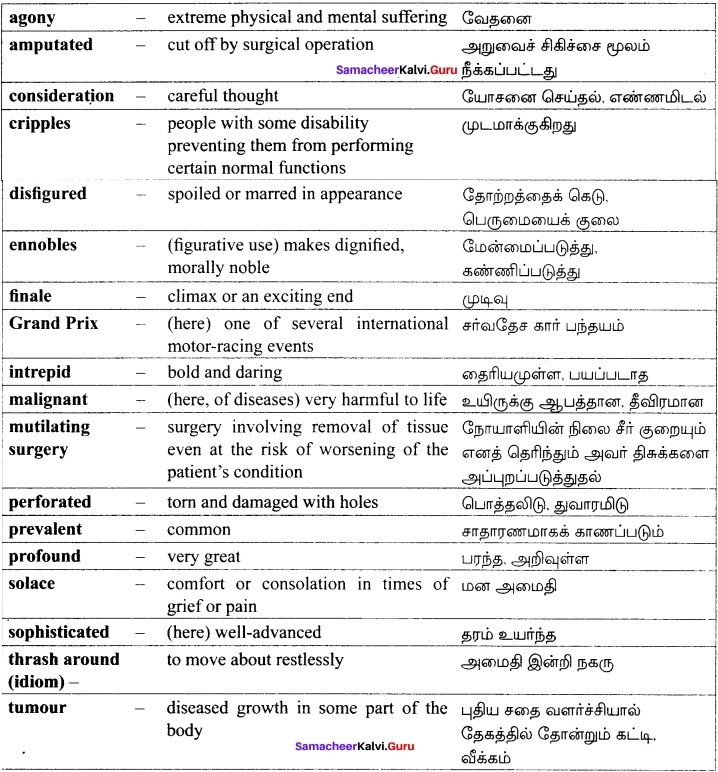
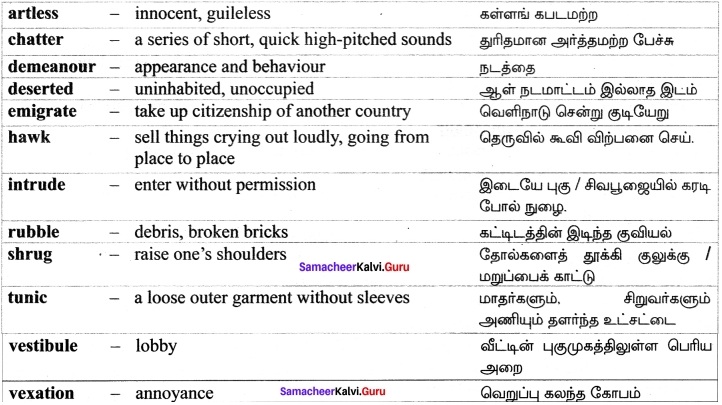
Samacheer Kalvi 12th English Solutions Poem Chapter 6 Incident of the French Camp img-4

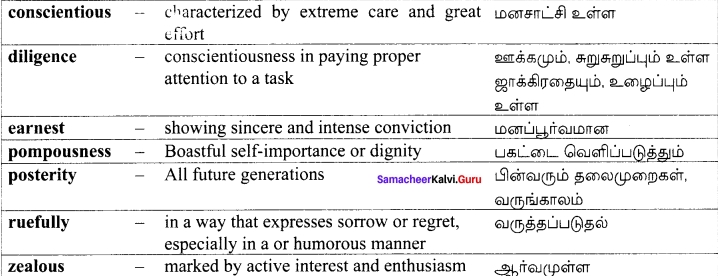
Additional:

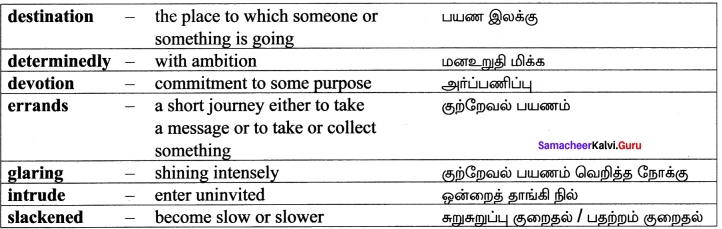
Samacheer Kalvi 12th English Solutions Poem Chapter 6 Incident of the French Camp img-5

Samacheer Kalvi 12th English Book Solutions Poem

12th English Unit 6 Poem Incident of The French Camp Paragraph Book Back Answers Samacheer Kalvi Read More »

12th English Unit 5 Supplementary All Summer in a Day Paragraph Book Back Answers Samacheer Kalvi

All Summer in a Day Book Back Answers Class 12 English Guide Chapter 5 Tamilnadu Solutions

Students can Download English Lesson 5 All Summer in a Day Questions and Answers, Summary, Activity, Notes, Samacheer Kalvi 12th English Book Solutions Guide Pdf helps you to revise the complete Tamilnadu State Board New Syllabus and score more marks in your examinations.

Get a Practical Study with the help of Samacheer Kalvi 12th English Grammar to make learning language much easy for you and score good grades in exams.

12th Standard English 5th Lesson All Summer in a Day Questions and Answers

Warm Up

(a) What makes the earth the one and only living planet?
(b) Name a few things that make the earth a unique planet.

Samacheer Kalvi 12th English Solutions Supplementary Chapter 5 All Summer in a Day img-1

Answer:

Samacheer Kalvi 12th English Solutions Supplementary Chapter 5 All Summer in a Day img-2

(c) Do you enjoy watching movies? What type of movies do you like to watch? Here are the pictures of a few blockbuster movies.

Samacheer Kalvi 12th English Solutions Supplementary Chapter 5 All Summer in a Day img-3

Classify the movies based on the following categories: Historical/ Comedy/ Horror/ Cartoon/ Science Fiction

Discuss : Gravity is a science fiction movie.

Student A: Gravity, a 2013 block buster science fiction movie received an overwhelming response for its realistic depiction of the various conditions and challenges faced by astronauts to save themselves after their spare shuttle gets’ clobbered by space debris from a destroyed Russian satellite.

Student B: As much wre loved watching Gravity, its important that we get acquainted with various scientific aspects depicted in the movie.

Student C: Let me tel! you about the opening scene of the movie. Three astronauts including Dr. Ryan Stone (played by Sandra Bullock) and Lieutenant Matt Kowalski (played by George Clooney) are seen space walking and having a nice informal chat.

Student D: Allow me to explain what the movie tries to convey to us. The crew members of space shuttle explorer are servicing the Hubble space telescope. Suddenly they are informed by mission control in Houston that a cloud of debris (caused by the destruction of a Russian defunct spaceship) is headed towards their location. They are advised to abort the mission to avoid a nasty collision. But the collision happens. Dr. Stone and Kowalski head for ISS after their shuttle is hit. ISS is destroyed. Kowalski and Stone get separated as their tethers get twisted. She couldn’t dock the Soyuz with Chinese station. She ejects herself from Soyuz via

explosive decompression. She uses pressure from fire extinguisher to push herself towards Tiangong which is also abandoned in space. She enters Shenzhou capsule but is unable to separate the capsule from the space station. The space station begins to break up and the capsule gets separated. As the capsule falls to the earth, it corrects its position and descends through the atmosphere. Parachute opens up. Stone lands in a lake and comes out with unsteady legs.

SamacheerKalvi.Guru

Question (a)
Which aspect of the movie is real science?
Answer:
It is true that space debris can indeed cause uncontrolled collisions between objects present in lower earth orbit (LEO); the orbit that encloses every orbit below 2000 km, Kessler syndrome, excess of “trash” in the space orbit could cause problems. The world communication can be blacked out.

It is also true that space station can fall out of orbit. ISS has to be boosted to make sure that it maintains the orbit. The process doesn’t take place suddenly. It takes a few years, it is true that the earth’s atmosphere is relative to Earth’s size. In the film, the fantastic shots of earth enveloped a thin translucent layer of atmosphere which was truly mesmerising. The best thing is that they have correctly depicted the atmosphere’s thinness relative to the earth’s size without exaggeration.

Question (b)
Which aspect of the movie is fictional?
Answer:
Informal chats in a space walk is fictional. Every action during a space walk is premeditated in order to avoid unnecessary ambling and minimize the use of oxygen.

The possibility of the Hubble telescope and a destroyed Russian satellite colliding in the space is fictional because of the following reasons:

The Hubble telescope orbits at an altitude of 500 kilometres above the earth. The film claims that the Russian satellite is also in orbit at the same height. It is wrong because this type of communication satellites which are called TDRSS (Tracking and Data Relay Satellite System) stay in the geosynchronous orbit which is much higher (i.e.) almost 35000 km above the earth. The film showing the Hubble Telescope, ISS and Tiangong-1 located close to each other is fictional. In fact, these three man-made structures are not only at different heights but also lie in different orbits around the earth.

The scene in which Dr. Stone’s tears trickle down heT cheeks and then floats is fictional as it doesn’t happen that way in space.

Samacheer Kalvi 12th English All Summer in a Day Textual Questions

1. Based on your understanding of the story, answer the following questions in a sentence or two.

Question (a)
What do children get ready for at the beginning of the story?
Answer:
The children get ready for looking at the sun at the beginning of the story.

Question (b)
How is life on the planet Venus described?
Answer:
It was raining continuously for seven years without Sunlight. Trees grew and perished in the planet.

SamacheerKalvi.Guru

Question (c)
Who is Margot? How is she different from the rest of the children?
Answer:
Margot is a nine-year-old girl who comes to the planet Venus from Earth, just five years ago. She is always different from the other children by remembering her earthly life.

Question (d)
What does Margot like the most – the sun or the rain?
Answer:
Margot liked Sun the most.

Question (e)
What was Margot waiting for? Why did William say that it was a joke?
Answer:
Margot was waiting for the sun to appear. According to William, the sun never appeared during rainy days. So he said that it was a joke.

Question (f)
Why does Margot wish to return to the earth?
Answer:
Margot is accustomed to the systematic change of day and night on the earth. She hated the wretched rain which lasted for seven years. She even refused to take a shower because she never felt like living a normal life in Venus. So, she wanted to go back to the earth.

Question (g)
Why did the children lock Margot in a closet?
Answer:
The children locked Margot in a closet because she was always talking about the sun and earthly life which she had experienced five years ago.

Question (h)
Margot could recall what the sun looked like while the other children could not. Why?
Answer:
Margot had come only 4 years ago to Venus. She had seen the sunlight almost every day in Ohio. So, she could recall the appearance of the Sun vividly.

SamacheerKalvi.Guru

Question (i)
How long did the Sunshine on Venus?
Answer:
The sun shined on Venus only once in seven years as the rain was constant there.

Question (j)
Why did one of the girls wail?
Answer:
One of the girls wailed because rain resumed after one hour of sunlight. She caught a droplet of rain in her palm and reacted to the abrupt end of sunlight and the resumption of rain.

2. Based on your understanding of the story, answer the following in three or four sentences.

Question (a)
What is the significance of the particular day described in the story “All summer in a day”?
That particular day all the children were clamouring for a glimpse of sunlight which was predicted for an hour. Only Margot had a clear memory of sunlight that she had seen five years ago. Others had not seen the Sun for about seven long years. Her explanation was an orb-like penny and its colour was that of a lemon, the children were annoyed and could not believe her words of experience.

Question (b)
What happens to Margot while the teacher is out of the classroom?
Answer:
One of the children, especially a boy named William seized her roughly and treated her very badly. They surged about her, caught her up, slammed, and locked the door of a tunnel. This is what happened to Margot while the teacher is out of the classroom.

Question (c)
How did Margot describe the sun to others?
Margot explained that Sun looked like a penny. When other children objected she said, “It’s like a fire in the stove”. She even wrote a poem, “I think the Sun is a flower, that blooms for just one hour.” One of the boys even protested that Margot did not write the poem.

Question (d)
How did the children react when the sun came out after seven years?
Answer:
When the sun came out after seven years, the children were running and turning their faces up to the sky and feeling the sun on their cheeks like a warm iron; they were taking off their jackets and letting the sun burn their arms.

Question (e)
Why did William and the other children bully Margot?
Answer:
William and other children did not have deep living knowledge about the Sun. They had seen it for an hour seven years ago when they were only two years old. But Margot had the fortune to enjoy the warmth of Sunlight till she was 5 years old in Ohio. Others got used to live in the dark but Margot wasn’t comfortable living in the dark planet in the underground tunnel. She longed to see the Sun. She wrote a poem on the Sun. She distanced herself from others and spoke less. The feeling that she was different from them was a cause that made the other students in the school bully her.

Question (f)
What were their feelings towards Margot at the end of the story?
Answer:
They stood as if someone had driven them like so many stakes, into the floor. They looked at each other and could not meet each other’s glances. Their faces were pale and solemn. They seem to be very pathetic.

Question (g)
What does the title of the story convey?
Answer:
The title of the story suggests the summer in Venus does not last a few months. It lasts only for an hour a day. The entire season is capsuled in a single day which is unusual.

3. Answer the following questions in a paragraph of about 100-150 words each.

Question (a)
What is the conflict between Margot and the other children in the story, “All Summer in a day”?
Answer:
The main conflict in the story is between Margot, a nine-year-old girl who has recently moved to Venus from Earth, and the other children in her class. The story takes place on Venus, a planet of constant rain, except for a few hours every seven years, when the sun briefly comes out. Margot refuses to play the games with the other children in the school as she is neglected by the children.

According to the children, her real crime is memory. They said that she had come here only five years ago from Earth and she remembered the sun and the way the sun was and the sky was when she was four in Ohio. They had been on Venus all their lives and they had been only two years old when the sun came out last.

Margot’s memory of the sun is her memory of being human. The children locked her in a closet and forgot about her when the sun finally came out. However, the story ends without any resolution to this conflict.

SamacheerKalvi.Guru

Question (b)
How do the children react to the long-awaited event in the story?
Answer:
Children get really excited. They want to see the touch of sunlight on all forms of life on the planet. They want to tan themselves in the newfound warmth of the Sun. Children persist that they are allowed to go out to the Sun. The teacher allows them with a warning that they must be back in two hours. They start running and turning their faces up to the sky and feeling the sun on their cheeks like a warm iron. They take off their jackets to allow the Sun to bum their arms. They gladly shouted “Oh, it’s better than Sun lamps. Children stood in the great jungle in Venus. The jungle was in the colour of stones as they had not seen the Sun for years.

The children lay out laughing on the jungle mattresses and heard it sigh and squeak under them resilient and alive. They ran among the trees, they slipped and fell and pushed one another. They played hide and seek. But most of them squinted at the sun until tears ran down their faces. They put their hands up to the yellowness and the amazing blueness, they breathed off the fresh air and listened to the silence in a blessed sea of sound lessness. They looked at everything and savoured everything. Like animals escaped from their caves, they ran shouting in circles. Their mirth continued for one hour.

Question (c)
The sun brought about a positive change in the attitude of the children. Illustrate the statement.
Answer:
After really enjoying the brief summer that lasted for an hour, they quietly returned to the tunnel. Suddenly they remembered that they had locked Margot in a closet and a sense of guilt pervaded among all the students. Margot, who was most anxiously waiting to see the Sun had been locked up. They had the opportunity to play in the brief summer but she had to stay in the dark, feeling lonely. She did not deserve that punishment. Realizing their folly, they went back and opened the door very slowly. There was silence. They let Margot out slowly. The arrogance in their behaviour was gone. They were sorry for Margot who they had punished just because she was sharing her real experiences of ‘sunlight’. She had lost the chance to see the Sun.

Question (d)
Did the children regret having locked Margot in a closet? Answer citing relevantly from the story.
Answer:
Yes, the children did regret. Young children can’t keep feelings like anger and hatred for long. The collective sense of guilt tormented them. The joy they experienced under the sunlight for an hour vanished. A kind of uncomfortable gloom and silence fell among them. They looked at one another with remorsefulness. They couldn’t meet each other’s glances. They felt as if someone had driven them like so many stakes into the floor.

One of the girls said, “Margot”. Another girl whispered, “go on.” They could perceive only silence behind the door. They unlocked the door even more slowly and let Margot out. After all, all her descriptions of the Sun turned out to be correct. They had unjustly punished her. Their arrogance and aversion had abandoned them. They were guilt-driven. They did not know how to appease her. They were penitent but had no words to seek Margot’s forgiveness.

Additional Questions

Question (a)
What kind of vegetation was seen in the forest of Venus? How was it different.
Answer:
The jungle continued to grow tumultuously. The children saw a nest of Octopi, clustering up great arms of flesh like weed, wavering and flowering in that brief spring. It was the colour of rubber and ash, this jungle, from the many years without sunlight was the colour of stones and white cheeses and ink. It was the colour of moon. The grass was not green. A thousand forests had been crushed under the rains. They have grown again up a thousand times to be crushed again. This was the way the jungle existed in Venus.

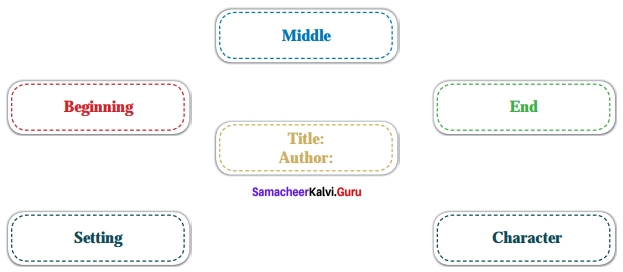
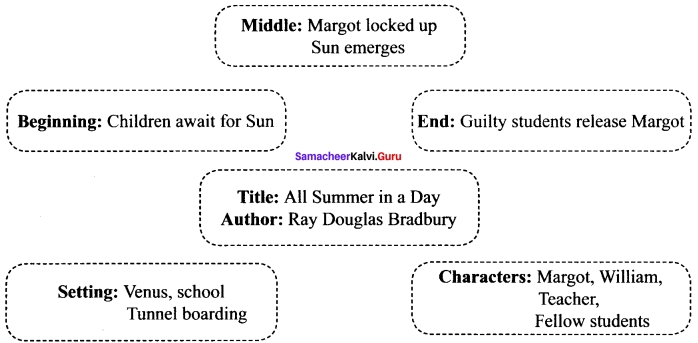
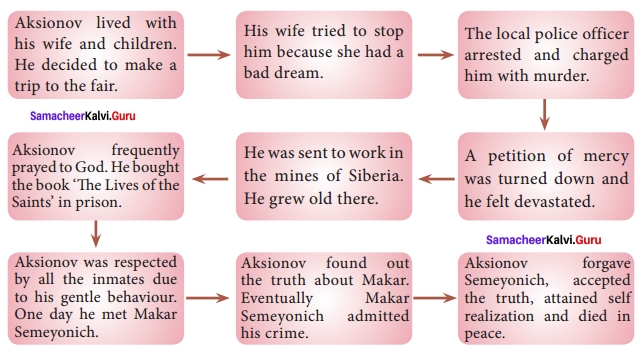
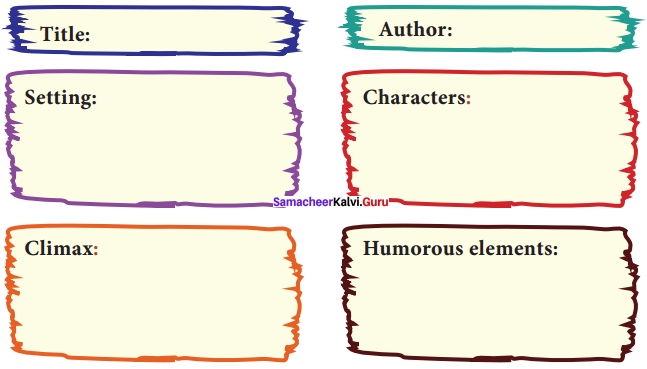
4. Based on your understanding of the story, complete the story map.

Samacheer Kalvi 12th English Solutions Supplementary Chapter 5 All Summer in a Day img-4

Answer:

Samacheer Kalvi 12th English Solutions Supplementary Chapter 5 All Summer in a Day img-5

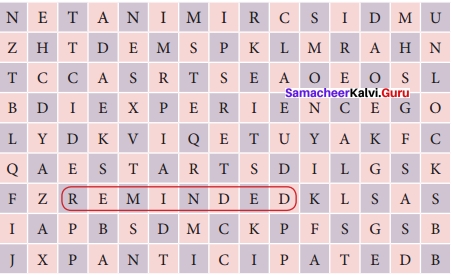
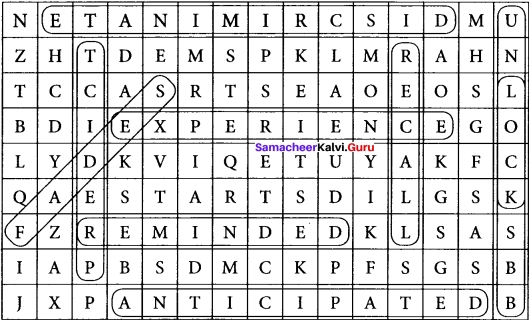
5. Find out and encircle the following words in the word grid. (The words have been placed horizontally, vertically, diagonally, and even back to front)

fades predict discriminate locks reminded
experience anticipated unlock recall

Samacheer Kalvi 12th English Solutions Supplementary Chapter 5 All Summer in a Day img-6

Answer:

Samacheer Kalvi 12th English Solutions Supplementary Chapter 5 All Summer in a Day img-7

Now read the sentences below. Complete them appropriately with the words you identified from the grid.

  1. The scientists ______ that the Sun would come out on Venus that day after seven years.
  2. The children are getting ready for the _____ event.
  3. The children Margot as she _____ the Sun.
  4. William and other children have bullied her and _____ her in a closet.
  5. When the Sun comes out, the children _____ the sun.

Answers:

  1. predicted
  2. anticipated
  3. discriminate, recalls
  4. locked
  5. experience

Speaking Activity

Pair Work
Ray Bradbury’s “All Summer in a Day” is a piece of science fiction. Discuss plots of similar stories with your partner and share your ideas with the class.

We read a story called “The thief’. Yarmuk is one of the top thieves of the solar system. He overhears a secret about planet ‘X’. There is no crime on the planet ‘X’. There are no policemen. Most of the shops had no assistants. They were all honesty stores. Yarmuk wanted details about the location of the planet so that he could steal from a jewel store there and settle for life. He mixes a tranquilizer in his friend’s Makin’s second drink. When Makin loses his consciousness, he obtains the address of a man who knows the coordinates of the planet ‘X’.

He steals into the house of that man. He uses a hallucinogen to get the information he wants from the man. He prowls the space parking lot. On visiting a space ship dealer, he collects information on different spacecraft and narrows down on MIG-31 spacecraft for his trip to planet ‘X’. He finds a newly married couple parking in a hotel. He takes a room just next to the couple.

SamacheerKalvi.Guru

Using a false key, he enters their room. He gasses them both and takes a space-port parking lot pass; the electronic card which opens their spaceships airlock and controls its engines and the hyper-wave radio key. He vacates the room explaining that he got a video call from his wife that she was sick. Yarmuk enters the spaceport and explaining his wife’s sudden illness get permission to blast off. He reaches the planet ‘X’. The parking charges in the spaceport are ridiculously cheap. To try to find out, if the alarm goes off, he stealthily picks up socks in an unmanned textile showroom. Nothing happens. Emboldened by the attempt he goes to one of the posh jewellery shops.

He makes a mental note of which ever jewels he wants to steal the following day. He takes two big suitcases and stuffs all valuable jewels and rushes back to the hotel. Nobody checks him. He sleeps gladly. The next morning when he leaves the hotel, he is stopped by the security guards with stun guns. He does not understand how his theft got found out. Later he learns that planet ‘X’ is full of telepathists, mind readers, and clairvoyants. Stray customers who had seen him at the jewellery and the hotel staff have read his thoughts and just communicated in a flash of a second through their minds. He is sentenced to 20 years in the alien’s jail.

All Summer in a Day About The Author

Samacheer Kalvi 12th English Solutions Supplementary Chapter 5 All Summer in a Day img-8

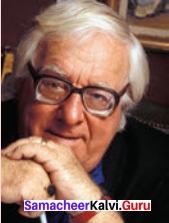
Ray Douglas Bradbury (August 22, 1920 – June 5, 2012) was an American author and screenwriter. He worked in a variety of genres, including fantasy, science fiction, horror, and fiction. Widely regarded as the most important figure in the development of science fiction as a literary genre, Ray Bradbury’s works evoke the themes of racism, censorship, technology, nuclear war, humanistic values, and the importance of imagination. Ray Bradbury is well-known for his incredibly descriptive style.

He employs figurative language (mostly similes, metaphors, and personification) throughout the novel and enriches his story with symbolism. On April 16, 2007, Bradbury received a special citation from the Pulitzer Prize jury “for his distinguished, prolific, and deeply influential career as an unmatched author of science fiction and fantasy.” Bradbury also wrote and consulted on screenplays and television scripts, including Moby Dick and It Came from Outer Space. Many of his works were adapted to comic book, television, and film formats.

All Summer in a Day Summary in English

Introduction
Bradbury’s story “All Summer in a Day” revolves around a day’s happenings in planet Venus after it is colonized by humans. This story falls under the category of Science fiction. So far, Earth is the only planet supporting human beings and the survival of millions of plants and thousands of animals. But in this story we come across children who are settled in Venus in an underground tunnel.

Excitement of children
Scientist predicted that the Sun would be visible in planet Venus for an hour. Children, in the dark planet, were overjoyed about the event. Each tried to visualise how the Sun would appear. Except Margot, all the children had seen the Sun seven years ago. M&rgot had come only four years ago. Till 5, she was in Ohio and had seen and enjoyed many “sunny days” and summer lasting three months. She says it is an orb like a penny. It is a kind of a ball with yellow flame. Its burning like a stove. The more details she gives, the more she is hated by her peers. Realising the unspoken but obvious contempt in the eyes of the peers, Margot keeps quiet. William teases Margot. Her silence of deep understanding of Sun annoys peers.

Be different and be punished
Margot is different from the students in the school. One day she even threw tantrums and wanted to be sent back to her parents to the earth. Other children realised that it would cost a fortune for her parents. But she was helpless. She stopped talking to the peers who did not hide their hatred. They teased her. She ignored and started anxiously waiting for the brief encounter with the Sun. She deeply believed that as per the prediction of the scientists, they would see the sun for an hour in the Venus planet. Her knowing silence and unwillingness disturbed the peers so much that they forcefully locked her up in a room.

SamacheerKalvi.Guru

Vivid Memory
When other children had nightmarish dreams recalling how the Sun was 7 years ago, Margot remembered the yellow lemon-like ball of fire she had seen almost everyday in Ohio for 5 long years. She secretly disdained the inadequate knowledge of her peers.

Pride and Prejudice
Margot was in love with the Sun. Margot wrote a poem, “I think Sun is a flower, that blooms for just one hour.” She read out the poem when it was raining outside the classroom. She knew for sure that her friends were dreaming and remembering gold or yellow crayon or coin large enough to buy the world with. They were often woken up by the tatting drum of rainfall. Her unexpressed pride over her knowledge of the Sun had really caused a prejudice among children. They locked her up in the anticipated day of sunlight

All Summer in a Day Summary in Tamil

முன்னுரை:
‘All summer in a day’ (“ஒரு நாளில் கோடை |காலம்” என்ற பிராட்பரியின் இந்தக் கதை வீனஸ் கோளை மனிதன் ஆக்ரமித்தப் பிறகு நடக்கும் நிகழ்வுகளைத் தழுவி சுழல்கிறது. இது அறிவியல் புனைக் கதையாகும். இதுவரை நம் பூமி தான் பல கோடி மரங்களும் மற்றும் பல்லாயிரம் விலங்குகளும், மனிதனும் வாழ்வதற்கு துணையாக நின்றது. ஆனால், இந்தக் கதையில் நாம் காணுவது வீனஸ் கோளில் | குழந்தைகள் பாதாளத்தில் வாழும் அதிசயம்.

குழந்தைகளின் ஆரவாரம்:
விஞ்ஞானிகள் வீனஸ் கோளில் சூரியன் ஒரு மணி நேரம் தென்படும் எனக் கணித்து அறிவித்தனர். இருண்ட கோளில் இருந்த குழந்தைகளுக்கு ஒரே குதூகலம். சூரியன் எங்ஙனம் இருக்கும் என அவரவர் கற்பனை செய்தனர். மார்கோட்டைத் தவிர மற்ற அனைவரும் | சூரியனை ஏழு வருடங்களுக்கு முன்பு பார்த்திருந்தனர். | ஆனால் மார்கோட் 4 வருடம் முன்பு தான் இங்கு வந்ததால், ஐந்து வயது வரை ஓஹையோவில் இருந்த போது நிறைய வெயில் காலங்கள்

அதுவும் மூன்று மாதங்களுக்கு நீடிக்கக்கூடியதாக அமைய அதை அனுபவித்துள்ளாள். சூரியனை மார்கோட் ஒரு பைசா அளவு வட்டப் பந்து என சித்தரிக்கிறாள். அது மஞ்சள் | நிற தீப்பந்து எனவும் சித்தரிக்கிறாள். அடுப்பைப் | போன்று எறியக் கூடியதாக இருந்தது என்கிறாள். சூரியனைப் பற்றி அவள் அதிக தகவலைக் கொடுக்க கொடுக்க அவளின் குழு அவளை வெறுத்தது. குழுவினர் எதிர் பேச்சு பேசாவிடினும் அவர்கள் கண்களில் தெரிந்த வெறுப்பைக் கண்டு மௌனமானாள். வில்லியம், மார்கோட்டை கிண்டல் செய்தான். சூரியன் பற்றி அவள் அறிந்திருந்த ஆழமான தகவல்கள் அவர்களை வெறுப்புறச் செய்தது.

வேறுபட்டு இருந்ததால் தண்டனைக்கு ஆளாக்கப்பட்டாள்.
பள்ளிக்கூடத்தில் மார்கோட் மற்ற மாணவ மாணவியிடம் இருந்து வேறுபட்டு இருந்தாள். ஒரு நாள் தன்னை தன் பெற்றோரைக் காண பூமிக்கு அனுப்பி விடுமாறு ரகளையும் செய்தாள். மற்ற குழந்தைகள் அது மார்கோட்டின் பெற்றோருக்கு பெருத்த செலவினை உண்டாக்கும் என அறிந்தனர். ஆனால், மார்கோட் விடாப்பிடியாக இருந்தாள். தன் மீது வெறுப்பை வெளிப்படுத்திய தன் குழுவினரோடு பேச மறுத்தாள். அவர்கள் மார்கோட்டை கிண்டல் செய்தனர். அதை அவள் பொருட்படுத்தாமல் சூரியனை சற்று நேரம் தரிசிப்பதை எதிர் நோக்கி காத்திருந்தாள். விஞ்ஞானிகள் கூறியது போல் ஒரு மணி நேரம் சூரியனை வீனஸ் கோளில் தரிசிக்கப் போவது உறுதி என நம்பினாள். மார்கோட்டின் மௌனமும், மற்றவரிடத்தே காட்டிய அலட்சியப் போக்கும் வெகுவாக குழுவினரைப் பாதித்ததால் மார்கோட்டை அவர்கள் ஒரு அறையில் போட்டு பூட்டினர்.

SamacheerKalvi.Guru

தெளிவான நினைவு:
சூரியன் ஏழு வருடங்கள் முன் எங்ஙனம் இருந்தது என்பதைப் பற்றிய பயங்கரக் கனவுகள் குழந்தைகளுக்கு ஏற்பட, மார்கோட்டிற்கோ சூரியனை சிறிய எலுமிச்சை பந்தாய் ஐந்து ஆண்டுகள் ஓஹையோவில் தான் ஒவ்வொரு நாளும் கண்டது நினைவுக்கு வந்தது. குழவினர் அளித்த போதாத தகவல்களை அவள் இரகசியமாக புறக்கணித்தாள்.

மமதையும் பாரபட்சமும்:
மார்கோட் சூரியனிடத்தில் பிரியம் கொண்டிருந்தாள், மார்கோட் ஒரு கவிதை எழுதினாள். சூரியன் ஒரு பூப் போன்றது. ‘அது ஒரு மணி நேரம் தான் பூக்கும்’ என்று, இந்தக் கவிதையை மழை பெய்து கொண்டிருக்கும் போது வகுப்பறையில் வாசித்தாள். | கட்டாயமாக குழுவினர் தங்கம் அல்லது மஞ்சள் | நிறத்திலோ அல்லது உலகை வாங்கவல்ல பெரிய அளவிலான பைசாவையோ சூரியனுக்கு ஒப்பாக கற்பனை செய்து கொண்டிருக்கிறார்கள் என்பதை அறிந்தாள். அவர்கள் மழையோசைக்கு அடிக்கடி விழித்த வண்ணம் இருந்தனர். சூரியனின் பால் தான் அறிந்திருந்த தகவலின் பேரில் உண்டான கர்வம், குழுவினரிடையே பாரபட்ச உணர்வை உண்டாக்கியது. ஆதலால், சூரியன் உதிக்கும் என எதிர்நோக்கிய நாளன்று மார்கோட்டை ஒரு அறையில் தள்ளி பூட்டினர்

7 வருடம் பெய்த மழை:
ஏழு வருடங்களாக தொடர்ந்து மழை பெய்தது. தொடர்ந்து பெய்த மழையால் ஏற்பட்ட பெருத்த வெள்ளப் பெருக்கின் காரணமாக தீவைச் சுற்றி அலைகள் மோதிக் கொண்டிருந்தன. ஏழாயிரம் காடுகள் மழையால் அழிந்தன.

வீனஸ் கோளில் சூரிய உதயம்:
திடீரென்று மழை நின்றது. சூரியன் தோன்றியது. வெண்கல நிறத்தில் மிகப் பெரியதாகக் காணப்பட்டது. சூரியனைச் சுற்றி வானம் மிகுந்த நீல நிறமாய் காணப்பட்டது. காடு சூரிய ஒளியில் பிரகாசிக்க, மாய வசப்பட்டிருந்த குழந்தைகள் திடீரென்று விடுதலை பெற்றது போல் கூக்குரலுடன் ஓடினர். ஆசிரியர் அவர்களை நீண்ட தூரம் செல்லா வண்ணம் எச்சரித்தார். அவர்களுக்கு 2 மணி நேரம் வெளியே சென்று வர அனுமதி கிடைத்தது.

திடீரென்று மழை நின்றது.
சூரியன் தோன்றியது. வெண்கல நிறத்தில் மிகப் பெரியதாகக் காணப்பட்டது.) சூரியனைச் சுற்றி வானம் மிகுந்த நீல நிறமாய் காணப்பட்டது. காடு சூரிய ஒளியில் பிரகாசிக்க, மாய | வசப்பட்டிருந்த குழந்தைகள் திடீரென்று விடுதலை பெற்றது போல் கூக்குரலுடன் ஓடினர். ஆசிரியர் அவர்களை நீண்ட தூரம் செல்லா வண்ணம் எச்சரித்தார். அவர்களுக்கு 2 மணி நேரம் வெளியே சென்று வர அனுமதி கிடைத்தது.

All Summer in a Day Glossary

Textual:

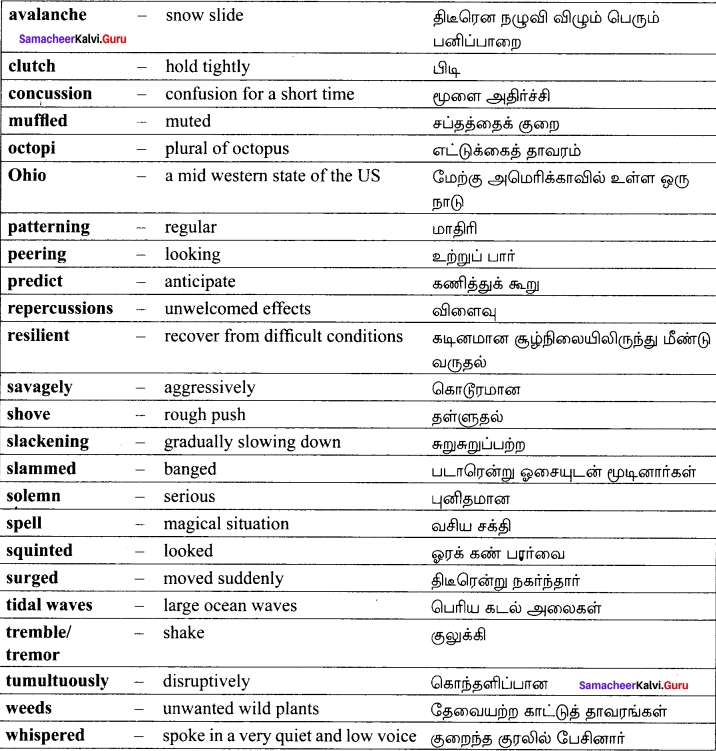
Samacheer Kalvi 12th English Solutions Supplementary Chapter 5 All Summer in a Day img-9

Additional:

Samacheer Kalvi 12th English Solutions Supplementary Chapter 5 All Summer in a Day img-10

Samacheer Kalvi 12th English Book Solutions Supplementary

12th English Unit 5 Supplementary All Summer in a Day Paragraph Book Back Answers Samacheer Kalvi Read More »

12th English Unit 4 Prose The Summit Paragraph Book Back Answers Samacheer Kalvi

The Summit Book Back Answers Class 12 English Guide Chapter 4 Tamilnadu Solutions

Students can Download English Lesson 4 The Summit Questions and Answers, Summary, Activity, Notes, Samacheer Kalvi 12th English Book Solutions Guide Pdf helps you to revise the complete Tamilnadu State Board New Syllabus and score more marks in your examinations.

Get a Practical Study with the help of Samacheer Kalvi 12th English Grammar to make learning language much easy for you and score good grades in exams.

12th Standard English 4th Lesson The Summit Questions and Answers

Warm up

(a) Adventures, expeditions and explorations are always exciting. Especially when they are real and if it is the first of its kind, it is even more thrilling. The only question that comes to ones mind is what makes one to take up such tasks that involve high risks. It is the spirit of formidable adventure and certain qualities which make them achieve such feats.
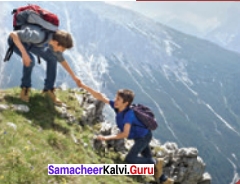
Samacheer Kalvi 12th English Solutions Prose Chapter 4 The Summit

(b) Tick the qualities that are required to achieve such a feat.

passion reward determination physical fitness
fame faith courage money
drive vengeance inspiration self-satisfaction
vision undying spirit inner-urge perseverance

Answer:

passion ✓ reward determination ✓ physical fitness ✓
fame faith ✓ courage ✓ money
drive ✓ vengeance inspiration ✓ self-satisfaction
vision ✓ undying spirit ✓ inner-urge ✓ perseverance ✓

Samacheer Kalvi 12th English The Summit Textual Questions

1. Based on your reading of the text, answer the following questions in one or two sentences each.

Question (a)
What did Hillary do with his wet boots?
Answer:
Hillary cooked his wet boots over the fierce flame of the primus and soften them as they became frozen solid.

SamacheerKalvi.Guru

Question (b)
Name an equipment and a tool carried by the climbers during their expedition.
Answer:
Oxygen gear is an equipment and ice-axe and ice hammer are some tools that climbers carry’ during their expedition.

Question (c)
Why did Hillary become clumsy-fingered and slow-moving?
Answer:
He became clumsy-fingered and slow-moving because of lack of oxygen.

Question (d)
What did Hillary find in a tiny hollow?
Answer:
Edmund Hillary and Tenzing reached a tiny hollow. They found two oxygen bottles left there by Evans and Bourdillon after a failed attempt.

Question (e)
When did Hillary feel a sense of freedom and well being?
Answer:
He felt a sense of freedom and well-being when his oxygen bottle became lighter in weight and he cut steps down off the south summit.

Question (f)
What did Hillary mean by saying “We had had enough to do the job, but by no means too much”?
Answer:
It was providential will that Hillary found two oxygen bottles on the way up towards Everest. As they returned successfully after the conquer of Everest, just near their tent, their bottle ran out of oxygen. So, he says they had had enough oxygen to conquer Everest but by no means it was too much.

Additional Questions

Based on your reading of the text, answer the following questions in one or two sentences each.

Question (a)
Why was Pemba unable to accompany Tenzing and Hillary?
Answer:
Pemba was too ill to climb. So, he did not accompany Tenzing and Hillary.

Question (b)
Where did the three companions go back after climbing up to 27,900 feet?
Answer:
The three companions went back to the south col after climbing 27,900 feet.

Question (c)
When did Hillary and Tenzing get ready for the arduous climb to Everest?
Answer:
Hillary and Tenzing got ready to climb at 4 am on May 29, 1953.

Question (d)
How did Hillary and Tenzing energize themselves for the final lap of the ascent?
Answer:
Both Hillary and Tenzing drank a lot of lemon juice and sugar. They followed it with their last tin of sardines and biscuits.

Question (e)
Why did Hillary ask Tenzing lead when they sit ready to more at 6.30 am?
Answer:
Hillary was worried about his cold feet. So, he asked Tenzing to lead.

SamacheerKalvi.Guru

Question (f)
Why did Hillary feel relieved on discovering two oxygen bottles?
Answer:
Hillary scraped the ice if the gauges and felt relieved as they still contained several hundred liters of oxygen to last till they return to south col.

Question (g)
Who had left behind the two bottles of oxygen at the tiny hollow?
Answer:
Evans and Bourdillon had made an attempt to climb Everest. They failed in their mission. To reduce their load, they had left the two bottle of oxygen behind.

Question (h)
In which phase of the journey did Hillary and Tenzing find the snow dangerous?
Answer:
In the phase of the last 400 feet to the southern summit the snow was dangerous.

Question (i)
Why did Hillary doubt the feasibility of continuing the climb at one crucial point?
Answer:
As Hillary was inching his way up towards the Southern Summit, he slipped back there or four of his steps. Having a doubt about the feasibility of continuing the climb, he sought Tenzing’s advice.

Question (J)
When did Hillary and Tenzing Crampon on to the South Peak?
Answer:
After climbing for two and a half hours, they cramponed on the south peak at 9 am.

2. Answer the following questions in two or three sentences each.

Question (a)
How did the mountaineers belay?
Answer:

  1. The mountaineers belayed by moving one at a time.
  2. When Hillary was at work Tenzing would belay him.
  3. When Hillary sank his shaft and put a few loops of the rope around it, Tenzing would move up to him.
  4. Thus they belayed each other.

Question (b)
Why was the original zest fading away?
Answer:
As Hillary tried to reach the peak, he had to negotiate giant cornices on the right and steep rock sloped on the left. They had no idea as they trudged forward where the peak was. As Hillary cut around the back of one hump, another higher one would swing into the view. So, their original zest was fading away.

Question (c)
What did Edmund Hillary do to escape the large overhanging ice cornices?
Answer:
To escape from the large overhanging ice-cornices, Hillary cut a line of steps down to where the snow met the rocks on the west.

SamacheerKalvi.Guru

Question (d)
What did Tenzing and Edmund Hillary gift to the God of lofty Summit? How did they do it?
Answer:
A hole was made in the ice where Tenzing placed reverentially a bar of chocolate, a packet of biscuits, and a handfull of lollies. As Hillary remembered that his team head Col. Hunt had requested to place a crucifix after reaching the peak. So, he also made a hole in the snow and placed the crucifix beside Tenzing’s gift to the Gods. Devout Buddhists believed that at least a small token of gift should be left with Gods who have their homes in that lofty Everest.

Question (e)
What did the photograph portray?
Answer:
The photograph portrayed the North Col and old route which had been made famous by the struggles of those great climbers of the 1920’s and 1930’s.

Question (f)
The soft snow was difficult and dangerous. Why?
Answer:
The soft snow made a route on top of the ridge both dangerous and difficult. Sometimes it held Hillary’s weight. But often it gave way suddenly. Thus it was dangerous for the climbers. But both persisted and trudged ahead for 400 feet and reached the southern summit.

Question (g)
How did the firm snow at the higher regions fill them with hope?
Answer:

  1. When they were on their trail on a ridge with soft snow, a section around Hillary gave way and he slipped back.
  2. This implanted doubt in his mind about whether to proceed further or not.
  3. It was only after reaching the firm snow he had full confidence that they will succeed.

Additional Questions

Answer the following questions in two or three sentences each.

Question (a)
When did Hillary and Tenzing realize their high hopes?
Answer:
As they trudged up, they came across crystalline and firm snow. As Hillary’s ice-axe bit into the first steep slop of the ridge, their high hopes were realized. They could make comfortable belays and move up with confidence.

Question (b)
What was thrilling to watch 8000 feet below them?
Answer:
In a number of places, the overhanging ice cornices were very large. In order to escape them, Hillary cut a line of steps down to where the snow met the rocks on the west. It was a great thrill to look straight down that enormous rock face to see 8000 ft below them the tiny tents of Camp 4 in the Western Cwm,

Question (c)
What were the immediate feelings of Hillary on the conquest of Everest?
Answer:
On the conquest of Everest Hillary ’s immediate feeling was that of relief that there were no move ridges to traverse. There were no more humps to tantalize them with hopes of success.

Question (d)
How did the achievers express their joy on the conquest?
Answer:
They shook hands. Tenzing threw his arms around Hillary’s shoulders. They thumped each other on the back until they were almost breathless.

Question (e)
How were the achievers welcomed by fellow climbers?
Answer:
Two figures came towards them a couple of hundred feet about their camp. They were George Lowe and Wilfrid Noyce, and it was thoughtful of them because Hillary ‘s oxygen ran out just then.

3. Based on the text, answer the following questions in a paragraph of about 100-150 words each.

1. We started up our cooker and
drank large quantities of lemon juice and
sugar, and followed this with our last tin of
sardines on biscuits. I dragged our oxygen
sets into the tent, cleaned the ice off them,
and then rechecked and tested them.

2. I had removed my boots, which
had become wet the day before, and they
were now frozen solid. So I cooked them
over the fierce flame of the Primus and
managed to soften them up. Over our
down clothing we donned our windproof
and on to our hands we pulled three pairs
of gloves – silk, woollen, and windproof.

SamacheerKalvi.Guru

3. At 6.30 a.m. we crawled out of that
tent into the snow, hoisted our 30 lb. of
oxygen gear on to our backs, connected
up our masks and turned on the valves to
bring life-giving oxygen into our lungs. A
few good deep breaths and we were ready
to go. Still a little worried about my cold
feet, I asked Tenzing to move off.

4. Tenzing kicked steps in a long
traverse back towards the ridge, and we
reached its crest where it forms a great
snow bump at about 28000 feet. From
here the ridge narrowed to a knife-edge
and, as my feet were now warm, I took
over the lead.
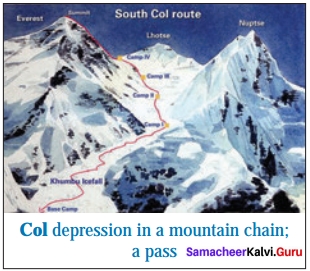
Samacheer Kalvi 12th English Solutions Prose Chapter 4 The Summit

5. The soft snow made a route on top
of the ridge both difficult and dangerous,
which sometimes held my weight but often
gave way suddenly. After several hundred
feet, we came to a tiny hollow, and found
there the two oxygen bottles left on the
earlier attempt by Evans and Bourdillon.
I scraped the ice off the gauges and was
relieved to find that they still contained
several hundred litres of oxygen-enough
to get us down to the South Col if used sparingly

6. I continued making the trail on up
the ridge, leading up for the last 400 feet
to the southern summit. The snow on this
face was dangerous, but we persisted in
our efforts to beat a trail up it.
We made frequent changes of
lead. As I was stamping a trail in the deep
snow, a section around me gave way and

7. I slipped back through three or four of
my steps. I discussed with Tenzing the
advisability of going on, and he, although
admitting that he felt unhappy about the
snow conditions, and finished with his
familiar phrase “Just as you wish”.

8. I decided to go on; and we finally
reached firmer snow higher up, and then
chipped steps up the last steep slopes and
cramponed on to the South Peak. It was
now 9 a.m.

9. We cut a seat for ourselves just
below the South Summit and removed our
oxygen apparatus. As our first partly-full
bottle of oxygen was now exhausted, we
had only one full bottle left. Our apparatus
was now much lighter, weighing just over
20 lb., and as I cut steps down off the South
Summit I felt a sense of freedom and well- being.

10. As my ice-axe bit into the first
steep slope of the ridge, my high hopes
were realized. The snow was crystalline
and firm. Two or three blows of the ice axe
produced a step large enough even for
our over-sized High Altitude boots, and
a firm thrust of the ice-axe would sink it
half-way up the shaft, giving a solid and
comfortable belay.

11. We moved one at a time. I would
cut a forty foot line of steps, Tenzing
belaying me while I worked. Then in turn I
would sink my shaft and put a few loops of
the rope around it, and Tenzing, protected
against a breaking step, would move up to
me. Then once again as he belayed me I
would go on cutting

12. In a number of places the
overhanging ice cornices were very large
indeed, and in order to escape them I cut a
line of steps down to where the snow met
the rocks on the west. It was a great thrill
to look straight down this enormous rock
face and to see, 8000 feet below us, the
tiny tents of Camp 4 in the Western Cwm.
Scrambling on the rocks and cutting
handholds on the snow, we were able to
shuffle past these difficult portions.

13. On its east side was another great
cornice; and running up the full forty feet
of the step was a narrow crack between
the cornice and the rock. Leaving Tenzing
to belay me as best he could, I jammed my
way into this crack. Then, kicking
backwards, I sank the spikes of my
crampons deep into the frozen snow
behind me and levered myself off the
ground
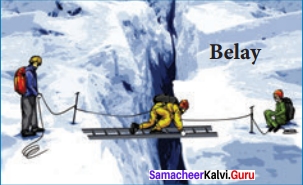
Samacheer Kalvi 12th English Solutions Prose Chapter 4 The Summit

14. Taking advantage of every little
rock hold, and all the force of knee,
shoulder, and arms I could muster, I
literally cramponed backwards up the
crack, praying that the cornice would
remain attached to the rock. My progress
although slow was steady. As Tenzing paid
out the rope, I inched my way upwards
until I could reach over the top of the rock
and drag myself out of the crack on to a
wide ledge.
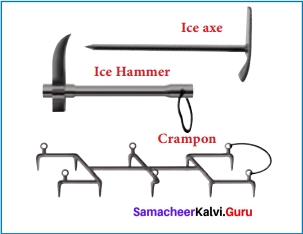
Samacheer Kalvi 12th English Solutions Prose Chapter 4 The Summit

15. For a few moments I lay regaining
my breath, and for the first time really
felt the fierce determination that nothing
now could stop us reaching the top. I took
a firm stance on the ledge and signalled
to Tenzing to come on up. As I heaved
hard on the rope, Tenzing wriggled his
way up the crack, and finally collapsed at
the top like a giant fish when it has just
been hauled from the sea after a terrible
struggle.

16. The ridge continued as before:
giant cornices on the right; steep rock
sloped on the left. The ridge curved away
to the right and we have no idea where the
top was. As I cut around the back of one
hump, another higher one would swing
into view. Time was passing and the ridge
seemed never-ending.

SamacheerKalvi.Guru

17. Our original zest had now quite
gone, and it was turning more into a grim
struggle. I then realized that the ridge
ahead, instead of rising, now dropped
sharply away. I looked upwards to see a
narrow snow ridge running up to a snowy
summit. A few more whacks of the ice-axe
in the firm snow and we stood on top.

18. My first feelings were of relief–
relief that there were no more steps to
cut, no more ridges to traverse, and no
more humps to tantalize us with hopes
of success. I looked at Tenzing. In spite of
the balaclava helmet, goggles, and oxygen
mask – all encrusted with long icicles–that
concealed his face, there was no disguising
his grin of delight as he looked all around
him. We shook hands, and then Tenzing
threw his arm around my shoulders and
we thumped each other on the back until
we were almost breathless. It was 11.30
a.m. The ridge had taken us two and a
half hours, but it seemed like a lifetime
To the east was our giant

19. neighbour Makalu, unexplored and
unclimbed. Far away across the clouds,
the great bulk of Kanchenjunga loomed
on the horizon. To the west, we could
see the great unexplored ranges of Nepal
stretching off into the distance.

20. The most important photograph,
I felt, was a shot down the North Ridge,
showing the North Col and the old route
which had been made famous by the
struggles of those great climbers of the
1920’s and 1930’s. After ten minutes,
I realized that I was becoming rather
clumsy-fingered and slow-moving. So I
quickly replaced my oxygen set

Question (a)
How did Hillary and Tenzing prepare themselves before they set off to the summit? (Para 1, 2 and 3)
Answer:
Hey drank large quantities of lemon juice and sugar. They also had their last tin of sardines on biscuits. Hillary cleaned their oxygen sets. and tested them. As his boots became wet and, frozen solid, Hillary cooked them. Over the fierce flame and tried to soften them. They also wore three pairs of gloves made of silk, woolen, and windproof. At 6.30 a.m they set their oxygen gear on to their backs, connected their masks, and turned on their valves. They had a few good deep breaths and set off to their summit.

Question (b)
Give an account of the journey to the South Col from 28,000 feet. (Para 4 to 8)
Answer:
From the altitude of 28000 feet, the ridge narrowed to a knife-edge and as Hillary’s feet were now warm, he took over the land and Tenzing followed him. The soft snow was difficult and dangerous to tackle. Sometimes it supported Hillary’s weight and often it gave way suddenly. After trudging several hundred feet, they reached a tiny hollow where they found two oxygen bottles left by Evans and Bourdillon after a failed mission. Hillary7 scraped off the ice and found that both were full and could last till they returned from ascent if they used them sparingly. Despite risky slips, they persisted and made 400 feet climb to the southern summit. Hillary sought the advisability of continuing on such a lowly snow bed. But Tenzing remarked, “as your wish.” Hillary’ made up his mind to go on. His resolve paid off. They finally reached firmer snow higher up fuelling their hopes of success.

Question (c)
Describe the feelings of Edmund Hillary and Tenzing as they reached the top of the Summit. (Para 18)
Answer:
The very first feeling of Edmund Hillary was that of complete relief. A relief that there were no steps to cut, no more ridges to traverse and no more humps to tease them with hopes of success. Hillary was able to find a grin of delight in Tenzing’s face though it was concealed with a helmet, goggles, and oxygen mask. They shook their hands. Tenzing threw his arm around Hillary’s shoulders and thumped each other on the back till they became breathless. It took nearly two and a half hours for them to reach the top of the ridge. As they had undergone a huge risk they felt that it seemed like a lifetime.

Question (d)
The ridge had taken us two and half hours, but it seemed like lifetime. Why? (Para 15 to 17)
Answer:
Both Hillary and Tenzing reached a wide ledge. Hillary deeply felt the fierce determination that nothing could stop them from scaling the Himalayas. He took a stronghold on the ledge and signalled Tenzing to come up. With great difficulty Tenzing reached the way up the crack and collapsed like a giant fish hauled up from the ocean. There were giant cornices on the right and steep rock sloped on the left. The ridge curved away to the right. They had no idea’ where the peak was. As Hillary cut around the back of one hump, another would swing anew ‘ to his view’. Time seemed never ending. Their original zest started diminishing. The climb becoming a grim struggle. To their surprise, the ridge ahead now dropped sharply away. A few more whacks of the ice-axe in the firm snow’, they stood on top. It w’as 11.30, the ridge had taken two and a half hours. But it seemed like a lifetime as they had to negotiate numerous ridges on the way.

Question (e)
Describe the view from the top. What was the most important photograph? (Para 19 and ’ 20)
Answer:
When viewed from the top towards the east was Makalu which was unexplored and unclimbed. Far away on the horizon appeared the great bulk of Kanchenjunga. Towards the west was the great unexplored ranges of Nepal. The most important photograph was that of the north ridge which showed the North Col and the old route which had been made famous by the struggles of the great climbers of the 1920’s and 1930’s.

SamacheerKalvi.Guru

Question (f)
‘There is no height, no depth that the spirit of man, guided by higher Spirit cannot attain’. Discuss the above statement in the context of the achievement of Edmund Hillarv and Tenzing.
Answer:
Man is naturally endowed with an indomitable spirit. Guided by powers above man reach any height. The grit and persistence of both Hillary and Tenzing stand testimony to the above maxim. The conditions were really overwhelming. Hillary slipped many times. Once he even t sought the advisability of continuing the climb under such conditions. But Tenzing and Hillary. resolved to persist and conquer the peak. As a reward to 400 feet climb near the south summit,,they got two bottles of oxygen which in fact kept them alive almost up to their base camp. Both pick up the pieces of hopes only when they come into contact with firmer rock-like.ice as they moved up.

Though they had to inch their way up clearing snow with the ice-axe and making a path to haul themselves up ridge after ridge in the elusive terrain, they did not give up. As Hillary’s ice-axe bit into the first steep slope of the ridge, his hopes were realized. The snow was crystalline and firm. With just two or three blows, Hillary could make a step large enough for their oversized high altitude boots. They could create comfortable belays and trudge forward with confidence. As the humps were continuously seen, their original zest started declining. It was at this point Hillary saw a narrow ridge up to a snowy summit. With a few more whacks of the ice-axe in the form of snow, they reached the top.

Vocabulary

(a) Idioms
(i) Given below are some idiomatic expressions with their meanings. Understand the meaning.
Answer:

(a) wait for the dust to settle to wait for a situation to become clear or certain
(b) get/have all your ducks in a row to have made all the preparations needed to do something / to be well organized
(c) fetch and carry (for somebody) to do a lot of little jobs for somebody as if you were their servant
(d) do the math to think carefully about something before doing it, so that you know all the relevant facts or figures
(e) round the corner very near

(ii) Fill in the blanks with the right idioms. Choose from the above given idioms.

  1. The Sherpas are cheerful, gallant men, who _____ tents, oxygen, food etc., for climbers during their ascent of the summit.
  2. The team _____ carefully so as to reach the summit successfully.
  3. When they had to climb through deep new snow the party sometimes had to _____
  4. Each member of the team had all their _____
  5. We could not believe that with a few more whacks of the ice axe in the firm snow we were _____ to the top.

Answer:

  1. fetch and carry
  2. does the math
  3. wait for the dust to settle
  4. ducks in a row
  5. round the comer

(iii) Understand the meaning of the given idiomatic expression and choose the right one to complete the sentence.

the icing on the cake – something extra and not essential, but is added to make it even better
break the ice – to make people more relaxed, especially at the beginning of the meeting

  1. The conference room was silent though packed. The chairman introduced an interactive session to ________
  2. Our headmistress not only promised us to take us for an excursion, but also announced that on return we would get a holiday. It was like ________

Answer:

  1. break the ice
  2. the icing on the cake

(b) Phrasal Verbs

Question (i)
Given below are the phrasal verbs with their meanings. Use the given phrasal verbs in sentences of your own.

turn on to open
took over take lead
set off start a journey
put off postpone

Answer:

  1. She turned on the induction stove to prepare the dinner.
  2. After Steven Paul Jobs took over the lead role, Apple started making a revolution in sales.
  3. The boy set off on foot to his uncle’s home in the city.
  4. Don’t put off important works as delay could be dangerous.

Question (ii)
Given below are some Phrasal Verbs which are frequently used in connection with travelling. Guess the meaning and match.

Question (a)

(a) see off (i) start off / to begin a journey
(b) stopover (ii) to go to station or airport to say goodbye to someone
(c) set off (iii) to stay at a place for a short period of time when travelling to another destination

Answer:
(a) (ii) to go to the station or airport to say goodbye to someone
(b) (iii) to stay at a place for a short period of time when travelling to another destination
(c) (i) start off / to begin a journey

Question (b)

(a) get in (i) leave a bus, train etc.,
(b) get off (ii) to go away from home for a vacation
(c) get on (iii) arrive inside train, bus etc.
(d) getaway (iv) enter a bus, train, plane.

Answer:
(a) (iii) arrive inside train, bus etc.
(b) (i) leave a bus, train etc.,
(c) (iv) enter a bus, train, plane.
(d) (ii) to go away from home for a vacation

Question (c)

(a) check-in (i) pay the bill when leaving a hotel
(b) check out (ii) arrive and register at airport or hotel

Answer:
(a) (ii) arrive and register at airport or hotel
(b) (i) pay the bill when leaving a hotel

(c) Compound Words

(i) Here are some compound words chosen from the text.

ice-fall knife-edge wind-proof sleeping-bags
half-way never-ending partly-full ice- axe

Let us learn a few more with their meaning.

ice-berg an extremely large mass of ice floating in the sea
ice-cap a layer of ice permanently covering parts of the earth, especially around North and South Poles
ice-floe large area of ice floating in the sea
ice-sheet a layer of ice that covers a large area of land for a long period of time
ice-rink specially prepared flat surface of ice, where you can ice-skate;

(d) Semantic network

(i) Match the following with their right field, choosing appropriately from the box given.

Machinery Sports
Transportation Geography
Weather Travel
snow-board Sports
snow-mobile Transportation
snow-chains Machinery
snow-storm Weather
snow-bird Travel
snow-belt Geography

Listening Activity

First, read the following statements. Then, listen to the passage read aloud by your teacher or played on the recorder and complete the statements. You may listen to it again, if required.

Question 1.
What were the reasons for our success?
Answer:
There are many answers to this question. Firstly, 1 would say that we owed much to the work of previous climbers on Everest: to the experience and knowledge they passed on, and to the fact that they had gone on trying and had never given up hope.

Next, I would place the careful and thorough planning done before the climb began. On the Everest, a large number of people have to do different things in different places at the same time. Unless every detail had been worked out in advance, things would quickly have gone wrong.

The third reason was the excellence of our equipment. In particular, our oxygen apparatus was very important, and it worked well. Without it. we could not have reached the summit.

Our own fitness played a big part in the climb, and this was due to our periods of training, in which we got used gradually to great heights: and to our food; and to the care and attention we received from our doctors.

Above all else, I should like to mention how well we worked together. That was the biggest single reason why we got to the top. In the four months we were together we lived and worked as a team. Not everyone could climb to the top. Some of the members had jobs to do on other parts of the mountain; jobs that were less exciting than climbing to the summit, but just as dangerous and uncomfortable. But everyone played his part to the full. That was the biggest thing of all.

In the same way, our Sherpas were magnificent. Without our tents, our oxygen, our food, our climbing gear, the summit could not have been reached. And without the Sherpas, we could

not have lifted all this equipment, which weighed 750 lb., up to 26,000 feet, ready for the assaults. No praise is too high for these cheerful and
gallant men.

Finally, there was the weather. For five weeks we had bad weather; then, after the middle of May, we were lucky. It no longer snowed, and even the wind sometimes dropped.

Complete the following.

(a) List any three aspects which contributed to the success of the ascent of the summit.

  1. ______
  2. ______
  3. ______

Answer:

  1. Knowledge gained from other climbers
  2. Careful planning
  3. Excellence of equipments (oxygen apparatus)

(b) Without the help of _________ nothing would have been possible.
(c) The main idea of the passage is _________
(d) The biggest thing of all is _________
(e) _________ were cheerful and gallant men.

Answers:

(b) teamwork
(c) factors contributing to successful conquest of Everest
(d) togetherness of mountaineers
(e) Sherpas

Speaking Activity

(a) Group Activity

(i) Have you ever been on an adventurou trip? If so. share your success story with your friends.

He went on a tour to Ooty. My PET Master said that if we were lucky’, we might see some elephants while travelling in the small train. We saw monkeys on either side of the track. As the train was going very slow, wc could see the beauty’ of the mountains and lush green trees. Suddenly, the toy train stopped. I wanted to get down and see what was happening. My English miss who was escorting us prevented us from getting down. Her concern was that we might get lost. But the train did not move for about 45 minutes, and everyone became restless. I begged the teacher to let us go out and see what was happening. As our coach was just two coaches behind the engine and our English Miss saw a huge gathering in front of the engine, she relented. At first, myself and Philomena got down.

We found that, in a short while, the rest of our classmates and our teacher came there to know what was happening. We found a baby elephant lying on the track doing some pranks. Someone gave one banana, the baby elephant ate it and continued to sit there. I snatched a bunch of banana which Philomena was keeping and showed it to the baby elephant. It stretched its trunk to take it. But I carefully walked out of the track showing the banana. The baby elephant followed me twenty feet beyond the track. I gave him the bunch. My English miss asked me to come back, and before the baby elephant returned, the driver resumed the train. I can never forget this adventure in my life

SamacheerKalvi.Guru

(ii) How will you organize or plan for a trip or an event? Do you have the habit of preparing a check-list? Discuss.
If we want to organise a trip the following things are to be alone. If it is a school trip, we must plan well ahead and decide the place of visit and inform the parents and get the letters of consent and if needed, subsidised charges for entry tickets and journey expenses. Once the travel distance and duration are finalised, it can be decided if we are going to hire a bus or take train tickets in advance. If the distance is less than 150 Km, a bus would be fine.

If it exceeds that distance and if the duration of the trip is about two to three days we need to hook accommodation for students in the visiting spot and ensure safety of children. If advance permission is required to visit a factory or a research institute or a planetarium, we must write and get the proper permission from the competent authorities. One escort must be fixed for every ten students well ahead of the trip. A checklist is necessary before the commencement of the journey. The same checklist will be required to bring back the materials which were taken from the school.

(b) Individual Activity
Given below are a few proverbs. Prepare a short speech of two minutes on one of the proverbs.

(i) Nothing is impossible:
Respected Principal, teachers and my dear friends, Good morning, I wish to say a few words on the topic “Nothing is Impossible”. Napoleon Bonaparte said, “Impossible is the word found only in a fool’s dictionary”. Conquering Everest was deemed impossible. In the 1920’s and 1930’s mountain climbers aborted their efforts. The brittle snow beyond the altitude of 28000 ft. made even Hillary doubtful for a while of the possibility of conquering Everest. But persisting on their daring adventure, Hillary and Tenzing scaled the Everest. When the whole world is appreciating many daring adventures of able-bodied men, a differently abled lady namely Arunima Sinha has created history by conquering Everest. She was a volleyball player who was pushed from a running train in an attempted robbery.

One of her legs had to be amputated below the knee. Using a prosthetic leg, under the Inspirational guidance of Bachendri Pal, the first Indian lady to conquer Everest, she climbed Everest on 21st May 2013. The most admirable thing about her is that she has climbed six difficult mountain peak of the world viz Everest in Asia, Kilimanjaro in Africa, Elbrus in Europe, Kosciuszko in Australia, Aconcagua in Argentina and Carstensz Pyramid in Indonesia. She completed her final summit of Mount Vinson in Antarctica on 4th January 2019. She is running a charitable foundation namely Arunima foundation. She wants to open a free sports academy for the poor and differently abled children. She wrote a book “Bom again on the mountain” which was launched by Hon’ble Prime Minister Narendra Modi in December 2014. She was awarded Padma Sri, the fourth-highest award of India in 2015. Dear friends, we must never accept small defeats in life. We must leam lessons and believe that we can succeed and it is possible to achieve excellence against all the odds.

SamacheerKalvi.Guru

(ii) Where there is a will there is a way:
Respected Principal, teachers and my dear friends, Good morning, I wish to say a few words on the topic “Where there is a will there is a way”.
There are numerous examples to quote from where the will has made people create history. ‘ All of us know Mother Teresa won the Nobel Prize for Peace in 1999. But the beginnings of her work were met with many insults and humiliating experiences. She was moved by poverty, sickness, suffering in old age which she encountered amidst the poorest of the poor in the streets of Calcutta. Her heart went out for street children who could not go to school. She wanted to give them a home and food. The financial position of her organisation was not healthy enough. She willed to adopt orphaned children and provide them with food, shelter and education.

If she had only thought about financial disabilities and not taken the necessary steps, she wouldn’t be the person we know her to be today. Similarly, Thomas Alva Edison [. had only three months of formal schooling, and he was partially deaf too. But that never made his mother give up on him. She took the responsibility of teaching and training him. She persuaded and encouraged him even though she never knew what he would become in future. Hence, dear friends when times of trial come, or when you face mockery by people surrounding you, never give up hope. Always remember this,“Where There is a Will There is a Way”.

(iii) Together we can achieve more:
Respected Principal, teachers and my dear friends, Good morning, I wish to say a few words on the topic “Together we can achieve more”. There are so many social and environmental issues that have been curbed by the coming together of like-minded people. For example, The Students Sea Turtle Conservation Network, a voluntary group comprising students, have been working in the beaches of Chennai since 1987, trying to conserve Olive Ridley, and create awareness about the endangered sea turtles. The steps they had taken have given them pleasant rewards. Many hatchlings can be seen running towards the sea thanks to the efforts made ‘ by these volunteers.

There is Arun Krishnamurthy, who initiated the campaign of cleaning various lakes across India. Arun along with the organisation has been successful in cleaning at least 39 lakes in the country. As a result, Arun was presented with the prestigious Rolex Awards for Enterprise in the year 2012 at Geneva. He was the youngest to win this award. He couldn’t have achieved it without the support of his organisation. These are only a few examples that show that “Together we can achieve more”.

Giving instructions:
Here are a few instructions given by a Health Inspector to a group of students, in order to prevent malaria and dengue. Complete the series adding some more important instructions.

  1. Do not allow water to stagnate in and around your house.
  2. Keep your surroundings clean.
  3. Wear long-sleeved shirts/blouses and long pants / skirts that cover your arms and legs.
  4. Always use a bed-net impregnated with insecticide.
  5. Use mosquito repellants, carry it wherever you go.
  6. Don’t allow rainwater to gather in discarded tyres and mud pots or coconut shells.
  7. Keep all water containers or tanks closed.
  8. Cover your well also.

Now, write a set of 8 to 10 instructions for the following situations:

1. A doctor instructing a patient regarding a healthy diet and proper care after surgery.

  1. Don’t carry heavyweight for a few months.
  2. You must avoid infections.
  3. Cough and sneeze very’ carefully.
  4. Limit salt intake.
  5. Limit your sugar intake.
  6. Avoid cool drinks and fast foods.
  7. Eat a lot of fruits and vegetables,
  8. You can take eggs, fish, legumes, and dairy products.
  9. Go for walking early in the mornings.
  10. Come for regular check-ups.

2. A traffic police personnel to the public, as to how to move around in safety, in crowded public places during festival seasons.

  1. Don’t allow’ your children to walk ahead of you.
  2. Make your children memorise your phone numbers or give them an id card with your phone numbers written in it.
  3. Ask your children not to speak or take anything from a stranger.
  4. Park your vehicles only in the open area marked as parking area behind the police stations.
  5. Use the entry path to the fair.
  6. Go out only through the exit route demarkated by the long rope.
  7. In case of any problem or suspicion, contact the nearest police booth and inform the officer there.
  8. Makeshift toilets are kept separately for men and women at the right corner.
  9. Don’t run in a crowd.
  10. Walk with your family in a row’ of two members keeping track of children.

3. A mother to her children, on safety measures to be taken before leaving home on vacation.

  1. Switch off all the lights.
  2. See if the water containers have been closed piverly.
  3. If there is left-over food, dispose them in the dust bin.
  4. Ensure that there are no unwashed vessels in the kitchen sink.
  5. Make certain that all the pipes are properly closed.
  6. Check whether there are any washed clothes lying in the balcony, if so. bring them inside.
  7. Pack your bags with a checklist of what you need during the vacation. Each one must bring her/his own toothbrush, soap, towels, etc.
  8. Check if the gas cylinder’s regulator is turned off.
  9. Don’t forget to bring your mobile phones. Stay connected.
  10. Carry at least one Identity card as a proof.

Reading

On the basis of your understanding of the given passage, make notes in any appropriate format.

The Sherpas were nomadic people who first migrated from Tibet approximately 600 years ago. through the Nangpa La pass and settled in the Solukhumbu District, Nepal. These nomadic people then gradually moved westward along salt trade routes. During 14th century, Sherpa ancestors migrated from Kham. The group of people from the Kham region, east of Tibet, was called “ShyarKhamba”. The inhabitants of ShyarKhumbu, were called Sherpa. Sherpa migrants travelled through U and Tsang, before crossing the Himalayas. According to Sherpa oral history, four groups migrated out of Solukhumbu at different times, giving rise to the four fundamental Sherpa clans: Minyagpa, Thimmi, Sertawa and Chawa. These four groups have since split into the more than 20 different clans that exist today.

Sherpas had little contact with the world beyond the mountains and they spoke their own language. Ang Dawa, a 76-year-old former mountaineer recalled “My first expedition was to Makalu [the world’s fifth highest mountain] with Sir Edmund Hillary”. We were not allowed to go to the top. We wore leather boots that got really heavy when wet, and we only got a little salary, but we danced the Sherpa dance, and we were able to buy firewood and make campfires, and we spent a lot of the time dancing and singing and drinking. Today Sherpas get good pay and good equipment, but they don’t have good entertainment. My one regret is that I never got to the top of Everest. I got to the South Summit, but I never got a chance to go for the top.

The transformation began when the Sherpa Tenzing Norgay and the New Zealander Edmund Hillary scaled Everest in 1953. Edmund Hillary took efforts to build schools and health clinics to raise the living standards of the Sherpas. Thus life in Khumbu improved due to the efforts taken by Edmund Hillary and hence he was known as ‘Sherpa King’.

Sherpas working on the Everest generally tend to perish one by one, casualties of crevasse falls, avalanches, and altitude sickness. Some have simply disappeared on the mountain, never-to-be saw again. Apart from the bad seasons in 1922,1970 and 2014 they do not die en masse Sherpas carry the heaviest loads and pay the highest prices on the world’s tallest mountain.

In some ways, Sherpas have benefited from the commercialization of the Everest more than any group, earning income from thousands of climbers and trekkers drawn to the mountain. While ,interest in climbing Everest grew gradually over the decades after the first ascent, it wasn’t,until the 1990s that the economic motives of commercial guiding on Everest began. This leads to eclipse the amateur impetus of traditional mountaineering. Climbers looked after each , other for the love of adventure and “the brotherhood of the rope” now are tending to mountain businesses. Sherpas have taken up jobs as guides to look after clients for a salary. Commercial,guiding agencies promised any reasonably fit person a shot at Everest.

Origin and Development of Sherpas

The roots:
The Sherpas-nomadic tribe-migrated 600 years ago-settled in Solukhumbu District, of Nepal-14th Century migration westward from Kham-ShyarKhamba-inhabitants Sherpa- 1 Oral history-four goups at different times-Minyagpa, Thimmi, Sertawa and Chawa-now 20′ groups.

Life in isolation:
Little contact beyond mountains-AngDawa-76-year old former mountaineer-first expedition to Makalu with Hillary-not allowed to top-poor salary no equipments-danced, bought firewood-drank made merry-Today situation bright-Sherpas-good pay-good equipment-no , entertainment.-One regret-never got to the top of Everest.

Transformation:
1953 ascent-Hillary and Tenzing Norgay-Hillary built schools, healthcare centres-Sherpas life in Khumbu better-Hillary-‘Sherpa king’.

The difficult life of Sherpas:
Many casualities-avalanches and altitude sickness-Sherpas die-died enmasse 1922-1970 and 2014 only-heavy loads-price death.

Commercialisation of Everest-a boon:
Regular income-thousands of climbers-1990 onwards economic motive-traditional mountaineering-love of rope-brotherhood gone-jobs as guides-good salary-healthy Sherpas take a shot at Everest now-Guiding agencies help.

Grammar

Kinds Of Sentences
(a) Simple sentence
Task 1
Pick out the finite verbs in the following sentences:

  1. You can solve this problem in different ways.
  2. The professor has been working on the last chapter of the book since March.
  3. Despite being a celebrity, Ravi mingles easily with everyone.
  4. You must speak clearly to make yourself understood.
  5. The chairman being away, the clerk is unable to approve the proposal.
  6. Getting down from the car, the Chief Guest walked towards the dais amidst applause.
  7. The old man struggled to walk without support.
  8. In case of emergency, please contact this number.
  9. The sun having set, the temperature fell rapidly.
  10. But for your help, I could not have completed the assignment.

Answers:

  1. solve
  2. has been working
  3. mingles
  4. speak
  5. is
  6. walked
  7. struggled
  8. contact
  9. fell
  10. completed

Task 2
Read the following passage and identify the simple sentences.

Sunflowers turn according to the position of the sun. In other words, they ‘ chase the light’. Have you ever wondered what happens on cloudy, rainy days when the sun is completely covered by clouds? If you think the sunflower withers or turns its head towards the ground, you are completely mistaken. Do you know what happens? Sunflowers turn to each other to share their energy. Learning from Nature, we too should support and empower each other.

Simple sentences:

  • Sunflowers turn according to the position of the sun.
  • they ‘chase the light’
  • Sunflowers turn to each other to share their energy.

(b) Complex sentence
Task 1
Look at the following complex sentences. Circle the Main clauses and underline the Subordinate clauses.

  1. (Nobody knows) when the power supply will resume.
  2. (please tell me) what the time is.
  3. (The man) who directed the film was my schoolmate.
  4. (I believe) that all men are basically good.
  5. (No one knows) when he will return.

Task 2
Pick out the complex sentences in the following passage.

A man saw a lion in the bush, as he was walking through the forest. He did not know what to do. He was helpless. He was too scared to turn around and run. He just knelt down as if he were getting ready to pray. He closed his eyes, thinking that the lion would pounce on him anytime. Out of the comer of his eye, he saw the lion on its knees too. Shocked, he asked the . lion what it was doing. The lion replied that he was praying before he started his meal.

Complex sentences:

  • A man saw a lion in the bush, as he was walking through the forest.
  • He did not know what to do.
  • He just knelt down as if he were getting ready to pray.
  • He closed his eyes, thinking that the lion would pounce on him anytime.
  • He asked the lion what it was doing.
  • The lion replied that he was praying before he started his meal.

(c) Compound sentence
Task 1
Identify the two main clauses and conjunction in each of the following sentences.

(a) It started raining suddenly and people ran for shelter.
(b) Understand the concept well, otherwise you cannot solve the problem.
(c) Fifty candidates appeared for the interview, but only five were selected.
(d) Ramesh did not know Spanish, so he wanted a translator.
(e) He is a good actor, still he is not popular.
Answer:

Main clauses Conjunction
(a) (i) It started raining suddenly
(ii) people ran for shelter
and
(b) (i) Understand the concept well
(ii) you cannot solve the problem
otherwise
(c) (i) Fifty candidates appeared for the interview
(ii) only five were selected
but
(d) (i) Ramesh did not know Spanish
(ii) he wanted a translator
so
(e) (i) He is a good actor
(ii) he is not popular
still

Task 2
Pick out the compound sentences in the following passage.

The food we eat has to be digested and then thrown out of the body. The air we breathe in, has to be thrown out, to help us survive. But we hold negative emotions like insecurity, anger and jealousy within ourselves for years. If these negative emotions are not eliminated, the mind grows corrupt and diseased. Let us do away with hatred and lead a healthy life filled with peace and joy.

Compound sentences:

  • The food we eat has to be digested and then thrown out of the body.
  • Let us do away with hatred and lead a healthy life filled with peace and joy.

Task 3
Complete the sentences by choosing the right endings.

We were thoroughly disappointed to find out his address
Hardly had he stepped out we could not go further
They wanted since our team did not get a prize
Since we had run out of petrol was his reckless driving
The cause of his injury when it began to rain
We were thoroughly disappointed since our team did not get a prize
Hardly had he stepped out when it began to rain
They wanted to find out his address
Since we had run out of petrol we could not go further
The cause of his injury was his reckless driving

Conditional Clauses
Task 1
Read the following sentences and fill in the blanks.

  1. If I _____ (be) a spider, I _____ (weave) webs.
  2. If Raj _____ (be) a sculptor, he _____ (make) beautiful idols.
  3. If Mary had an umbrella, she _____ (lend) it to me.
  4. Rex would have played with me if he _____ (has) time.
  5. If I were you, I _____ (accept) this offer.
  6. We _____ (select) storybooks for kids, if we allow time for storytelling.
  7. The Education Minister _____ (visit) our school tomorrow, if he goes by this way.
  8. You will be rewarded by the wise if you (stand) for truth.
  9. If my mother (know) of my poor performance in the exam, she will not allow me to watch a movie.
  10. If I had won the lottery, I (donate) relief materials for the flood victims

Answer:

  1. were, would weave
  2. were, would make
  3. would have lent
  4. had
  5. would have accepted
  6. can select
  7. will visit
  8. stand
  9. knows
  10. would have donated

Task 2
Rewrite the following sentences using ‘If’ without changing the meaning, e.g.

Unless you go for a walk regularly, you cannot reduce your weight. (Use ‘If) If you do not go for a walk regularly, you cannot reduce your weight.

Question (a)
Sindhu would not have won the world championship unless she had had single-minded devotion.
Answer:
Sindhu would not have won the world championship if she had no single-minded devotion.

SamacheerKalvi.Guru

Question (b)
You will not reach your goal unless you chase your dream.
Answer:
You will not reach your goal if you don’t chase your dream.

Question (c)
Unless we plant more trees, we cannot save our planet.
Answer:
If we don’t plant more trees, we cannot save our planet.

Question (d)
The rescue team would not have saved the victims unless they had received the call in time.
Answer:
The rescue team would not have saved the victims if they had not received the call in time.

Question (e)
The palace cannot be kept clean, unless we appoint more people.
Answer:
The palace cannot be kept clean, if we don’t appoint more people.

Question (J)
The portraits would not have been so natural unless the artist had given his best.
Answer:
The portraits would not have been so natural if the artist had not given his best.

SamacheerKalvi.Guru

Question (g)
The manager would not have selected Nithiksha unless she exhibited good accounting skills.
Answer:
The manager would not have selected Nithiksha if she had not exhibited good accounting skill.

Question (h)
The policeman would not have arrested the man unless he had violated the rules.
Answer:
The policeman would not have arrested the man if he had not violated the rules.

Question (i)
Mr Kunaal would not sponsor my higher education unless I studied well.
Answer:
Mr Kunaal would not sponsor my higher education if I do not study well.

Question (j)
Kavin will not stop flying kites unless he understands the risk involved in it.
Answer:
Kavin will not stop flying kites if he does not understand the risk involved in it.

Question (k)
Tanya would not know the answer unless she referred to the answer key.
Answer:
Tanya would not know the answer if she had not referred to the answer key.

Question (l)
My village cannot achieve 100 % literacy rate, unless the elders of the village cooperate with the education department.
Answer:
My village cannot achieve 100 % literacy rate, if the elders of the village do not cooperate with the education department.

Writing

Summarizing

Origin and development of Sherpas

The roots:
The Sherpas are a nomadic race who migrated to Nepal 600 years ago. They got settled in Solukhumbu District of Nepal. In the 14th Century they migrated westward from Kham to ShyarKhamba. This is where the Sherpas inhabited in four goups viz., Minyagpa, Thimmi, Sertawa, and Chawa.

Life in isolation:
Sherpas had little contact with the world beyond the mountains. Ang Dawa, 76-year old former Sherpa recounts his bitter memories. He could touch the summit Makalu along with Hillary. He was never allowed to go to Everest. Sherpas had meagre salaries. They danced Sherpa dance, drank, and entertained guests. They could buy firewood with their earnings. Now the scenario has changed. They are well paid and given good equipment but left with no entertainment.

Transformation:
The attitude to Sherpas changed after Tenzing Norgay and Hillary reached Everest in 1953. Edmund Hillary is hailed as ‘Sherpa king’ for his initiative to build schools for their children and healthcare centres too.

Tough life of Sherpas:
Many Sherpas have died without a trace due to avalanches and altitude sickness. Enmasse’s death is now ended after the 1922-1970 and 2014 incidents. They carry heavy loads and pay with dearth for their survival.

Commercialisation-a boon:
After 1990, the commercialisation of mountaineering has started. Many mountain guiding firms now employ Sherpas with good salary. A steady flow of professional climbers and tourists ensure regular income. Now anyone with sound physique can take a shot at the Everest.

Reading a map
Nowadays though locations are traced easily using GPS, (Global Positioning System) one should know what to look for in the map to reach the destination. Here are a few general instructions to be followed while reading a map.

  1. Identify and understand the elements of the map correctly.
  2. Look out for the title to know what the map shows.
  3. Study the symbols / colours that are used on the map and find what they stand for.
  4. Look at the scale of the map. (whether to be scaled or not to be scaled)
  5. Look for the pointer to know the direction.

Let us together scale the summit. Here is a drawing of the Everest showing the way to the summit, and the position of the camps with their heights. Trace the trekking trail to reach the summit with the given details and write an interesting paragraph in about 100 words.
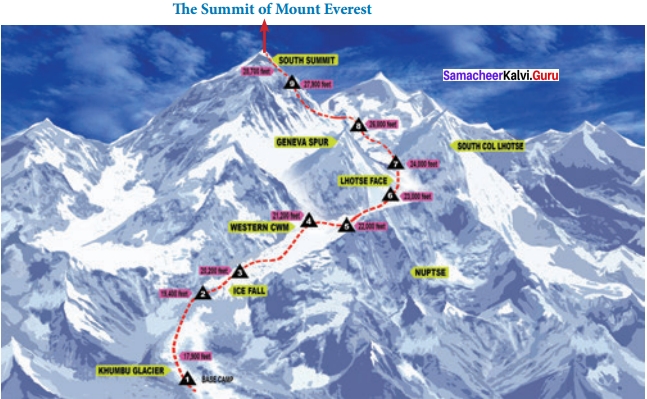
Samacheer Kalvi 12th English Solutions Prose Chapter 4 The Summit

Tips on Elements of the Map:
Map Title: The title is a centre, a short summary of a map. It should determine the area covered and provide some communication of the map content, as “The Summit of Mount Everest”. Map Scale: A scale is the prime essential of a map. Map scale can be defined as part of a map that compares distance on a map to distance in the real world.

Direction: The direction is normally shown on a map by means of the geographical grid, Meridians (of longitudes) are supposed to extend north-south, and parallel (of longitudes) are east-west lines. A straight arrow pointing northward also marked that is called “north arrow”. The Map show’s the route marked in red dotted lines having 9 camps at different levels (height).

The trek starts from the base camp which is located on Khumbu Glacier and ends at the south summit.

Phases of climbing Mount Everest:
Everest is our tallest mountain. Its altitude and the technicalities of the climb are not to be underestimated. Climbing Everest requires intensive training. You might be lucky, and the climb might go well even if you didn’t do your homework. But you will undoubtedly notice that Everest lives up to its fearful reputation should the conditions turn against you. By then though, it might simply be too late if not well prepared. Everest is also a gorgeous mountain. And just as we continue to

launch ourselves into space even though missions sometimes turn into tragedy, mountaineers will always try to climb Everest to experience the majesty, beauty, and adventure of our closest frontier to Universe.

Let’s start the trek at the Base camp Route no. 1 which is situated on the Khumbu Glacier at 17,900 feet. Distance from Route No. 1 & Route No. 2 is 1500 feet reaching at route no.2 at 19400 feet- Icefall. This place is similar to a massive horror-chamber at an amusement park. There are countless scary things that can happen here. An avalanche can bury the climbers alive. After climbing further 800 feet, it reaches Route No.3 20,200 feet – Camp-1, Valley of silence. This is a vast, flat area of endless snow, deep crevasses, and mountain walls frequently washed by avalanches. Here climbers set up camp 1. At night one listens to the deep, murmuring cracking sounds under the tents. It is the crevasses opening and closing deep down in the glacier beneath. It is here that for the first time, just a few steps around a comer, we gain first close sight of Everest.

After 1000 feet of an endless, slow march through the silent valley, the climbers reach at last a rocky patch, at the foot of the icy Lhotse wall. This marks route no.4 Camp-2 at 21,200 feet. This place is absolutely stunning. Clouds roll in from the lower ranges of the Himalayas, up the valley and into the camp. Further climbing 800 feet it takes us to Route No.5 which is at 22,000 feet, next comes Route No. 6 at 23,000 feet Camp-3, Lhotse Face/Wall.

Imagine sliding a fun, icy slope on a sunny winter’s day. Only this one is 1200 meter (4000 ft) high. The dangerous part is to hang on to the rope of dubious strength and to change carabiners between the ropes. Further, 1000 feet upwards the climbers can reach Route No.7 at 24,000 feet they are now almost beside South Col Lhotse.

From Route No.7 to Route No.8 the distance is around 2000 feet. The climbers are now, at Geneva Spur which is 26,000 feet above sea level. It is camp-4, The Death Zone: Camp 4 sits on a plateau resembling a moonscape. The climbers are at the edge of the atmosphere, and the sky owns a strange, dark blue colour. It is surely the closest one can get to space on earth. Only a small climb above camp, you look down the Tibetan plateau with its vast brown plains, white glaciers and the other alpine giants – Kanchenjunga, Lhotse, Makalu -in the distance. It’s all magic and unreal.

The final destination is quite far from here. Further climbing 1700 feet climbers reach at Route No.9 which is at the height of 27,900 feet.
South Summit at 28,700 feet.

There, in the distance, the climbers can see a worm of light slowly moving up a dark wall. It’s climbers head torches flickering in the dark. It’s completely silent. Nobody talks. If you do, you whisper. It is terrifying, and you climb and climb, awaiting the first ray of dawn. It’s desperately cold. It’s steep and at parts very icy. The ice axe and the crampons barely cut into the ice. The mountain projects itself onto the morning fog. The shadow towers in front of the climbers like a giant mirage. Beneath lies, the world in all its glory, Everest glowing in the rising sun.

The Summit About the Author
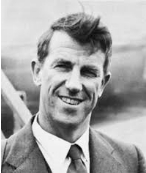
Samacheer Kalvi 12th English Solutions Prose Chapter 4 The Summit img-1

Sir Edmund Percival Hillary (20 July 1919 – 11 January 2008) was a New Zealand . mountaineer, explorer, and philanthropist. He served in the Royal New Zealand Air Force as a navigator during World War H. He joined the team led by John Hunt and created history by climbing the Everest in 1953. He has recounted the ordeals, frustrations and moment of glory in “View from the Summit: The Remarkable Memoir by the First Person to Conquer Everest”. He founded the Himalayan Trust to help Sherpa people of Nepal who usually escort mountaineers. High Adventure, No Latitude for Error, Nothing Venture, Nothing Win, are some of his famous works.

The Summit Summary in English

Introduction
Sir Edmund Percival Hillary joined the team led by John Hunt and created history by climbing the Everest with the support of Tenzing Norgay on 29th May 1953.

The preparation
On 28th May 1953, Edmund Hillary and Tenzing had put up a little tent at an altitude of 27,900 feet.

They started up their cooker and drank large quantities of lemon juice in addition to sardines and biscuits. Hillary scraped the ice off the oxygen sets. As his boots were wet, he cooked them over the fierce fire of Primus and managed to soften them up. They fortified their clothing with windproof and they pulled three pairs of gloves, silk, woollen, and windproof on to their hands. At 6.30 am, they hauled their oxygen gear on their backs. Inhaling deep breaths of oxygen, they got ready to climb.

Gruelling climb to the South Col
From the altitude of 28,000 feet, the ridge narrowed to a knife ridge. Hillary’s feet were now warm. So, he took the lead. The snow’ was dangerously soft. The deep soft snow supported Hillary’s weight. Sometimes, it gave way pulling him down by three to four feet. The brittleness of the ice frightened Hillary a little. He asked the advice of Tenzing if they could continue the climb or abort. Tenzing said, “as you please.” Curiously, Hillary decided to continue. They trudged a few hundred feet and reached a tiny hollow. As if to reward their persistence, they found two oxygen bottles filled to their capacity. Hillary hoped that they would sustain them till they returned to their base camp. After the end of the tricky 400 feet climb, they came across firmer ice. This increased their hope of success. As one of the oxygen bottles had been exhausted, their load was reduced by half. Hillary felt a sense of freedom and w ell-being.

SamacheerKalvi.Guru

Reaching a wide ledge
As Hillary’s ice-ax bit into the first steep slope of the ridge, his high hopes were realized. The snow was crystalline and firm. Two to three blows of ice-axe could get them a step large enough for their high altitude boots. A firm thrust of ice-ax would sink it half-way up the shaft, giving a solid and comfortable belay egging the mountaineers to move on. Hillary would cut a forty-foot line of steps, Tenzing would belay Hillary while he worked. Hillary and Tenzing changed their roles supporting one another. Taking advantage of every little rock hold and all forces of the knee, and arms Hillary could muster, Hillary championed backward up the crack praying that the comice should not give way from the rock. With Tenzing’s support, Hillary reached the wide ledge. For the first time Hillary realized that nothing would prevent their chances of reaching Everest that day. Soon Tenzing wriggled his way up and collapsed like a giant fish hauled up from the sea.

The crucial last leg of the climb
Giant cornices loomed on the right. Steep rock sloped on the left. As Hillary cut around the back of a hump, another came into the view. Time was passing. Ridge seemed to have no end at all.

The conquest
Their original zest in the conquest started diminishing. It was becoming a grim struggle. Then Hillary realized that the ridge ahead instead of rising now dropped sharply away. He looked upwards to see a narrow ridge running up to a snowy summit. A few more whacks of the ice-axe in the firm snow, they stood on top of the Everest.

The triumph and the reaction of the heroes
Both had a great sense of relief. There were no more steps to cut or ridges to traverse and no more humps to lure them with the hope of success. In spite of the balaclava helmet, goggles, and oxygen mask, all covered with icicles, he could not disguise his grin of delight. They shook hands. Tenzing threw his arms around Hillary. They thumped each other on their backs till they became breathless.

The view from the top
To the east of Everest, they saw their giant neighbour Makalu, unexplored and unclimbed. Far away across the clouds, the great bulk of Kanchenjunga loomed on the horizon. To the west, they could see the great unexplored ranges of Nepal stretching off into a distance.

The photography-the testimony of their conquest
The most important photo was shot down the north ridge. It showed the North Col and the old route which had been made famous by the struggles of those great climbers of 1920’s and 1930’s.

Small offering to the great Gods
Devout Buddhists believe that Gods have their home on this lofty summit. Hence, they wish to offer at least a token of gift. Tenzing dug a little hole in the snow and in it he placed a bar of chocolate, the packet of biscuits and a handful of lollies. Hillary had a small Crucifix from Colonel Hunt. He had asked Hillary to offer it to the Gods when they reached the top. Hillary also made a small hole in the snow and placed the small crucifix beside Tenzing’s gifts piously.

Conclusion
Not all adventures are exciting. Adventures are not to be found only upon the mountains. In everyday life, there are Everests to be climbed in every walk of life. Man can conquer any height or depth if he persists with his undaunted spirit guided by a higher spirit.

The Summit Summary in Tamil

முன்னுரை:
29 மே மாதம் 1953 ஆம் ஆண்டு டென்சிங் உதவியுடன் ஜான் ஹண்ட் நடத்திய குழுவினருடன் சர். எட்மண்ட் பெர்சிவால் ஹிலாரி சேர்ந்து இமயமலை உச்சியை அடையும் வரலாற்றை ஏற்படுத்தினார்.

ஆயத்தங்கள்:
27,900 அடி உயரத்தில் 28 மே மாதம் 1953 ஆம் ஆண்டு எட்மண்ட் ஹிலாரி மற்றும் டென்சிங் ஒரு கூடாரத்தை அமைத்தனர். அடுப்பை பற்ற வைத்தார்கள். தாராளமாக எலுமிச்சை பரசம் பருகினார்கள். தவிர்த்து மீனும், பிஸ்கட்டுகளும் உண்டார்கள், ஹிலாரி ஆக்ஸிஜன் செட்டின் மேல் படிந்துள்ள ஐஸ்கட்டிகளை அப்புறப்படுத்தினார். காலணிகள் ஈரமாகிவிட்டதால் பிரிமஸ் என்ற பிரம்மாண்டமான அடுப்பில் காட்டி சூடேற்றி அதை மிருதுவாக்கினார். துணிக்கு மேல் அடைக்களமாக காற்று புகா உறையை அணிந்து கைகளுக்கு, சில்க், ரோமத்தினால் ஆன உறை மற்றும் காற்று புகா உறை என மூன்று ஜோடி உறைகளை அணிந்தனர். அதிகாலை 6.30 மணி அளவில் ஆக்ஸிஜன் இயந்திரத்தை முதுகில் இழுத்து மாட்டி ஆக்ஸிஜனை நுகர்ந்த வண்ணம் மலையேற ஆயத்தமானார்கள்.

தெற்கு கோலை நோக்கி கடினமான மலையேறும் படலம்:
28,000 அடி உயரத்தில் இருந்து மலையின் உச்சியை பார்க்கும் போது அது கத்தியின் கூர்மையான முனை போல் குறுகிக் காணப்பட்டது. ஹிலாரியின் பாதங்கள் வெதுவெதுப்பாக இருந்ததால் அவர் பயணத்தை முன்னின்று தொடங்கினார். பனிக்கட்டிகள் மிகவும் இலகிக் காணப்பட்டன. அடித்தளத்தில் காணப்பட்ட தளர்ந்த ஐஸ்கட்டிகள் ஹிலாரியின் பாரத்தை தாங்கியது. சில சமயம் ஐஸ் விலகி அவர் கீழ் நோக்கி மூன்று அல்லது நான்கு அடி இறங்க வேண்டியதாயிற்று. ஐஸ்கட்டியின் கூர் முனைகள் ஹிலாரியை சற்றே அச்சுறுத்தின. அவர் டென்சிங்கிடம் தாம் இந்த பயணத்தை மேற்கொள்ளலாமா

அல்லது விட்டுவிடலாமா என ஆலோசனைக் கேட்டார். வழக்கமாக டென்சிங் “உங்கள் விருப்பம்” என்றார். ஆச்சரியமாக ஹிலாரி பயணத்தை மேற்கொள்ள நினைத்தார். கஷ்டத்துடன் சில நூறு அடிகள் கடந்து ஒரு பொந்தை அடைந்தனர். அவர்கள் முயற்சியை பாராட்டும் விதமாக அங்கு இரண்டு ஆக்ஸிஜன் பாட்டில்கள் முழுமையாக காணப்பட்டன. அவை அவர்கள் தன் கூடாரம் செல்லும் வரை உதவும் என எண்ணினார். 400 அடி மிக சாதுர்யமான மலையேற்றத்திற்குப்பின்னர் கடினமானபனிக்கட்டியை அடைந்தனர். இது அவர்கள் முயற்சியை ஊக்குவித்தது. ஒரு ஆக்ஸிஜன் பாட்டில் தீர்ந்து விட்டமையால் அது அவர்கள் பாரத்தை பாதி குறைத்தது ஹிலாரிக்கு பெரிய விடுதலையாகவும், நிம்மதியாகவும் இருந்தது.

பரவலான விளிம்பை அடைந்தனர்:
ஹிலாரியின் பனிக் கோடரி பனிக்கட்டியின் விளிம்பை முதலில் வெட்டியதும் அவரின் ஊக்கம் வெளிப்பட்டது. பனிக்கட்டிகள் படிகங்களாகவும், கெட்டியாகவும் காணப்பட்டன. இரண்டு அல்லது மூன்று முறை பனிக் கோடரியால் கொத்தினால் உயரத்தில் அணிவதற்கு ஏதுவாக தயாரிக்கப்பட்ட பூட்ஸ் கொள்ளும் அளவுக்கு இடம் கிடைத்தது. திடமாக பனிக் கோடரியை ஊன்றுவதால் அது தண்டை தாங்குவதற்கு ஏதுவாக கீழிறங்கியும், இறுக்கிக் கட்டுவதால் அவர்கள் முன்னேறிச் செல்ல ஏதுவாகவும் மற்றும் சௌகரியமாகவும் அமைந்தது. நாற்பது அடி தாண்டும் வரை டென்சிங் பனிக் கோடரியை ஹிலாரி வேலை செய்யும் வரை இறுக்கிப் பிடித்துக் கொள்வார். ஹிலாரியும் மற்றும் டென்சிங்கும் மாறி, மாறி ஒருவருக்கு ஒருவர் உதவியாக வேலையை மாற்றிக் கொண்டனர்.

சிறு பாறைகளின் உதவியோடும் மற்றும் முட்டியையும், கைகளையும் பலம் கொண்ட மட்டும் ஊன்றி, ஹிலாரி பனி படலத்தின் ஊடே அமைந்த துவாரத்தில் பின்னோக்கி நகர்ந்தவண்ணம் இருக்க அந்த பனிப் படலம் உடைந்து விடக்கூடாது என வேண்டிக் கொண்டார். டென்சிங்கின் உதவியுடன் பனிப்படலத்தின் விளிம்பை அடைந்தார். முதன்முறையாக தான் இமயமலையின் உச்சியை அடைவதை எதுவும் தடுக்க முடியாது என்பதை உணர்ந்தார். விரைவில் டென்சிங் மேலெழும்பி வலையில் பிடிபட்ட பெரி மீன் விழுவது போல் விழுந்தார்.

கடினமான கடைசி முயற்சி:
அகன்ற பனிப்பாறைகள் வலப்புறமும், செங்குத்தான பாறைகள் இடப்புறமும் பயமுறுத்தின. ஹிலாரி ஒரு மேடை கடந்தால் மற்றொன்று தோன்றியது. காலம் கடந்து கொண்டிருந்தது. பனிப்பாறையின் விளிம்புகள் முடிவே இல்லாமல் சென்று கொண்டிருந்தன.

எல்லையைப் பிடித்தனர்:
தொடக்கத்தில் இருந்த வேட்கை குறைந்தது. அது கடினமான போராட்டமாகிப் போனது. ஹிலாரி முன்னே படர்ந்த பனி விளிம்பு மேல் நோக்கி எழாமல் கீழே கூர்மையாக தாழ்ந்த வண்ணம் காணப்பட்டது. மேலே குறுகிய பனிப்படலத்தின் விளிம்பு பனிப்பாறையை நோக்கி படர்ந்து இருப்பதைக் கண்டார். ஓரிரு முறை பனிக் கோடரியை பலமாக பனிக்கட்டியில் ஊன்றி ஏறினால் மலை உச்சியை அடைவது நிச்சயம்.

வெற்றியும், வீரர்களின் குதூகலிப்பும்:
இருவருக்கும் பெருத்த நிம்மதி கிடைத்தது. இனி பாறைகளை உடைத்து முன்னேற வேண்டியதோ, ) கடக்கக்கூடிய முகடுகளோ ஆக்ஸிஜனைக் கட்டிக் கொண்டு வெற்றியை நோக்கி அலையவோ வேண்டிய தேவையில்லை.

(Balaclava helmet) பலாக்லாவா தலைக்கவசம், கண்ணாடி, ஆக்ஸிஜன் முகமூடி இவை அனைத்தையும் கூரிய பனிக்கட்டிகள் மறைத்திருக்க, இருப்பினும் பற்களைக் காட்டி சிரிக்கும் வெற்றியின் மகிழ்ச்சி தென்பட்டது. கை குலுக்கி கொண்டார்கள். டென்சிங், ஹிலாரியை கட்டி அணைத்துக் கொண்டார். மூச்சிறைக்க இருவரும் முதுகை தட்டிக் கொடுத்துக் கொண்டனர்.

உச்சியில் இருந்து கண்ட காட்சி:
இமயத்தின் கிழக்கு மார்கமாக, ஆராயப்படாத மற்றும் மலையேறாத வானளாவிய மக்காளு உச்சி தென்பட்டது. வெகு தூரத்தில் மேகங்களிடையே பிரம்மாண்டமாக கஞ்சன்ஜங்கா தொடுவானத்தை தொட்டது. மேற்கு திசையில் ஆராயப்படாத மறப்பான் மலைத் தொடர்கள் வெகு தூரத்திற்கு நீண்டு தொலைந்தன.

SamacheerKalvi.Guru

புகைப்படம் அவர்கள் வெற்றியின் அடையாளம்:
வடக்கு மலைத் தொடர்களில் மிக முக்கியத்துவம் வாய்ந்த புகைப்படங்கள் எடுக்கப்பட்டன. அது 1920/1930 ஆம் ஆண்டு மலை ஏறுபவர்களால் பிரசித்தப்படுத்தப்பட்ட வடக்கு கோல் மட்டும் பழைய மலை ஏறும் வழிகள் ஆகியவையே கொண்டிருந்தன.

கடவுளுக்கு அர்ப்பணம்:
புத்தரின் மேல் பக்தி கொண்டவர்கள். உயர்ந்த சிகரம் கடவுளின் இருப்பிடம் என நம்பினர். ஆதலால் கடவுளுக்காக ஒரு சிறிய பரிசை தர விரும்பினர். டென்சிங் பனிக்கட்டியில் துளையிட்டு அதில் சாக்லெட், பிஸ்கெட் மற்றும் மிட்டாய்களை வைத்தார். ஹிலாரி, கர்ணல் ஹண்ட் கொடுத்த சிலுவை ஒன்றை வைத்திருந்தார். அவர் ஹிலாரியிடம் மலை உச்சியை அடைந்ததும் அதை பொதித்து வைக்க சொன்னார். ஹிலாரி பனிக்கட்டியில் துளையிட்டு அந்த திண்பண்டங்களின் பக்கத்தில் சிலுவையையும் பக்தியுடன் நட்டு வைத்தார்

முடிவுரை:
எல்லா சாகசங்களும் உற்சாகமூட்டுவதாக அமைவதில்லை. மலைச் சிகரங்களில் மட்டும் சாகசங்களை நாம் காண்பதில்லை. நடைமுறை வாழ்க்கையில் எல்லா தருணங்களிலும் நாம் எல்லையை தொட வேண்டிய சிகரங்கள் வந்த வண்ணமே உள்ளன. கடவுளின் அருளுடன் மனிதன் எப்பேர்ப்பட்ட உயரத்தையும் அல்லது ஆழத்தையும் சளைக்காத மனப்போக்குடன் தொடலாம் என்பதை அறிந்தோம்.

The Summit Glossary

Textual:
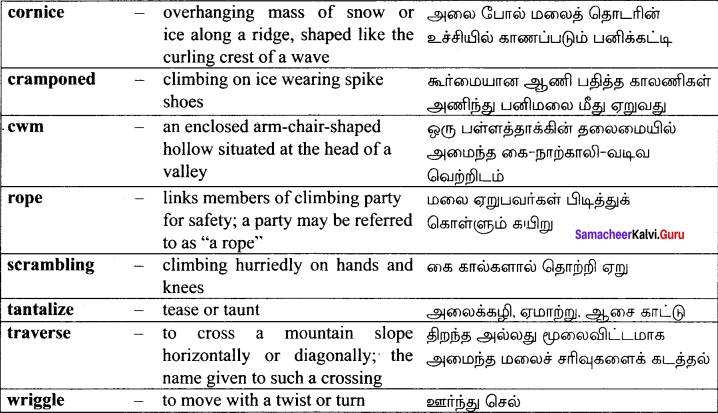
Samacheer Kalvi 12th English Solutions Prose Chapter 4 The Summit img-2

Additional:

Samacheer Kalvi 12th English Solutions Prose Chapter 4 The Summit img-3

The Summit Synonyms

Find out the synonym of the underlined word in each of the following sentences. Tenzing crawled into the tent.

Question 1.
Tenzing crawled into the tent.
(a) craved
(b) craned
(c) crashed
(d) crept
Answer:
(d) crept

Question 2.
I dragged our oxygen sets into the tent.
(a) pushed
(b) loaded
(c) pulled
(d) lauded
Answer:
(c) pulled

Question 3.
They were now frozen solid.
(a) soft
(b) rigid
(c) molten
(d) liquid
Answer:
(b) rigid

Question 4.
I cooked them over the fierce flames.
(a) mild
(b) benign
(c) ferocious
(d) sublime
Answer:
(c) ferocious

Question 5.
We hoisted our oxygen gear onto our backs.
(a) hauled up
(b) dropped
(c) swayed
(d) hooked up
Answer:
(a) hauled up

Question 6.
Tenzing kicked steps in a long traverse.
(a) vertical movement
(b) horizontal crossing
(c) diving
(d) jumping
Answer:
(b) horizontal crossing

SamacheerKalvi.Guru

Question 7.
We came to a tiny hollow.
(a) peak
(b) sledge
(c) empty space
(d) deep pit
Answer:
(c) empty space

Question 8.
I scraped the ice off the gauges.
(a) melted
(b) applied
(c) saw
(d) scratched
Answer:
(d) scratched

Question 9.
If used sparingly, the newly found cylinders could get us down to south.
(a) lavishly
(b) extravagantly
(c) economically
(d) sufficiently
Answer:
(c) economically

Question 10.
We persisted in our efforts to beat a trail up.
(a) plodded
(b) persevered
(c) prevented
(d) perished
Answer:
(b) persevered

Question 11.
We made frequent changes of the lead.
(a) irregular
(b) intermittent
(c) regular
(d) legal
Answer:
(c) regular

Question 12.
We reached a firmer snow higher up.
(a) milder
(b) softer
(c) fragil
(d) harder
Answer:
(d) harder

Question 13.
A section around me gave way.
(a) firmed up
(b) collapsed
(c) cleared
(d) shook
Answer:
(b) collapsed

Question 14.
We removed our oxygen apparatus.
(a) implement
(b) tool
(c) equipment
(d) mask
Answer:
(c) equipment

Question 15.
Our first bottle of oxygen was now exhausted.
(a) full
(b) filled
(c) exploded
(d) finished
Answer:
(d) finished

Question 16.
The space was large enough for our oversized high altitude boots,
(a) expensive
(b) cozy
(c) height
(d) depth
Answer:
(c) height

Question 17.
We scrambled on the rocks.
(a) slept
(b) slipped
(c) smiled
(d) hurried
Answer:
(d) hurried

Question 18.
We were able to shuffle past these portions.
(a) walk unsteadily
(b) run fast
(c) dive
(d) slide
Answer:
(a) walk unsteadily

SamacheerKalvi.Guru

Question 19.
I took a firm stance.
(a) chance
(b) act
(c) fact
(d) viewpoint
Answer:
(d) viewpoint

Question 20.
It has just been hauled from the sea.
(a) thrown
(b) preserved
(c) pulled out
(d) put out
Answer:
(c) pulled out

Question 21.
Our original zest had now gone.
(a) indolence
(b) indifference
(c) insight
(d) enthusiasm
Answer:
(c) insight

Question 22.
There were no more humps to tantalize us.
(a) tip
(b) tease
(c) divert
(d) provoke
Answer:
(b) tease

Question 23.
There was no disguising his grin of delight.
(a) concealing
(b) controlling
(c) curbing
(d) curtailing
Answer:
(a) concealing

Question 24.
To the east was our giant neighbour Makalu unexplored.
(a) unnoticed
(b) unnerved
(c) undiscovered
(d) unruffled
Answer:
(c) undiscovered

Question 25.
The great bulk of Kanchenjunga loomed on the horizon.
(a) soothed
(b) reassured
(c) reaffirmed
(d) reaffirmed
Answer:
(d) reaffirmed

Question 26.
All devout Buddhists believe that at least a token gift must be given to God.
(a) addicted
(b) devastated
(c) dedicated
(d) delirious
Answer:
(c) dedicated

Question 27.
We cautiously scrambled over the rock.
(a) casually
(b) recklessly
(c) gracefully
(d) carefully
Answer:
(d) carefully

Question 28.
We set ourselves to the task of safely descending the ridge of South Col.
(a) disagreeing
(b) dissenting
(c) climbing down
(d) dissecting
Answer:
(c) climbing down

Question 29.
The tents flapped and shook under the perpetual South Col gale.
(a) transitory
(b) makeshift
(c) never ending
(d) rare
Answer:
(c) never ending

Question 30.
John Hunt led the expedition.
(a) picnic
(b) purposeful journey
(c) excursion
(d) tour
Answer:
(b) purposeful journey

The Summit Antonyms

Find out the antonym of the underlined word in each of the following sentences.

Question 1.
They were now frozen solid.
(a) concrete
(b) firm
(c) thick
(d) liquid
Answer:
(d) liquid

Question 2.
I cooked them over the fierce flames.
(a) rude
(b) tough
(c) gentle/mild
(d) cruel
Answer:
(c) gentle/mild

Question 3.
My feet were now warm.
(a) hot
(b) cozy
(c) chill
(d) comfortable
Answer:
(c) chill

Question 4.
The bottle of oxygen was now exhausted.
(a) emptied
(b) finished
(c) completed
(a) filled
Answer:
(b) finished

Question 5.
They wear over-sized high altitude boots.
(a) depth
(b) sound
(c) light
(d) height
Answer:
(a) depth

SamacheerKalvi.Guru

Question 6.
I felt a sense of freedom.
(a) liberty
(b) fraternity
(c) equality
(d) slavery
Answer:
(d) slavery

Question 7.
It was a great thrill to look down at this enormous rock.
(a) huge
(b) large
(c) tiny
(d) colossal
Answer:
(c) tiny

Question 8.
With effort could muster my arms and shoulder.
(a) gather
(b) collect
(c) give
(d) lose
Answer:
(d) lose

Question 9.
Makalu was unexplored.
(a) expedited
(b) explored
(c) explained
(d) expelled
Answer:
(b) explored

Question 10.
Buddhists believe that God lives in lofty summits.
(a) high
(b) colossal
(c) enormous
(d) lowly
Answer:
(d) lowly

Question 11.
We scrambled cautiously.
(a) carefully
(b) meticulously
(c) carelessly
(d) teasingly
Answer:
(c) carelessly

Question 12.
We set about descending from the ridge.
(a) dissenting
(b) ascending
(c) condescending
(d) stooping
Answer:
(b) ascending

Question 13.
We cramponed along our tracks spurred by the urgency of diminishing oxygen.
(a) aroused
(b) animated
(c) propelled
(d) calmed
Answer:
(d) calmed

Question 14.
With a sigh of delight, we collapsed into our sleeping bags.
(a) joy
(b) bliss
(c) sorrow
(d) contentment
Answer:
(c) sorrow

Question 15.
Their happiness and pride showed.
(a) egoism
(b) egotism
(c) gratification
(d) humility
Answer:
(d) humility

Samacheer Kalvi 12th English Book Solutions Prose
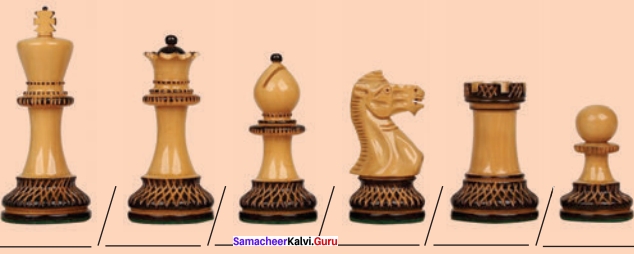
12th English Unit 4 Prose The Summit Paragraph Book Back Answers Samacheer Kalvi Read More »

12th English Unit 6 Prose On the Rule of the Road Paragraph Book Back Answers Samacheer Kalvi

On the Rule of the Road Book Back Answers Class 12 English Guide Chapter 6 Tamilnadu Solutions

Students can Download English Lesson 6 On the Rule of the Road Questions and Answers, Summary, Activity, Notes, Samacheer Kalvi 12th English Book Solutions Guide Pdf helps you to revise the complete Tamilnadu State Board New Syllabus and score more marks in your examinations.

Get a Practical Study with the help of Samacheer Kalvi 12th English Grammar to make learning language much easy for you and score good grades in exams.

12th Standard English 6th Lesson On the Rule of the Road Questions and Answers

Warm-Up

(a) From the pictures given below, identity the actions that may cause inconvenience and discomfort to others. Discuss.

Samacheer Kalvi 12th English Solutions Prose Chapter 6 On the Rule of the Road img-1

Answer:
Using mobile phones, listening to loud music, and driving recklessly will cause inconvenience and discomfort to others.

(b) Classify these pictures to show what they depict-Personal freedom/Public liberty.

Personal freedom Public liberty
colouring the hair red

Answer:

Personal freedom Public liberty
colouring the hair red Using a mobile phone
listen to music driving recklessly on the road
cycling
mountain climbing

Samacheer Kalvi 12th English On the Rule of the Road Textual Questions

1. Answer the following questions in one or two sentences each.

Question (a)
Why did the lady think she was entitled to walk down the middle of the road?
Answer:
The lady thought that she was entitled to walk down the middle of the road as she had got the liberty to do so.

Question (b)
What would be the consequence of the old lady’s action?
Answer:
If the pedestrian takes to the road, the cars have to take the pavement to drive on. The lady’s action would result in universal chaos.

SamacheerKalvi.Guru

Question (c)
What does the ‘rule of the road’ mean?
Answer:
‘Rule of the road’ means in order to preserve the liberties of all, the liberties of everybody must be curtailed.

Question (d)
Why should individual liberty’ be curtailed?
Answer:
Individual liberty must be curtailed in order that everyone may enjoy a social order which makes individual liberty a reality.

Question (e)
How would a reasonable person react when his actions affect another person’s liberty?
Answer:
A reasonable person would accommodate his liberty to the liberties of others.

Question (f)
Define Liberty as perceived by the author.
Answer:
Liberty is an accommodation of interests. It is a social contract rather than a personal affair,

Question (g)
According to the author, what are we more conscious of?
Answer:
According to the author, we are more conscious of the imperfections of-others than of our own.

Question (h)
What is the foundation of social conduct?
Answer:
A reasonable consideration for the rights or feelings of others is the foundation of social conduct.

Question (i)
How can we sweeten our life’s journey?
Answer:
We can sweeten our life’s journey by the habit of commonplace communion that makes up the great sum of life.

Question (J)
What does the traffic policeman symbolize?
Answer:
The traffic policeman symbolizes not tyranny but liberty.

Additional Questions

Question (a)
How does individual liberty become social anarchy?
Answer:
When an individual does not follow the rules of the road, he interferes with others. Everyone will get into everyone else’s way and thus individual liberty will become social anarchy.

Question (b)
What will happen if the policeman does not interfere with traffic?
Answer:
Universal chaos occurs when an individual pays more attention to his personal liberty alone and ignores the liberty of others.

Question (c)
When can one enjoy a social order?
Answer:
When one submits to a curtailment of private liberty, one can enjoy a social order. Such a social order makes one’s liberty a reality.

SamacheerKalvi.Guru

Question (d)
Why does the author say liberty is a social contract?
Answer:
Liberty is not a personal affair but a social contract. It is an accommodation of interests.

Question (e)
What are we liable to forget?
Answer:
We are liable to forget that there are a lot of people in the world and we have to accommodate our liberties to their liberties.

Question (f)
What are we often conscious of?
Answer:
We are often conscious of the imperfections of others than of our own when it comes to accommodation of interests.

Question (g)
How do we declare ourselves civilised or uncivilised?
Answer:
It is in the small matters of conduct, in the observance of the rules of the road, that we pass judgement upon ourselves and declare if we are civilised or uncivilised.

2. Answer the following questions in three or four sentences each.

Question (a)
What is ‘liberty’ according to the old lady?
Answer:
According to the Russian old lady, liberty is the right to walk in the middle of the road. She is liberty-drunk. She wasn’t aware that if the pedestrian chooses to walk down the middle of the road, then the end of such liberty would be a universal chaos.

Question (b)
How would ‘liberty’ cause universal chaos?
Answer:
When liberty is used without accommodating the interests of others, it results in universal chaos. Everybody would be getting in everybody else’s -way. Nobody would get anywhere. Individual liberty would become a social anarchy.

Question (c)
Why is there a danger of the world getting ‘liberty drunk’?
Answer:
Similar to the Russian old lady many people are liberty-drunk. Many think that a traffic policeman is a symbol of tyranny. Being in a hurry, the people who are crazy driving their cars . at break-neck speed think that the traffic policeman interferes with their right to free use of highway.

Question (d)
‘Curtailment of private liberty is done to establish social order’ – Do you agree?
Answer:
Yes, curtailment of private liberty is done to establish social order. Liberty is not a personal affair only, it is a social contract. There are a lot of people in the world who need to accommodate their liberty to the liberties of others. A reasonable consideration of the rights or feelings of others in the foundation of social conduct. When one has submitted to the curtailment of private liberty, one may enjoy a social order which makes his liberty, a reality.

3. Answer each of the following in a paragraph of 100-150 words.

Question (a)
What do you infer from Gardiner’s essay ‘On the rule of the Road’?
Answer:
Gardiner’s essay “On the rule of the Road’ emphasises the fact that liberty is not a personal happening but a social commitment. One can enjoy one’s liberty to the extent that it does not disturb others. For example, one has got the complete liberty to choose his dress, dye his hair, go to bed late, or get up early. In fact, one has got the liberty to practice the trombone till midnight when he is alone.

The same cannot be done in the streets at night as it disturbs the liberty of his neighbours to sleep in quiet. It is quite essential that one has to accommodate one’s liberty to other liberties. The foundation of good social conduct is a reasonable consideration of the rights or feelings of others. Thus one can declare himself as civilized. It is this consideration for others which sweeten our life’s journey.

SamacheerKalvi.Guru

Question (b)
Explain in your own words, “What freedom means?”
Answer:
Freedom is not the absolute right of an individual. It is not a personal affair only but a social contract. It is an accommodation of interests. One may exercise freedom in matters pertaining to choice of hair-cut, clothes, sandals, and sleeping habits. There are a thousand little things for which one can use freedom and be wise or otherwise. But beyond that kingdom of freedom, one’s freedom of action is qualified by other’s freedom. One might use a trombone from midnight till three in the morning provided it is done in Mount Everest and not where one’s own family members are asleep. One’s right to play on trombone must not interfere with the liberty of neighbours to sleep in quiet. A reasonable consideration for the rights or feelings of fellow humans is the foundation of social conduct.

Question (c)
“My right to swing my fist ends, where your nose begins.” Elucidate with reference to, ‘On the Rule of the Road’.
Answer:
Liberty is doing what we like we can wax our mustache. We can wear an overcoat or sandals. We can eat whatever food we like we have the choice to select our favourite writers for reading. All these are considered to be personal liberty. It does not disturb others in any way but when there arises a situation where our personal liberty disturbs others it is very essential to curtail our liberty. That is why it is said “My right to swing my first ends where your nose begins”, only when we have reasonable consideration for the rights of others good social conduct can be maintained.

Question (d)
Civilization can only exist when the public collectively accepts constraints on its freedom of action – Explain.
Answer:
Human beings, by nature, are quick to find fault with the imperfections of others. They don’t usually realize the truth that they have to accommodate their liberty to the liberty’ of others. A reasonable consideration for the rights and feelings of others is the foundation of social conduct. It is in small matters of conduct, in the observance of the rules of the road, that we pass judgment on ourselves. We assess ourselves as civilized or uncivilized.

We are civilized if we enjoy our rights without violating the rights of others or eroding into the privacy of others. It is the little habits of commonplace interaction that make up the great sum of life and sweeten or make bitter the journey.

In a civilized society, the public collectively accepts the fact that freedom is an accommodation of the interests of others. It means curtailing a part of one’s own liberty to the liberty of others. So, it is true that civilization can only exist and prosper when the public collectively accepts constraints to its freedom of action.

Vocabulary

Pronunciation – Functional Stress

(a) Now the teacher will read the following words. Listen carefully to the stress in each word. Write against each word whether it is a noun or a verb and mark the stress.

‘contract con’tract
‘conduct con’duct
‘object ob’ject
‘subject sub’ject
‘present pre’sent
‘desert de’sert
‘project pro’ject
‘refuse re’fuse
‘address ad’dress

Answer:

‘contract (n) con’tract (v)
‘conduct (n) con’duct (v)
‘object (n) object (v)
‘subject (n) subject (v)
‘present (n) pre’sent (v)
‘desert (n) de’sert (v)
‘project (n) project (v)
‘refuse (n) re’fuse (v)
‘address (n) ad’dress (v)

American And British English

(c) Some British English words are given in column ‘A’. Write their corresponding American English word is Column ‘B.’

British American
pavement sidewalk
pull over
waistcoat
chips
flat
ground floor
underground
queue
windscreen
indicator
timetable
post
holiday
autumn
lift
happy
fully

Answer:

British American
pavement sidewalk
pull over sweater
waistcoat vest
chips french fries
flat apartment
ground floor first floor
underground sub-way
queue line
windscreen windshield
indicator turn signal
timetable schedule
post mail
holiday vacation
autumn face
lift elevator
happy happy
fully totally

(d) Similarly there is a difference in the spelling of certain words between American and British English. In Column ‘A’ words are spelled in American. Write down the corresponding British English spelling for those words in column ‘B\ (The first one is done for you)

A B
odor odour
program
parlor
apologize
color
check
theater
gray
behavior
humor
labor

Answer:

A B
odor odour
program programme
parlor parlour
apologize apologise
color colour
check cheque
theater theatre
gray grey
behavior behaviour
humor humour
labor labour

Listening Activity

Listen carefully to the story being read out and answer the questions.

A boy was flying a kite with his father. He was excited to watch the kite soar high and asked his father, “What kept the kite up?” Dad replied “The String”. The boy said “No dad, the string is holding the kite down.” The father suddenly broke the string, the kite came crashing down. Now the boy understood, what was holding the kite up. This is true in life as well. We are advised to follow a set of rules or a prescribed code of conduct to enable us to reach our full potential.

However, very often we hear the phrase “I want to be free.” If you take the train off the track, it is free. But where would it go? If each one of us follows our own traffic rules and drive on any side of the road what would you call it? Freedom or chaos? By observing rules we are actually gaining freedom. This is what discipline is all about.

SamacheerKalvi.Guru

Question 1.
According to the father, what kept the kite up?
(a) the kite itself
(b) air
(c) the string
(d) father’s skills
Answer:
(c) the string

Question 2.
The string helped the kite to ______
(a) withstand the pressure
(b) break free
(c) crash
(d) soar high
Answer:
(d) soar high

Question 3.
To realize our full potential, we should ______
(a) obey our elders
(b) follow a set of rules
(c) work hard
(d) plan well
Answer:
(b) follow a set of rules

Question 4.
A train should go on the ______ to reach its destination.
(a) track
(b) line
(c) road
(d) path
Answer:
(a) track

Question 5.
Taking freedom into our own hands will lead to ______
(a) self-discipline
(b) chaos
(c) a code of conduct
(d) freedom
Answer:
(b) chaos

Question 6.
The main idea of the passage is ______
(a) the art of flying kites
(b) father’s advice to his son
(c) the importance of discipline
(d) the right to freedom
Answer:
(c) the importance of discipline

Speaking Activity

(a) Everybody enjoys holidays but, when it comes to safety ‘There is no holiday for Safety’. Discuss in groups what safety measures one should take while driving a car/ two-wheeler.

Group A:
While riding a bike, the rider should wear a helmet. If there is a pillion rider, he/she should also wear a helmet. When the signal is yellow, one must stop the vehicle as a red signal will follow soon. Don’t ride or drive with breakneck speed. If somebody tries to cross the road suddenly, there could be a fatal accident. Before leaving the home, check the tyre pressure, adequacy of petrol or diesel or electricity if it is an electric bike/scooter. Thus, you can ensure safety by adopting the above strategies.

Group B:
If you plan to travel by car, leave at least one hour early to avoid peak hour traffic. Wear a seat belt. Before overtaking ensure if the vehicle ahead of you wishes to take a ‘U’ turn or not. If you wish to take a right turn or a left turn using the indicator to warn the following vehicle of your intended change in the direction of travel. If you tend to travel near a school, don’t speed up, look on either side to verify if children are trying to cross the road. Don’t honk near hospitals and schools. If there is an unmanned level crossing, park your car 10 meters away from the level crossing, check for the movement of the train on either side. Even if the train is seen far away, wait for the train to pass by.

(b) Your school has arranged for a road safety campaign, Share a few ideas with your classmates which can be used during the campaign. For example ‘Speed thrills but kills’.

The following are some interesting slogans to be used in the road safety campaign.

  • Drive as if every child on the road is your own.
  • A spill, a slip, a hospital trip
  • Start early, drive slowly, reach safely
  • An accident would cripple your income
  • Safety protects people
  • Safety starts within you
  • Risk prevention is better than cure
  • Drowsy driving is impaired driving
  • Fast drive’ could be the last drive
  • Don’t lose your head to gain a minute, you need your head Your brains are in it
  • Hug your kids at home but belt them in the car
  • Safety first because accident last
  • Chance takers are accident makers
  • Accidents hurt but safety doesn’t
  • Speed kills, slow down
  • Be cautious, nearly 40% of victims in road accidents are pedestrians
  • Sober up, drunk driving kills

Reading

Cyber Safety
Given below is a text on “Cybersafety” developed from the inputs received from Crime- Branch Crime Investigation Department (CBCID), Tamil Nadu dated: 05.12.2018. Read the text and answer the questions that follow.

Samacheer Kalvi 12th English Solutions Prose Chapter 6 On the Rule of the Road img-2

Question 1
How should teenagers guard against cybercrimes?
Answer:

  • Desist from interacting with strangers on social media and never meet strangers in person pursuant to social media chat/interaction.
  • Avoid having your picture as a profile picture. Even if you choose to have one, do so while restricting those persons who can see your profile picture.
  • Do not download software’s/Apps from unknown sources. Do not download unnecessary apps on the devices. Be a member of a social media group or WhatsApp group only if you know the majority of members in it and also if it is relevant to be part of the group. Do not believe and blindly share messages on social media without verifying the facts.
  • Keep front camera of mobile phones, laptops, etc., closed when not used. For Example, Stickers may be used to close the camera and to avoid remote access of the front camera.

SamacheerKalvi.Guru

Question 2
What should we do to ensure Safe Surfing?
Answer:

  • Use a secure browser.
  • Do not surf unsafe websites. A website with a URL starting with https:// is a secure website. If the website URL starts only as http://, it is unsecure.
  • Avoid clicking on links from unknown emails/pop-ups.
  • Do not enter passwords when connected to a public network (WiFi in Railway station or Airports)
  • Always use a computer in which an updated Anti Virus is installed.

Question 3
What are the details not to be revealed in the public domain?
Answer:

  • Any Passwords
  • Bank account /credentials
  • Credit card/Debit card details
  • Personal mobile number
  • Date of Birth
  • Any details which would help to track your routine activities

Question 4
What should parents do to ensure the safety of children in cyberspace?
Answer:

  • Set a fixed time during which children are allowed to surf the internet.
  • Always place the computer in that part of the house, which is visited most often by everyone. Don’t keep the computer in a secluded part. Talk with the children and educate them on the websites that they are allowed / not allowed to visit.
  • Be “Friends” with the children’s social media account so that their activities are monitored.
  • Install an Anti Virus with parental control in the computer.
  • Make it a habit to check to browse history/hidden files, apps installed, etc., on the computer/ device to monitor the activity of the children.

Question 5
Should children be discouraged from playing online games?
Answer:
Yes, the following steps can be followed to discourage children from playing online games.

  1. Encourage children to play outdoor games.
  2. Monitor closely if they are found playing a single game for long hours.
  3. Watch out for early signs of addiction to games such as
    • Decreasing Academic activity 4 Less times spent with family
    • Loss of interest in things previously enjoyed.
    • Lack of sleep / Sore Eyes
    • Headaches
    • Create awareness about the ill-effects of dangerous online games.

Questions:

Question 1.
Which of the following should one avoid while using social media? Tick against the correct options.
Answer:

  • Interacting with strangers on social media
  • Avoid posting your picture as a profile picture
  • Forwarding Whatsapp messages without verifying facts
  • Use a secure browser
  • Entering passwords while using a public network

SamacheerKalvi.Guru

Question 2.
How can we identify insecure websites?
Answer:
If the website URL starts only as http://, it is insecure.

Question 3.
Mention any three details that should not be revealed in the public domain.
Answer:

  1. Password
  2. Bank account details
  3. Personal mobile number

Question 4.
What should parents do to ensure cyber safety for their wards? (Any three points)
Answer:
Set a fixed time for viewing the internet
Keep the computer in a place where the content being viewed can be monitored by anyone Educate children on safe and unsafe sites.

Question 5.
Why is it not advisable to play online games?
Answer:

  1. They could swindle the family fortune
  2. Online games distract children from studies
  3. Children tend to spend less quality time with family members.
  4. Children tend to develop eye problems

Question 6.
Pick out words which mean the same as
Answer:

  1. stop doing something (para 1) – desist/avoid
  2. place or fix (para 2) – having
  3. not protected (para 2) – insecure
  4. keep a check on (para 3) – monitor

Grammar

Agreement of the subject with the verb
Task 1
I. Choose the correct option and complete the sentences.

  1. Manoj ________ (was, were) present along with his parents.
  2. Each of these boys ________ (has, have) passed.
  3. Neither Lekha nor Leela ________ (has, have) been selected.
  4. Every man, woman, and child ________ (was, were) happy.
  5. One of the machines ________ (is, are) defective.
  6. A number of books ________ (is, are) missing.
  7. Seker or his brothers ________ (has, have) done it.
  8. To make a promise and then not to keep it ________ (is, are) dishonesty.
  9. One of the other of those men ________ (has, have) lodged a complaint.
  10. TO. Each leaf and each flower ________ (was, were) stripped off the tree.

Answers

  1. was
  2. has
  3. 3. has
  4. were
  5. is
  6. are
  7. have
  8. is
  9. has
  10. was

Task 2
II. Identify the errors in each of the following sentences and rewrite them correctly.

Question 1.
Either Shyam or Ram have to pay the fine.
Answer:
Either Shyam or Ram has to pay the fine.

Question 2.
Abdul as well as Karim deserve praise.
Answer:
Abdul as well as Karim deserves praise.

Question 3.
Ten thousand rupees a month are an insufficient income.
Answer:
Ten thousand rupees a month is an insufficient income.

Question 4.
Many a student were awarded at the function.
Answer:
Many a student was awarded at the function.

Question 5.
Neither Veena nor her sisters have been informed of the accident.
Answer:
Neither Veena nor her sisters have been informed of the accident.

Question 6.
Mithra as well as her daughters enjoy singing.
Answer:
Mithra as well as her daughters enjoys singing.

Question 7.
You, who is my friend, should help me.
Answer:
You, who are my friend, should help me.

Question 8.
My scissors is missing.
Answer:
My scissors are missing.

Question 9.
A variety of pleasing objects charm the eye.
Answer:
A variety of pleasing objects charms the eye.

Question 10.
Sixty miles are a long distance.
Answer:
Sixty miles is a long distance.

Writing

Describing a process
Task 1:

Preparation of apple juice
You plan to delight your parents and sister, serving them chilled apple juice. Here is the process:

(Complete the sentences with the right form of the verbs)
Four or five apples (1) ______ (take) and (2) ______ (wash) well. They (3) ______ (wipe) dry and cut into pieces of medium size. The seeds (4) ______ (remove). Then the apples (5) ______ (put) into the mixer. Some milk (6) ______ (add) .The apples(7) ______ (crush) and a fine liquid (8) ______ (obtain). This liquid (9) ______ (filter) and the juice (10) ______ (store) in the refrigerator. It is (11) ______ (take ) out whenever needed, and after adding sugar, it (12) ______ (sen e) in cups.
Answer:

  1. should be taken
  2. washed
  3. should be wiped
  4. should be removed
  5. should be put
  6. should be added
  7. should be crushed
  8. will be obtained
  9. should be filtered
  10. should be stored
  11. taken
  12. is served

Task 2:
Installing a computer

The description of installing a computer in your study room is given in the form of jumbled sentences. Rearrange the sentences in the right order and form a coherent paragraph.

  1. Once you connect the CPU, connect the keyboard and mouse.
  2. Before turning on the power, check that all parts are connected to the CPU.
  3. First, open the box and take out the computer parts.
  4. Plug both the computer and the monitor with a power cord.
  5. Set the computer on a table or flat surface.
  6. Finally, turn on the power.

SamacheerKalvi.Guru

Task 3:
Attempt a description of the following processes, in about 100 words each, either using the imperative or the passive.

Question 1.
Preparing your favourite dish
Answer:

  1. Finely chop one medium size onion, 1 to 2 green chilies, half-inch ginger, and some coriander leaves.
  2. One must keep aside 8 to 10 curry leaves, 10 to 12 cashew nuts, 1 teaspoon chana dal, and 1 teaspoon of urud dal.
  3. Heat a pan or Kadai. Add one cup rava and roast at a low flame, until the aroma of roasted rava arises.
  4. Shift the roasted rava to another plate.
  5. In a pan, heat 2 tablespoons of ghee or oil and add mustard seeds. Wait until it crackles.
  6. Then add cumin seeds and chana dal and fry them until brown.
  7. Add cashews and roast till they become golden colour. Now add finely chopped onions and saute them till they become translucent.
  8. Now add green chilly, ginger, curry’ leaves. Saute for a minute. Add two and a half cups of water and add salt to taste.
  9. Wait until the water boils and add the roasted Rava in four or five batches. Keep stirring and mix well under low flame.
  10. The rava will absorb the water and will be cooked.
  11. Keep on stirring until all the water is absorbed by the rava and then turn off the flame.
  12. Serve the delicious upma with coconut chutney or sugar.

Question 2.
Organising a birthday party at your house
Answer:
Organising a birthday party especially for young children could be great fun.

  1. Shortlist the names of invitees.
  2. Write or print as many invitation cards as necessary,
  3. Place them inside the cover and write the names on each cover.
  4. Decide on the items to be served to the invitees such as juice, cakes, ice-cream, candies etc.
  5. Decorate the home with colour flags, balloons, etc.
  6. Decide on the games to be played.
  7. Along with food items procure gift items to be given to children who come to honour the child at the birthday party.
  8. Either has a photographer or videographer to record the event.
  9. Now go ahead with the plan, you will have a wonderful birthday party.

Question 3.
Sending a letter by courier service
Answer:

  1. Write the letter, fold it, and place it inside an envelope.
  2. Paste the right end of the envelope and write your address at the left-hand bottom.
  3. Write the addressee’s name and address in the middle of the envelope.
  4. Take it to the courier office.
  5. Write on top of the envelope “By Courier”.
  6. Get it weighed.
  7. The front desk personnel will ask you to pay an amount according to the weight of the envelope and the distance it has to travel.
  8. Pay the money and get the invoice.
  9. Now the courier is on its way to the intended destination.

Question 4.
Obtaining a demand draft from a bank
Answer:

  1. It is a very simple process.
  2. Go to any nationalized bank and ask for a challan to fill in details such as the beneficiary’s name, date, amount, commission to be paid.
  3. One can turn the challan leaf to find the Tamil version of the challan to be filled,
  4. Total the amount and the commission and fill the challan.
  5. Draw a self-drawn cheque and attach it along with the DD challan.
  6. The bank will deduct the money from your account and give a demand draft to you.
  7. If you don’t have an account, the commission amount maybe a little extra.

On the Rule of the Road About The Author

Samacheer Kalvi 12th English Solutions Prose Chapter 6 On the Rule of the Road img-3

Alfred George Gardiner was a British journalist and author. He was a prolific essayist and his style and subject matter easily qualified him to be categorized as what the English would call a very civilized gentleman. His essays include ‘On Habits’, ‘On Being Tidy’, and ‘On Talk and Talkers’. ‘On the Rule of the Road’, was included in one of Gardiner’s compilations titled “Leaves in the Wind’ and was published under his pseudonym “Alpha of the Plough”.

On the Rule of the Road Summary in English

Introduction
On the rule of the road, A. G. Gardiner emphasizes the necessity of certain constraints on individual liberty if society is to function in a genuinely civilized manner.

Social awareness
A plump old lady was walking with her basket in the middle of the road in Petrograd. It created great confusion with the traffic. Even her own life was in danger. Somebody pointed out to her that the pavement was meant for the pedestrians. Her reply was that she enjoyed liberty and could walk anywhere she liked. She did not realize that her liberty or such unrestrained freedom could lead to an all-round disorder. If everybody interferes with the liberties of others, nobody would be able to enjoy liberty. This could lead to social anarchy.

SamacheerKalvi.Guru

Liberty drunk public
In the modem world, people are liberty dunk like that old lady. Therefore, it is important to remind them what the mle of the road means. It means that to preserve the liberties of all, everybody’s liberties must be reduced. He makes his point clear with an example of a traffic policeman. The traffic policeman is not a symbol of tyranny but of liberty. An unreasonable man will be annoyed by the interference of the traffic policeman. If the policeman stops a man in a hurry, he will feel that his liberty has been injured by violence. A reasonable man will surely think him to be the right man to do so. If he does not interfere with him, he would interfere with none. It would lead to chaos. Then nobody would be able to cross the road. Therefore, one’s liberty has to be curtailed to create social order and make liberty real.

Personal liberty vs Public liberty

Samacheer Kalvi 12th English Solutions Prose Chapter 6 On the Rule of the Road img-4

Liberty is not only a personal affair but a social contract too. It requires an adjustment of our interests. There are matters of a private kingdom which does not touch anybody else’s liberty’. In this kingdom, one can follow one’s own fancy and ask no one’s permission. For example, one may follow any religion or one may marry a dark or fair lady. One may dye one’s hair or do whatever one may like with his hairstyle. These actions do not interfere with the liberties of others. But when one comes out of the kingdom of one’s personal liberty of action, becomes qualified by other people’s liberty. For example, one may like to play the guitar. But one should do the practice mildly to accommodate one’s liberty to other liberties. But most often people forget this. People look to the faults of others but forget their own. A reasonable consideration for the rights or feelings of others is the foundation of social conduct

Equal rights for small and big people

Samacheer Kalvi 12th English Solutions Prose Chapter 6 On the Rule of the Road img-5

The rights and liberties of small people are as important as those of small nationalities. Gardiner here condemns the attack of Germany on Belgium. In World War-II, Germany, a super military power overran the small and poorly equipped Belgium. He also criticizes the aggressive and bullying nature of some people and nations of the world. He called them an ugly specimen of a civilized world.

Small actions with big impact
Small actions of conduct count more. By these actions, like observing or not the rules of the road, we can be civilized or uncivilized. It is the little habits of commonplace intercourse that make up the great sum of life sweeter or make the journey bitter.

Conclusion
A.G. Gardiner illustrates with interesting examples of how social anarchy could be prevented by adhering to rules of the road. In a way, adhering to the rules of the road will not only retain a social order but also prevent fatal accidents on the road and embarrassing traffic jams.

On the Rule of the Road Summary in Tamil

முன்னுரை
_ ‘On the Rule of the Road’ (“சாலை விதியைப் பற்றி”) என்ற பாடத்தின் வாயிலாக கார்டினர், நம் தனி சுதந்திரத்தில் சில கட்டுப்பாடுகளை வகுத்துக் கொண்டால் நம் சமுதாயம் உண்மையாக நாகரிகம் நிறைந்ததாக செயல்படும் என்கிறார்.

சமூக விழிப்புணர்வு:
பெட்ரோகாட் நகரத்தில் பருமனான வயது | முதிர்ந்த பெண்மணி ஒருவர் தன் கையில் ஒரு | கூடையுடன் நடுரோட்டில் நடந்து கொண்டிருந்தார். இது சாலை போக்குவரத்தை பெரிய குழப்பத்திற்கு | உண்டாக்கியது. அவர் உயிருக்கே ஆபத்தாக இருந்தது. | நடைபாதையில் நடக்குமாறு சிலர் கூறிய போது, தான் | சுதந்திரத்தை விரும்புதால் தான் எங்கும் நடப்பதற்கு | உரிமை உண்டு எனப் பதிலளித்தார். அத்தகைய சுதந்திரம் மொத்தத்தில் குழப்பத்தையே ஏற்படுத்தும் என்பதை அவர் உணரவில்லை. ஒவ்வொருவரும் அடுத்தவரின் தனி சுதந்திரத்தில் தலையிட்டால் எவராலும் சுதந்திரத்தை அனுபவிக்க முடியாது. இது சமூக அராஜகத்தை உண்டாக்கும்.

சுதந்திர போதையில் தள்ளாடும் பொதுமக்கள்:
தனிச் சுதந்திரம் என்ற அபாய நோக்கமானது இக்காலத்தினரிடயே அந்த வயதான மூதாட்டி போல் தொற்றிக் கொண்டுள்ளது. ஆதலால், சாலை ஒழுக்கத்தை அவர்களுக்கு நினைவுபடுத்துவது முக்கியமான கடமையாகிறது. அதாவது அனைவரின் சுதந்திரத்தை பாதுகாக்கும் பொருட்டு அவர்களின் சுதந்திரத்தில் எல்லை வரையறுக்கப்படுகிறது. ஆசிரியர் இந்த கருத்தை தெளிவாக்க சாலை பாதுகாப்பு காவல்காரரை உதாரணமாகக் கொள்கிறார். சாலை பாதுகாப்பு காவலர் எதேச்சதிகாரத்தின் அடையாளம் அல்ல. அவர் உரிமையின் சின்னமாவார். இதைப் புரிந்து கொள்ளாதவர் காவலர் குறுக்கிடுதலை இடையூறாக கருதுவார். அவசரமாக காவலர் தடுத்து நிறுத்தினால் அவர் நம்மை வன்முறைக்கு உள்ளாக்குகிறார் என நினைக்கக்கூடும். புரிந்துகொண்டவர்களுக்கு அவர் நம் நன்மைக்கே செய்கிறார் என்பது விளங்கும். அவர் நம்மிடம் தலையிடாவிட்டால் அவரால் யாரிடமும் தலையிட முடியாது. அது குழப்பத்தையே உருவாக்கும். ஆகவே, வெறும் சாலையை கடக்க முடியாது. உங்களின் தனிச் சுதந்திரத்தை கட்டுப்படுத்துவது உங்களை பொது விதிகளை அனுசரிக்கச் செய்து உண்மை சுதந்திரத்தை உணரச் செய்வதற்கே ஆகும்.

தனிப்பட்ட சுதந்திரம் மற்றும் பொதுச் சுதந்திரம்

Samacheer Kalvi 12th English Solutions Prose Chapter 6 On the Rule of the Road img-6

சுதந்திரம் என்பது தனி நபரைச் சார்ந்தது மட்டும் அல்ல. அது ஒரு பொதுக் கோட்பாடு ஆகும். இதில் நம் உரிமைகளை பொருந்தச் செய்யவேண்டும். தனிப்பட்ட சுதந்திரக் கோட்பாடுகள் வேறு எவரின் சுதந்திரத்தையும் பாதிப்பதில்லை. இந்த நாட்டில் ஒருவர் தன் மனம் செல்லும் வழியில் செல்ல யாரிடமும் உத்தரவு கேட்பதில்லை. உதாரணத்திற்கு ஒருவர் எந்த மதத்தையும் பின்பற்றலாம் அல்லது கறுப்பு நிறத்தவரையோ, வெள்ளை நிறத்தவரையோ திருமணம் செய்து கொள்ளலாம். அவர் தலைக்கு சாயம் அடித்துக் கொள்ளலாம். எதுவாயினும் செய்யலாம். இந்தச் செயல்கள் அடுத்தவரின் சுதந்திரத்தைப் பாதிப்பதில்லை. ஆனால் இந்த தனிப்பட்ட சுதந்திர வட்டத்தை விட்டு வெளியேறும் போது மற்றவரின் சுதந்திரத்தை மதித்து அனுமதிக்க வேண்டியுள்ளது. அதாவது ஒருவர் கிடார் (guitar) வாசிக்க விரும்பலாம். ஆனால், அடுத்தவரின் சுதந்திரத்தை அனுசரிக்கும் வகையில் தன் சுதந்திரம் இருக்க அவர் மெதுவாக வாசிக்க வேண்டும். பெரும்பான்மையான மக்கள் இதை மறந்து விடுகிறார்கள். அடுத்தவர் குறையைக் காணும் மக்கள் தன் குறையை மறந்து விடுகிறார்கள். அடுத்தவரின் உரிமை அல்லது உணர்வுகளுக்கு இடமளிப்பதே சமூக நடத்தையின் அடித்தளம் ஆகும்.

எளியவருக்கும், வலியவருக்கும் ஒரே விதி:

Samacheer Kalvi 12th English Solutions Prose Chapter 6 On the Rule of the Road img-7

சிறிய நாடுகளில் வாழும் மக்களைப் போன்ற சிறுபான்மைப்பட்ட மக்களின் விதிகளும், உரிமைகளும் முக்கியமானதே. கார்டினர் (Gardiner) ஜெர்மனி நாடானது பெல்ஜியத்தின் மேல் போர் தொடுத்ததை வன்மையாகக் கண்டிக்கிறார். இரண்டாம் உலகப் போரின் போது சிறுபான்மையான மற்றும் போதிய இராணுவ வசதிகள் இல்லாத பெல்ஜிய நாட்டை பெரும் இராணுவப் படையுடைய ஜெர்மனி தன் வசப்படுத்தியது. சில மக்கள் மற்றும் உலக நாட்டவரின் ஆக்ரமிக்கும் குணம் மற்றும் அகங்காரம் குறித்தும் ஆசிரியர் விமர்சனம் செய்கிறார். அவர்களை நாகரிக உலகத்தின் வெறுக்கத்தக்க இனம் எனக் குறிப்பிடுகிறார்.

சிறிய நடவடிக்கை கொடுத்த பெரிய விளைவு:
சிறிய சிறிய நம் செயல்கள் பெரிய தாக்கத்தை உருவாக்குகின்றன. இத்தகைய சிறிய செயல்களான விதிமுறைகளைக் கடைப்பிடிப்பது அல்லது | தவிர்ப்பது வழியாகவே நாம் நாகரிகமானவரா அல்லது (நாகரிகமற்றவரா என வரையறுத்துக் கொள்ளலாம். | இத்தகைய சிறிய பொது இடக் கோட்பாடுகளே நம் பெரும்பான்மையான வாழ்வை இனிமையாக்குவது அல்லது கசப்பாக்குவது என்பதை முடிவு செய்கின்றன. இத்தகைய சிறிய பொது இடக் கோட்பாடுகளே நம் பெரும்பான்மையான வாழ்வை இனிமையாக்குவது அல்லது கசப்பாக்குவது என்பதை முடிவு செய்கின்றன.

SamacheerKalvi.Guru

முடிவுரை:
சாலை விதிகளைக் கடைபிடிப்பதன் மூலம் சமூக அராஜகத்தை எப்படி தடை செய்யலாம் என்பதை ஏ.ஜி. கார்டினர் சுவாரஸ்யமான உதாரணங்களுடன் விளக்குகிறார். ஒரு வழியில், சாலையின் விதிகள் கடைபிடிக்கப்படுவது ஒரு சமூக ஒழுங்கைத் தக்கவைத்துக் கொள்வது மட்டுமல்லாமல், சாலையில் விபத்துகள் ஏற்படுவதை தடுக்கவும், சங்கடமான போக்குவரத்து நெரிசலைத் தடுக்கவும் உதவுகிறது.

On the Rule of the Road Glossary

Textual:

Samacheer Kalvi 12th English Solutions Prose Chapter 6 On the Rule of the Road img-8

Additional:

Samacheer Kalvi 12th English Solutions Prose Chapter 6 On the Rule of the Road img-9

On the Rule of the Road Synonyms

Find out the synonym of the underlined word in each of the following sentences.

Question 1.
A stout old lady walking down the middle of the street caused great confusion.
(a) vision
(b) clarity
(c) mess
(d) mesh
Answer:
(c) mess

Question 2.
She caused great peril to herself.
(a) safety
(b) frill
(c) shrill
(d) danger
Answer:
(d) danger

Question 3.
One who walks on the pavement is called,
(a) stalker
(b) walker
(c) pedestrian
(d) martian
Answer:
(c) pedestrian

SamacheerKalvi.Guru

Question 4.
We have got liberty now.
(a) tyranny
(b) freedom
(c) avarice
(d) slavery
Answer:
(b) freedom

Question 5.
The end of such liberty would be universal chaos.
(a) brotherhood
(b) love
(c) peace
(d) confusion
Answer:
(d) confusion

Question 6.
Individual liberty would become social anarchy.
(a) cooperation
(b) vanity
(c) civility
(d) lawlessness
Answer:
(d) lawlessness

Question 7.
Liberties of all may be preserved.
(a) excluded
(b) severed
(c) maintained
(d) pointed
Answer:
(c) maintained

Question 8.
The liberties of everybody must be curtailed.
(a) enhanced
(b) increased
(c) levelled
(d) reduced
Answer:
(d) reduced

Question 9.
He is a symbol of tyranny.
(a) plutocracy
(b) democracy
(c) aristocracy
(d) autocracy
Answer:
(d) autocracy

Question 10.
We may choose to be wise or ridiculous.
(a) serious
(b) funny
(c) earnest
(d) critical
Answer:
(b) funny

Question 11.
You can be conventional or odd.
(a) common
(b) usual
(c) strength
(d) popular
Answer:
(c) strength

Question 12.
If I play trombone in my bedroom, my family will object.
(a) accept
(b) approve
(c) oppose
(d) oppese
Answer:
(c) oppose

Question 13.
Liberty is a social contract.
(a) contact
(b) encounter
(c) confront
(d) agreement
Answer:
(d) agreement

SamacheerKalvi.Guru

Question 14.
I have to accommodate the interests of others.
(a) reject
(b) decline
(c) accomplish
(d) fit in with
Answer:
(d) fit in with

Question 15.
A reasonable consideration for the rights or feelings of others is the foundation of social conduct.
(a) thoughtfulness
(b) rejection
(c) confrontation
(d) argument
Answer:
(a) thoughtfulness

On the Rule of the Road Antonyms

Find out the antonym of the underlined word in each of the following sentences.

Question 1.
A stout old lady was walking.
(a) fat
(b) obese
(c) brittle
(d) lean
Answer:
(d) lean

Question 2.
We’ve got liberty now.
(a) freedom
(b) slavery
(c) right
(d) democracy
Answer:
(b) slavery

Question 3.
Such liberty would be universal chaos.
(a) disorder
(b) confusion
(c) order
(d) mess
Answer:
(c) order

Question 4.
Individual liberty would have become social anarchy.
(a) order
(b) disorder
(c) confusion
(d) mess
Answer:
(a) order

Question 5.
Liberties of all may be preserved.
(a) conserved
(b) damaged
(c) retained
(d) maintained
Answer:
(b) damaged

SamacheerKalvi.Guru

Question 6.
The liberties of everybody must be curtailed.
(a) reduced
(b) constrained
(c) restricted
(d) increased
Answer:
(d) increased

Question 7.
The policeman is not a symbol of tyranny.
(a) democracy
(b) autocracy
(c) plutocracy
(d) aristocracy
Answer:
(a) democracy

Question 8.
If you are a reasonable person, you would understand liberty.
(a) sound
(b) fair
(c) logical
(d) unreasonable
Answer:
(d) unreasonable

Question 9.
I have the liberty to be indifferent to you.
(a) caring
(b) disinterested
(c) heedless
(d) unconcerned
Answer:
(a) caring

Question 10.
We may choose to be harsh or easy.
(a) rude
(b) soft
(c) rough
(d) severe
Answer:
(b) soft

Question 11.
I have to accommodate my liberty to other’s liberties.
(a) adjust
(b) hinder
(c) fit in with
(d) give up
Answer:
(b) hinder

Question 12.
We are conscious of much more imperfections of others than of our own.
(a) frailties
(b) follies
(c) perfections
(d) shortcomings
Answer:
(c) perfections

Question 13.
A reasonable consideration for the rights or feelings of others is the foundation of social conduct.
(a) thoughtfulness
(b) heedfulness
(c) heedlessness
(d) sensitivity
Answer:
(c) heedlessness

Question 14.
I must not interfere with their liberty to sleep in quiet.
(a) solemnity
(b) quietude
(c) tranquillity
(d) noise
Answer:
(d) noise

Question 15.
The lady walked down the middle of the road with great peril to herself.
(a) danger
(b) safety
(c) horror
(d) criticality
Answer:
(b) safety

Samacheer Kalvi 12th English Book Solutions Prose
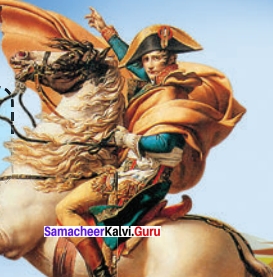
12th English Unit 6 Prose On the Rule of the Road Paragraph Book Back Answers Samacheer Kalvi Read More »

12th English Unit 3 Prose In Celebration of Being Alive Paragraph Book Back Answers Samacheer Kalvi

In Celebration of Being Alive Book Back Answers Class 12 English Guide Chapter 3 Tamilnadu Solutions

Students can Download English Lesson 3 In Celebration of Being Alive Questions and Answers, Summary, Activity, Notes, Samacheer Kalvi 12th English Book Solutions Guide Pdf helps you to revise the complete Tamilnadu State Board New Syllabus and score more marks in your examinations.

Get a Practical Study with the help of Samacheer Kalvi 12th English Grammar to make learning language much easy for you and score good grades in exams.

12th Standard English 3rd Lesson In Celebration of Being Alive Questions and Answers

Warm Up

There are several physically-challenged people who have lived successful and meaningful lives. Here are a few personalities who have fought great odds and lived a life of blazing achievements. Let’s share wdiat we know about each of them and complete the table below.

Samacheer Kalvi 12th English Solutions Prose Chapter 3 In Celebration of Being Alive img-1

Answer:

Name of the Personality Nature of Challenge Field of achievement
e.g. Beethovan Hearing impairment Music
Demosthenes Speech impaired Oration
Helen Keller Vision and multiple disorders Writing, Public Service
Mariyappan Thangavelu Physically handicapped High Jump
 Mozart Hearing impairment Music
John Milton Hearing impairment Poetry
Sudha Chandran Hearing impairment Dancing

Samacheer Kalvi 12th English In Celebration of Being Alive Textual Questions

1. Answer the following questions in one or two sentences based on your understanding of the lesson.

Question (a)
What thoughts troubled Dr. Christiaan Barnard as he neared the end of his career as a heart surgeon?
Answer:
The thought of why people should troubled Barnard.

SamacheerKalvi.Guru

Question (b)
What were Dr. Barnard’s feelings when he was hospitalized after an accident?
Answer:
He experienced not only agony but also anger after they had met with an accident. He had eleven broken ribs and perforated lungs. His wife had a badly fractured shoulder. He could not understand why they should undergo pain when they had other important things to do in life during that time.

Question (c)
When and where did the accident occur?
Answer:
The accident occurred when Barnard and his wife crossed a street after having a lovely meal together.

Question (d)
How did the hospitalization of Dr. Barnard and his wife affect their routine?
Answer:
As a heart surgeon, he had to operate on many heart patients. He was helpless as he had perforated lungs and broken ribs. His wife could not take care of the baby. Thus the routine life of both Dr. Barnard and his wife has affected adversely.

Question (e)
How was Dr. Barnard’s attitude to suffering different from that of his father’s?
Answer:

  1. Barnard did not find anything noble in a patient who moves restlessly in a mind clouded with agony.
  2. But his father was of the view that suffering makes one morally noble and better person.

Question (f)
How was the unattended trolley put to use?
Answer:
The unattended trolley was taken possession of by two bold and daring boys who had a great ride with it.

Question (g)
What roles did the duo take up?
Answer:
The unattended trolley was commandeered by a crew of two boys. One served as the driver and the other as a mechanic.

Question (h)
Why did the choice of roles prove to be easy for them?
Answer:
The choice of roles proved to be easy for them because the mechanic was totally blind and the driver had only one arm.

Question (i)
Who encouraged them and how?
Answer:
They were encouraged by laughter and shouts of encouragement from the rest of the patients.

SamacheerKalvi.Guru

Question (j)
What does Dr. Barnard compare this entertainment to?
Answer:
Dr. Barnard compares this entertainment with that of the Indian polis 500 car race.

Question (k)
What happened in the grand finale?
Answer:
There was a grand finale of scattered plates and silverware before the nurse and ward sister caught up with them.

Question (l)
How does Dr. Barnard know the boy who played the trolley’s driver?
Answer:
Dr. Barnard knew the boy as he had successfully closed a hole in his heart a few years earlier.

Question (m)
What was the profound lesson that Dr. Barnard learned from the boys?
Answer:
The boys had taught Dr. Barnard the lesson in getting on with the business of living. The business of living is the celebration of being alive.

Additional Questions

Question (a)
What did the Grand Prix of the hospital teach the author?
Answer:
The author found out that his perception of human suffering was incomplete. The boys taught him how the experience of suffering helps a person value life. This thought gave the author solace.

2. Answer the following questions in three or four sentences.

Question (а)
Detail the statistics Dr. Barnard has provided in his speech.
Answer:
Out of the 125 children born, 12 million are unlikely to reach the age of one, six million die before the age of five and the rest ends up with mental or physical disabilities.

Question (b)
What happened when the doctor couple was crossing the street?
Answer:
After a nice meal, Dr. Barnard and his wife were crossing the street. A car hit the doctor. He dashed against his wife who was thrown on the other side of the road. She was hit by another car from the opposite side.

SamacheerKalvi.Guru

Question (c)
What injuries did they sustain in the accident?
Answer:

  1. Dr.Barnard had eleven broken ribs and a damaged lung.
  2. His wife had a badly fractured shoulder.

Question (d)
Dr. Barnard couldn’t find any nobility in suffering. Why?
Answer:
As a doctor, he does not find any nobility in suffering. There is nothing noble in a patient’s thrashing around in a sweat-soaked bed, mind clouded in agony. He was against his dad’s faith that suffering ennobles human beings.

Question (e)
Why does Dr. Barnard find the suffering of children heartbreaking?
Answer:

  1. Dr. Barnard found the suffering of children heartbreaking as they trust the doctors and nurses totally and believe that they are going to help them.
  2. Even they are ready to accept their fate if something happened in an unlucky way.

Question (f)
How did the boy who played the mechanic lose his eyesight?
Answer:
The mechanic was seven years old. One night, when he’s drunk father tortured his mom, she threw a lantern at him. The lantern broke over the child’s head and shoulders. He suffered third-degree bums on the upper part of his body and lost both of his eyes.

Question (g)
Why does Dr. Barnard describe the blind boy as a ‘walking horror’?
Answer:

  1. Dr. Barnard describes the blind boy as a “walking horror” because of his disfigured appearance.
  2. A long flap of skin hanging from the side of his neck.
  3. As the wound healed around his neck, his lower jaw became gripped in a mass of fibrous tissue.

Question (h)
What were the problems the trolley driver suffered from?
Answer:
The trolley’s driver had a malignant tumour of the bone. A few days before the race, his shoulder and arm were amputated. There was no hope of recovery.

Additional Questions

Question (a)
How does suffering ennoble a person?
Answer:
One does not become a better person because one has suffered. One becomes a better person because one has undergone suffering. One can’t appreciate light in the absence of darkness.

3. Answer the following in a paragraph of 100 – 150 words each.

Question (a)
Give an account of the medical problems for which the two boys were hospitalized.
Answer:
The mechanic who was seven years old suffered severe third-degree burns on the upper part of his body and lost both his eyes. He had a long flap of skin hanging from the side of his neck to his body. His lower jaw became gripped in a mass of fibrous tissue. He could open his mouth only when he raised his head. Because of this disfigured appearance, he was called a ‘walking horror’ by Dr.Barnard. The trolley’s driver had a hole in his heart which was successfully closed by Dr.Barnard. Later he was hospitalized again because he had a malignant tumour of the bone out of which his shoulder and arm were amputated.

SamacheerKalvi.Guru

Question (b)
“These two children had given me a profound lesson …” Elucidate.
Answer:
The author had self-pity and was cursing the accident that had caused him and his wife great pain and inconveniences in the daily routine. But the two little boys, one almost scarred to death with both eyes gone and the other with an amputated arm and no hope of recovery were together celebrating the joy of being alive. They minded the business of living ignoring pain, surgery, and the sickly environment. Dr. Barnard learned the lesson from the children that the business of living is joy in the real sense of the word. It was not just something for pleasure, amusement, or recreation. The business of living in the celebration of being alive.

Question (c)
Describe the ‘Grand Prix’ at Cape Town’s Red Cross Children’s Hospital.
Answer:
One morning, Dr.Barnard witnessed a ‘Grand Prix’ of cape town’s Red Cross children’s hospital which made him perceive a new dimension of life. A nurse had left a breakfast trolley unattended which was taken possession of by two bold and daring boys. One acted as a driver and the other a mechanic. The choice of their roles apted them well as the mechanic was totally blind and the driver had only one arm.

The other patients encouraged them by their shouts and laughter. It was a much better entertainment, the result of which was the scattered plates and silverware placed on the trolley. After the Grand Prix, the driver who had a little hope of recovery proudly informed Dr.Barnard that the trolley’s wheels were not properly oiled but he was a good driver and he had full confidence in the mechanic. The action of these two children made Dr.Barnard realize the fact that the business of living is the celebration of being alive.

Question (d)
How did a casual incident in a hospital help Dr. Barnard perceive a new dimension of life?
Answer:
Initially, Dr. Barnard was grumbling. He wondered why on earth he and his wife should have been subjected to agony and inconvenience. He couldn’t take his dad’s view that suffering ennobles human beings. But the little boys taught him a profound lesson of life. One should get on with the business of living irrespective of whatever misfortune strikes one. You don’t become a better person because you suffered, your suffering does not ennoble you. But you become a better person because you have experienced suffering. It is not what you have lost is important. What is important is what you have left. We can appreciate light better once we have experienced darkness. Similarly, we can appreciate warmth only after experiencing cold.

SamacheerKalvi.Guru

Question (e)
Life is unjust and cruel to certain people. Do they all resign themselves to their fate? Can you think of some who have fought their disabilities heroically and remained a stellar example for others? (for e.g. the astrophysicist Stephen Hawking, a paraplegic). Give an account of one such person and his/her struggle to live a fruitful life.
Answer:
Alexis Leon lives in Kakkanad, Kerala. He passed B.Tech from the University of Kerala with the first rank. Then he did his M.Tech. He met with an accident in 1993 which left him paralyzed from the chest down and confined him to a wheelchair for the rest of his life. After a brief spell of dejection owing to a suspended marriage, he made up his mind to write books. He has written 50 books for Engineering graduates.

His notable work is ‘Internet for Everyone’ and ‘A Guide to Software Configuration Management’. He is also a mentor at the International Mentoring Network Association. He offers software consultancy to international IT companies. He travels across the world and delivers lectures to graduates and Corporates. His indomitable will has made him strong. He has become a lighthouse for many aspirants in the software industry.

Additional Questions

(a) What did Dr. Christiaan Barnard know about the mechanic and his family?
Answer:
The mechanic was seven years old. Both of his parents were drunk while quarreling, his mom threw a lantern at his father. It missed him but hit the boy. He suffered severe third-degree bums on the upper part of his body. He had lost both his eyes in the process. He got a disfigured face. He was a walking horror with a long flap of skin hanging from the side of his next to his body.

Vocabulary

1. More and more, as I near the end of my career as a heart surgeon, my thoughts have turned to the consideration of why people should suffer. Suffering seems so cruelly prevalent in the world today. Do you know that of the 125 million children born this year, 12 million are unlikely to reach the age of one and another six million will die before the age of five? And, of the rest, many will end up as mental or physical cripples.

2. My gloomy thoughts probably stem from an accident I had a few years ago. One minute I was crossing the street with my wife after a lovely meal together, and the next minute a car had hit me and knocked me into my wife. She was thrown into the other lane and struck by a car coming from the opposite direction.

3. During the next few days in the hospital, I experienced not only agony and fear but also anger. I could not understand why my wife and I had to suffer. I had eleven broken ribs and a perforated lung. My wife had a badly fractured shoulder. Over and over, I asked myself, why should this happen to us? I had work to do, after all; there were patients waiting for me to operate on them. My wife had a young baby who needed her care

SamacheerKalvi.Guru

4. My father, had he still been alive, would have said: “My son, it’s God’s will. That’s the way God tests you. Suffering ennobles you – makes you a better person.”

5. But, as a doctor, I see nothing noble in a patient’s thrashing around in a sweat-soaked bed, mind clouded in agony. Nor can I see any nobility in the crying of a lonely child in a ward at night.

6. In those days, they didn’t have sophisticated heart surgery. I have always found the suffering of children particularly heartbreaking–especially because of their total trust in doctors and nurses. They believe you are going to help them. If you can’t they accept their fate. They go through mutilating surgery, and afterward, they don’t complain.

7. One morning, several years ago, I witnessed what I call the Grand Prix of Cape Town’s Red Cross Children’s Hospital. It opened my eyes to the fact that I was missing something in all my thinking about suffering – something basic that was full of solace for me.

8. What happened there that morning was that a nurse had left a breakfast trolley unattended. And very soon this trolley was commandeered by an intrepid crew of two – a driver and a mechanic. The mechanic provided motor power by galloping along behind the trolley with his head down, while the driver, seated on the mower deck, held on with one hand and steered by scraping his foot on the floor. The choice of roles was easy because the mechanic was totally blind and the driver had only one arm.

Samacheer Kalvi 12th English Solutions Prose Chapter 3 In Celebration of Being Alive img-2

9. They put on quite a show that day. Judging by the laughter and shouts of encouragement from the rest of the patients, it was much better entertainment than anything anyone puts on at the Indianapolis 500 car race. There was a grand finale of scattered plates and silverware before the nurse and ward sister caught up with them, scolded them, and put them back to bed.

10. Let me tell you about these two. The mechanic was all of seven years old. One night, when his mother and father were drunk, his mother threw a lantern at his father, missed and the lantern broke over the child’s head and shoulders. He suffered severe third-degree burns on the upper part of his body and lost both his eyes.

At the time of the Grand Prix, he was a walking horror, with a disfigured face and long flap of skin hanging from the side of his neck to his body. As the wound healed around his neck, his lower jaw became gripped in a mass of fibrous tissue. The only way this little boy could open his mouth was to raise his head. When I stopped by to see him after the race, he said, “You know, we won.” And he was laughing.

11. The trolley’s driver I knew better. A few years earlier, I had successfully closed a hole in his heart. He had returned to the hospital because he had a malignant tumour of the bone. A few days before the race, his shoulder and arm were amputated. There was little hope of his recovery. After the Grand Prix, he proudly informed me that the trolley’s wheels were not properly oiled, but he was a good driver, and he had full confidence in the mechanic.

12. Suddenly, I realized that these two children had given me a profound lesson in getting on with the business of living. Because the business of living is joy in the real sense of the word, not just something for pleasure, amusement, recreation. The business of living in the celebration of being alive.

13. I had been looking at suffering from the wrong end. You don’t become a better person because you are suffering, but you become a better person because you have experienced suffering. We can’t appreciate the light if we haven’t known darkness. Nor can we appreciate warmth if we have never suffered cold. These children showed me that it’s not what you’ve lost that’s important. What is important is what you have left

(a) Go through the lesson and spot the words which mean the same as the following.

  1. profession (para 1)
  2. sorrowful (para 2)
  3. decency (para 5)
  4. destiny (para 6)
  5. hijacked (para 8)
  6. motivation (para 9)
  7. serious (para 10)
  8. significant (para 13)

Answer:

  1. career
  2. gloomy
  3. nobility
  4. fate
  5. commandeered
  6. encouragement
  7. severe
  8. important

(b) Go through the lesson and spot the words opposite to the meaning of the following.

  1. rare (para 1)
  2. primitive (para 6)
  3. fiction (para 7)
  4. fearful (para 8)
  5. benign (para 11)
  6. diffidence (para 11)
  7. boredom (para 12)
  8. criticize (para 13)

Answers

  1. prevalent
  2. sophisticated
  3. fact
  4. intrepid
  5. malignant
  6. confidence
  7. recreation
  8. appreciate

(c) Frame illustrative sentences to distinguish the meaning of the words in the following clusters.

Question 1.
career – carrier – courier
Answer:
A J. Cronin started his career as a doctor but eventually became a writer.
The curry spilled over as the tiffin carrier lid was not tightly closed.
The courier office is closed on Sundays.

SamacheerKalvi.Guru

Question 2.
patients – patience – patents
Answer:
I saw a large number of patients standing in a queue in front of the Government Hospital.
The patience of the gardener got paid well when the garden bloomed.
No other scientist in the world has got so many patents as Edison did.

Question 3.
accident – incident – incidence
Answer:
The accident took place in front of the hospital.
The incident of the French camp is an interesting poem.
The rising incidence of cross border terror attacks has annoyed India.

Question 4.
scraping – scrapping – scrubbing
Answer:
Scraping of NEET may help rural students to get into Government Medical Colleges.
Anil Ambani’s company suffered through several bankruptcies, resulting in the scrapping of many deals.
After scrubbing the stains for a long time, she found that the stain was gone but the cloth had got damaged.

Question 5.
accept – except – expect
Answer:
Don’t accept bribes.
Except Raghu, all had paid the fees for NEET coaching.
Those who don’t expect much gain a lot in life.

Question 6.
lesson – lessen – lesion
Answer:
Dr. Barnard learned a great lesson from the two disabled kids.
This medicine will lesson the pain.
The protruding thorn caused a lesion in his forearm.

Question 7.
severe – sever – sewer
Answer:
Prime Minister of India warned Pakistan of the severe consequences of the Pulwama terror attack.
It is difficult to sever the relationship for flimsy reasons.
Madras Corporation has invested a lot in laying underground sewers.

Question 8.
raise – rise – rice
Answer:
The philanthropist raised funds for the benefit of relations of those warriors who laid down their lives in Pulwama.
“The rise and fall of the Roman Empire” is an interesting book.
Many poor people do not use ration rice but exchange it for other items.

Question 9.
quiet – quite – quit
Answer:
Sheela lives in her quiet cottage in Chengalpattu with her retired husband.
Life in Coimbatore is quite expensive.
Some players, who are jealous of Dhoni’s reputation, want him to quit before the world cup matches.

SamacheerKalvi.Guru

Question 10.
final – finale – feline
Answer:
You must be relaxed before the final examination.
The performance of the child with autism in super singer in the grand finale was amazing.
I have a young feline pet who is very naughty.

(d) Fill in the blanks with the words given in brackets.

[profound, amusement, confidence, agony, solace, intrepid, disfigured, perforated]

  1. Theatrical plays were a main source of ________ before the advent of television of police.
  2. The ________ warriors of the Spartan Army marched into battle against a powerful enemy.
  3. The ________ of parents finally came to an end when their lost child was found with the help
  4. Social media has brought about a ________ impact on the lives of millennial.
  5. The tyres of the car got ________ when the vehicle rolled over the rusted nails scattered on the road.
  6. Thomas Alva Edison did not lose his ________, even after facing a series of experimental’ failures in his quest to discover tungsten.
  7. Many victims of the pipeline explosion in an oil refinery were left permanently ________
  8. The old lady found ________ in the company of the children in the neighbourhood

Answer:

  1. amusement
  2. intrepid
  3. agony
  4. profound
  5. perforated
  6. confidence
  7. disfigured
  8. solace

(e) Form a phrase with each of the

  1. muscle + pain – muscular pain
  2. skeleton + system – skeletal system
  3. nerve + disorder – nervous disorder
  4. digestion + enzymes – digestive enzyme
  5. surgery + instruments – surgical instruments
  6. agony + experience – agonising experience
  7. glory + victory – glorious victory
  8. fancy + idea – fanciful idea
  9. emotion + song – emotional song
  10. sense + issue – sensitive issue

(f) Fill the empty boxes with suitable words under each word class.

NOUN VERB ADJECTIVE ADVERB
amusement
appreciate
success
proudly
hopeful

Answer:

NOUN VERB ADJECTIVE ADVERB
amusement amuse amusing amusingly
appreciation appreciate appreciative appreciably
success succeed successful successfully
pride be proud proud proudly
hope(n) hope (v) hopeful hopefully

(g) Spot the errors in the following sentences and rewrite them correctly.

Question 1.
My grandfather is well-known in the village for his Nobel deeds.
Answer:
My grandfather is well-known in the village for his noble deeds.

Question 2.
I had my evening meals in a restaurant near my office.
Answer:
I had my dinner in a restaurant near my office.

Question 3.
The Boss had full confidence on his Manager for the successful completion of the project.
Answer:
The Boss had full confidence in his Manager for the successful completion of the project.

SamacheerKalvi.Guru

Question 4.
After the complicated surgery, the patient hoped of a complete recovery.
Answer:
After the complicated surgery, the patient hoped for complete recovery.

Question 5.
The new health care scheme announced by the Government will bring relief to the children suffering from acute tuberculosis.
Answer:
The new health care scheme announced by the Government will bring relief to the children suffering from acute tuberculosis.

Question 6.
In spite of his poverty and setbacks, he was able to launch his dream carrier.
Answer:
In spite of his poverty and setbacks, he was able to launch his dream career.

Listening Activity

Listen to the passage being readout. Based on your understanding, complete the statements given below with appropriate answers.

Boredom
We have all experienced boredom sometime or the other. Boredom occurs when a person is unable to stay attentive. It is something more than an unpleasant feeling. It can make you angry and frustrated and lead to negative physical health consequences.

How boredom affects one physically
A study reveals that when a person is affected by acute boredom his eyelids droop and the face assumes a frown. There is a gradual loss of ability to coordinate movements. These symptoms are accompanied by mental fatigue and a slowing down of thought processes. A bored person at work is likely to make many more errors than one who is not bored. We should never let boredom take charge. There are several easy ways to overcome boredom.

Here are a few practical suggestions:

  • Set goals for yourself, work towards them.
  • Develop an interest in hobbies and crafts.
  • Socialize, stay in the company of cheerful people.
  • Take up a charitable cause.
  • Exercise regularly.

Coming out of boredom will feel like breaking free from a cold, dark room into the outdoors on a warm, sunny day

Questions:

  1. Boredom occurs when a person is unable to
  2. ______ and ______ are emotional consequences of boredom.
  3. Two physical signs of acute boredom are (a) ______ (b) ______
  4. How does boredom affect the quality of work a person does?
  5. Mention two ways by which one can overcome boredom. (a) ______ (b) ______

Answers:

  1. stay attentive
  2. Anger, frustration
  3. (a) Drooping eyelids, (b) Frown
  4. A bored person commits a lot of errors in his work.
  5. (a) Goal setting, (b) stay in the company of cheerful people

Speaking Activity

1. You are rushing to attend to important work and you witness an accident on your way. Will you go to the rescue of the injured person? Share your views with the class.
Answer:
There is nothing more valuable than human life. I would suspend whatever important work I have in hand and call 108 and summon the ambulance. I will try to get the contact number of the next of kin of the injured person if he/she is conscious. I will inform them of the incident without causing panic. I will accompany the injured person to the hospital. In our NSS team, we have blood donors WhatsApp group. I will find out if blood is required and inform my blood donor group to ensure blood donation to the injured person. Only after the doctor confirms that the injured person is out of danger, I will leave the place.

I draw my inspiration to help people in distress from the life of Abraham Lincoln. He was a budding lawyer. He had to walk 2 hours to reach the court. On his way, he found a pig sinking in the mud and grunting in agony. It was scared that it would die. Abraham Lincoln was on his only best dress. He just got into the mud, lifted the pig, and left him safely on the hard surface. As he reached the court everyone laughed at his dirty coat but Abraham Lincoln just smiled and argued well in favour of his innocent client and got him acquitted too.

SamacheerKalvi.Guru

2. Every person should take up the responsibility to serve society in his or her own way. Discuss the various ways in which you can serve society.
Answer:
Elders keep on telling that students should not enter into politics, instead should focus on studies and scoring high marks. I have a sincere feeling that life is more than marks. Students can do a lot of services which would certainly make society a better place. Though the state government has banned the use of single-use plastics, it is widely used. Hot sambar curry and tea are packed in small plastic bags. People just use them.

We can generate awareness to all sellers and buyers in places where a large number of people gather that by eating hot things from single-use plastic bags, we are increasing the chances of getting cancer. The plastic covers thrown away blatantly do not degenerate for hundreds of years, it does not allow percolation of rainwater and soon after rain, we suffer from water scarcity. The rainwater runs away and joins the oceans.

We can tell the importance of rainwater harvesting and make farming practices economically viable. During elections, we can campaign for judicious use of voting rights to elect a person who has both the capacity and love for citizens to serve without expecting anything in return. We can also spread hygiene among the masses.

(a) Pair work: Practise the dialogue with another student. Then write a similar dialogue between a student and the class teacher regarding an educational trip.

Teacher : We plan to go on an excursion.
Student A : Where sir?
Teacher : We will discuss and finalise it today.
Student B : Sir, how about Vandaloor Zoo?
Teacher : it is a very hot season now, all the animals will be taking shelter under distant trees
Student A : We can’t see all of them. What about Vedanthangal?
Teacher : No, only after the rains foreign birds visit it.
Student B : What about Birla Planetarium?
Teacher : Fine, that is a good choice. We will go there next week.

(b) Build a conversation for the following situations with a minimum of five exchanges.

1. A passenger and a railway staff regarding the cancellation of the reserved tickets.

Passenger : Sir, I want to cancel a ticket.
Clerk : When was the journey planned?
Passenger : Sir, next Monday, the 23rd of March.
Clerk : Well, still three days are there.
Passenger : This is my ticket and takes the filled in cancellation form. Tell me, sir, how much will you deduct.
Clerk : Well, we will deduct only the reservation charges and you will get the balance amount. Take the money and count it, it is Rs. 280/ Thank you, sir.

2. Two friends about the NSS camp which they are going to attend.

Tarun : I am leaving for NSS camp.
Kavin : How many days?
Tarun : One week.
Kavin : Where are you going to?
Tarun : To Madagupatti.
Kavin : That village has no electricity.
Tarun : Yes. That’s why we are going there to help them in small possible ways.
Kavin : What will you do?
Tarun : We will deepen the lakes, clean the streets, remove the unneeded thorny
Kavin : bushes from the school and temple premises.
Tarun : That is a lot of work.
Kavin : We will conduct a medical camp with the help of doctors too.
Tarun : Sounds exciting. Can I join you?
Tarun : No, brother. Wait till you become old enough to become a volunteer.
Kavin : Well, I’m ten years old already.

3. A salesman and a customer at an electronic shop.

Customer : Good evening sir.
Salesman : Good evening. What shall I do for you?
Customer : We bought a Smart TV last week. It is not working properly.
Salesman : May be the problem is with your dish antenna or cable connection.
Customer : No, the fault is only with the TV.
Salesman : Please leave your address and phone number. I will send the TV mechanic in half an hour.
Customer : Thanks.

4. A father and his daughter about the advantages of the habit of newspaper- reading.

Father : Maydhini my dear, you must read newspapers daily.
Maydhini : How does it help dad? Will they ask questions in the examination from them?
Father : No, newspapers help you know about the world.
Maydhini : I’m a small girl. Are there sections in a newspaper that will have things to my taste?
Father : Why not? You read the young world in the Hindu. In fact, children write and send things to be published here.
Maydhini : Can I send my puzzles and paintings?
Father : Yes, of course.
Maydhini : Ok dad, I will read the newspaper every day.

SamacheerKalvi.Guru

(c) Extend the conversation with two more relevant exchanges.

Question 1.
Receptionist : Good evening, sir. Welcome to Chennai.
Traveller : I would like to book a deluxe room in your hotel for 3 days.
Receptionist : (i) ________
Traveller :(ii) ________
Receptionist :(iii) ________
Traveller :(iv) ________
Answers:
(i) How many people intend to stay sir?
(ii) Three members
(iii) For Deluxe A/C room the charge is Rs. 5000/- per day and for Non A/C it is Rs. 3500/-
(iv) If it includes GST, please book a Deluxe A/C room. Take my card and book the room.

Question 2.
Student : Good morning, sir. May I come in?
Teacher : Good morning, why are you late today?
Student : (i) ________
Teacher : (ii) ________
Student : (iii) ________
Teacher : (iv) ________
Answers:
(i) There was a traffic jam sir.
(ii) Why?
(iii) A political party had staged a protest blocking the vehicles. I was stranded and helpless.
(iv) Oh! The politicians should keep in mind the difficulties common people face when doing such protests. Okay, go to your seat now.

Reading

Read the passage given below and answer the questions that follow.

Humans have long been fascinated by fiction. We experience the excitement in assigning supernatural power to imaginary characters in fictional stories – and so we have Spiderman, Batman, He-man, Titans, and many more. The ‘Cyborg’ was an offshoot of such wild imagination of humans to invest our species with superhuman powers. Today, the Cyborg is no more an imaginary organism. We are living in a world where a sizeable population of humans has merged their bodies with technological implants. The term ‘Cyborg’, short for ‘cybernetic organism’, was coined to describe a man, whose body is implanted with technological devices to supplement and substitute body functions.

Cyborgs include people with cardiac pacemakers, contact lenses, bionic ears and eyes, prosthetics, and so on. In other words, a cyborg is partly human and part machine. The technological innovations in the field of medicine and healthcare augment humans with machines, producing a beta version of the human body. The advent of brain-machine interfaces is certain to blur the boundary between humans and machines. Scientists are working hard to find a technique for age reversal too. People do not want to die, so mankind is striving to get to the final frontier, which is the development of machines and devices that would accord man immortality.

The needs of humans are not limited. As time passes, food habits change, thinking patterns change, and even appearances change. We are about to travel by driverless, folly automated vehicles. Computers and smartphones have become our masters. The more we depend and merge with technological advancements, the more the humanness in us slowly erodes. Intelligence is sought to be infused into machines and robotics are designed in such a way to give a man a virtual human companion.

The field of artificial intelligence is overtaking the human brain and many fear that it could even harm the human race. Despite certain limitations and potential threats, many believe that cyborgs will be the next step in the evolution of mankind. The amalgamation of man and machine is sure to add a new dimension to the life of mankind and this will prove to be the ‘biggest evolution in Biology’ since the emergence of life, four billion years ago.

Question (a)
Account for the popularity’ of characters with supernatural powers.
Answer:
Human beings want to achieve things far above their natural capacity. The superheroes like Spiderman, Batman, and He-man do great feats on screen. So, people like them.

SamacheerKalvi.Guru

Question (b)
Who is referred to as a ‘Cyborg’?
Answer:
Cyborg is a man whose body is implanted with technological devices to supplement and substitute body functions.

Question (c)
What is expected to happen with the advent of the brain-machine interface?
Answer:
The advent of brain-machine interface is certain to blur the boundary between machines and humans.

Question (d)
The needs of humans are not limited. How is this statement elaborated in the passage?
Answer:
As time passes, food habits change, thinking patterns change, even appearances change. We are about to travel by driverless, folly automated vehicles.

Question (e)
How can a machine turn into a virtual companion for humans?
Answer:
Intelligence is sought to be infused into machines and robots are designed in such a way to give man a virtual human companion.

Question (f)
Explain the flipside of the rapid technological advancement.
Answer:
The more we depend and merge with technological advancements, the humanness in us slowly erodes.

Question (g)
Identify the word in para 2 which means ‘everlasting life’.
Answer:
Immortality in para 2 means ‘everlasting life’.

SamacheerKalvi.Guru

Question (h)
Which of the following words is synonymous with ‘amalgamation’?
(a) recreation
(b) integration
(c) exploration
(d) proposition
Answer:
(b) integration

Question (i)
Which of the following options is the antonym of the word ‘advent’?
(a) drawback
(b) dispute
(c) departure
(d) danger
Answer:
(c) departure

Question (J)
Find out the word which is the antonym of ‘natural’ in para 2.
Answer:
Prosthetics

Grammar

Tenses
Task 1
Change the following sentences into Passive Voice.

Question (a)
The Governor inaugurated the exhibition at ten o’clock.
Answer:
The exhibition was inaugurated by the Governor at ten o’clock

Question (b)
The crowd expected their leader to arrive early in the morning.
Answer:
The leader was expected to arrive early in the morning.

SamacheerKalvi.Guru

Question (c)
Who taught her Computer Science?
Answer:
By who was she taught Computer Science.

Question (d)
They unanimously named Ravi the captain of the team.
Answer:
Ravi was named the captain of the team unanimously.

Question (e)
The President gave the commander an award.
Answer:
An award was given to the commander by the president.

Question (f)
Do not tell a lie.
Answer:
Let not a lie be told.

Question (g)
Please open the door.
Answer:
Let the door be opened, please.

Question (h)
It is time to stop work.
Answer:
It is time for the work to be stopped.

Question (i)
They say he is a spy.
Answer:
It is said that he is a spy.

Question (j)
One should keep one’s promise.
Answer:
The promise must be kept.

SamacheerKalvi.Guru

Question (k)
People burn a great deal of wood in winter.
Answer:
A great deal of wood is burnt in the winter by people.

Question (l)
Where had you kept the book?
Answer:
Where had the book been kept by you?

Question (m)
When did you feel the tremors?
Answer:
When were the tremors felt by you?

Question (n)
How did you do the experiment?
Answer:
How was the experiment done by you?

Question (o)
Whose car did someone park in front of your gate?
Answer:
Whose car was parked in front of your gate?

Task 2
Change the following sentences into Active Voice.

Question (а)
The smuggler has been nabbed by the police.
Answer:
The police have nabbed the smuggler.

Question (b)
By whom were you interviewed?
Answer:
Who interviewed you?

Question (c)
Why were you scolded by your parents?
Answer:
Why did your parents scold you?

SamacheerKalvi.Guru

Question (d)
Not a word was spoken by the convict in self-defence.
Answer:
The convict spoke not a word in self-defence.

Question (e)
Good news is expected shortly.
Answer:
We expect good news shortly.

Question (f)
The mail has just been received.
Answer:
We have received the mail just now.

Question (g)
Sundari has been taken to hospital by her husband.
Answer:
Sundari’s husband has taken her to the hospital.

Question (h)
Our television is being repaired now.
Answer:
We are repairing our TV now.

Question (i)
Sweets have not been distributed to children by the organisers.
Answer:
The organization have not distributed sweets to children.

Question (j)
Prizes were being given by the chief guest.
Answer:
The chief guest was giving prizes.

Question (k)
Nobody has been seen in the library this week.
Answer:
The librarian has not seen anybody in the library this week.

Question (l)
Nobody would have known the truth if you had not disclosed it.
Answer:
Nobody will know the truth if you have not disclosed it.

Question (m)
You are advised to help the poor and needy.
Answer:
Help the poor and the needy.

Question (n)
You are requested to make a cup of tea for the guest.
Answer:
Please make a cup of tea for the guest.

Interrogations Or Questions

Task 1
Add suitable question tags to the following sentences and punctuate them properly.

Question 1.
The children are very happy today.
Answer:
The children are very happy today, aren’t they?

Question 2.
You have not returned my books yet.
Answer:
You have not returned my books yet, have you?

Question 3.
We enjoyed the trip very much.
Answer:
We enjoyed the trip very much, didn’t we?

SamacheerKalvi.Guru

Question 4.
Let’s clean the shelves this weekend.
Answer:
Let’s clean the shelves this weekend, shall we?

Question 5.
My mother rarely travels by bus.
Answer:
My mother rarely travels by bus, does she?

Question 6.
Somebody must bell the cat.
Answer:
Somebody must bell the cat, mustn’t they?

Question 7.
Anita never comes late to the office.
Answer:
Anita never comes late to the office, does she?

Question 8.
I am always the winner.
Answer:
I am always the winner, aren’t I?

Question 9.
Don’t commit this mistake again.
Answer:
Don’t commit this mistake again, will you?

Question 10.
There is a pharmacy near that bus stand.
Answer:
There is a pharmacy near that bus stand, isn’t it?

Question 11.
Bacteria can never survive in extreme weather conditions.
Answer:
Bacteria can never survive in extreme weather conditions, can it?

Question 12.
I am not as smart as you are.
Answer:
I am not as smart as you are, am I?

Question 13.
The boys broke the windowpane last evening.
Answer:
The boys broke the windowpane last evening, didn’t they?

Question 14.
Leaves wither during autumn.
Answer:
Leaves wither during autumn, don’t they?

SamacheerKalvi.Guru

Question 15.
You should add a little salt to the buttermilk.
Answer:
You should add a little salt to the buttermilk, shouldn’t you?

Task 2
Correct the error found in the question tag in each of the following.

Question 1.
The evildoers cannot cross the path of truth, can’t they?
Answer:
The evildoers cannot cross the path of truth, can they?

Question 2.
The vegetables in the fridge are still fresh, isn’t it?
Answer:
The vegetables in the fridge are still fresh, aren’t they?

Question 3.
The village head understood the intention of the politician, doesn’t he?
Answer:
The village head understood the intention of the politician, didn’t he?

Question 4.
I claim to be a person of faith and prayer, aren’t I?
Answer:
I claim to be a person of faith and prayer, don’t I?

Question 5.
The employees are seldom allowed to meet their boss, aren’t they?
Answer:
The employees are seldom allowed to meet their boss, are they?

Question 6.
Let’s organize a trip to Goa, can we?
Answer:
Let’s organize a trip to Goa, shall we?

Question 7.
The landlady will charge me for the damage, shan’t she?
Answer:
The landlady will charge me for the damage, won’t she?

Question 8.
Both the sisters have left for Canada, aren’t they?
Answer:
Both the sisters have left for Canada, haven’t they?

SamacheerKalvi.Guru

Question 9.
That’s definitely not the right thing to do in this situation, isn’t that?
Answer:
That’s definitely not the right thing to do in this situation, isn’t it?

Question 10.
We needn’t apply for a bank loan, do we?
Answer:
We needn’t apply for a bank loan, need we?

Question 11.
The Chief Guest spoke a few words, did he?
Answer:
The Chief Guest spoke a few words, didn’t he?

Question 12.
The rhinoceros has a horn made of keratin, haven’t they?
Answer:
The rhinoceros has a horn made of keratin, hasn’t it?

Writing

Story Writing
Task 1
Expand the following outlines into complete stories and supply a suitable title for each.

Question 1.
Big cotton merchant – owned a factory – many employees – one day a heap of cotton stole – no clue – merchant’s secretary assured to find out – asked him to host dinner – invite all workers – merchant agreed – middle of the feast – secretary suddenly shouted – cotton sticking to hair of thieves – the guilty dusted their heads – tried to clear – caught in the trap – punished.
Answer:
Once upon a time, there was a big cotton merchant. He owned a factory. Many employees were working on it. One day a bale of cotton was stolen. The merchant had no clue as to who might have stolen the bale of cotton. The merchant’s secretary assured him that she will find out the thief. She asked him to host a dinner and invite all the workers. Merchant agreed. When the feast was in progress, the secretary shouted suddenly, “There is cotton sticking on to the hair of the thieves. The guilty ones involuntarily dusted their heads to clear it. They were caught unawares. They were sacked from their jobs as a punishment for their theft.

SamacheerKalvi.Guru

Question 2.
Mr. X, a rich businessman – runs a company – always very busy with office work – one day his son – 10 years old – approaches dad and asks – how much he earns in one hour – father gets furious – boy persuades – father says Rs. 500 – immediately son asks for ’ Rs. 300 – father shouts – wasting money on toys – son leaves to his room crying – father feels bad – thinks might need some stationery – enters boy’s room and gives money – boy becomes happy – takes some crumpled notes – under his pillow – counts everything together – total Rs.500 – gives it to dad – wants to buy – one hour of his time – father realizes his mistake – feels sorry and guilty – hugs son – closes all office files – takes him on a picnic – decides to spend more time w ith near and dear ones.
Answer:
Mr. X is a rich businessman. He runs a company. He is always busy with his office work. Like a snail, he carries his office workers everywhere. His young son one day asks him, “How much do you earn in an hour?” The father gets furious and refuses to reply. But the son coaxes him to give the answer. The father grudgingly says, “Rs. 500/- an hour.” Immediately the boy asks his dad to give him three hundred rupees. He reprimands his son for trying to waste his hard-earned money. The boy cries and goes to the bedroom without dinner. The father feels guilty.

He realises that the boy might really need the money for buying some stationery. He gives him three hundred rupees. The next moment, the boy collected all the crumpled notes from under his pillow. Dad asks, “why did you ask for money when you have so much?” Without replying the boy handed him Rs. 500/- and said, “this is the amount you earn in an hour, I have given you that money. Now, will you spend an hour with me?” The father realizes his mistake. He suspends his work and takes the boy out on a picnic. Then onwards he regularly spends time with near and dear ones.

Task 2
Continue and complete the following stories and suggest suitable titles for the same.

Question 1.
A rich man had a neighbour who was suffering from acute poverty. The rich man was
proud of his wealth and treated his poor neighbour with disrespect and derision. One day, a fortune-teller told the rich man that all his wealth would be possessed by his neighbour within a month. The rich man became greatly worried and spent sleepless nights. He did not know how to safeguard his wealth round the clock. Suddenly he thought of a plan. He disposed of everything he had and with all that money, he bought a large, precious diamond. He sewed up the diamond in his turban. He proudly said to himself, “Now, there’s no way. My poor neighbour can never secure my wealth. The words of the fortune-teller will prove false.” _______
Answer:
Once, he had to go to a distant town with his merchandise. His poor neighbour’s wife came to borrow the turban on the occasion of attending a marriage function in the town. The rich man’s wife wasn’t aware of the value of the turban. She gave it to him. This poor neighbour wore the turban proudly and attended the wedding. When he was returning, he had a feeling that something hurt like a stone. On reaching home, he took a needle and untied the stitches.

He was amazed at the hidden diamond. He threw the turban into the rich man’s compound and vacated the house at night and ran away with his family. When the rich man returned, he saw the turban lying in his compound. He shouted at his wife for not keeping the turban in its proper place. He hurriedly took the turban and touched it at the bottom. He was shocked to find the diamond missing. He realized that the fortune-teller was proved right.
Title: The Rich man’s turban and the fortune-teller

Question 2.
Four friends decided to go to a restaurant for dinner. They ordered an extra-large pizza with grated cheese and other choice toppings. The next 20 minutes seemed to be too long a time. Their eyes widened and their mouth watered, when the server brought the steaming hot pizza and placed it on the table. They could barely control the drool. Simultaneously, all the four hands pulled at a slice from the plate, their faces beaming with a victorious grin. Silence prevailed as they were absorbed in the taste of their favourite food. They relished every mouthful to the core and savoured the taste of each topping with a smile of approval. Soon, the plate was empty and clean with no trace.

The boys dabbed their mouths and wiped their hands with tissues. Mission accomplished, they leaned back with immense joy and satisfaction not knowing, it would be short-lived. The waiter arrived with the bill. Joseph, who had brought the others to the restaurant for a treat casually slipped his hand into his pocket to get his wallet. He gave a soft shriek accompanied by an expression of dismay and utter disbelief. He exclaimed, “It’s not there! Someone has pinched my wallet! What are we to do now?”______
Answer:
One of the friends sprang up saying, “take it easy. Our government has made things simple for us. See we are going digital, isn’t it? So now consider the problem we encountered to be solved.'”Joseph, still will asked, “What do you mean?” Simple, let me pay the bill through the Paytm app in my mobile. The money will be transferred instantly. Everyone was overjoyed at the turn of the event. They walked out with their pride being saved. It is important to be safe and to have an alternative option in unwarranted situations.

UTHIRA is an event conducted by the NSS unit of ABC Hr Sec School. Imagine you are a volunteer and help a parent fill in the following registration form. (Invent necessary details)

Question 1.

Samacheer Kalvi 12th English Solutions Prose Chapter 3 In Celebration of Being Alive img-3

Answer:

Samacheer Kalvi 12th English Solutions Prose Chapter 3 In Celebration of Being Alive img-4

Question 2.

Samacheer Kalvi 12th English Solutions Prose Chapter 3 In Celebration of Being Alive img-5

Answer:

Samacheer Kalvi 12th English Solutions Prose Chapter 3 In Celebration of Being Alive img-6

Samacheer Kalvi 12th English Solutions Prose Chapter 3 In Celebration of Being Alive img-7

In Celebration of Being Alive About The Author

Samacheer Kalvi 12th English Solutions Prose Chapter 3 In Celebration of Being Alive img-8

Christiaan Neethling Barnard was bom in rural South Africa in 1922 to poor parents as their fourth child. After the loss of his brother to a heart ailment, he resolved to become a doctor. He performed the world’s first successful human heart transplantation in the year 1967. He instantly gained worldwide recognition. He has penned 14 books and 235 scientific articles. Some of his prominent books are, ‘The Best Medicine’ and ‘The Faith’. He has been conferred with 11 honorary doctorates and 36 International Awards. In his late years, he established the Christiaan Barnard Foundation to serve and promote the cause of underprivileged children throughout the world and died at the age of 78.

In Celebration of Being Alive Summary in English

Introduction
The piece “In celebration of being alive” portrays new dawn of understanding of human life after he met with an accident.

Is there divinity behind suffering?
Christian Barnard was a Doctor who performed the world’s first human heart transplant operation. He found the suffering of children particularly heart-breaking. During his lifetime, Christian Barnard and his wife met with an accident while they were crossing the road. His eleven ribs were broken and lung was perforated. His wife had a badly fractured shoulder. Both experienced fear and agony in the hospital. He totally disagreed with his father’s view that God tests human beings and suffering ennobles a person.

SamacheerKalvi.Guru

A life-changing event
His brother died of an abnormal heart. This incident brought awareness to Dr. Barnard of the sufferings of little children. Several years ago. Dr. Barnard witnessed an incident at Cape Town’s Red Cross Children’s Hospital. That event made him realize that he was missing something in all his thinking about suffering.

Grand prix in the hospital
While he and his wife were undergoing treatment in the hospital, one day a nurse left a breakfast trolley unattended. Two children who were patients took charge of the trolley. One was blind and the other was crippled. One of them played the role of a driver and the other players that of a mechanic. The blind boy provided motor power, and the crippled sat on the lower deck and steered the trolley. The rest of the patients laughed and gave shouts of encouragement. The nurse and the ward sister finally took control of the situation

The harsh truth about the heroes
The mechanic was a seven-year-old boy who was admitted in the hospital due to serious bums on the upper part of his body and lost both of I .eyes.
The driver had a harmful tumor and his shoulder and arm were amputated with little hope of recovery. Both did not lose hope. They enjoyed life despite its stings

Learning life’s lesson
These two children taught Dr. Barnard a profound lesson that the business of living is in the celebration of being alive and not just something for pleasure, amusement, and recreation. They made it clear that being alive is more important than the suffering they are experiencing. They made him understand that sufferings do not ennoble humans but celebrating life in spite of the sufferings make it noble

Conclusion
People try to understand life always with their own experiences. Only when misfortune strikes, they look at life from a different angle. They may have scars but then they understand what makes life noble.

In Celebration of Being Alive Summary in Tamil

முன்னுரை:
ஆசிரியர் தாம் விபத்துக்குள்ளாகிய பிறகு எழுதிய இந்தக் கட்டுரை மனித வாழ்க்கையின் புது அர்த்தத்தை விவரிக்கக் கூடிய ஒரு விடிவெள்ளியாகும்.

நாம் படும் வேதனைக்குப் பின்னால் தெய்வீக காரணம் உள்ளதா?
கிரிஸ்டியன் பார்னாட் உலகத்திலேயே முதன் முதலாக மனித இதய மாற்று சிகிச்சையை மேற்கொண்ட மருத்துவர் ஆவார். அவர், குழந்தைகள் இதய நோயால் அவதிப்படுவதை கண்டு மனமுடைந்து போனார். அவர்தம் மனைவியுடன் சாலை ஒன்றை கடக்கும் போது இருவரும் விபத்திற்கு உள்ளானார்கள். அவரின் 11 விலா எலும்புகள் முறிந்தன மற்றும் நுரையீரல் சல்லடைத் துளையாகிப் போனது. அவர் மனைவிக்கு தோற்பட்டை முறிந்து போனது. மருத்துவமனையில் பயமும், வேதனையும் அவரைத் தொற்றிக் கொண்டது. ஆசிரியர் தம் தகப்பனாரின் கருத்தான ‘கடவுள் மனிதனை சோதிப்பான், அந்த சோதனை அவனை மேன்மைபடுத்தும்’ என்பதை ஆட்சேபித்தார்.

ஒரு வாழ்க்கை மாறும் நிகழ்வு
அவரின் சகோதரர் அசாதாரண இதயத்துடன் பிறந்ததால் இறந்து போனார். இந்த சம்பவம் குழந்தைகள் படும் துன்பத்தை உணர்த்த வல்லதாக அமைந்தது. பல வருடங்களுக்கு முன்னதாக டாக்டர். பார்னாட் கேப் டவுனின் செஞ்சிலுவை குழந்தைகள் மருத்துவமனையில் ஒரு சம்பவத்தை காண நேரிட்டது. இந்த சம்பவம் அவர் வேதனை என்று தாம் நினைப்பதில் ஏதோ ஒரு குறைபாடு இருப்பதை உணர்ந்தார்.

SamacheerKalvi.Guru

கிரிஸ்டியன் பார்னாட்டின் மருத்துவமனை அனுபவம்
ஆசிரியரும் அவரது மனைவியும் மருத்துவமனையில் சிகிச்சை மேற்கொண்டிருந்த போது ஒரு சமயம் செவிலிப் பெண் சிற்றுண்டி வண்டியை நிறுத்தி சென்று விட்டார். அங்கு அனுமதிக்கப் பட்டிருந்த இரண்டு நோயாளிகளான சிறுவர்கள் அந்த சிற்றுண்டி வண்டியைக் கையாண்டனர். ஒருவன் குருடன், மற்றவனோ முடவன். அதில் ஒரு சிறுவன் தன்னை ஓட்டுனர் போல் சித்தரித்துக் கொண்டான். மற்றொருவன் இயந்திர தொழில் நிபுணராக வேடம் ஏற்றுக் கொண்டான், கண் இல்லாத சிறுவன் வண்டியை தள்ள வண்டியின் அடித்தளத்தில் அமர்ந்த முடவனான சிறுவன் வண்டியை செலுத்துவது போல் பாவனை செய்தான். இதைக் கண்ட இதர நோயாளிகள் உற்சாகக் கூக்குரல் எழுப்பினார்கள். ஒரு வழியாக செவிலிப் பெண்ணும் மற்றும் வார்ட் சிஸ்ட்டரும் நிலைமையை கட்டுக்குள் கொண்டு வந்தனர்.

இரு கத இயந்திர தெரு வயது சிங்கம் கருகி
இரு கதாநாயகர்களைப் பற்றிய திடுக்கிடும் தகவல்:
இயந்திர தொழில் நிபுணராக தன்னை சித்தரித்துக் கொண்ட 7 வயது சிறுவனின் தீப்புண் காயங்களால் உடலின் மேல் பாகம் கருகி கண் பார்வையை இழந்த நிலையில் மருத்துவமனையில் அனுமதிக்கப்பட்டான். தன்னை ஓட்டுநர் போல் சித்தரித்துக் கொண்டு இருந்த சிறுவனுக்கு தோள்பட்டை புற்றுநோய் பாதித்ததால் கை ஒன்று வெட்டி எடுக்கப்பட்டு உடல்நலம் தேற சிறிது வாய்ப்பே இருந்தது. ஆனால், இருவரும் நம்பிக்கையை இழக்கவில்லை. வாழ்க்கையின் வலியைத் தாண்டிய குதூகலம் அவர்களிடம் காணப்பட்டது.

வாழ்க்கை தந்த பாடம்:
இந்த இரு சிறுவர்களும் டாக்டர். பர்னாட் அவர்களுக்கு கற்றுத் தந்த ஆழ்ந்த உண்மை நாம் | உயிருடன் இருப்பதை கொண்டாடுவதே வாழ்க்கை. | அல்லாமல் சொகுசு. வேடிக்கை மற்றும் பொழுது போக்கு அல்ல என்பதாகும். அவர்கள் தாம் அனுபவிக்கின்ற வலியைக் காட்டிலும் உயிருடன் இருப்பதை |முக்கியத்துவம் வாய்ந்ததாக தெளிவுபடுத்தினர். வேதனைகள் மனிதனை மேம்படுத்துவதில்லை. மாறாக,வேதனைகளை அனுபவித்த பின் வாழ்வதின் சுகம் எளிதில் புலப்படுகிறது.

முடிவுரை:
தம் அனுபவத்தின் வாயிலாகதான் மனிதன் வாழ்க்கையை அறிந்து கொள்கிறான். துன்பப்படும் போது தான் வாழ்க்கையை வேறு கோணத்தில் பார்க்க முயல்கிறான். காயங்கள் அடைந்தபோதிலும் வாழ்க்கையை எது உன்னதப்படுத்துகிறது என்பதை அறிந்து கொள்கிறான்.

In Celebration of Being Alive Glossary

Textual:

Samacheer Kalvi 12th English Solutions Prose Chapter 3 In Celebration of Being Alive img-9

Additional:

Samacheer Kalvi 12th English Solutions Prose Chapter 3 In Celebration of Being Alive img-10

In Celebration of Being Alive Synonyms

Find out the synonym of the underlined word in each of the following sentences.

Question 1.
My thoughts have turned to the consideration of why people suffer.
(a) imagination
(b) curiosity
(c) absurdity
(d) careful thought
Answer:
(d) careful thought

SamacheerKalvi.Guru

Question 2.
Suffering seems cruelly prevalent in the world today.
(a) unique
(b) uncommon
(c) common
(d) fair
Answer:
(c) common

Question 3.
Of the rest, many will end up as mental or physical cripples
(a) people with sound bodies
(b) people with rare gifts
(c) people with disabilities
(d) people with perfect health
Answer:
(c) people with disabilities

Question 4.
My gloomy thoughts stem from an accident.
(a) ecstatic
(b) blissful
(c) depressed
(d) lofty
Answer:
(c) depressed

Question 5.
I experienced agony.
(a) relaxation
(b) liberation
(c) amusement
(d) extreme suffering
Answer:
(d) extreme suffering

Question 6.
Dr. Barnard had a perforated lung.
(a) damaged with holes
(b) inflated
(c) shrunk
(d) inebriated
Answer:
(a) damaged with holes

SamacheerKalvi.Guru

Question 7.
The wound healed around his neck.
(a) cursed
(b) cured
(c) curtailed
(d) contorted
Answer:
(b) cured

Question 8.
He had a malignant tumour of the bone.
(a) harmless
(b) friendly
(c) harm full
(d) helpful
Answer:
(c) harm full

Question 9.
His shoulder and arm were amputated.
(a) attached
(b) surgically cut off
(c) frustrated
(d) transplant
Answer:
(b) surgically cut off

Question 10.
There was little hope for his recovery.
(a) recuperation
(b) discovery
(c) loss
(d) damage
Answer:
(a) recuperation

Question 11.
He had full confidence in the mechanic.
(a) trust
(b) disbelief
(c) doubt
(d) skepticism
Answer:
(a) trust

Question 12.
Two children had given me a profound lesson.
(a) humble
(b) modest
(c) shallow
(d) very great
Answer:
(d) very great

Question 13.
The business of living is joy
(a) amnesia
(b) dyslexia
(c) dementia
(d) delight
Answer:
(d) delight

Question 14.
Life is not something for recreation.
(a) earnestness
(b) meditation
(c) entertainment
(d) distress
Answer:
(c) entertainment

Question 15.
Nor can we appreciate warmth if we have not
(a) heat
(b) wellness
(c) chillness
(d) wetness
Answer:
(a) heat

Question 16.
Suffering ennobles you.
(a) destroys
(b) dignifies
(c) distress
(d) encourages
Answer:
(b) dignifies

Question 17.
I see nothing noble in thrashing around in a sweat-soaked bed
(a) heated
(b) warmed
(c) drenched
(d) smelled
Answer:
(c) drenched

Question 18.
There was a grand finale of scattered plates.
(a) anti-climax
(b) climax
(c) boring end
(d) gloomy denouement
Answer:
(b) climax

Question 19.
They didn’t have sophisticated surgery.
(a) crude
(b) undeveloped
(c) cumbersome
(d) well-advanced
Answer:
(d) well-advanced

Question 20.
Something basic that was full of solace for me.
(a) pity
(b) neglect
(c) abandon
(d) consolation
Answer:
(d) consolation

In Celebration of Being Alive Antonyms

Find out the antonym of the underlined word in each of the following sentences.

Question 1.
Why people should suffer.
(a) undergo pain
(b) struggle
(c) enjoy
(d) heal
Answer:
(c) enjoy

Question 2.
Suffering is cruelly prevalent.
(a) sarcastically
(b) tortuously
(c) mercilessly
(d) mercifully
Answer:
(d) mercifully

Question 3.
My gloomy thoughts stem from an accident.
(a) sad
(b) murky
(c) happy
(d) vague
Answer:
(c) happy

Question 4.
I experienced agony.
(a) calamity
(b) delight
(c) horror
(d) misery
Answer:
(b) delight

Question 5.
Suffering ennobles you.
(a) exalts
(b) dignifies
(c) praises
(d) humility
Answer:
(d) humility

Question 6.
This trolley was commandeered by an intrepid crew of two.
(a) timid
(b) bold
(c) daring
(d) adventurous
Answer:
(a) timid

Question 7.
They did not have sophisticated heart surgery.
(a) advanced
(b) well-developed
(c) backward
(d) cultured
Answer:
(c) backward

Question 8.
He was a walking horror.
(a) disgust
(b) delight
(c) shock
(d) fear
Answer:
(b) delight

Question 9.
They go through mutilating surgery.
(a) crippling
(b) paralyzing
(c) maiming
(d) heating
Answer:
(d) heating

Question 10.
There was a grand finale.
(a) end
(b) climax
(c) exciting finish
(d) beginning
Answer:
(d) beginning

Question 11.
It was a solace for me.
(a) anguish
(b) cheer
(c) consolation
(d) reassurance
Answer:
(a) anguish

Question 12.
The trolley was commandeered by the two boys.
(a) hijacked
(b) snatched
(c) usurped
(d) abandoned
Answer:
(d) abandoned

Question 13.
The wound healed around his neck.
(a) cured
(b) worsened
(c) got healthy again
(d) returned to normalcy
Answer:
(b) worsened

SamacheerKalvi.Guru

Question 14.
He had full confidence.
(a) trust
(b) belief
(c) disabilities
(d) distrust
Answer:
(c) disabilities

Question 15.
Two children had given me a profound lesson.
(a) deep
(b) great
(c) intense
(d) superficial/hollow
Answer:
(d) superficial/hollow

Question 16.
The business of living in the celebration of being alive.
(a) commemoration
(b) praise
(c) honour
(d) criticism
Answer:
(d) criticism

Question 17.
The business of living is not just for joy.
(a) bliss
(b) sorrow
(c) indulgence
(d) elation
Answer:
(b) sorrow

Question 18.
We can’t appreciate light if we haven’t known darkness.
(a) criticise
(b) acknowledge
(c) welcome
(d) be obliged
Answer:
(a) criticise

Question 19.
Living is not for just recreation.
(a) dalliance
(b) amusement
(c) drudgery
(d) pastime
Answer:
(c) drudgery

Question 20.
He was laughing.
(a) crying
(b) chuckling
(c) whooping
(d) simpering
Answer:
(a) crying

Samacheer Kalvi 12th English Book Solutions Prose
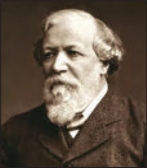
12th English Unit 3 Prose In Celebration of Being Alive Paragraph Book Back Answers Samacheer Kalvi Read More »

12th English Unit 1 Supplementary God Sees the Truth, But Waits Paragraph Book Back Answers Samacheer Kalvi

God Sees the Truth, But Waits Book Back Answers Class 12 English Guide Chapter 1 Tamilnadu Solutions

Students can Download English Lesson 1 God Sees the Truth, But Waits Questions and Answers, Summary, Activity, Notes, Samacheer Kalvi 12th English Book Solutions Guide Pdf helps you to revise the complete Tamilnadu State Board New Syllabus and score more marks in your examinations.

Get a Practical Study with the help of Samacheer Kalvi 12th English Grammar to make learning language much easy for you and score good grades in exams.

12th Standard English 1st Lesson God Sees the Truth, But Waits Questions and Answers

Warm Up:

Question 1.
If you are punished for a prank your classmate played, how would you react to the situation?
Answer:
I will not be quick to anger. I will keep quiet and will quietly let my friend know that, I did not relish his act. If he values my friendship, he will certainly apologize. If he doesn’t, I will forgive.

SamacheerKalvi.Guru

Question 2.
While many would seek vengeance or feel sorry for themselves, some may put their trust in God, forgive others for the wrongs done to them and move on in life. What is your take on this? Discuss.
Answer:
I believe anger, self-pity and hatred are negative emotions. Anger is a punishment we give ourselves for others wrong doing. I would not be in a hurry to express my anger or displeasure. I will focus more on the business of living ignoring the pain. If the relationship is really good for me, the person who had hurt me knowingly or unknowingly will come back to me. Otherwise, I will understand that he/she was not destined to be my lifetime friend. So, I will move ahead in life leaving the weight of hurt and disappointment behind.

Samacheer Kalvi 12th English God Sees the Truth But Waits Textual Questions

1. Answer the following questions in a sentence or two each, based on your understanding of the story.

Question (a)
Why did Aksionov’s wife stop him from going to the fair?
Answer:
Aksionov’s wife stopped him from going to the fair because she had a bad dream about him.

Question (b)
What is the importance of Aksionov’s wife’s dream?
Answer:
She had dreamt that he had returned from the town. When he took off his cap, she saw that his hair was quite grey. This was a bad omen.

Question (c)
What made Aksionov leave the inn before dawn?
Answer:
Aksionov left the inn before dawn because he was wishing to travel while it was still cool.

Question (d)
What were the circumstances that led to Aksionov’s imprisonment?
Answer:
Aksionov had left the inn at the dawn. He was intercepted by the police. A blood-stained knife was found in his bag. So, the police arrested him accusing him of murdering the merchant who stayed in the same inn where he had stayed.

Question (e)
Why did Aksionov give up sending petitions?
Answer:
Aksionov gave up sending petitions because his wife already said that the petitions had not been accepted. That is why he gave up all hope and only prayed to god.

Question (f)
Why didn’t Makar disclose that he had killed the merchant?
Answer:
Makar’s disclosure would have given the police the chance to arrest him and convict him. So, he did not disclose his guilt.

SamacheerKalvi.Guru

Question (g)
Did Makar feel guilty when he heard Aksionov’s story?
Answer:
Yes, Makar felt guilty when he heard the story of Aksionov.

Question (h)
What made Aksionov think that Makar was the real murderer?
Answer:
Makar asked who could put the knife in Aksionov’s bag when it was kept under his head. This made Aksionov understand that it was Makar who had killed the merchant.

Question (i)
What was Aksionov’s realization by the end of the story?
Answer:
Aksionov realizes that as a man-made justice is imperfect and it is not his place to report Makar Semyonich to the authorities for his escape attempt. Aksionov himself is a victim of manmade justice.

SamacheerKalvi.Guru

Question (j)
Why did Aksionov’s wife suspect him of involvement in the murder?
Answer:
Mrs. Aksionov had dreamt that her husband’s hair had turned grey on his return from the fair. As Aksionov used to drink occasionally, she suspected that her husband may have killed the merchant in a drunken brawl which also correlates with the dream she had the same morning.

Additional Questions

Question (a)
What is the story “God sees the truth but waits” about?
Answer:
This story is about faith, forgiveness, freedom and acceptance of a suffering young merchant named Aksionov. He was sent to prison for a murder he had not committed. He spent 26 years in prison in Siberia before he could discover the murderer. After discovery, though pained, he forgave him. He died on the day the pardon was granted.

Question (b)
Write briefly about the early life of Aksionov.
Answer:
Aksionov was a handsome, fair, haired, curly-headed fellow. He was full of fun in his youth. He was very fond of singing. He used to drink in excess and enter into brawls. But after marriage, he became sober.

Question (c)
Why did Aksionov doubt his wife’s statement about a bad dream?
Answer:
Aksionov did not believe in his wife’s dream. He thought his wife must have been afraid that he . might go on a spree after reaching the fair.

SamacheerKalvi.Guru

Question (d)
What prompted Aksionov to ask Semyonich if he knew anything about the merchant Aksionov of Vladimir?
Answer:
Aksionov heard one of the convicts say that he is from Vladimir. He did not know what happened to his family in the last 26 years. So, he asked him about his family.

Question (e)
What information was consoling to Aksionov?
Answer:
The information that Aksionov’s are now rich was consoling to Aksionov.

Question (f)
Why did Aksionov become angry and restless after meeting Semyonich?
Answer:
Aksionov got convinced that it was Semyonich who had murdered the merchant and kept the. blood-stained knife in his bag. So, he longed for vengeance. He kept praying but could not find peace. He was really restless.

Question (g)
What circumstances made Semyonich threaten to kill Aksionov?
Answer:
Semyonich was digging out a hole to escape from jail one night. Aksionov happened to see it ’ accidentally. Fearing exposure, Semyonich threatened to kill Aksionov.

Question (h)
How did Aksionov react to the threat of Semyonich?
Answer:
He said that Semyonich need not kill him as he had already done so long ago. He may tell about his bid to escape or may not. He would do as God directed him.

Question (i)
What was the Governor’s opinion of Aksionov in the Siberian Jail?
Answer:
The Governor of the Siberian jail believed that Aksionov was a truthful old man.

Question (j)
Why did the prisoners respect Aksionov?
Answer:
Aksionov’s fellow prisoners respected him and called him “grandfather” and “The Saint”. When they wanted to petition to the prison authorities about anything, Aksionov was their spokesman. He settled their quarrels too in a just manner.

Question (k)
What thoughts prevented Aksionov from exposing Semyonich who had ruined his life?
Answer:
Aksionov knew if he tells the authorities, they would probably flog the life out of Semyonich. Besides what good will come out of getting him punished. Let him pay for his sins himself.

SamacheerKalvi.Guru

Question (l)
Why was Semyonich left unpunished for trying to escape from the jail?
Answer:
Nobody else dared to expose him. Aksionov found no point in doing so. As there was no evidence to nail him, Semyonich went unpunished.

Question (m)
What unexpected thing happened at night?
Answer:
Semyonich knelt before Aksionov and asked for his forgiveness and offered to confess his crime of murdering the merchant.

Question (n)
What made Aksionov feel that the belated confession of Semyonich and his own release would be futile?
Answer:
Aksionov had spent the best part of his life (i.e.) 26 years in Siberia. His wife was dead and children had forgotten him. He had nowhere to go. So, Aksionov felt that the confession of Semyonich would be futile.

2. Answer the following questions in three or four sentences each.

Question (a)
Did the police officer have sufficient evidence to convict Aksionov?
Answer:
Yes, the police officer has sufficient evidence to convict Aksionov. Because the merchant with whom he spent last night has been found with his throat cut, and a blood-stained knife has been taken from Aksionov’s bag.

Question (b)
What impact did the book “The Lives of Saints” have on Aksionov?
Answer:
Aksionov read “The lives of saints” when there was enough light in the prison. He became a religious person. He sang in the choir. He was resigned to his fate. The fellow prisoners realized that he was innocent and unjustly condemned and hence respected him. They called him grandfather.

SamacheerKalvi.Guru

Question (c)
Pick out the clues that convey that Makar Semyonich recognized Aksionov.
Answer:
Makar Semyonich recognized Aksionov when Aksionov asked him about the merchants family in Vladimir whether they were still alive or not and it was also told to the new comer-how Aksionov came to be in Siberia; how some one had killed a merchant and had put the knife in Aksionov’s things. From these two pieces of information, Makar Semyonich recognized Aksionov.

3. Answer the following questions in a paragraph of about 150 words each.

Question (a)
Compare and contrast the main characters, Aksionov and Makar Semyonich, in the story.
Answer:
Aksionov, a handsome man, full of life, enjoyed the music. He loved his family and did an honest business. He is innocent to the core. The very sight of a blood-stained knife found in his bag sends a chill down his spine. He is deeply sensitive. When he realizes that his wife too suspected him, he gives up petitioning the Tsar for mercy. He recognized Makar Semyonich the person who had murdered the merchant and had him framed in murder charges and unjustly punished for twenty-six long years. When an opportunity presents to wreak vengeance on him, he keeps quiet. He does not show any interest in his belated freedom and restoration of justice. He seeks refuge in God.

Makar Semyonich is a cold-blooded murderer and scoundrel. Knowingly, he hides the blood-stained knife in Aksionov’s bag and tips of the police. He doesn’t confess his guilt on the day he meets Aksionov. It is only when he realizes that Aksionov is a noble soul and does not want to expose his plan to escape from the prison that he changes his attitude to Aksionov. He is haunted by guilt that he had wronged a noble soul. He confesses but it is in vain. The pardon arrives but Aksionov passes away in prison before release.

SamacheerKalvi.Guru

Question (b)
How did Aksionov react when his wife suspected him?
Answer:
Aksionov had a deep love for his wife. He wanted to petition the Tsar for clemency. But his wife said that the petition already sent had been rejected. She asked, “Vanya dearest, tell your wife the truth; was it not you who did it?” It was too much to bear for Aksionov. He was devastated. He buried his face in his hands and sobbed. When he recalled what his wife had said, he was shocked. He said to himself, “It seems that only God can know the truth; it is to Him alone we must appeal, and from Him alone expect mercy.” He gave up all hope. He only prayed to God.

Question (c)
Describe the life of Aksionov in prison.
Answer:
His hair turned white as snow and his beard grew long, thin, and grey. He walked slowly, spoke little and never laughed, and often prayed. In prison, Aksionov learned to make boots, and earned a little money, with which he bought “The lives of the saints”. He read this book when he had time enough in the prison and on Sundays in the prison church, he read the lessons and sang in the chair. The prison authorities liked Aksionov for his weakness and his fellow-prisoners respected him and called him “grandfather” and “The Saint” thus Aksionov spent his life in prison peacefully.

Question (d)
Why did Aksionov decide not to reveal the truth about Makar Semyonich?
Answer:
Aksionov was quite aware of the gravity of the offense done by Makar Semyonich. He had tried to make a hole in the prison compound wall and escape. Aksionov found this out accidentally. Makar warned him that he would kill him if he testified against him. Initially, the anger welled up in his heart demanding revenge for the 26 years of prison life. But slowly he made up his mind to keep quiet and let God punish him for the crimes he had committed. He thought, “why should I screen him who ruined my life?” When questioned by the Governor, he kept quiet. He knew deep at heart, if he disclosed the truth, they will flog the life out of him.

Question (e)
Discuss the meaning and importance of the saying “God sees the truth but waits”.
Answer:
Ivan is tongue-tied when the police find a knife in his bag. The moral shock he undergoes as an innocent victim of circumstances allows him to have faith in injustice. But the moment his wife expresses her suspicion over his involvement in the murder, he loses all hopes. It is then that he starts believing in God and divine justice. Tsar can’t give him freedom. His judgment is based on evidence given by crooked people.

God need not be given any pieces of evidence of innocence. He knows the truth but his mills of justice grind very slowly. Ivan loses interest in escaping dr leaving the prison. He had no one to go back to. At this juncture, Semyonich confesses his guilt of murdering the merchant. When the pardon arrives as a cruel joke, Ivan is dead. So, ‘God knows the truth but waits’ is the most appropriate title for this story.

Question (f)
Forgiveness is the best form of revenge. Substantiate the statement with reference to the story.
Answer:
“On God sees the truth, but waits”, by Leo Tolstoy We have the theme of guilt, faith, conflict, forgiveness, freedom, and acceptance. The reader realizes after reading the story that Tolstoy may be exploring the theme of forgiveness. Despite the fact that Aksionov has spent twenty-six years in prison for a crime he did not commit, he is able to forgive the man who did commit the crime.

According to Leo Tolstoy, if a person has faith in God no matter how difficult things maybe for them, they will be able to forgive another human being for any action taken against them. For instance, Action knows that Semyonich killed the merchant but he never reports him to the authorities. He knows that after twenty-six years in prison he has nothing to live for. Moreover, when Aksionov heard him sobbing, he too began to weep, said “God will forgive you”. Aksionov no longer had any desire to leave the prison, but only hoped for his last hour to come. In spite of what Aksionov had said, Makar Semyonich confessed his guilt and repeatedly asks for forgiveness.

Additional Questions

Question (a)
What were the nostalgic reminiscences that disturbed Aksionov once he discovered the real murderer of the merchant?
Answer:
Soon after discovering the fact that it was Semyonich who had murdered the merchant, he became terribly unhappy. A kaleidoscope of images of his own past life flooded his mind. In his mind’s eye, he saw the youthful image of his lovely wife. Her face and eyes rose before him. He heard her speak and laugh. He saw his little children, one with his little cloak on suckling at his mother’s breast. Then he remembered his own merry-go-lucky life in his youth.

He vividly remembered how happy he was playing the guitar at the inn without any worry. He remembered how he was arrested, flogged in the presence of his villagers. He recalled how shamefully he was chained and convicted. He remembered how he had to spend twenty-six long years in Siberia and attain premature old age. He felt so wretched that he wanted to take away his own life.

SamacheerKalvi.Guru

Question (b)
Describe the circumstances leading to Semyonich threatening Aksionov in Siberia?
Answer:
One night, unable to sleep, Aksionov was walking inside the prison. He noticed that soil came out rolling from one of the shelves on which prisoners slept. He found Makar Semyonich creep out of the spot. He looked up at Aksionov with dread. Aksionov ignored him and started ‘ walking ahead. Driven by guilt and fear of exposure, Semyonich ran and caught hold of Aksionov’s hand. He explained how he had dug a hole with his heavy boots to escape from jail. He warned him not to blab. If he did, the authorities will flog the life out of him.

But he would kill him first. He offered the bait that Aksionov also could escape. Aksionov drew his hand away and said he had no desire to escape. He said that Semyonich had already killed him long ago. He added that he may or may not tell about him as per the direction of God.

Question (c)
Why was the Governor forced to seek the witness of Aksionov?
Answer:
Aksionov was meek. He was respected by fellow prisoners. The prison authorities also believed that the religious old man must have been unjustly punished. They knew Aksionov never told lies. The prison authorities found out that someone had been digging the prison shelf to escape. They doubted that newcomer Semyonich could be the culprit. But they could not nail him on the grounds of suspicion alone.

All the prisoners were summoned and enquired including Semyonich. All denied any knowledge of it. Those who knew kept quiet because they knew Semyonich will get flogged if someone betrayed him. As no one was ready to tell the truth, the Governor, who had enormous trust in the nobility and honesty of Aksionov asked him to tell the truth. But Aksionov preferred to stay quiet.

4. Using the mind map given below, write a brief summary of the story in your own words.

Samacheer Kalvi 12th English Solutions Supplementary Chapter 1 God Sees the Truth, But Waits img-1

Aksionov was a businessman. He lived with his wife and children. He was full of life. He sang and played the Guitar and occasionally drank too. Once he got ready to go to the fair. His wife tried to stop him saying that she had a bad dream. On his return from the fair, his hair had turned grey. It was ominous. But Ivan ignored his wife’s warning and went to the fair. As he liked cool weather, he left the inn early. He was intercepted by the police who searched his belongings. Finding a blood-stained knife in his bag, he was arrested on charges of murder. His wife’s petition for clemency to the Tsar was turned down. His wife’s unwillingness to trust him was more devastating than Tsar’s rejection of mercy petition. He was flogged. After the wounds healed he was sent to work in the mines of Siberia.

Staying 26 years in Siberia he grew a long beard. He became a grandfather to the prisoners. He read “The lives of saints” and was found praying and singing in the choir. He was respected both by the fellow prisoners and the jail authorities for his gentle behaviour. Everyone in jail believed in his innocence and unjust condemnation. One day a new convict namely Makar Semyonich came there. When Makar blurted out how the knife went to his bag kept under his head, Ivan recognized Makar as the real murderer of the merchant. Ivan had a chance to expose Makar to the jail authorities. But he kept quiet. Makar became remorseful and asked Ivan’s forgiveness. He forgave him. Makar confessed to the authorities. The order of pardon came but then Ivan was dead.

God Sees the Truth, But Waits About The Author

Samacheer Kalvi 12th English Solutions Supplementary Chapter 1 God Sees the Truth, But Waits img-2

Leo Tolstoy was born on September 9, 1828, in Tula Province, Russia. He is best known for the novels War and Peace (1869) and Anna Karenina (1877), often cited as pinnacles of realist fiction. He first achieved literary acclaim in his twenties with his semi-autobiographical trilogy, Childhood, Boyhood, and Youth and Sevastopol Sketches, based upon his experiences in the Crimean War. Tolstoy’s fiction includes dozens of short stories and several novellas such as The Death of Ivan Ilyich (1886), Family Happiness, and Hadji Murad. He also wrote plays and numerous philosophical essays. Tolstoy died on November 20, 1910, in Astapovo, Russia.

God Sees the Truth, But Waits Summary in English

Introduction
In “God sees the truth but waits” the author’s deep-seated faith in God and moral values is expressed

Innocent man charged with murder

Samacheer Kalvi 12th English Solutions Supplementary Chapter 1 God Sees the Truth, But Waits img-3

In Vladimir, a young, attractive businessman named Ivan Dmitrich Aksionov lived with his wife and children. Although in his youth, he had given in to drinking and living a carefree life, he had now settled down and lived a responsible, productive life. One day he decided to make a trip to a fair where he could sell some of his merchandise. His wife objected to his trip saying that she had a bad dream about this trip. Aksionov ignored her apprehension and proceeded. On the way, he stopped at an inn, where he met another merchant he knew.

They stayed at the inn in rooms next to one another. Being an early bird, he proceeded at dawn. After traveling twenty-five miles, however, he was intercepted by a local police officer. He questioned him closely about the time he had spent at the inn. He claimed that the other merchant had been found with his throat slit. Aksionov seemed a likely suspect since he knew the man and since they shared neighbouring rooms. Aksionov vehemently denied any involvement in the murder. However, when his bag was searched, a blood-stained knife was found.

SamacheerKalvi.Guru

Circumstantial evidence
Although Aksionov protested claiming innocence, he was arrested and charged with the murder. Even his wife wondered if he might have been involved since the circumstantial evidence was so convincing. A petition to the Czar for clemency was turned down. Aksionov bade his wife and young children farewell, reflecting that only God can know the truth, he waited. As Aksionov’s wife also suspected him, he stopped petitioning to Tar. After being severely flogged, he was sent to work in the mines in Siberia. During his twenty-six years of imprisonment there, his hair had turned grey. His cheerful personality disappeared, and his body began to weaken. He never showed any signs of happiness and frequently prayed to God.

Faith lessens sorrow
While imprisoned, he became a bootmaker. He earned enough money to buy a book called The Lives of the Saints. He read this book whenever there was light. On Sundays, he took a prominent role in the religious services and sang in the choir of the prison church. The wardens and guards appreciated his humility. Other prisoners regarded him with respect, calling him “Grandfather” and “The Saint.” He became their representative when they needed to deal with the authorities. They trusted him so much that they treated him as a kind of judge, who could settle disputes and disagreements amongst them. Meanwhile, he had no information about his family nor any contact with them. He thought that they might all be dead, for all he knew.

Reviving old wounds – a new discovery

Samacheer Kalvi 12th English Solutions Supplementary Chapter 1 God Sees the Truth, But Waits img-4

When a new shipment of prisoners arrived one day, Aksionov eventually realized that one of the men, Makar Semyonich, was from his own home town. In response to Aksionov’s questions, Maker informed the old man that Aksionov’s family was prosperous. Maker seemed to know Aksionov somehow, leading the latter to wonder if Makar knew, anything about the murder of the merchant. Maker’s reply led Aksionov to begin to suspect that it was Maker who had in fact committed the crime.

Tormented by painful memories and by a sense of all the years he had lost, he eventually accused Makar, privately, of having murdered the merchant. Makar ignored the accusation even though Aksionov had caught Makar trying to dig a tunnel to escape the prison. Aksionov could easily have reported this deed to the authorities. But he chose to keep quiet, even after Makar threatened him with death. When the tunnel was eventually discovered, no one would identify Makar as the culprit who had been doing the digging. Governor believed Aksionov will not tell lies, who was closely questioned by him. He denied knowing who had been digging. He did not want to see Makar harshly punished. He even started wondering if he had wrongly suspected Makar of murdering the merchant.

SamacheerKalvi.Guru

Transformation of a criminal
Later that night, Makar came to Aksionov’s bed and begged the old man for forgiveness. He confessed that he had indeed killed the merchant and had hidden the blood-stained knife in Aksionov’s bags. He offered to confess to this crime so that Aksionov could be released from prison and go back to his home and family. Makar continued to beg Aksionov for forgiveness, especially since Aksionov had not revealed what he knew about Makar and the tunnel. Both men were soon weeping, and Aksionov said “God will forgive you! Maybe I am a hundred times worse than you.” Having said this, he suddenly felt a load leave him. He no longer cared about leaving the prison. He only desired death. Makar did eventually confess to having killed the merchant. Ironically, by the time Aksionov’s pardon arrived, he was already dead.

Conclusion

Samacheer Kalvi 12th English Solutions Supplementary Chapter 1 God Sees the Truth, But Waits img-5

The story’s essence is that forgiveness is the best sort of revenge in life. The hardcore criminal Makar Semyonich undergoes a spiritual transformation because Aksionov had forgiven him in spite of unjust suffering for 26 years. In the end, Aksionov gets peace of mind. It is only after he forgave Makar that he enjoyed the serenity and was able to die in peace.

God Sees the Truth, But Waits Summary in Tamil

முன்னுரை:
“கடவுள் உண்மையைக் காண்கிறார். ஆனால் காத்திருக்கிறார்” என்னும் – கதையில் கதாசிரியரின் ஆழ்ந்த கடவுள் பக்தியும் மற்றும் அறத்தைப் பற்றிய முக்கிய கருத்தையும் வெளிப்படுகின்றன.

களங்கமற்றவன் மேல் திணிக்கப்பட்ட கொலைப் பழி:

Samacheer Kalvi 12th English Solutions Supplementary Chapter 1 God Sees the Truth, But Waits img-6

விலாட்மிர் என்னும் நகரத்தில் இவான் டிமிட்ரிச் ஆக்சியோனோ தன் மனைவி மக்களுடன் வாழ்ந்து | வந்தார். சிறு வயது முதலே குடிப்பழக்கத்திற்கு ஆளாகி, கவலையற்ற வாழ்க்கை வாழ்ந்திருந்த போதிலும், | தற்போது பொறுப்புள்ள, ஆக்கப்பூர்வமான வாழ்வை வாழ்ந்து வந்தார். ஒரு நாள் சந்தைக்கு சென்று தன் வியாபார பொருட்களை விற்க முடிவு செய்தார். அவன் மனைவியோ தான் கெட்ட கனவு கண்டதால் போக வேண்டாம் எனத் தடுத்தாள். ஆக்சியோனோ, மனைவியின் கவலையைப் பொருட்படுத்தாது பயணத்தை மேற்கொண்டார். செல்லும் வழியில் விடுதி |

ஒன்றில் தங்க, அங்கு தனக்கு அறிமுகமான ஒரு வியாபாரியைச் சந்தித்தார். அவர்கள் விடுதியின் அருகருகே அமைந்த அறைகளில் தங்கினர். அதிகாலையில் எழும் பழக்கம் உள்ளவராக இருப்பதால் பயணத்தை சூரிய உதயத்துக்கு முன்பே தொடங்கினார். இருபத்தி ஐந்து மைல் தூரம் கடந்து சென்றிருந்த போது, ஒரு காவல்காரர் இடைமறித்தார். அவர் விடுதியில் | எவ்வளவு நேரம் கழித்தார் என்பதைக் குறித்து குறிப்பாக விசாரித்தார். தான் தங்கியிருந்த விடுதியில் அவருக்கு | அறிமுகமான வியாபாரி கழுத்து அறுக்கப்பட்டு கொடூரமான முறையில் கொலை செய்யப்பட்டு இறந்து | கிடந்தார் எனத் தெரிவித்தார். அந்த வியாபாரியை தான் அறிந்திருந்ததாலும் அருகருகே தங்கி | இருந்ததாலும் அநேகமாக சந்தேகத்திற்கு உரியவனாகிறான் என ஆக்சியோனோவிடம் சொன்னார். ஆக்சியோனோ இதை கடுமையாக மறுத்தான். இருப்பினும். அவரது பையை ஆராய்ந்த | போது இரத்தக் கறை படிந்த கத்தி கிடைத்தது.

SamacheerKalvi.Guru

சூழ்நிலை சாட்சியங்கள்:
ஆக்சியோனோமறுத்த போதிலும், அவன் மேல் கொலைப் பழி சுமத்தப்பட்டு கைது செய்யப்படுகிறார். அவரது மனைவியே அவர் கொலை செய்திருக்கக் கூடுமோ என எண்ணும் அளவிற்கு சாட்சியங்கள் அமைந்தன. அரசுக்கு அனுப்பிய கருணை மனுவும் நிராகரிக்கப்பட்டது. சிறையில் கடைசி முறையாக மனைவி, மக்களை சந்தித்து பிரியாவிடை கொடுத்தார். தன் மனைவியே தன்னை சந்தேகித்ததால் அவர் மேலும் அரசுக்கு மனு அனுப்புவதை நிறுத்திக் கொண்டார்.சவுக்கால் கொடூரமாக விளாசப்பட்டு காயம் ஆறிய பின் சைபீரியா நாட்டின் சுரங்கத்திற்கு பணி செய்ய அனுப்பப்பட்டான். அங்கு 26 வருட சிறை வாழ்க்கையால் தலைமுடி நரைத்துப் போனது. அவரது உற்சாகமான தோற்றம் மாறியது. உடல் பலவீனமானது. எந்த ஆரவாரமும் இன்றி கடவுளையே வழிபாடு செய்து கொண்டிருந்தார்.

நம்பிக்கை சோகத்தைக் குறைக்கும்:
சிறைக் கைதியாக இருந்த போது கால் செறுப்புகள் செய்தார். “சாதுக்களின் வாழ்க்கை ” என்ற புத்தகம் வாங்கும் அளவிற்கு போதிய ஊதியம் கிடைத்தது. வெளிச்சம் கிடைத்த போதெல்லாம் இந்த நூலை ஆக்சியோனோ வாசித்தார். ஞாயிற்றுக் கிழமைகளில் கடவுள் சேவையில் முதல் ஆளாக நின்று சேவை புரிந்து, ஆலயப் பாடல் பாடும் குழுவினருடன் சேர்ந்து பாடவும் செய்தார். அதிகாரிகளும், காவலர்களும் | ஆக்சியோனோவின் பணிவைப் பாராட்டினர். இதர கைதிகள் ஆக்சியோனோவை ‘தாத்தா’ என்றும், ‘துறவி’ என்றும் கூறினர். சிறை அதிகாரிகளுடன் தொடர்பு கொள்ளவேண்டி நேர்ந்ததால் ஆக்சியோனோவை பிரதிநிதி ஆக்கினர். ஆக்சியோனோவை கைதிகள் தங்கள் சச்சரவுகள் மற்றும் வேற்று மனப்பான்மையைத் தீர்த்து வைக்கும் நீதிபதியாக மதித்தனர். இது நாள் வரை ஆக்சியோனோவிற்கு தன் குடும்பத்தாரைப் பற்றிய தகவல் ஏதும் தெரியவில்லை . அவர்கள் எல்லோரும் இறந்திருக்கக்கூடும் என ஆக்சியோனோவ் எண்ணினார்

பழைய காயங்களைக் கீறுதல்- புதிய கண்டுபிடிப்பு:

Samacheer Kalvi 12th English Solutions Supplementary Chapter 1 God Sees the Truth, But Waits img-7

புதிய கைதிகளுடன் கப்பல் வந்தது.அதில் மக்கர் என்பவன் தன் ஊரைச் சேர்ந்தவன் என்பதை அறிந்து கொண்டார் ஆக்சியானோவ். தன் குடும்பத்தாரைப் பற்றி விசாரிக்க அனைவரும் வளமாக உள்ளதாக மக்கர் தெரிவித்தான். மக்கர், ஆக்சியோனோவை எப்படியோ அறிந்திருந்தான் என்பது, கொலையைப் பற்றிய விவரம் ஏதேனும் அவனுக்கு தெரிந்திருக்குமோ என்று அறிவும் ஆர்வம் ஆக்சியோனோவிற்கு உண்டாயிற்று. கொலையைப் பற்றிய மக்கரின் பதில், இந்தக் கொலையை மக்கர் செய்திருக்கக்கூடுமோ என்ற சந்தேகத்தை ஆக்சியோனோவிற்கு எழுப்பியது. வலி கொடுக்கும் நினைவுகள் ஒருபுறம் சித்ரவதை செய்ய, மறுபுறம் வீணாகக் கடந்துபோன வாழ்நாட்களை நினைக்க, முடிவாக ஆக்சியோனோ,மக்கரைமனதுக்குள் திட்டிக் கொண்டார். மக்கர் அதை பொருட்படுத்திக் கொள்ளவில்லை.

மக்கர் சிறைச்சாலையில் திருட்டுத்தனமாக சுரங்கம் அமைப்பதை ஆக்சியானோவ் தற்செயலாகப் பார்த்துவிட்டார். அதன் மூலம் மக்கர் தப்பிக்க எண்ணினான். ஆக்சியோனோவ் இதை அதிகாரிகளிடம் முறையிட்டு இருக்கலாம். ஆனால், ஆக்சியோனோவ் மக்கர் கொலை செய்து விடுவதாகக் கூறியும் உண்மையைக் கூறவில்லை. சுரங்கத்தை கடைசியாக கண்டுபிடித்த பிறகு எவரும் மக்கரை குற்றவாளி என்று காட்டிக் கொடுக்கவில்லை. ஆளுநர், ஆக்சியோனோவ் பொய் கூறமாட்டார் என நம்பி அவனிடம் விசாரித்தார். ஆக்சியோனோ சுரங்கம் அமைத்தது யார் என்று தனக்குத் தெரியாது என பதில் அளித்தான். மக்கர் கடுமையான தண்டனைக்கு ஆளாவதை அவர் விரும்பவில்லை. தான் ஒருவேளை தவறாக மக்கரை கொலையாளி எனக்

SamacheerKalvi.Guru

குற்றவாளியின் மன மாற்றம்:
அன்று இரவு மக்கர் ஆக்சியோனோவின் அறையின் படுக்கைக்கு வந்து, தன்னை மன்னிக்குமாறு | வேண்டிக் கொண்டான். வியாபாரியைக் கொன்று இரத்தக் கறை படிந்த கத்தியை தான் ஒளித்து வைத்ததை ஒப்புக் கொண்டான். தான் கொலைக் குற்றத்தை ஒப்புக் கொள்வதன் மூலம் ஆக்சியோனோ விடுதலைப் பெற்று தன் குடும்பத்தாருடன் சேர இயலும் எனக் கூறினான். சுரங்கம் அமைத்தது மக்கர் தான் என்று தெரிந்தும் | ஆக்சியோனோ காட்டிக் கொடுக்காததால் தன்னை |

மன்னித்து விடுமாறு வேண்டிக் கொண்டான். இருவரும் சேர்ந்து அழத் தொடங்கினர். ஆக்சியோனோ ‘கடவுள் உன்னை மன்னிக்கட்டும், ஏன் நான் உன்னை விட நூறு மடங்கு பொல்லாதவனாக இருக்கலாம்’, எனக் கூறினார். இங்ஙனம் கூறியதும் ஏதோ சுமை குறைந்தது போல் ஆக்சியோனோவ் உணர்ந்தார். இதற்கு மேல் சிறையை விட்டு வெளியேற வேண்டும் எண்ணம் அவருக்குத் தோன்றவில்லை. அவர் மரணத்தையே விரும்பினார். முடிவாக வியாபாரியைக் கொலை செய்தது. தான் என்பதை மக்கர் ஒப்புக் கொண்டான். விதிவசமாக ஆக்சியோனோவின் விடுதலை உத்தரவு வந்த போது அவர் உயிரை விட்டிருந்தார்.

முடிவுரை:

Samacheer Kalvi 12th English Solutions Supplementary Chapter 1 God Sees the Truth, But Waits img-8

‘பழிக்குப் பழி’ என்பது ஒருவரை மன்னித்து விடுவதே என்பது தான் இக்கதையின் தத்துவம். மக்கர் சீமோனிச் தெய்வாதீனமாக மாற்றம் அடைகிறான். ஏனெனில், 26 வருடம் தான் பெற்ற அநியாயத்திற்குப் பிறகும் ஆக்சியோனோ மக்கரை மன்னித்து விடுகிறார். இறுதியில் ஆக்சியோனோவிற்கு மன அமைதி கிடைக்கிறது. அந்த அமைதி அவருக்கு மக்கரை மன்னித்த பிறகே கிடைக்கிறது. அதனால் நிம்மதியாக உயிரை விடுகிறார்.

SamacheerKalvi.Guru

God Sees the Truth, But Waits Glossary

Textual:

Samacheer Kalvi 12th English Solutions Supplementary Chapter 1 God Sees the Truth, But Waits img-9

Additional:

Samacheer Kalvi 12th English Solutions Supplementary Chapter 1 God Sees the Truth, But Waits img-10

Samacheer Kalvi 12th English Book Solutions Supplementary

12th English Unit 1 Supplementary God Sees the Truth, But Waits Paragraph Book Back Answers Samacheer Kalvi Read More »

12th English Unit 1 Prose Two Gentlemen of Verona Paragraph Book Back Answers Samacheer Kalvi

Two Gentlemen of Verona Book Back Answers Class 12 English Guide Chapter 1 Tamilnadu Solutions

Students can Download English Lesson 1 Two Gentlemen of Verona Questions and Answers, Summary, Activity, Notes, Samacheer Kalvi 12th English Book Solutions Guide Pdf helps you to revise the complete Tamilnadu State Board New Syllabus and score more marks in your examinations.

Get a Practical Study with the help of Samacheer Kalvi 12th English Grammar to make learning language much easy for you and score good grades in exams.

12th Standard English 1st Lesson Two Gentlemen of Verona Questions and Answers

Warm up

Samacheer Kalvi 12th English Solutions Prose Chapter 1 Two Gentlemen of Verona img-1

Samacheer Kalvi 12th English Two Gentlemen of Verona Textual Questions

1. Answer the following questions in one or two sentences each based on your understanding of the story.

Question (a)
Who did the narrator meet at the outskirts of Verona?
Answer:
The narrator met the brothers Nicola and Jacopo on the outskirts of Verona.

Question (b)
Why did the driver not approve of the narrator buying fruits from the boys?
Answer:
The fruit vendors were shabby in their appearance. So, the driver did not approve of the narrator’s idea of buying fruits from them.

SamacheerKalvi.Guru

Question (c)
The boys did not spend much on clothes and food. Why?
Answer:

  1. The boys were in need of money for the treatment of their sister.
  2. So they did not spend much on clothes and food.

Question (d)
Were the boys saving money to go to the States? How do you know?
Answer:
No, the boys did not save the money to go to States. The boys themselves admit that they have other plans.

Question (e)
Why did the author avoid going to Lucia’s room?
Answer:
The author did not want to disturb the privacy of the family party and the sense of pride the boys had in supporting their elder sister.

Question (f)
What was Lucia suffering from?
Answer:
Lucia was suffering from tuberculosis of the spine.

Question (g)
What made the boys join the resistance movement against the Germans?
Answer:
The boys hated the Germans who had destroyed their town and killed their father. So, they joined the resistance movement against the Germans.

Question (h)
What made the boys work so hard?
Answer:
Their desire to save the life of their sister made the boys work so hard.

Question (i)
Why didn’t the boys disclose their problem to the author?
Answer:
The little boys did not want sympathy but any work which would fetch them money. So, they did not disclose their problem to the author.

Additional Questions

Question (a)
What were the two boys selling?
Answer:
The two boys were selling wild strawberries.

Question (b)
What were the boys doing at night in a deserted square?
Answer:
The boys were resting on the stone pavement in the windy and deserted square beneath the street light. They were waiting for the last bus from Padua to sell the unsold newspapers.

Question (c)
How did the boys impress the narrator?
Answer:
Both the boys were cheerfully ready to work. In their boyish faces, there was a seriousness which was far beyond their years.

SamacheerKalvi.Guru

Question (d)
What did the boys do other than selling fruits?
Answer:
The boys shined shoes, hawked newspapers, conducted tourists round the town and ran errands in addition to selling fruits.

2. Answer the following questions in three or four sentences each.

Question (a)
Describe the appearance of Nicola and Jacopo.
Answer:

  1. Nicola and Jacopo had a shabby appearance.
  2. One had worn a jersey and cut off khaki pants. The other had shortened army tunic gathered in loose folds.
  3. They had brown skins, tangled hair, and dark earnest eyes.

Question (b)
What were the various jobs undertaken by the little boys?
Answer:
The little boys sold wild berries. They shined shoes. They showed visitors through the town to Juliet’s tomb and other places of interest. They even booked a seat for the narrator in a theatre and got American cigars too.

Question (c)
How did the narrator help the boys on Sunday?
Answer:

  1. The boys used to visit Poleta every Sunday.
  2. The narrator himself drove the car for the boys to reach their destination.
  3. Thus he helped the boys.

Question (d)
Who took the author to the cubicle?
Answer:
The attained nurse who was very familiar with Nicola and Jacopo took the narrator in. She led him through a cool, tiled vestibule into the hospital, the villa had become. She left him at the door of a little cubicle from where he can watch unseen Nicola and Jacopa chatting with their ailing sister.

Question (e)
Describe the girl with whom the boys were talking to in the cubicle.
Answer:
Lucia was a girl of about twenty. She was propped up on pillows wearing a pretty lace jacket. Her eyes were soft and tender.

Question (f)
Recount the untold sufferings undergone by the siblings after they were rendered homeless.
Answer:

  1. They suffered from starvation and exposure to the cold winter.
  2. They barely kept themselves alive in a sort of shelter they built with their own hands amidst the rubble.

Question (g)
The narrator did not utter a word and preferred to keep the secret to himself. Why? Substantiate the statement with reference to the story.
Answer:
After coming out of the hospital the boys sat beside the narrator. Throughout the 30 km ride, they did not say a word. The narrator did not say a word because he wanted the boys to feel that their sacrifice and suffering remained a secret. However, the narrator was touched by the devotion of the little boys.

SamacheerKalvi.Guru

Additional Questions

Question (a)
Why was the narrator tempted to ask if the brothers wanted to emigrate to America?
Answer:
The boys earned a lot of money doing odd jobs from dawn to midnight. Yet, they spent little on clothes and food. This tempted the narrator to ask the boys if they had plans to emigrate to America.

Question (b)
How did the narrator gather information about Nicola and Jacopo without meeting Lucia?
Answer:
The author could not bear to intrude upon the happy family party. Yet, he wanted to know everything about the boys. So, he requested the nurse to tell him all she knew about them. She did share all she knew about Nicola and Jacopo with the narrator.

3. Answer the following in a paragraph of 100-150 words each.

Question (а)
What was the driving force that made the boys do various jobs?
Answer:
The boys lost their mother in their early life. Their father, a well-known singer became a victim of the early war against Germany. They became homeless and suffered starvation and cold winter. They led a pathetic life. After the war, they found their sister. They could not feel happy because she was suffering from tuberculosis of the spine.

The boys were the only family for their sister. They felt that it was their duty to make arrangements for her medical treatment. They were not rich enough to spend on medical expenses but they had an optimistic view to save their sister in one way or the other. This was the driving force that made the boys do various jobs.

Question (b)
How was the family affected by the war?
Answer:
Before the war, Nicola and Jacopo’s widowed father was a well-known singer. He was killed in the early part of the war leaving Lucia, his daughter behind to take care of the little boys. Shortly after a bomb destroyed their home. The three children were thrown into the streets. They had always known a comfortable and cultured life. Lucia was training to become a singer. Suddenly they were uprooted from their cozy life. They had suffered from near starvation and exposure to cold winter. The home they rebuilt from the rubbles was not weather-proof. The boys joined the secret services of resistance moment as they hated Germans. When they returned home after the war, they found their sister affected by tuberculosis of the spine. They persuaded a private hospital to take Lucia in. Every week they worked hard to pay for their sister’s medical expenses. To achieve it they had to sacrifice a lot.

Question (c)
Write a character sketch of Nicola and Jacopo.
Answer:
Nicola and Jacopo were two brothers who were 13 and 12 years respectively. They belonged to the city of Verona in Italy. They were childish and innocent. Jacopo was lively as a squirrel. Nicola was steady and engaging. They were engaged in different works to earn money which shows that they were hard working. Though they were young they were mature enough to understand the situation.

They were quite focused on their goal of earning money for the treatment of their sister. They didn’t even care about themselves which shows their care and understanding for their sister. Nicola was very cautious in keeping his secret. In fact, he did not like to get any help from anyone. They were honest and truthful. They carried family values of love, care, and sacrifice. In fact, one can find hope for human society in their characters.

Question (d)
What message is conveyed through the story ‘Two Gentlemen of Verona’?
Answer:
Adversity is a touchstone of virtue. Both the little boys resemble tea leaves. Their best essence comes to limelight when they find themselves in hot waters. But they don’t complain. One does not give up on family relations when misfortune strikes. The bond becomes strong as the bond demands selfless sacrifice. The nobility of human life emerges from the precious lessons one learns from the supreme sacrifices of Nicola and Jacopo. One who shoulders the responsibility of taking care of loved ones, irrespective of age, is an exemplary gentleman worthy of emulation. The primary motivational force of an individual is to find meaning in life. Both the little boys had a specific purpose for their life. They had made up their minds to do whatever work possible to earn money to save their sister and restore her singing career.

Question (e)
Justify the title of the story ‘Two Gentlemen of Verona’.
Answer:
The two boys Nicola and Jacopo were kind and caring towards their sister. They were very polite towards others. At their young age itself, they were ready to shoulder responsibilities without any hesitation. They behaved in a mature way which gets revealed by the fact that they were not ready to accept others feeling of sympathy
towards them. So they maintained their secrecy in a perfect way till the end.

They never lose hope. They didn’t even bother about their own personal appearance in their run towards earning money. They were ready to do all kinds of odd jobs to achieve their goal. Even in that situation they did not choose the wrong path. With all these qualities the two boys can be rightly called gentlemen. Thus the title gets justified.

SamacheerKalvi.Guru

Question (f)
Adversity brings out the best as well as the worst in people. Elucidate this statement with reference to the story.
Answer:
Whenever confronted by adversity, there is a psychological reaction among most of us. Either fight or flee from it. Even adults run away from crisis and seek asylum or support of others. We find hordes of people, when living becomes difficult, migrate to other places to survive. In the face of adversity, even educated people turn to evil ways. They worked hard from dawn to midnight. They did any job that came their way. They shined shoes, hawked newspapers, sold wild fruits and took the people round the city. They spent very little on their food and clothes. Every week they cycled to Poleta and paid Lucia’s medical bill systematically. In this story, the nurse of the private hospital reveals the bitter truth about the economy of Verona. Jobs are scarce. There is inflation. It is difficult to buy food with limited money. When the hospital laid the condition that the little boys Nicola and Jacopo should pay the weekly medical bill for their sister Lucia’s treatment for tuberculosis, they did not back off or give up. Their best qualities came out during adversity. Like tea leaves, they gave their best while in hot waters.

Question (g)
Which character do you like the most in the story and why?
Answer:
The character whom I like the most in the story is the Narrator. He is a keen observer and a very sensitive person. He tries to see the sorrow and joy beyond the shabby appearance of the boys. This shows his good humanity. He is both kind-hearted and has the tendency to help others, which is proved by his behaviour of driving the boys to Poleta himself.

In spite of the warning given by his driver he truly admires the gentlemanly attitude of the shabbily dressed boys. He never likes to intrude in the privacy of the boys. Even after knowing about their sister, he doesn’t utter a word and gives them the pleasure that they had succeeded in keeping their secret. In fact, the narrator himself can be called a perfect gentleman.

Vocabulary

(a) Read the following words taken from the story. Give two synonyms and one antonym for each of these words. Use a dictionary, if required.

Samacheer Kalvi 12th English Solutions Prose Chapter 1 Two Gentlemen of Verona img-2

Answer:

S. No. Word Synonyms Antonym
1. cautious careful alert reckless
2. disapprove express dislike object to approve
3. brisk swift fast sloppy
4. engaging charming agreeable repulsive
5. humble meek submissive proud
6. eager anxious impatient apathetic
7. resistance opposition hostility acceptance
8. persuade convince induce dissuade
9. scarce scant insufficient plentiful
10. nobility virtue goodness dishonour

(b) Homophones and Confusables

Question 1.
Given below is a list of common confusables. Distinguish the meaning of each pair of words by framing your own sentences.
Answer:
(a) emigrate (leaving homeland) – immigrate (come to live permanently in a foreign country)
Priyanka Chopra does not wish to emigrate to the UK where her husband is living. Candidates who wish to immigrate to the USA are increasing in number every year.

(b) beside (at the side of) – besides (in addition to)
I remember keeping my watch beside my glasses.
Besides supporting terrorist outfits within its borders, Pakistan claims innocence in the Pulwama attack.

(c) judicial (relating to justice) – judicious (wise/prudent)
The fraudsters who swindled the money of an IT personnel in Navalur through ATM were taken into judicial custody.
Kalpana reacted judiciously when she realized that a mobile thief was standing next to her.

(d) eligible (Adj.- satisfying the appropriate conditions) – illegible (Adj.- not clear enough to be read)
Even at the age of 30, Vinod is an eligible bachelor for the manager post.
Priya’s handwriting is illegible.

(e) conscience (a person’s moral sense of right and wrong) – conscious (being aware of) “Conscience makes cowards of us all”, said Shakespeare.
The lorry driver was conscious of the dangers involved in carrying the explosives in his truck.

SamacheerKalvi.Guru

(f) industrial (relating to industry) – industrious (diligent/hardworking)
Perungudi is an industrial block.
Man should be as industrious as ants and bees.

(g) eminent (famous) – imminent (something bad likely to happen very soon)
Every eminent scientist has an unseen past in which he must have struggled to prove his theory or inventions to the world.
Environmentalists are apprehensive of the imminent earthquakes in mega multipurpose projects’ catchment areas as they fall under seismicity-prone areas.

(h) illicit (adj- illegal) – elicit (v – to evoke a response)
Two hundred miners perished after consuming illicit liquor in Bihar.
The police personnel tried to elicit the truth about the murder of the schoolgirl in a pump set from the arrested relative and three other culprits.

(i) prescribed (set down rules) – proscribed (prohibited)
The students were advised to follow the guidelines prescribed by the Directorate of Government Examinations.
The tourists were proscribed from taking selfies from the suicide point in Kodaikanal.

(j) affect (to influence something or someone) – effect (result/impact of something)
The athlete did not imagine that a steroid shot might affect his sports career adversely.
The rising number of cybercrimes proves the adverse effect of educated unemployment.

(k) aural (relating to hearing) – oral (verbal)
In primary schools, teachers must assess the aural skills of children.
There must be a fool-proof mechanism to assess the oral skills of students at the secondary level, especially in languages.

(l) born (related to birth) – borne (carried by)
Divya was not born with a silver spoon in her mouth.
The entire village paid homage to army personnel, U. Saravanan’s body which was borne in a decorated coffin by military soldiers and home guards.

Question 2.
Fill in the blanks with suitable homophones or confusables

Samacheer Kalvi 12th English Solutions Prose Chapter 1 Two Gentlemen of Verona img-3
Answer:

wallet valet hoard horde
fairy ferry desert dessert
medal meddle night knight
wait weight sweet sweat
yoke yolk plain plane
grown groan might mite
earn yearn quite quiet

(c) Give the meanings of the following phrasal verbs and frame sentences using them.

Question 1.
cut off: block the way
Answer:
The village was cut off due to floods.

Question 2.
come upon: to meet or encounter unexpectedly
Answer:
I came upon an old friend in the street today.

Question 3.
put out: extinguish
Answer:
The firemen put out the fire after a struggle of six hours.

Question 4.
draw up : halt
Answer:
Ram drew up his car on seeing the red signal.

SamacheerKalvi.Guru

Question 5.
pass out: become unconscious
Answer:
The college student who fell down from the bus passed out and an ambulance was called.

Question 6.
take off: leave the ground
Answer:
The plane took off two hours late from Delhi due to fog.

Question 7.
turn away: move one’s face away
Answer:
Whenever I find able-bodied men and women beg in the trains, I turn away.

Question 8.
stand by: ready to substitute
Answer:
The eleventh player was standing by to play if any player gets hurt or a substitute is needed.

Question 9.
bank on: rely on confidently
Answer:
We can always bank on our English teacher whenever a debate is announced.

Prefixes and Suffixes

(d) Read the list of words formed by adding suffixes.

frequently satisfaction willingness
comfortable resemblance nobility

Form two derivatives from each of the following words by adding prefixes and suffixes.

Samacheer Kalvi 12th English Solutions Prose Chapter 1 Two Gentlemen of Verona img-4

Answer:

Word Prefix Suffix
patient impatient patiently
honour dishonour honourable
respect disrespect respectable
manage mismanage management
fertile infertile fertility
different indifferent differently
friend befriend friendly
obey disobey obedience

Listening Activity

Floods are an inevitable natural disaster which can occur in any part of the world. Floods can prove all the more disastrous in localities, where population density is high. Preparation for Disaster Management has become imperative for any city, town or village during monsoons. The Government Department entrusted with Disaster Management makes periodic announcements about the precautions to be taken whenever floods are anticipated.

Now, you are going to listen to the cautionary instructions that are given to the general public living in flood-prone areas. Listen carefully and complete the following sentences. For the attention of the public, here is an announcement from the Department of Disaster Management. As per the warning issued today by the Meteorological Department, there exists a high probability of a widespread heavy downpour from the early hours of Sunday and consequent flooding of low-lying areas. In order to ensure the safety of life and property, everyone is hereby warned and advised to take certain precautionary measures:

  • First of all, prepare a household flood plan and be ready to respond to the situation.
  • Find out the locations of the closest flood shelters available and routes to reach them.
  • Maintain an emergency kit comprising water bottles, biscuit packets, medical supplies, a torchlight, and a whistle to signal for help.
  • Paste or fix a list of emergency telephone numbers on the wall in a visible spot.
  • Switch off hazardous items like gas cylinders and disconnect electrical gadgets.
  • Secure important personal documents and valuables in a waterproof case and place them in an accessible location.
  • Place small pieces of furniture and clothing on tables and cots.
  • Shift all the small objects safely to the loft.
  • Empty your refrigerators and leave their doors open to avoid damage in case they float.
  • Charge your mobile phones as well as your battery banks so as to communicate with friends, relatives, and emergency services.
  • Place sandbags in the toilet bowls and bathroom drain holes to prevent sewage inflow.
  • Prepare and pack food with a long shelf life.
  • Finally, listen to the periodic news updates through your portable communication devices and follow the instructions implicitly.
  1. The announcement was made by the Department of _________
  2. Widespread heavy rains are expected from the early hours of _________
  3. The public is asked to find out the locations of _________
  4. An emergency kit should contain water bottles, biscuit packets, and a _________
  5. A list of _________ should be displayed on the wall.
  6. Important documents can be secured by keeping them in a _________ case.
  7. Damage to refrigerators can be avoided by _________
  8. Mobile phones should be charged to enable the marooned to contact their friends, relatives and _________
  9.  _________ should be placed in the toilet bowls to prevent sewage inflow.
  10. Listen to the _________ and follow the instructions implicitly.

Answer:

  1. Disaster Management
  2. Sunday
  3. closest flood shelters
  4. whistle
  5. emergency telephone numbers
  6. waterproof
  7. emptying refrigerators and leaving their doors open
  8. emergency services
  9. Sandbags
  10. periodic news updates

Speaking Activity

Task 1
On the occasion of World Environment Day, you have been asked to deliver a speech during morning assembly on the importance of tree planting. Write the speech in about 100 -150 words.

  • Introduction
  • Suggested value points
  • Pollution control – Medicine – Necessary for wildlife – Cause rainfall
  • Conclusion

Respected Principal, chief guest, and dignitaries on the dais and off the dias.
Good evening. I am immensely delighted to speak to you on World Environment Day. All of you know that we celebrate Environment Day on 5th June, every year, let me explain why we celebrate World Environment Day. The relationship between humanity and the environment is a delicate balance. Since the industrial revolution, the world’s population has increased exponentially. With population growth, the environment has been profoundly affected. Deforestation, pollution, and global climatic changes are amongst the adverse effects the explosive population and technological expansion have introduced. The main objective of Environment Day is to gain a greater understanding of the environment. This enhanced awareness, I believe, will help the country reduce carbon footprints, increase the use of solar power, reduce and recycle non-biodegradable waste and evolve alternative technologies which would reduce our dependence on fossil fuels.

Moreover, tree planting will be done on a mission mode by school children and college students representing NCC and NSS wings. This would spread the forest cover and give shelter to the wildlife and also ensure plentiful rainfall sustaining life on this lovely planet. The student community shall disseminate the urgent need to conserve water and other natural resources. I appeal to the younger generation, I mean my friends to be socially responsive and do their part to preserve the environment.

SamacheerKalvi.Guru

Task 2
Prepare a speech on “The importance of a reading habit” in about 100-150 words using the hints given below together with your own ideas.

  • Introduction
  • Suggested value points
  • Knowledge enrichment – Skill development – Meaningful usage of time – Overall  development
  • Conclusion

The most distinguished chief guest, revered Principal, dignitaries on the Dias, and off the dias, my beloved teachers and friends. This morning 1 wish to share my views on a man-making habit called ‘Reading’.

Books are the quietest and most constant of friends. They are the most accessible and wisest of counselors and the most patient of teachers. Some schools do focus on developing a flair for reading by keeping a library period. Children are allowed to borrow books and also share their observations with their peers after the library hour is over. Such sharing introduces children to the wonderful world of books. The art of reading is in great part that of acquiring a better understanding of life from one’s encounter with it in a book. Through reading, one exposes oneself to new things, new ways to solve a problem. Reading is a very useful hobby. Wisemen have lauded the importance of reading and the hobby of reading. Kofi Annan said, “Literacy is a bridge from misery to hope.”

William James said, “So it is with children who learn to read fluently and well. They begin to take flight into whole new worlds as effortlessly as young birds take to the sky.” Dear friends let us read books and conquer the world.

Reading

Read the passage given below and make notes.

To match the best cities across the world, the Government of India initiated ‘smart cities’ to drive economic growth and improve the quality of life of people. The agenda under smart city promises to resolve urban sustainability problems. Urban forests provide a range of important ecosystem services that are critical for the sustainability of cities. Urban forestry, which is defined more as ‘Management of Trees’ contributes to the physiological, sociological, and economic well-being of the society. Mangroves, lakes, grasslands, and forests in and around our cities, act as sponges that absorb the air and noise pollution and they present themselves as our cultural and recreational hotspots. However, these spots are rapidly being reclaimed” and replaced in the name of development. The presence of urban green has shown to increase the economic value of the place.

Urban forests contribute to reducing the cost of building stormwater drain systems for municipalities and neutralizing the urban heat island effect. Plants not only provide shade but also help in regulating the micro-climate. They help regulate energy budgets, improve air quality, and curtail noise pollution. Trees, herbs, shrubs, and grasses arrest sedimentation and prevent other pollutants from entering our water systems. This will give a chance for our urban lakes and rivers to recover and help improve aquatic ecosystems. Biodiversity also gets a boost through the urban forests and helps create corridors connecting the forest areas. High biodiversity areas can also help to build resilient ecosystems. The availability of forests within our urban areas gives an opportunity for children to connect to the natural environment and learn about native species.

Notes

1. Agenda of smart cities
Resolve urban sustainability problems-manage trees-urban forestry-psychological and sociological well-being of society.

2. Main advantages of urban forestry
Mangroves, lakes, grasslands, and forests-sponges absorbing noise and air pollutants Recreational hotspots-urban green-additive economic value-threat in the name of development.

3. Impact on climate
Reduce the cost of stormwater drain system-neutralize urban heat island effect-maintains I microclimate.

SamacheerKalvi.Guru

4. Enhancing environmental health
Regulate energy budget-air quality improved-sedimentation arrested-pollutants prevented I from entering water systems-urban lakes and rivers revive aquatic ecosystems.

5. Biodiversity
Biodiversity enhanced-resilient ecosystems developed-children get connected to the natural environment.

Grammar

Tenses
Task 1
Tick the correct options and complete the dialogue.

  1. A: Hello. What do you watch/are you watching?
  2. B: A programme about the Jillian Wala Bagh massacre, which I recorded last night. I study /I’m studying about it this term.
  3. A: All that I know / I’ve known about it is that hundreds of people died/had died in it.
  4. B: Yes, it was much, much worse than anyone has expected/had expected. It went on / has gone on for hours. Do you want / Have you wanted to watch the programme with me?
  5. A: No, thanks. I’ve got to do some veena practice. I’ve just remembered /I just remembered that we’ve got a concert tomorrow, and I don’t have/haven’t had time to practice my new piece this week.
  6. B: OK. I’ve already done /I already did my practice, so I’ve got time to watch TV. See you later.

Answer:

  1. are you watching
  2. I’m studying
  3. I’ve known, had died
  4. had expected, went on, Do you want
  5. I’ve just remembered, haven’t had
  6. I already did

Task 2
Complete the sentences with the correct tense form of the verbs in brackets.

  1. ________ (tell) me exactly what ________ (happen) last night!
  2. Mrs. Mageswari is my Maths teacher. She ________ (teach) me for four years.
  3. I ________ (never /think) of a career in medicine before I spoke to my Biology teacher but now I (seriously/ consider) it.
  4. Oh no! I ________ (forget) to bring my assignment! What am I going to do? This is the second time I (do) this!
  5. I can’t remember what my teacher ________ (say) yesterday about our homework. I (not listen) properly because Hussain (talk) to me at the same time.
  6. Last year we ________ (go) on a school trip to Kanyakumari. We (have) a very interesting time.
  7. At the moment I ________ (think) about what course to pursue next year but I (not make) a final decision yet.
  8. I ________ (get) up at 7 every morning but this morning I (sleep) for a long time and I ________ (not get) up until 8.

Answer:

  1. Tell, happened
  2. has been teaching
  3. never thought, am seriously considering it
  4. forgot, have done
  5. said, was not listening, was talking
  6. went, had
  7. am thinking, have not made
  8. get, slept, did not get

Task 3
Fill in the blanks with the correct form of the verbs given in the brackets.

  1. Everyone ________ when the earthquake hit the small town, (sleep)
  2. Evangeline ________ her job a couple of years ago. (quit)
  3. Where ________ your last holidays? (you spend)
  4. I think Suresh ________ for Tiruvallur next morning, (leave)
  5. I was angry that I ________ such a mistake (make).
  6. My mother was tired yesterday because she ________ well the night before (not sleep).
  7. Her parents ________ in Coimbatore for two weeks from today (be).
  8. Nothing much ________ when I got to the meeting (happen).
  9. Scientists predict that by 2050, man ________ on Mars, (land)
  10. Sh! Someone ________ to our conversation! (listen)
  11. The plane ________ off in a few minutes, (take)
  12. They ________ about me when I interrupted their conversation, (talk)
  13. Justin and his parents ________ in an apartment right now because they can’t find a cheap house, (live)
  14. Rajini Prem’s family ________ in Chengalpet now. (be).
  15. Yusuf ________ to the movies once in a while (go)
  16. This ________ an easy quiz so far (be).
  17. Our team ________ any games last year, (not win)
  18. We ________ a wonderful film at the cinema last night, (see)
  19. Hurry up! The movie ________ (already begin)

Answer:

  1. was sleeping
  2. had quit
  3. did you spend
  4. left
  5. had made
  6. had not slept
  7. will be
  8. had happened
  9. will land
  10. is listening
  11. will take
  12. were talking
  13. are living
  14. is
  15. goes
  16. has been
  17. did not win
  18. saw
  19. may have already begun

Modal Auxiliaries
Task 1
Fill in the blanks with modal auxiliaries.

  1. The candidates ________ answer five out of ten questions.
  2. How ________ you open my bag?
  3. Tajudeen ________ finish this work by Monday.
  4. _______ I go to school today?
  5. I wish you ________ tell me the truth.
  6. Poonam ________ not catch the bus yesterday.
  7. People who live in glass houses ________ not throw stones.
  8. You ________ not go to the market as I have brought vegetables.
  9. ________ you have taken all this trouble?
  10. You ________ be joking.
  11. I tried to climb up the tree, but ________ not.
  12. Hima Das ran so fast that she ________ win the medal.
  13. You ________ lead a horse to water, but you make it drink.
  14. I ________ like to have a cup of coffee.
  15. My grandfather ________ visit this temple when he was young.

Answer:

  1. should
  2. dare
  3. can
  4. May
  5. could
  6. could
  7. should
  8. need
  9. Should
  10. must
  11. could
  12. could
  13. can, can’t
  14. would
  15. used to

Task 2
Complete the following sentences with modals using the clues given.

  1. You ________ help the needy, (moral obligation)
  2. If I were you, I ________ not behave like that, (conditional sentence)
  3. I ________ never tell a lie. (determination)
  4. My uncle ________ have reached by now. (possibility)
  5. To play hockey when I was a student, (past habit)
  6. You do not attend my class, (order)
  7. He comes today, (remote possibility)
  8. You follow the traffic rules, (regulation)
  9. He plays the match, (willingness)
  10. You do not waste time on it. (necessity)
  11. Had the doctor come in time, he has saved the patient. (probability)

Answer:

  1. ought to
  2. would
  3. will
  4. may
  5. must
  6. used
  7. should
  8. might
  9. should
  10. would
  11. need
  12. would

Reported Speech

Task 1
Read what these people say and rewrite as sentences.

Question 1.
I am very busy.
Answer:
Raja said that he was very busy.

SamacheerKalvi.Guru

Question 2.
I have completed my work.
Answer:
Satya said that she had completed her work

Question 3.
I don’t like to go out.
Answer:
Johnson said that he didn’t like to go out

Question 4.
I have just come back from Chennai.
Answer:
Akshita said that she had just come back from Chennai

Question 5.
I am learning English.
Answer:
Jayan said that he was learning English

Question 6.
I bought a pen yesterday.
Answer:
Madhu said that she had bought a pen the previous day

Question 7.
We will go shopping tomorrow.
Answer:
Joseph and Mary said that they would go shopping the next day

Question 8.
We can’t attend the party.
Answer:
Afsar and Ayesha said that they couldn’t attend the party

Question 9.
How are you?
Answer:
Satish

Question 10.
I am in line. Thank you.
Answer:
Victor enquired how Victor was replied that he was fine and thanked him

Task 2
Read the following dialogue and complete the report in the space provided. 

Question 1.
Priya: Where are you going to?
Vijay: I am going to the railway station.
Priya: Why are you going there?
Vijay: I want to receive my uncle who is coming from Bangalore.

Answer:

Priya asked Vijay : (a) where he was going.
Vijay replied : (b) that he was going to the railway station.
Priya further inquired : (c) why he was going there.
Vijay stated that : (d) he wanted to receive his uncle who was coming from Bangalore.

SamacheerKalvi.Guru

Question 2.
Teacher : Why are you late?
Divya : I missed the bus.
Teacher : You should have reached the bus stop on time.
Divya : My grandmother is ill. So, I had to take her to the doctor.
Teacher : I am sorry. What ails her?
Divya : She has high fever.

The teacher asked Divya why she was late. Divya replied that ___(a)___The teacher told her that ___(b)___ Divya said that her grandmother was ill so she had to take her to the doctor. The teacher felt sorry and further asked her ___(c)___Divya explained that she ___(d) ___ high fever.

Answer:

(a) she had missed the bus
(b) she should have reached the bus stop on time.
(c) what ailed her
(d) had

Task 3
Rewrite the following passage in indirect speech.

Pradeep got out of bed with much excitement. “It is going to be a lovely sunny day,” he remarked to his sister Varshini.
I “Just let me sleep a bit longer, Pradeep,” Varshini begged, “and since you are feeling so
enthusiastic,” she suggested, “Why don’t you go and help a mother in cooking?”
“Sure, I will”, said Pradeep. “Can I help you, mum?”, he said to his mother.
“Yes, of course. There are idlis and vadas on the dining table. Have your breakfast.”
“Thank you, mum; I’ll surely help you by eating them.”

‘Pradeep got out of his bed with much excitement and told his sister that it was going to be a lovely Sunday. Varshini requested him to let her sleep a bit longer. She added that as he was feeling so enthusiastic he should go and help his mother in cooking. Pradeep agreed readily. He asked his mom if he could help her. Mom agreed and asked him to have breakfast adding that there were idlis and vadas on the dining table. Pradeep thanked mom and said that he would surely help her by eating them.

Writing
Letter Writing

(a) Read the following letter carefully, discuss with your partner, and answer the questions.

Sir,
I request you o publish the following letter in your daily to address an important issue which needs immediate redressal.
During weekends motorcyclists are seen racing on the East Coast Road and the Old Mahabalipuram road of Chennai. The amateur racers are risking their own lives and of the public as well. They are fearless and irresponsible, not knowing the price of human lives. Risking others and their lives for their pleasure is highly condemnable.

Even school students indulge in such activities and cause fatal accidents. The racers have started occupying the lanes and streets of busy localities. As such, the violation of traffic rules often results in the loss of young lives. Such reckless riders who violate traffic rules should be punished severely.

As a responsible citizen of society, I request the authorities concerned to take appropriate measures to put an end to this menace.
Yours truly,
Srivastav

Questions:

Question (a)
Who is the sender of the letter?
Answer:
The sender is Srivatsav

Question (b)
Who is the receiver?
Answer:
The editor of a Newspaper (unnamed).

Question (c)
What is the issue?
Answer:
Bike racing on the East Coast Road and the Old Mahabalipuram road of Chennai is the issue.

Question (d)
What is the request of the sender?
Answer:
The reckless riders who violate traffic rules must be punished. This is the request of the sender.

Question (e)
Who will take steps after reading it?
Answer:
The authorities concerned will take steps after reading it.

SamacheerKalvi.Guru

(b) You have chosen Computer Science in the Higher Secondary Course. Write a letter to your friend giving reasons for your choice. Read the clues given in brackets to complete the letter.

(1) _____ (Greeting),
Hope (2) ______ (enquire about his well being). I would like to (3) ______ Firstly (4) ______ (the reason for your choice of group). I wish (5) ______ (state your ambition). We come to hear (6) ______ (discuss recent unhealthy happenings in social media and society). These have made me (7) ______ (demand or need of this profession). I have plans to pursue (8) ______ (higher studies or specialization).
All the best for your CA preparation.
Convey my (9) ______
Yours lovingly,
(your name)

Answer:

  1. Dear Ram
  2. you are doing fine
  3. inform you that I have chosen the Computer Science stream in eleventh
  4. one has to have sound knowledge of computers and without computer literacy, one can’t succeed in life.
  5. to become a Computer Engineer
  6. cyberbullying and exploitation
  7. understand the need for ethical computer engineers in tackling such issues
  8. Computer Science Engineering in Anna University
  9. kind regards to your parents

Task
(a) You had been to your Grandma’s house during the summer holidays. You enjoyed your stay at her company. Write a letter to your Grandma stating how much you miss her after returning to your home.
Dear Grandma,

I am fine. I hope your health is fine. My stay at your house was really wonderful. You spent a lot of time with me sharing recipes for many delicious dishes. Every day you prepared curry with vegetables from your own garden. The food you gave was so tasty that I envied my mom who had spent the best part of her life with you. I just love the stories you shared every evening. Grandma, you had herbal remedies for every kind of ailment. I wish I could come again next summer and stay with you.
Yours lovingly,
Anu
To
K. Savithri
18, Mettu St.
Chengalpattu – 603001

(b) You are the head of the English department in a renowned institution. You are invited to preside over the inauguration of the English Literary club in your alma mater. Respond to the letter you have received either accepting the invitation or expressing your inability to attend the function.

Dear Vijaya Sarathy,
Received your invitation. I am really glad to accept your invitation to inaugurate the English Literary Club in the school where I had completed my twelfth standard 15 years ago. Don’t worry about sending a car. I will come in my own car. You can fix any working day in the second week of November.
With Warm
Regards Yours sincerely
Anjali
To
Vijaya Sarathy
Secretary, Literary Club
ABC HSS,
XXXX

Inability to attend the function

Dear Sarathy,

Received your invitation, I wish I could attend the inaugural meeting of the literary club. It would be such an honour as I have studied in that school. But I need to attend an international conference in Thailand. I will be away during the second and third week of October. 1 would recommend you to invite Dr. Sangeetha, a great scholar who has recently done her Ph.D. in Modem Poetry (i.e.) Pudhukavithai. Though she is young, she is a versatile genius and it would be appropriate if you would come and invite her in person. Good luck with the success of the programme.
With Warm Regards Yours sincerely Anjali Head
Dept, of English
ABC College of Arts and Science Chennai – 78.
To
Vijaya Sarathy
Secretary, Literary Club
ABC HSS,
XXXX

(c) Write a letter to the Headmaster of your school requesting him to help you obtain a duplicate mark sheet of class XII, which you lost while travelling.

From
S. Kavinilavan
18, Gangu Reddy
Egmore Chennai To
The Headmaster
Govt. HSS
Nungambakkam
Respected Sir,
Sub: Loss of Twelfth Marksheet
I completed my twelfth in your esteemed school in the year 2016-2017. My reg. no. is 98781. I lost my twelfth marksheet. I request you to kindly guide me to get a duplicate marksheet from the Directorate of Government Examinations at the earliest.
With warm regards.
Yours sincerely
S. Kavinilavan
To;
The Headmaster
Govt. HSS
Nungambakkam

SamacheerKalvi.Guru

(d) Write a letter to AZ Company requesting them to replace the defective juicer that you bought recently. Include the following details: the problem, date of purchase, receipt number, model, and warranty.

From
K. Manimuthu
18, East Street
Kulamangalam
To,
The Manager
A2 Company
18, Dindigul Road
Madurai
Sir,
Sub: Request to replace defective juicer-Reg.
I bought Preethi juicer mixie on 18.02.19 vide bill no. 1781. On reaching home I tried to make apple juice. The juicer rotates but the cut apples were not crushed. I believe this is a mechanical fault. Could you please replace the faulty Preethi juicer with a new one? Photocopies of warranty card and the bill are enclosed.
Yours sincerely K. Manimuthu
To,
The Manager
A2 Company
Company
18, Dindigul Road
Madurai

(e) You wish to become a pilot. Write a letter to a college enquiring about the details of the pilot training course offered by the college. Include the following details in your enquiry: duration of the course, fee structure, scholarships, hostel facilities and placement details.

From
L. Kathiravan
17, Awaiyar St.
K.K. Nagar
Madurai – 20 To
The Principal
PTC Aviation Academy
Chromepet
Chennai – 600044
Sir,
Warm Greetings.
Sub: Enquiry about Pilot training course-Reg.
I saw your advertisement in the Indian Express newspaper about pilot training course yesterday. I would like to become a commercial pilot. Kindly clarify my doubts by answering the following questions.
1. How long do you conduct the course for the candidates who want to become pilots?
2. What is the fee structure of the course?
3. I have 90+ marks in I Group in my +2 Board examinations. Is there any scholarship or concession in fee structure for meritorious candidates?
4. What is the success rate of placements in your institute for trained pilots?
I shall contact you in person after receiving your information-packed reply.
Yours sincerely
L. Kathiravan
To,
The Principal
PTC Aviation Academy
Chromepet
Chennai – 600044

(f) Write a letter to the manager of Waves Furniture Company ordering furniture for a coaching centre. Include the following details: description of the furniture, number of pieces, mode of payment, time and delivery options.

From
M. Usharani Coordinator
NEET Coaching Centre Government Girl’s Hr. Sec. School Egmore To
The Sales Manager
Waves Furniture Company
Station Road
Nungambakkam
Chennai
Sir,
We need 100 double desks (i.e.) Desk + bench enabling four students to sit comfortably and write at a time. On receipt of the green painted iron double desks, we will make payment through cheque. Delivery can be effected only after personal verification of sample piece tailor-made for our school requirements. You can deliver the pieces before 28th July without fail.
Yours sincerely
S/d Usharani
To,
The Sales Manager
Waves Furniture Company
Station Road
Nungambakkam
Chennai

(g) Write an application for the post of Personal Secretary to the Managing Director of a company. Include the following details: Educational qualification, experience, various other qualifications required for the post.

From
R. Kalaivani, B.Sc.
23, Karameswar Koil St.
Saidapet Chennai – 16 To
The Managing Director Mathew Garments Rameshwaram Road T. Nagar Chennai – 17
Sir,
With reference to your advertisement in The Hindu dated 18.02.19,1 wish to apply for the post of Personal Secretary. I am a Science graduate from Loyola College. I have done my shorthand and P.G. Diploma in Human Resource Management. I can take notes and type in the computer at a reasonable speed. I have experience of working as a part-time Personal Secretary to Shri Ram Chits Company Manager for a period of three years. I have good working knowledge of English and Tamil. I request you to consider my application favourably and send me a call letter. I assure you, I would execute my job to the best satisfaction of my superiors.
With Regards
Yours Sincerely
R. Kalaivani
To,
The Managing Director
Mathew Garments
Rameshwaram Road, T. Nagar
Chennai – 17

(h) Write a letter the Editor of a newspaper about the nuisance created by the roadside vendors blocking the pavements and occupying the parking zone.

From
M. Kalavathi
24, South Car St
Madurai
To,
The Editor
The Hindu
Chennai – 2
Sir,
Sub: Nuisance of vendors in roads and parking spaces
Many foot path vendors are blocking the pavements and occupying parking areas in South Car St. and the nearby parking areas. All those vendors who eke out a living may be allotted shops elsewhere to curtail this menace. Kindly publish this in your newspapers so that Madurai corporation and the traffic police may take the necessary action.
Yours Sincerely
M. Kalavathy
To,
The Editor
The Hindu
Chennai – 2

(i) Write a letter to your relative or friend who is admitted in hospital for treatment of jaundice. Advise him/her not to worry about the illness and be positive. Assure him/her of your psychological and financial help during the crisis.

Dear Mala,
Received the letter informing me of your ailment. Jaundice can be cured by herbs very quickly without serious side effects. Sirukurinjan Thalai is a remarkable herb which would expedite the cure. In case you have already started the treatment, don’t worry, if you need money, I will transfer it to your account by NEFT or I can transfer it from my Paytm App.’ Drink only boiled water. Avoid oily and spicy food items. You must take fruit juices to recover completely. Don’t worry, I’m there for you. Get well soon.
With love KuralMathi
To,
Mala
Meenakshi Nagar
Madurai

Two Gentlemen of Verona About The Author

Samacheer Kalvi 12th English Solutions Prose Chapter 1 Two Gentlemen of Verona img-5

Archibald Joseph Cronin (1896-1981) was a Scottish novelist, dramatist and physician. A.J. Cronin was a doctor by profession and a writer by accident. While recovering from an illness, he started writing his first novel “Hatter’s Castle” and instantly became popular. Many of his stories have emerged from his medical career and are noted for their narrative skill, deep social conscience and finely drawn characters. Cronin’s books were not only bestsellers but some of them were made into successful films and were adapted for radio and television. His novella Country Doctor was adapted for a long running BBC radio and TV series. Drawing inspiration from an early play of Shakespeare, he wrote “Two Gentlemen of Verona”.

Two Gentlemen of Verona Summary in English

Introduction
‘Two Gentlemen of Verona’ is the story of two young boys, Nicola and Jacopo. The story recounts how the two brothers devoted themselves to a hard and difficult life to earn money for the medical treatment of their sister. She was afflicted with tuberculosis of the spine. The author was impressed by their sincerity and devotion to the cause. They displayed maturity and understanding beyond their years. Their selfless action ‘brought a new nobility to human life and gave promise of a greater hope for human society’.

Nicola and Jacopo – the fruit vendors
Two young boys stopped the narrator on the outskirts of Verona. They were selling wild strawberries. The elder brother Nicola was thirteen while the younger brother Jacopo was nearly twelve. Both were in rags. He was strangely attracted towards them. The earnestness in their eyes touched the narrator. He bought their biggest basket inspite of Luigi’s (his driver) protests.

Doing odd jobs

Samacheer Kalvi 12th English Solutions Prose Chapter 1 Two Gentlemen of Verona img-6

Next morning, the narrator saw both the brothers bending over shoeshine boxes in the public square. They were doing a brisk business. They not only picked up fruits but also did many other things to earn a living. Often they showed visitors round the town-to Juliet’s tomb and other places of interest. They proved extremely useful to the narrator and his driver Luigi. They could buy a pack of American cigarettes or get seats for the opera. They could be relied upon to satisfy their needs. They shined shoes, sold fruits and hawked newspapers, took tourists round the city and did all odd jobs for others to earn money.

SamacheerKalvi.Guru

Working till late night

Samacheer Kalvi 12th English Solutions Prose Chapter 1 Two Gentlemen of Verona img-7

One night, the narrator saw both the brothers resting on the stone pavement. Jacopo’s head was resting upon his elder brother’s shoulders. He was asleep. It was nearly midnight. Nicola told them that they were waiting for the last bus from Padua. They could sell all their papers when the bus came in there. The narrator thought that they must earn quite a lot. They worked so hard and ate so little. They spent nothing on their clothes. The narrator thought that perhaps they were saving up to emigrate to America. But they had other plans.

A rare privilege
The author was to leave Verona on Monday. He asked the brothers if he could do anything for them before leaving. Jacopo told that every Sunday they made a visit to the country to Poleta, 30 kilometers from there. Usually they hired bicycles to go there. He asked the narrator if he could send them there in his car. Luigi had taken the Sunday off but the narrator replied that he would drive them out himself. The following afternoon they drove to a tiny village. The two brothers came out of the car and went towards a red-roofed villa. They promised to be back within an hour.

Unravelled Mystery
The narrator found a grilled slide entrance. He determinedly rang the bell. A pleasant-looking young woman appeared in the white uniform of a trained nurse. She led him into the hospital. She stopped at the door of a little cubicle. She asked him to look through the glass partition. The two brothers were seated at the bedside of a girl of about twenty. She resembled her brothers. She was listening to their chatter. The nurse asked the narrator to go in. Lucia would be pleased to see him. The narrator did not want to intrude upon that happy family party. He begged the nurse to tell him all she knew about those boys.

SamacheerKalvi.Guru

Family Destroyed by the War
Nicola and Jacopo were quite alone in the world, except their sister Lucia. Their father was a widower. He was a well-known singer and was killed in the early part of the war. A bomb had destroyed their home and they were thrown into the streets. They rebuilt their house using the rubbles. They suffered horribly. They faced starvation and were exposed to the cold winter. They hated the Germans who brought all these troubles on them. The boys served as secret agents and carried messages about movement of German troops to freedom fighters. When the war was over, they came to their beloved sister. They found her suffering from tuberculosis of the spine.

Love for their Sister
The boys did all that they could do for their ill sister. They brought her to the hospital and persuaded them to take her into the hospital. She had made a lot ofj progress in the last twelve months. It I was hoped that one day she would walk and sing again. Lucia’s brothers paid weekly bills regularly. The narrator was shocked to know the story of the two boys and their sister. He hurriedly came out and waited until the boys rejoined him. He drove them back to the city. They sat beside him and spoke nothing. Even he didn’t say a word to them. He knew they would prefer to feel that they had ‘safely kept their secret’. Their devotion, selfless action and sincerity touched his heart deeply. Their devotion to the cause brought a new nobility to human life. They gave a new hope for humanity.

Conclusion
The selfless hardships bravely faced by the two little brothers of Lucia teach us the meaning of life. The story conveys the message that as long as people are willing to make sacrifices for the well-being of others, there is hope for humanity.

Two Gentlemen of Verona Summary in Tamil

முடிவுரை:
லூசியாவின் சகோதரர்களின் தன்னலமற்ற கடின உழைப்பு மனித வாழ்க்கையின் அர்த்தத்தை நமக்கு உணர்த்தியது. இந்தக் கதையானது பிறரின் நல்வாழ்விற்காக தங்களை அர்ப்பணிப்பவர்கள் உள்ள வரையில் மனித குலம் தழைக்கும் என்ற செய்தியை நமக்கு அளிக்கிறது.அவர்கள் தங்கை முதுகுத்தண்டு புற்றுநோயால் | பாதிக்கப்பட்டிருந்தார். அச்சகோதரர்கள் தன் குறிக்கோளின் மேல் கொண்ட விசுவாசத்தைக் கண்டு | கதையாசிரியர் வியந்து போனார். அவர்கள் வயதிற்கு மீறிய பக்குவத்தைக் கொண்டிருந்தனர். தன்னலமற்ற அவர்களின் சேவை மனித குலத்திற்கே உண்டான | பெருந்தன்மையையும், மனித குலத்தின் மேல் அதிக நம்பிக்கையையும்

கனி விற்பவர்களாக நிகோலாவும், ஜக்கோப்போவும்:
நிகோலா மற்றும் ஜகாப்போ என்ற இரு சிறுவர்களும் கதையாசிரியரை வெரோனா நகர்ப்புறவெளியில் வழி மறித்து நிறுத்தினர். அவர்கள் காட்டு வகை மென்மையான செந்நிற கனிகளை (Wild Strawberries) விற்றுக் கொண்டிருந்தனர். பெரியவன் நிகோலாவிற்கு வயது 13, சிறியவன் ஜகாப்போவிற்கு வயது 12. இருவரும் மிகவும் ஏழ்மை கோலம் பூண்டிருந்தனர். கதாசிரியர் வினோதமாக அவர்களின்பால் ஈர்க்கப்பட்டார். அவர்களின் கபடமற்ற கண்கள் கதாசிரியரை கவர்ந்தன. கதையாசிரியரின் காரோட்டி லூகி மறுப்பு தெரிவித்த போதிலும் அவர் சிறுவர்களிடமிருந்து பெரிய பழக்கூடையை வாங்கிக் கொண்டார்.

SamacheerKalvi.Guru

கையில் கிடைத்த வேலைகளை எல்லாம் செய்தனர்:

Samacheer Kalvi 12th English Solutions Prose Chapter 1 Two Gentlemen of Verona img-8

அடுத்த நாள் காலைப் பொழுதில் ஒரு பொது இடத்தில் இரு சகோதரர்களும் பொது மக்களின் காலணியை மெருகூட்டிக் கொண்டிருப்பதைக் கண்டார் அவர்கள் சுறுசுறுப்பாக வேலையில் ஈடுபட்டிருந்தனர் அவர்கள் வாழ்வாதாரத்திற்காக பழம் மட்டும் விற்கவில்லை . மேலும், பல பணிகளை புரிந்து வந்தனர் பல சமயங்களில் அவர்கள் சுற்றுலாப் பயணிகளை ஊரைச் சுற்றிக் காட்டும் விதமாக ஜுலியட் கல்லறை மற்றும் இதரப் புகழ் பெற்ற இடங்களுக்கு அழைத்துக் சென்றனர். இருவரும் கதையாசிரியருக்கும், லூகிக்கும் மிகவும் உதவியாக இருந்தனர். அவர்களுக்கு சிகரெட் வாங்குதல், கலை கச்சேரிக்கு அனுமதிச் சீட்டு வாங்குதல் என எல்லா உதவிகளையும் செய்து வந்தனர் நம்பிக்கைக்கு பாத்திரமானவர்களாக, அவர்கள் தேவைகளை நிறைவு செய்பவர்களாகத் திகழ்ந்தனர் காலணி பாலிஷ் செய்தல், பழங்கள் மற்றும் செய்தித் தாள்களை விற்றல், சுற்றுலா பயணிகளுக்கு ஊரை சுற்றிக் காட்டுதல் மற்றும் இதர கிடைத்த பணிகளைட் புரிந்து பொருள் ஈட்டினர்.

நடுநிசி வரை பணி புரிந்தனர்:

Samacheer Kalvi 12th English Solutions Prose Chapter 1 Two Gentlemen of Verona img-9

ஒரு நாள் இரவு கதையாசிரியரும், லூகியும், சிறுவர்கள் இருவரும் நடைபாதை கல் ஒன்றின் மேல் அமர்ந்து இருப்பதைக் கண்டனர். ஜகாப்போ அண்ணனின் தோள் பட்டையின் மேல் சாய்ந்து உறங்கிக் கொண்டு இருந்தான். அது நள்ளிரவு நேரம். நிக்கோலா கதையாசிரியரிடம் பதுவாவிலிருந்து வரும் கடைசி பேருந்திற்கு காத்திருப்பதாகக் கூறினான். ஊரைப் பேருந்து அடைந்ததும் அவர்கள் செய்தித் தாள்கள் முழுவதையும் விற்றுவிடுவார்கள். கதையாசிரியர் இச்சிறுவர்கள் கணிசமான தொகையை சம்பாதிக்கக் கூடும் என நம்பினார். அவர்கள் கடுமையாக உழைத்தாலும் உணவிற்காக கொஞ்சமே செலவழித்தனர். துணிகளுக்காக எதையும் அவர்கள் செலவழிக்கவில்லை. அவர்கள் அமெரிக்க நாட்டிற்கு குடிபெயர்வதற்கு சேமிக்கிறார்களா என கதையாசிரியர் சிறுவர்களிடம் விசாரித்தார். ஆனால் சிறுவர்களுக்கோ வேறு திட்டங்கள் இருந்தன.

அரிதான சலுகை:
கதையாசிரியர் திங்கட்கிழமை அன்று வெரோனாவை விட்டு கிளம்புவதாக இருந்தது. அவர் கிளம்புவதற்கு முன் அச் சகோதரர்களுக்கு ஏதேனும் உதவி தேவைப்படுகிறதா எனக் கேட்டார். அதற்கு ஜகாப்போ அங்கிருந்து 30 கிலோ மீட்டர் தூரத்தில் உள்ள பொலேட்டாவிற்கு செல்லவேண்டும் என்றான். பொதுவாகவாடகைசைக்கிளில் செல்வதுதான் அவர்கள் வழக்கம். ஜகாப்போ கதையாசிரியரின் மகிழுந்தில் செல்லும் விருப்பத்தை தெரிவித்தான். லூகிக்கு விடுமுறை கொடுத்து விட்டதால் கதையாசிரியர் தாமே இவர்களை தன் மகிழுந்தில் அழைத்துச் செல்வதாகக் கூறினார். அன்றைய மதிய நேரத்தில் அக்குறுகிய கிராமத்திற்கு பயணத்தை மேற்கொண்டனர். சிறுவர்கள் மகிழுந்தை விட்டிறங்கி சிவப்பு சாயம் பூசப்பட்ட பெரிய பங்களாவுக்குள் நுழைந்தனர். ஒரு மணி நேரத்தில் திரும்பி விடுவதாக வாக்களித்தனர்.

அவிழ்ந்த மர்மம்:
கதையாசிரியர் அந்த பங்களாவில் கம்பிகளாலான வாயிற் கதவைக் கண்டார். ஒரு முடிவோடு அழைப்பு மணியை அடித்தார். அங்கு இளமையான வெண்ணிற ஆடை உடுத்திய செவிலிப் பெண் ஒருவர் தோன்றினார்.
அவர் கதையாசிரியரை மருத்துவமனைக்குள் அழைத்துச் சென்றார். ஓர் தடுப்புச்சுவர் அருகில் கதையாசிரியரை நிற்கச் சொன்னார். கண்ணாடி தடுப்பு வழியாகப் பார்க்கச் சொன்னார். இரு சகோதரர்களும் 20 வயது மதிக்கத்தக்க பெண் ஒருவர் அருகில் அமர்ந்திருந்தனர். அவர் இச்சகோதரர்களின் சாயலில் இருந்தாள். அப்பெண் தம்பிகளின் அரட்டையை இரசித்துக் கேட்டுக் கொண்டிருந்தாள். செவிலிப் பெண் அவரை உள்ளே போகச் சொன்னார். அதற்கு கதையாசிரியர். அவர்களின் சந்தோசமான குடும்ப சந்தோசத்தில் தலையிட விரும்பவில்லை என்றார். செவிலிப் பெண்ணிடம் சிறுவர்களைப் பற்றிய விவரங்களைக் கூறுமாறு வருந்தி வேண்டிக் கொண்டார்.

SamacheerKalvi.Guru

போரால் சிதைந்த குடும்பம்:
லூசியாவைத் தவிர நிகோலா, ஜகாப்போவிற்கு இந்த உலகத்தில் சொந்தம் என்று கூறிக்கொள்ள எவரும் இல்லை. சிறுவர்களின் அம்மா சிறுவயதிலேயே இறந்துவிட்டார். அவர்களின் தகப்பனார் ஒரு பாடகர். அவர் ஆரம்ப போர் காலத்திலேயே மரணமடைந்து விட்டார். அதன்பிறகு நடந்த ஒரு குண்டு வெடிப்பில் அவர்கள் வீடு சின்னாபின்னமாகிக் போனதால் வீதிக்கு தள்ளப்பட்டார்கள். இடிந்த கட்டிட குவியலைக் கொண்டு மீண்டும் ஒரு வீட்டைக் கட்டினர். அவர்கள் பிறரைப் போலவே கடினமாகப் பாதிக்கப்பட்டனர். பசியையும், குளிரையும் எதிர் கொண்டார்கள். இந்நிலைக்கு தம்மை ஆளாக்கிய ஜெர்மானியர்களை சிறுவர்கள் வெறுத்தனர். இரகசிய உளவுத்துறை உளவாளிகளாகப் பணிபுரிந்து தகவல்களை விடுதலை வீரர்களிடம் தெரிவித்தனர். போர் முடிந்ததும் தன் அன்பார்ந்த சகோதரியுடன் வந்து சேர்ந்து கொண்டனர். தங்கள் சகோதரி முதுகெலும்பு புற்றுநோயால் அவதியுறுவதை அறிந்தனர்.

சகோதரியின்பால் கொண்ட அன்பு:
நோய் வாய்ப்பட்ட சகோதரிக்காக தம்மால் இயன்ற அனைத்தையும் செய்தனர். சகோதரியை மருத்தவமனைக்கு அழைத்து வந்து அவரை அனுமதித்துக் கொள்ள மன்றாடினர். 12 மாதத்தில் அவர் நல்ல உடல்நலம் தேறினார். அவர் மீண்டும் நடக்கவும், பாடவும் செய்வார் என்ற நம்பிக்கை உண்டாயிற்று.
லூசியாவின் வாராந்திர மருத்துவச் செலவினை சகோதரர்கள் ஏற்றுக்கொண்டனர். அவர்கள் கதையை அறிந்த கதையாசிரியர் அதிர்ச்சிக்குள்ளானார். அவர் அவசரமாக வெளியே வந்து சகோதரர்களின் வருகைக்கு காத்திருந்தார். அவர்களுடன் மீண்டும் வெரோனா நகரத்திற்கு பயணித்தார். இரு சிறுவர்களும் அவரின் அருகே அமர்ந்து அமைதியாகப் பயணம் செய்தனர். கதையாசிரியரும் ஏதும் பேசிக் கொள்ளவில்லை. அவர்கள் இந்த இரகசியத்தை பேணிக் காக்கவே விரும்புவார்கள் என எண்ணினார். அச்சகோதரர்களின் தியாகம், நம்பிக்கை மற்றும் குறிக்கோள் கதையாசிரியரை உருகச் செய்தது. ஒரு குறிக்கோளுக்காக அவர்கள் தங்களை அர்ப்பணித்துக் கொண்டது மனித குலத்திற்கே உரிதான பெருந்தன்மையை வெளிப்படுத்தியது. மனித குலத்திற்கே அவர்கள் நம்பிக்கையை கொண்டு வந்தனர்.

முடிவுரை:
லூசியாவின் சகோதரர்களின் தன்னலமற்ற கடின உழைப்பு மனித வாழ்க்கையின் அர்த்தத்தை நமக்கு உணர்த்தியது. இந்தக் கதையானது பிறரின் நல்வாழ்விற்காக தங்களை அர்ப்பணிப்பவர்கள் உள்ள வரையில் மனித குலம் தழைக்கும் என்ற செய்தியை நமக்கு அளிக்கிறது.

Two Gentlemen of Verona Glossary

Textual:

Samacheer Kalvi 12th English Solutions Prose Chapter 1 Two Gentlemen of Verona img-10

Additional:

Samacheer Kalvi 12th English Solutions Prose Chapter 1 Two Gentlemen of Verona img-11

Two Gentlemen of Verona Synonyms

Question 1.
He disannroved of their shabby appearance.
(a) tidy
(b) clean
(c) crisp
(d) wom-out
Answer:
(d) wom-out

Question 2.
He shrugged his shoulders.
(a) lowered
(b) raised lightly
(c) widened
(d) decreased
Answer:
(b) raised lightly

SamacheerKalvi.Guru

Question 3.
I was gazing at the two little figures.
(a) blinking
(b) looking intently
(c) grueling
(d) glistening
Answer:
(b) looking intently

Question 4.
They had tangled hair.
(a) smooth
(b) matted/twisted
(c) straight
(d) Well-groomed
Answer:
(b) matted/twisted

Question 5.
The narrator was attracted to their dark earnest eyes.
(a) comic
(b) serious
(c) innocent
(d) yearning
Answer:
(b) serious

Question 6.
Jacopo barely came up to the door handle of the car.
(a) fully
(b) hardly
(c) simply
(d) complexly
Answer:
(b) hardly

Question 7.
They were doing brisk business in the public square.
(a) indolent
(b) active
(c) lethargic
(d) dull
Answer:
(b) active

Question 8.
We went over to the boys as trade slackened.
(a) got brisk
(b) intensified
(c) quickened up
(d) slowed down
Answer:
(d) slowed down

SamacheerKalvi.Guru

Question 9.
My interest was again provoked.
(a) annoyed
(b) irritated
(c) aroused
(d) exasperated
Answer:
(c) aroused

Question 10.
They had remarkable demeanour.
(a) meanness
(b) manner
(c) make-up
(d) policy
Answer:
(b) manner

Question 11.
In many ways the boys were artless.
(a) artificial
(b) innocent
(c) pretentious
(d) snobbish
Answer:
(b) innocent

Question 12.
They hawked newspapers.
(a) sold in public places
(b) displacment
(c) showcased
(d) brought
Answer:
(a) sold in public places

SamacheerKalvi.Guru

Question 13.
We came upon them in the windy and deserted square,
(a) populated
(b) uninhabited
(c) dense
(d) occupied
Answer:
(b) uninhabited

Question 14.
you must be saving to emigrate to America.
(a) visit another country
(b) desert
(c) settle down
(d) become a citizen in another country
Answer:
(b) desert

Question 15.
There was a pause.
(a) closed
(b) temporary stop
(c) evicted
(d) seized
Answer:
(b) temporary stop

Question 16.
We drove to a tiny village.
(a) stupendous
(b) very small
(c) large
(d) spectacular
Answer:
(b) very small

Question 17.
I imagined seeing some humble dwellings.
(a) proud
(b) modest
(c) immodest
(d) grand
Answer:
(b) modest

Question 18.
They disappeared beyond the comer of a wall.
(a) left
(b) came
(c) emerged
(d) vanished
Answer:
(d) vanished

Question 19.
I rang the bell determinedly.
(a) resolutely
(b) gradually
(c) intermittently
(d) cautiously
Answer:
(a) resolutely

Question 20.
A pleasant looking woman with a steel rimmed glass opened the door.
(a) irritated
(b) intrepid
(c) morose
(d) happy
Answer:
(d) happy

Question 21.
With a smile she bade me look through the partition.
(a) requested
(b) ordered
(c) humbled
(d) humiliated
Answer:
(b) ordered

Question 22.
A girl was listening to their chatter.
(a) series of meaningless sounds
(b) chopper
(c) copter
(d) callousness
Answer:
(a) series of meaningless sounds

Question 23.
Her eyes were soft and tender.
(a) harsh
(b) gentle
(c) sly
(d) stubborn
Answer:
(b) gentle

Question 24.
I could not bear to intrude upon their privacy.
(a) help
(b) protect
(c) predate
(d) encroach
Answer:
(d) encroach

Question 25.
They persuaded us to take her in.
(a) dissuaded
(b) convinced
(c) disdained
(d) discouraged
Answer:
(b) convinced

Two Gentlemen of Verona Antonyms

Find out the antonym of the underlined word in each of the following sentences.

Question 1.
The driver disapproved of their shabby appearance.
(a) untidy
(b) dirty
(c) smart
(d) unkempt
Answer:
(c) smart

Question 2.
They had tangled hair.
(a) matted
(b) twisted
(c) organised
(d) mangled
Answer:
(c) organized

Question 3.
The children were artless.
(a) innocent
(b) simple
(c) natural
(d) pretentious
Answer:
(d) pretentious

Question 4.
They were doing brisk business in the public square
(a) quick
(b) intensified
(c) sluggish
(d) feverish
Answer:
(c) sluggish

Question 5.
We waited until trade slackened.
(a) slowed down
(b) intensified
(c) got closed
(d) begen
Answer:
(b) intensified

SamacheerKalvi.Guru

Question 6.
Their earnestness provoked my interest.
(a) aroused
(b) teased
(c) deterred
(d) preempted
Answer:
(c) deterred

Question 7.
We came upon a windy deserted square.
(a) uninhabited
(b) depeopled
(c) unoccupied
(d) crowded
Answer:
(d) crowded

Question 8.
There was a pause.
(a) period
(b) stop
(c) resumption
(d) end
Answer:
(c) resumption

Question 9.
We drove to a tiny village.
(a) very small
(b) huge
(c) minute
(d) dwarfis
Answer:
(b) huge

Question 10.
I expected to see some humble dwellings.
(a) modest
(b) small
(c) meek
(d) proud
Answer:
(d) proud

Question 11.
They disappeared beyond the comer.
(a) vanished
(b) appeared
(c) ran away
(d) melting
Answer:
(b) appeared

Question 12.
I rang the bell determinedly.
(a) firmly
(b) irresolutely
(c) decidedly
(d) unhesitatingly
Answer:
(b) irresolutely

Question 13.
He saw a pleasant looking nurse.
(a) gleeful
(b) happy
(c) unpleasant
(d) kind
Answer:
(c) unpleasant

SamacheerKalvi.Guru

Question 14.
Her eyes were soft and tender.
(a) caring
(b) kind
(c) noble
(d) unsympathetic
Answer:
(d) unsympathetic

Question 15.
They persuaded us to take her in.
(a) convinced
(b) satisfied
(c) pacified
(d) dissuaded
Answer:
(d) dissuaded

Samacheer Kalvi 12th English Book Solutions Prose
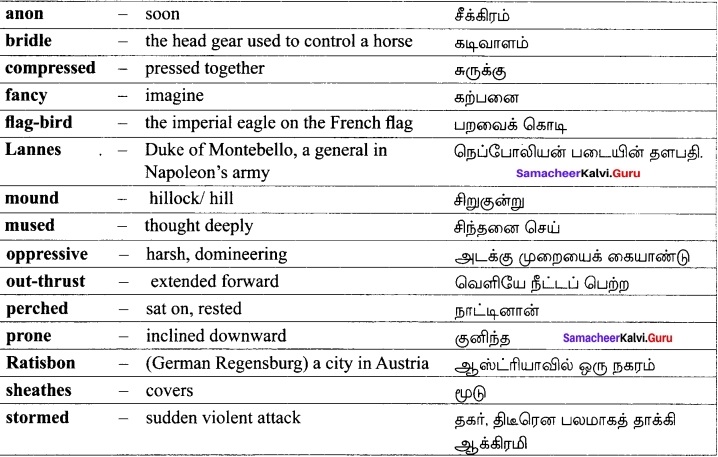
12th English Unit 1 Prose Two Gentlemen of Verona Paragraph Book Back Answers Samacheer Kalvi Read More »
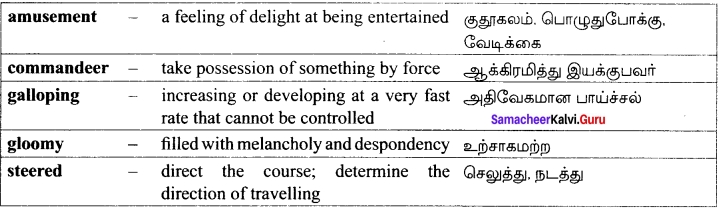
12th English Unit 3 Poem All The World’s A Stage Paragraph Book Back Answers Samacheer Kalvi

All The World’s A Stage Book Back Answers Class 12 English Guide Chapter 3 Tamilnadu Solutions

Students can Download English Poem 3 All the World’s a Stage Questions and Answers, Summary, Activity, Notes, Samacheer Kalvi 12th English Book Solutions Guide Pdf helps you to revise the complete Tamilnadu State Board New Syllabus and score more marks in your examinations.

Get a Practical Study with the help of Samacheer Kalvi 12th English Grammar to make learning language much easy for you and score good grades in exams.

12th Standard English 3rd Lesson All The World’s A Stage Questions and Answers

Warm Up

This is Life Cycle of butterfly.

Samacheer Kalvi 12th English Solutions Poem Chapter 3 All the World’s a Stage img-1

Question 1.
Discuss with your partner the different stages in the grow th of man from a new born to an adult.
Answer:
An infant pukes on the mother’s arms. As he is unable to articulate his needs, he keeps on crying like a kitten. Then he goes to school giving up his freedom. He is made to learn things he doesn’t want to learn. Then he becomes an adult hopelessly in love. He wastes his purple youth writing love letters or songs admiring the beauty of his love. Some join army or police force to serve the nation. At the peak of adulthood, they are quite touchy about honour and believe it to be more important than life itself.

Samacheer Kalvi 12th English All the World’s a Stage Textual Questions

1. Fill in the blanks using the words given in the box to complete the summary of the poem.

attention treble reluctantly
actors maturity reputation
serious faculties composing
enter promises dependent

Shakespeare considers the whole world a stage where men and women are only (1) _____ They (2) _____ the stage when they are borm and exit when they die. Every man, during his life time; plays seven roles based on age. In the first act, as an infant, he is wholly (3) _____ on the mother or a nurse. Later, emerging as a school child, he slings his bag over his shoulder and creeps most (4) _____ to school. His next act is that of a lover, busy (5) _____ ballads for his beloved and yearns for her (6) _____ In the fourth stage, he is aggressive and ambitious and seeks (7) _____ in all that he does. He (8) _____ solemnly to guard his country and becomes a soldier. As he grows older, with (9) _____ and wisdom, he becomes a fair judge. During this stage, he is firm and (10) _____ In the sixth act, he is seen with loose pantaloons and spectacles. His manly voice changes into a childish (11) _____ The last scene of all is his second childhood. Slowly, he loses his (12) _____ of sight, hearing, smell and taste and exits from the roles of his life.
Answer:

  1. actors
  2. enter
  3. dependent
  4. reluctantly
  5. composing
  6. attention
  7. reputation
  8. promises
  9. maturity
  10. serious
  11. treble
  12. faculties

2. From your understanding of the poem, answer the following questions briefly in a sentence or two.

Question (a)
What is the world compared to?
Answer:
The world is compared to a stage.

SamacheerKalvi.Guru

Question (b)
“And they have their exits and their entrances” – What do the words ‘exits’ and ‘entrances’ mean?
Answer:
‘Entrances’ means life. ‘Exits means death.

Question (c)
What is the first stage of a human’s life?
Answer:
The first stage of a human’s life is an infant, he is wholly dependent on the mother.

Question (d)
Describe the second stage of life as depicted by Shakespeare.
Answer:
The second stage is the schoolboy. The boy goes to school with a heavy heart like a snail.

Question (e)
How does a man play a lover’s role?
Answer:
When he turns into a lover, his lover is the only person he sees dancing in front of his eyes. For him, there is absolutely no other place that can comfort him, then the eyebrow of his lover.

Question (f)
Bring out the features of the fourth stage of a man as described by the poet.
Answer:
In the fourth stage, man becomes aggressive and ambitious and seeks glory in all his pursuits. He is ready to enter the mouth of the cannon for a moment of glory.

Question (g)
When does a man become a judge? How?
Answer:
In the fifth stage, man grows mature and wise. He becomes an impartial judge. He is firm and serious about his opinions.

Question (h)
Which stage of man’s life is associated with the ‘shrunk shank’?
Answer:
The sixth stage of man’s life is associated with the ‘shrunk shank’.

SamacheerKalvi.Guru

Question (i)
Why is the last stage called a second childhood?
Answer:
When he enters old age, he turns into a child again. Slowly, he loses his teeth, his eyesight, the taste in his mouth, and the love or greed for everything that he once wanted in his life.

3. Explain the following lines briefly with reference to the context.

Question (a)
“They have their exits and their entrances;
And one man in his time plays many parts”
Answer:
Reference: These lines are from the poem ‘All the world’s a stage’ written by William Shakespeare.
Context and Explanation: The poet says this while hinting at the beginning and the end of life. The poet divides man’s life into seven stages. The first stage symbolizes birth and the last stage of death. So, he uses the words “entrances and exits”.

Question (b)
‘‘Jealous in honour, sudden and quick in quarrel,
Seeking the bubble reputation”.
Answer:
Reference: These lines are from the poem ‘All the world’s a stage’ written by William Shakespeare.
Context and Explanation: The poet says these words while describing the fourth stage when the young man becomes a soldier and runs after short-lived glory. He has an inflated sense of honour and ready to insist on duels to settle matters touching his honour. He does not realize that the reputation he seeks is short-lived like a bubble.

Question (c)
“Is second childishness and mere oblivion;
Sans teeth, sans eyes, sans taste, sans everything.”
Answer:
Reference: These lines are from the poem ‘All the world’s a stage’ written by William Shakespeare.
Context and Explanation: The poet says this while man gets ready to leave this world (i.e.) the last stage of his life on this lonely planet. In this stage, man becomes totally forgetful. He loses his teeth, eyesight and taste. He loses all his senses of perception. Like a baby, he can’t do anything on his own. So, the poet calls this stage “second childhood” when the old man behaves in a childish manner.

Additional Questions

Explain the following lines briefly with reference to the context.

Question (a)
“His acts being seven ages. At first the infant,
Mewling and puking in the nurse’s arms;”
Answer:
Reference: These lines are from the poem ‘All the world’s a stage’ written by William Shakespeare.
Context and Explanation: The poet says these words while describing the first seven stages of life on the stage (i.e.) earth. The first stage/Act is infancy. The babe vomits on the arms of the nurse and cries like a kitten.

SamacheerKalvi.Guru

Question (b)
“All the world’s a stage,
And all the men and women merely players;”
Answer:
Reference: These lines are from the poem ‘All the world’s a stage’ written by William Shakespeare.
Context and Explanation: The poet says these words while philosophizing and classifying stages of life. The poet compares the world to a stage. All men and women are simply actors playing different roles in different stages of life.

Question (c)
“Then the whining school-boy, with his satchel
And shining morning face, creeping like a snail’
Answer:
Reference: These lines are from the poem ‘All the world’s a stage’ written by William Shakespeare.
Context and Explanation: The poet says these words while describing the second stage of life. During boyhood, the schoolboy goes to school reluctantly at snail speed with a heavy heart. In ‘Romeo and Juliet’, Shakespeare compares a schoolboy going to school like a lover going away from his lady love with a heavy heart.

Question (d)
“Sighing like furnace, with a woeful ballad
Made to his mistress’ eyebrow.”
Answer:
Reference: These lines are from the poem ‘All the world’s a stage’ written by William Shakespeare.
Context and Explanation: The poet says these words while describing the third stage of life when he becomes a lover. At this stage, he yearns for the attention of his lady love. He composes ballads expressing his agony caused by unrequitted love. He sings songs praising the beauty of his mistress trying to win her heart.

Question (e)
“Seeking the bubble reputation
Even in the cannon’s mouth.”
Answer:
Reference: These lines are from the poem ‘All the world’s a stage” written by William Shakespeare.
Context and Explanation: The poet says these words while describing the fourth stage of life. In this stage, Youngman becomes a soldier. He is quick to anger and attaches great importance to honour. He is ready to lay down his life for the fleeting bubble of reputation.

Question (f)
“…And then the justice,
In fair round belly with good capon lin’d,
With eyes severe and beard of formal cut,
Full of wise saws and modern instances;”
Answer:
Reference: These lines are from the poem ‘All the world’s a stage” written by William Shakespeare.
Context and Explanation: The poet says these words while describing the fifth stage of life. At this stage, he behaves like a judge pronouncing his decisive opinions with the modem instances. He quotes wise maxims from his own life experiences to influence other people. He is fond of eating delicacies unmindful of the protruding belly size.

SamacheerKalvi.Guru

Question (g)
“And so he plays his part The sixth age shifts
Into the lean and slipper ’dpantaloon,”
Answer:
Reference: These lines are from the poem ‘All the world’s a stage” written by William Shakespeare.
Context and Explanation: The poet says these words while describing the impact of ageing on physical appearance. In the sixth stage, he becomes old, thin, and unsteady.

Question (h)
“His youthful hose, well said, a world too wide
For his shrunk shank; and his big manly voice,”
Answer:
Reference: These lines are from the poem ‘All the world’s a stage” written by William Shakespeare.
Context and Explanation: The poet says these words to describe the unsuitability of one’s own dress as one advance in years. As the young man turns old, his legs become thin and his trousers become very loose giving easy access to legs but tough to wear as the waistline has also thinned. His manly voice has become feeble. When he speaks, it looks like a child piping up his dreams.

Question (i)
“…Last scene of all,
That ends this strange eventful history,”
Answer:
Reference: These lines are from the poem ‘All the world’s a stage” written by William Shakespeare.
Context and Explanation: The poet says these words while describing the preparedness of the old man in the last stage of life to exit from this lonely planet. The poet beautifully says the “eventful history” (i.e.) life which was spiced up with many interesting things is now coming to a dramatic close. The eternal jewel of life, ‘the soul’, is going to depart the body which had kept it imprisoned for long. The soul celebrates the joy of freedom in death.

Appreciate The Poem

4. Read the poem once again carefully and identify the figure of speech that has been used in each of the following lines from the poem.

“All the world’s a stage,
And all the men and women merely players;
They have their exits and their entrances;
And one man in his time plays many parts,
His acts being seven ages. At first the infant,

Mewling and puking in the nurse’s arms;
Then the whining school-boy, with his satchel
And shining morning face, creeping like snail
Unwillingly to school. And then the lover,
Sighing like furnace, with a woeful ballad
Made to his mistress’ eyebrow. Then a soldier,
Full of strange oaths, and bearded like the pard,
Jealous in honour, sudden and quick in quarrel,

Seeking the bubble reputation
Even in the cannon’s mouth. And then the justice,
In fair round belly with good capon lin’d,
With eyes severe and beard of formal cut,
Full of wise saws and modern instances;
And so he plays his part. The sixth age shifts
Into the lean and slipper’d pantaloon,
Samacheer Kalvi 12th English Solutions Poem Chapter 3 All the World’s a Stage img-2
With spectacles on nose and pouch on side;
His youthful hose, well sav’d, a world too wide
For his shrunk shank; and his big manly voice,
Turning again toward childish treble, pipes
And whistles in his sound. Last scene of all,
That ends this strange eventful history,
Is second childishness and mere oblivion;
Sans teeth, sans eyes, sans taste, sans everything.”

Question (a)
“All the world’s a stage”
Answer:
Metaphor

SamacheerKalvi.Guru

Question (b)
“And all the men and women merely players”
Metaphor

Question (c)
“And shining morning face, creeping like snail’
Simile

Question (d)
“Full of strange oaths, and bearded like the pard,”
Answer:
Simile

Question (e)
“Seeking the bubble reputation”
Answer:
Metaphor

Question (f)
“His youthful hose, well sav’d, a world too wide”
Answer:
Alliteration

Question (g)
“and his big manly voice, Turning again toward childish treble”
Answer:
Metaphor

5.Pick out the words in ‘alliteration’ in the following lines,

Question (a)
“and all the men and women merely players”
Answer:
and all the men and women merely players

Question (b)
“And one man in his time plays many parts”
Answer:
And one man in his time plays many parts

Question (c)
“Jealous in honour, sudden and quick in a quarrel ”
Answer:
Jealous in honour, sudden and quick in quarrel.

6. Read the given lines and answer the questions that follow.

(a) “Then the whining school-boy, with his satchel
And shining morning face, creeping like snail
Unwillingly to school ”

Question (i)
Which stage of life is being referred to here by the poet?
Answer:
Boyhood is referred to here.

SamacheerKalvi.Guru

Question (ii)
What are the characteristics of this stage?
Answer:
Innocence, joy, and care-free life are the characteristics of this stage in life.

Question (iii)
How does the boy go to school?
Answer:
The boy goes to school unwillingly. He is slow like a snail.

Question (iv)
Which figure of speech has been employed in the second line?
Answer:
A simile is employed in the second line.

(b) “Then a soldier,
full of strange oaths, and bearded like the pard,
Jealous in honour, sudden and quick in quarrel,
Seeking the bubble reputation Even in the cannon’s mouth.

Question (i)
What is the soldier ready to do?
Answer:
The soldier is ready to lay down his life.

Question (ii)
Explain ‘bubble reputation’.
Answer:
Reputation is a transitory thing. It doesn’t even last a minute like the life of a bubble.

Question (iii)
What are the distinguishing features of this stage?
In this stage, the youthful soldier attaches great value to honour. He is quick to temper and challenges people to fight for the sake of honour. He often swears to assert his valour.

(c) “And then the justice,
In fair round belly with good capon lin’d,
With eyes severe and beard of formal cut,
Full of wise saws and modern instances;’’’’

Question (i)
Whom does justice refer to?
Answer:
Justice refers to man in his fifth stage when he becomes critical of everyone else’s opinion in life.

Question (ii)
Describe his appearance.
Answer:
He has a potbelly and is fond of eating delicacies.

Question (iii)
How does he behave with the people around him?
Answer:
His eyes are severe. He often gives advice to people.

Question (iv)
What does he do to show his wisdom?
Answer:
To show his wisdom, he often quotes modem examples and words of wisdom.

Additional Questions

Read the given lines and answer the questions that follow.

(a) “All the world’s a stage
And all the men and women merely players:
They have their exits and their entrances;
And one man in his time plays many parts,
His acts being seven ages.”

SamacheerKalvi.Guru

Question (i)
What are all the men and women of this world?
Answer:
The men and women of the world are just like players on the stage of life.

Question (ii)
Explain: ‘They have their exits and their entrances’.
Answer:
They take birth and enter the world. They die and depart from the world.

Question (iii)
How many parts does every man enact and play?
Answer:
Every man enacts and plays seven different roles in life.

Question (iv)
Why is this world compared to a stage?
Answer:
This world is like a big stage where men and women are ever busy in playing their respective roles.

(b) “At first the infant,
Mewling and puking in the nurse’s arms.
Then the whining schoolboy, with his satchel
And shining morning face, creeping like snail
Unwillingly to school.”

Question (i)
What does a man do in the first stage of life?
Answer:
In the first stage of life, man plays the role of an infant. He is always crying and vomiting in the nurse’s arms.

Question (ii)
Does the schoolboy show eagerness to go to school?
Answer:
No, the schoolboy doesn’t show any interest in going to school. Rather he is unwilling to go there.

Question (iii)
How does the schoolboy walk up to his school?
Answer:
He is inching slowly and unwillingly like a snail towards his school.

Question (iv)
Explain, ‘Mewling and pucking’.
Answer:
It means crying and vomiting.

(c) “And then the lover,
Sighing like furnace, with a woeful ballad
Made to his mistress’ eyebrow.”

Question (i)
What is the third stage of life?
The third stage of a man’s life is that of a lover.

SamacheerKalvi.Guru

Question (ii)
What is the poetic device used in the second line?
Answer:
‘Simile’ is used as a poetic device in the second line.

Question (iii)
What does the lover do for his mistress?
Answer:
The lover is always sighing and longing for his beloved. He writes a sad ballad describing the eyebrow of his mistress.

Question (iv)
Explain, ‘sighing like a furnace’.
Answer:
It means moaning, breathing deeply and sadly like a fireplace.

(d) “Then a soldier.
Full of strange oaths, and bearded like the pard,
Jealous in honour, sudden and quick in quarrel,
Seeking the bubble reputation.
Even in the cannon’s mouth.”

Question (i)
Describe the two traits of a soldier.
Answer:
A soldier is always ready to swear and is full of oaths. He is ever ready to compete for honour and glory.

Question (ii)
What is the poetic device used in ‘bearded like a pard’?
Answer:
The poet uses a simile for comparison.

Question (iii)
Why does the soldier risk his life and what for?
Answer:
The soldier risks his life a momentary reputation and is ready even to enter the cannon’s mouth.

Question (iv)
How is the soldier bearded?
Answer:
He is bearded like a pard or a leopard.

SamacheerKalvi.Guru

(e) “The sixth age shifts
Into the lean and slippered pantaloon,
With spectacles on nose and pouch on side,
His youthful hose, well saved, a world too wide For his shrunk shank; and his big manly voice,
Turning again toward childish treble, pipes
And whistles in his sound.’’

Question (i)
What is a ‘lean and slippered pantaloon’?
Answer:
It means a thin old man wearing slippers and loose trousers.

Question (ii)
What does the phrase ‘a world too wide’ here mean?
Answer:
The stockings he bought in his youth have become too loose for his shrunk and thin legs.

Question (iii)
How does the ‘mainly voice’ turn into ‘childish’ in the sixth stage of life?
Answer:
His manly voice turns into childish trebles and whistles when he speaks as he has no teeth in his mouth.

Question (iv)
What is the sixth stage of man’s life?
Answer:
In the sixth stage of life man plays the role of a ‘lean and slippered pantaloon’.

(f) “Last scene of all,
That ends this strange eventful history,
Is second childishness and mere oblivion,
Sans teeth, sans eyes, sans taste, sans everything.”

Question (i)
What is the last scene of a man’s life?
Answer:
The last scene that ends man’s eventual life is a ‘second-childishness’. In this stage, he appears and behaves like a child.

Question (ii)
Why is the last stage of man has been called a ‘second childishness’?
Answer:
The last stage of man’s life has been called a ‘second childishness’ as man’s appearance and activities in this stage are quite similar to those of a child.

Question (iii)
How is the last stage of man’s life a ‘mere oblivion’?
Answer:
The last stage of life is a ‘mere oblivion’ as old age is another stage of forgetfulness.

Question (iv)
Explain ‘eventful history’.
Answer:
It means the life-long history of a man full of interesting incidents and experiences.

7. Complete the table based on your understanding of the poem.

Stage Characteristic
crying
judge
soldier
unhappy
second childhood
whining
old man

Answer:

Stage Characteristic
Baby (first stage) crying
judge Firm and serious
soldier Aggressive and Ambitious
Lover unhappy
second childhood Loses senses
Boyhood (school) whining
old man Wise and judges others

8. Based on your understanding of the poem, answer the following questions in about 100 – 150 words each. You may add your own ideas if required, to present and justify your point of view.

Question (а)
Describe the various stages of a man’s life picturised in the poem “All the World’s a stage.”
Answer:
Shakespeare has beautifully portrayed this world as a huge open theatre wherein all humans play seven acts/ages. In the first act, he is a helpless infant puking on the nurse’s arms mewling like a kitten. In the second stage, he is the grumbling/whining school student. He moves to school like a snail/unwillingly with his slate and bag. In the third Act, he is a lover sighing and yearning for the attention of his lady love.

He composes romantic ballads complaining his love that he needs a better deal. In the fourth Act, he becomes a quick-tempered soldier, aggressive and ambitious, ready to stake his life for the sake of bubble reputation. As he matures, he becomes a wise judge of contemporary life quoting wise maxims to endorse his opinion. He is firm and serious. In the sixth act, his stout legs become thin making his trousers of youth unsuitable. Thin and lean legs easily travel through them but are unable to stay due to a slimmed waist. His bass voice has become treble like that of a child. In the last act, he is sans teeth, sanys eyes, sans taste, and sans everything (i.e.) loses all senses. He departs the world.

SamacheerKalvi.Guru

Question (b)
Shakespeare has skillfully brought out the parallels between the life of man and actors on stage. Elaborate this statement with reference to the poem.
Answer:
Shakespeare has beautifully compared the growth of humans by stages with his emergent role during that stage. In the first stage, a man plays the role of an infant. As an infant, he does represent the characterization of mewling and puking. In the second Act, he does the role of a schoolboy with the characteristics of unwillingness to go to school and innocence shining in his face. In the third Act, he performs the role of a lover’s head over heels in love with a beautiful lady. He composes woeful romantic ballads and sings serenades to impress his love. In the fourth act, he plays the impressive role of a short-tempered, honor pursuing soldier.

He is ready to put his mouth in the Cannon’s mouth for conquering the bubble-like honor in order to defend the territory of his country. In the fifth Act, he performs the role of a mature and fair judge criticizing the ways of the world often spicing up his conversations with wise remarks and wit. His potbelly and well-cut beard show the social status he enjoys in life. In the sixth act, he is old. He performs the role of a thin old man wearing ill-fitting loose garments with a changed treble in his voice. He is bespectacled and slow in walking. In the final act, he becomes a total invalid losing all senses of hearing, taste, and sight. Then the performer leaves the stage (i.e.) the lonely planet.

Speaking Activity

Shakespeare describes the characteristics of the various stages of man. You are in the second stage of life. What do you think of your roles and responsibilities at this stage? Discuss with your partner and share your ideas with the class.
Answer:
At school age, imagination takes wings. Inquisitiveness is common among my peers. Parents, society, and teachers want us only to study. But we need to explore the world around us. At home, it is our responsibility to keep our things in order. We need to assist the perennial worker, we mean, our moms in completing their domestic chores. Occasionally, we shall take care of siblings too not as work but as a duty towards a family member who will be a lifelong companion to us.

SamacheerKalvi.Guru

Listening Activity

Listen to the poem and fill in the blanks with appropriate words and phrases. If required listen to the poem again.

The World Is Too Much with Us
The world is too much with us; late and soon, Getting and spending, we lay waste our powers; Little we see in Nature that is ours; We have given our hearts away, a sordid boon! This Sea that bares her bosom to the moon, The winds that will be howling at all hours, And are up- gathered now like sleeping flowers,

For this, for everything, we are out of tune; It moves us not. – Great God! I’d rather be A Pagan suckled in a creed outworn; So might I, standing on this pleasant lea, Have glimpses that would make me less forlorn; Have sight of Proteus rising from the sea; Or hear old Triton blow his wreathed horn.

The World Is Too Much with Us:
The world is too much with us; late and soon
Getting and spending, we lay waste our powers
Little we see in (1) ______ that is ours;
We have given (2) ______ away, a sordid boon!
This Sea that bares her bosom (3) ______
(4) ______ that will be howling at all hours,
And are up-gathered now like (5) ______
,For this, for everything, we are (6) ______ ;
It (7) ______ . us not. Great God! I’d rather be
A Pagan suckled in a creed outworn;
So might I, standing on this pleasant lea
Have glimpses that would make me less forlorn;
Have sight of Proteus rising (8) ______
Or hear old Triton blow his wreathed horn.
Answers:

  1. Nature
  2. our hearts
  3. to the moon
  4. The winds
  5. sleeping flowers
  6. out of tune
  7. moves
  8. from the sea

All the World’s a Stage About The Poet

Samacheer Kalvi 12th English Solutions Poem Chapter 3 All the World’s a Stage img-3

William Shakespeare (1564-1616) was a prolific writer during the Elizabethan and Jacobean ages of British theatre (sometimes called the English Renaissance). Shakespeare’s plays are perhaps his most enduring legacy. Shakespeare’s poems remain popular to this day. Shakespeare’s rich and diverse works have spawned countless adaptations across multiple genres and cultures. His writings have been compiled in various iterations of The Complete Works of William Shakespeare. William Shakespeare continues to be one of the most important literary7 figures of the English language.

All the World’s a Stage Summary in English

Introduction
‘All the world’s a stage’ is an extract from the play ‘As you like it’, a romantic comedy by Shakespeare.

A metaphor defining the world
Shakespeare claims this world as a stage in a theatre. All men and women are only actors. The stage has both exits and entrances. Similarly, men and women take birth and enter the world. They live their lives and go out of it when they die. Every man plays seven emergent roles and lives through seven stages of life.

SamacheerKalvi.Guru

Infancy and boyhood
The birth of an infant begins the first stage of a man’s life. The infant cries and vomits on the arms of his nurse. Then he grows into a school-going boy. He is unwilling to go to school. He moves towards school at a snail’s speed.

Thirst for love and glory
In the third stage, a man plays the role of a lover. He sighs like a furnace. He keeps on writing ballads praising the beauty of the eyes of his beloved. The fourth stage is that of a soldier. He keeps a beard like that of a leopard. He always runs after honor and fame. He is ready even to enter a cannon’s mouth just for momentary glory and bubble of reputation.

Wisdom and failing health
In the fifth stage, a man plays the role of justice. He is fond of eating chicken and develops a fat round belly. He is full of wise sayings and modem instances. He is a man of wisdom and knowledge. In the sixth stage, the man becomes weak and thin in body. He wears slippers, spectacles, and clothes that he bought when he was young. These pants and stockings have become loose for his shrunk and thin legs.

Second childhood
The seventh stage is the ‘second childhood’. In this stage, the man becomes very old and starts behaving like a child. He is left with no teeth and becomes weak in eyesight. Actually, he loses taste and becomes a victim of forgetfulness. The poet describes this helpless state as “Sans teeth, sans eyes, sans taste and sans everything” nicely. Then the man departs from this world.

Conclusion
Shakespeare condenses the life of man beautifully and portrays it well. The revisit of childhood in old age proves his profound understanding of human life.

All the World’s a Stage Summary in Tamil

முன்னுரை
‘All the World’s a stage’ (‘உலகம் ஒரு நாடக மேடை’) என்ற கவிதை சேக்ஸ்பியரின் ‘As you like it’, என்ற | நகைச்சுவை கலந்த கற்பனை கதையின் ஒரு சாரம் ஆகும்.

உலகம் ஒரு நாடக மேடை:
சேக்ஸ்பியர் உலகத்தை ஒருநாடக மேடையாகக் கருதுகிறார். அதில் அனைத்து ஆணும், பெண்ணும் நடிகர்களே. இந்த நாடக மேடையின் உள்ளே வரவும் வெளியே செல்லவும் வழிகள் உள்ளன. அதே போல தான் மனிதன் பிறந்து இந்த உலகத்துக்கு வருகிறான். அவனது வாழ்நாளை வாழ்ந்துவிட்டு வெளியே போய்விடுகிறான். ஒவ்வொரு மனிதனும் ஏழு கதாபாத்திரங்களாக வாழ்க்கை மேடையில் நடிக்கிறான்.

SamacheerKalvi.Guru

குழந்தை பருவமும், விடலைப் பருவமும்:
குழந்தை பருவமே மனிதனின் முதல் பாகம் ஆகும். வாந்தியும், அழுகையுமாக முதல் பாகம் செவிலிப் பெண் தோளில் இருக்கிறான். பிறகு பள்ளிப் பருவம் அடைகிறான். பள்ளிக்கூடம் போக மனமில்லாது இருக்கிறான். பள்ளிக்கூடத்தை நோக்கி நத்தை போல் நகர்கிறான்.

காதல், புகழ் என ஈர்ப்புக்குள்ளாகிறான்:
மூன்றாம் பாகத்தில் காதலனாக கதாபாத்திரம் ஏற்கிறான். எரியும் அடுப்பைப் போன்று குமுறுகிறான். தன் காதலியின் கண்களைக் குறித்து கவிதை மழை பொழிகிறான். நான்காம் பாகத்தில் சிப்பாய் வேடம் ஏற்கிறான். சிறுத்தை போன்று மீசையை வளர்த்துக் கொள்கிறான். பேர் மற்றும் புகழின் பின்னால் ஓடுகிறான். தற்காலிக பேருக்கும், புகழுக்கும் ஆசைப்பட்டு பீரங்கி | வாயினுள் நுழையவும் தயாராக இருக்கிறான்.

அறிவு முதிர்ச்சியும், குன்றும் ஆரோக்கியமும்:
ஐந்தாம் பாகத்தில் தானே ஒரு நீதிபதி ஆகிறான். கோழி மாமிசத்தின் பால் ஆவல் கொண்டு அதை உண்டு பெரிய தொப்பையுடன் தோன்றுகிறான். அறிவு முதிர்ச்சியுடனும், புதுப் பொலிவுடனும் தோன்றுகிறான். அறிவும் ஆற்றலுமுடையவனாய்த் திகழ்கிறான். ஆறாம் பாகத்தில் உடல் வலுவிழந்து சோர்வடைகிறான், ஒல்லி வடிவமாய், காலில் செருப்புமாய் ஒரு சிரிப்பு நடிகனைப் போல் தோற்றமளிக்கிறான். இளம் வயதில் அணிந்த கண்ணாடியும், துணிகளும், செருப்பும் அணிந்து கொள்கிறான். சுருங்கிய தோல்களுக்கும், ஒல்லியான கால்களுக்கும் இந்த உடையும், செருப்பும் தொள தொளவென காணப்படுகின்றன.

இரண்டாம் குழந்தை பருவம்:
ஏழாம் பருவம் இரண்டாவது குழந்தை பருவம் எனலாம். இந்த பாகத்தில் மிகவும் வயது முதிர்ந்த ஒரு குழந்தையின் இயலாமைத் தனத்தை செயல்பாட்டில் காட்டுகிறான். பற்களை இழந்து, கண் பார்வைக் குன்றிப் போகிறான். குழந்தையின் குரல் போல் மாறி, குரல் ஒரு விசில் சத்தமாய் மாறுகிறது. இது கடைசி அத்தியாயம் எனலாம். அவனின் அதிசயமான பரப்பரப்பூட்டும் நிகழ்வுகள் நிறைந்த வரலாறானது ஒரு முடிவுக்கு வருகிறது. தன் இரண்டாம் குழந்தைப் பருவத்தில் பிறரைச் சார்ந்து வாழும் நிலையை அடைகிறான். பற்களை இழந்து, கண் பார்வையை இழந்து, நாவின் | சுவை இழந்து, பின் அனைத்தையும் இழக்கிறான். உலகத்தை விட்டு வெளியேறுகிறான்.

முடிவுரை:
சேக்ஸ்பியர் மனித வாழ்க்கையை சுருக்கி அழகாக அதை வர்ணித்து இருக்கிறார். வயோதிகத்தில் திரும்பும் குழந்தைத் தனம் என்பது அவர் மனித வாழ்க்கையை அவர் ஆழ்ந்து அறிந்து கொண்டதை உணர்த்துகிறது.

All the World’s a Stage Glossary

Textual:

Samacheer Kalvi 12th English Solutions Poem Chapter 3 All the World’s a Stage img-4

Additional:

Samacheer Kalvi 12th English Solutions Poem Chapter 3 All the World’s a Stage img-5

Samacheer Kalvi 12th English Book Solutions Poem

12th English Unit 3 Poem All The World’s A Stage Paragraph Book Back Answers Samacheer Kalvi Read More »

12th English Unit 6 Supplementary Remember Caesar (Play) Paragraph Book Back Answers Samacheer Kalvi

Remember Caesar (Play) Book Back Answers Class 12 English Guide Chapter 6 Tamilnadu Solutions

Students can Download English Poem 6 Incident of the French Camp Questions and Answers, Summary, Activity, Notes, Samacheer Kalvi 12th English Book Solutions Guide Pdf helps you to revise the complete Tamilnadu State Board New Syllabus and score more marks in your examinations.

Get a Practical Study with the help of Samacheer Kalvi 12th English Grammar to make learning language much easy for you and score good grades in exams.

12th Standard English 6th Lesson Remember Caesar (Play) Questions and Answers

Warm up

Study the title of the play “Remember Caesar”. Who is Caesar? What is he remembered for? Let us go through the pages of history succinctly to answer the above questions.

Samacheer Kalvi 12th English Solutions Supplementary Chapter 6 Remember Caesar (Play) img-1

  • Julius Caesar was a brilliant military general and great Roman monarch.
  • He was bom on the 13th of July in 100 BC (BCE).
  • He created the Julian calendar which is the basis for todays calendar.
  • He was assassinated by a group of Roman senators in 44 BC(BCE).
  • The day that Julius Caesar was murdered,
  • 15 March, was called the Ides of March in ancient Rome.

1. Complete the summary of the play, choosing the appropriate words from the list given below the passage.

callous unperturbed
well-known gardener
reminder zealous service
Remember Caesar assassination
shut convinced

Lord Weston was a(1) _____ judge in England. Being pompous and vain, he told his secretary Roger that he had attained glory by hard work and (2) _____ He expressed his displeasure over Roger’s request for a half-holiday. Suddenly, he discovered a piece of paper with the words (3) _____ in his pocket, and he feared that the message was a warning conveyed by his enemies who had received legal punishments from him. As the message was sent on the 15th of March, (the day Julius Caesar was assassinated), he was (4) _____ that someone affected by his fair judgement was plotting his murder. Sensing the definite attack, Lord Weston ordered his secretary to (5) _____ all the doors and windows. But his wife remained (6) _____ by the threat. So, Lord Weston was angered by her (7) _____ reaction. He ordered Roger to send the cook and the (8) _____ away. Both Weston and Roger took elaborate precautionary measures to thwart the (9) _____ attempt. Finally, Weston was able to recollect that he had written the message “Remember Caesar” himself as a (10) _____ Caesar was actually a gardener who had an appointment to visit Weston’s garden. The play revolves around Weston’s absentmindedness which is the crux of the play.
Answer:

  1. well-known
  2. zealous service
  3. Remember Caesar
  4. convinced
  5. shut
  6. unperturbed
  7. callous
  8. gardener
  9. assassination
  10. reminder

2. Based on your understanding of the text, answer the following questions briefly.

Question (а)
How did Lord Weston describe himself?
Answer:
Lord Weston described himself as the most impartial judge in England only because of his hard work and Zealous service.

Question (b)
How did Roger react to Lord Weston’s advice?
Answer:
Roger was jolted from his self-indulgent absent-mindedness. He made a calculated guess that Mr. Weston must have recounted his rise to success and advised him to emulate his hard work and zealous service. When Mr. Weston was busy advising, Roger had resumed his work of taking notes.

Question (c)
What made Lord Weston think that his life was in danger?
Answer:While searching for a fill for his pipe, Weston discovered a small piece of paper in his pocket with a warning note “Remember Caesar”. After seeing that note Lord Weston thought that his life was in danger.
Lord Weston dug out a scrap of paper from his coat pocket. He imagined that it should have been placed by some unknown adversary. The words “Remember Caesar” reminded him of the Ides of March when Caesar was assassinated. Unfortunately, it was also the 15th of March. So, Mr. Weston deduced that he was likely to be assassinated on that day by someone who got punished through him in the court.

Question (d)
Why was the speaker keen to know what day it was?
Answer:
The speaker was keen to connect the scrap of paper with the Ides of March.

Question (e)
Mention the immediate steps taken by Lord Weston to protect himself from his assassin.
Answer:
He had all the doors except the kitchen bolted and locked from within. He wanted to diffuse allegedly a parcel deemed to contain a bomb, by keeping it soaked completely in a pail of water. He ordered the gardener to sit under the Ilex tree so that snipers can’t have access point to shoot at him. He sent all the servants away.

Question (f)
Do you think that Lady Weston did not care about the threat to her husband? State reasons.
Answer:
Lady Weston did not care much about the threat to her husband because she does not believe in the seriousness of the threat. She wanted to remove the portrait of his aunt from gun shot point so that Mr. Weston’s property is saved. She says only big people get assassinated. The assassination, if it happens, will make Mr. Weston great. She wants to let the grocer in. She is cool headed throughout the play.

Question (g)
How did Lord Weston ‘defuse’ the ‘infernal machine’?
Answer:
Lord Weston asked Roger to bring the pail of water, he placed the parcel of infernal machine inside. It floated. To drown it, Mr. Weston used some books.

Question (h)
Whose life was of ‘great value’ to England? In what way?
Answer:
According to Roger, Mr. Weston’s life was of great value. He was the most well-known and most impartial judge in England.

Question (i)
Why did the speaker consider his life less important?
Answer:
The speaker considered his life less important as he was just an assistant of Mr. Weston.

Question (j)
Who reminded Lord Weston about Mr. Caesar?
Answer:
Mr. Roger reminded Mr. Weston of the appointment made between him and Mr. Caesar regarding rose trees. He had come to discuss the deal on planting rose trees in his garden.
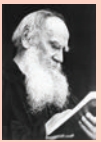

Question (k)
What was the truth about the crumpled piece of paper?
Answer:
Judge Weston himself had written “Remember Caesar” to remind himself about the appointment on 15th March with that gardener.

Question (l)
Bring out the irony in the message “Remember Caesar”.
Answer:
The message “Remember Caesar” was written by judge Weston. He himself forgot the context in which he had written it. Being an absent-minded fellow, he thought it was a coded message informing him of a w ell-thought out assassination on the Ides of March.

Additional Questions

Question (a)
Why did Mr. Weston rebuke Mr. Roger for asking half-a-day leave?
Answer:
Roger had availed half a day leave only the previous month. Mr. Weston thought that he was trying to have needless leisure time. So, he rebuked him.

Question (b)
How did Roger convince Mr. Weston of the need to avail half a day leave?
Answer:
Mr. Roger said that he wanted to interview the clerk of Awards Committee and find out why he had not sent the document. Thus he convinced his boss of the need for half a day leave.

Question (c)
Why did the judge link the words “Remember Caesar” to Ides of March?
Answer:
Julius Caesar was assassinated on the Ides of March. “Remember Caesar” took him to the scene of assassination.

Question (d)
What according to Weston is the beginning of greatness?
Answer:
According to Weston, attention to detail is the beginning of greatness.

Question (e)
How does Weston justify the cause for the impending assassination?
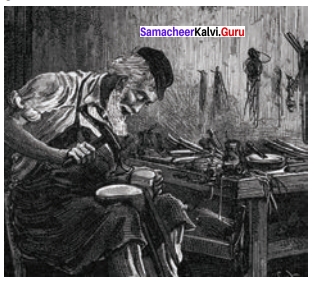
Answer:
For an instrument of justice (i.e.) judge over men sooner or later revenge awaits. And the juster ‘ a judge has been, the more fearless, so much greater will be the hate that pursues.

Question (f)
Why does Weston want to thank them for the warning?
Answer:
Mr. Weston wants to thank them for the warning given because it helped him in making sure that even if he may die before his time, he won’t die on 15th March. As there was time to bar doors and take preventive actions.

3. Based on your understanding of the play, complete the Graphic Organiser (GO)

Samacheer Kalvi 12th English Solutions Supplementary Chapter 6 Remember Caesar (Play) img-2

Answer:

Samacheer Kalvi 12th English Solutions Supplementary Chapter 6 Remember Caesar (Play) img-3

4. Answer the following questions in a paragraph about 150 words each.

Question (a)
“Remember Caesar” is a light-hearted comedy. Discuss the statement in a group and identify various aspects such as title, plot, and characterization that contribute to the humour in the play.
Answer:
Remember Caesar is a light-hearted comedy. The name Caesar is the name of a tragic hero Julius Caesar in one of the plays of William Shakespeare. Weston gives an appointment to Mr. Caesar to discuss rose tree planting work in his garden. Just to remind him of the proffered appointment, he scribbles two words “Remember Caesar” and keeps that scrap of paper in his coat pocket. Roger, the assistant of the judge elevates him to the level of a tragic hero. He flatters the judge that his death could be a great loss to England as he was a great impartial judge whose integrity could not be bargained or bribed. Mrs. Weston’s entry lightens up the whole drama and the tragedy transitions into a dark comedy. Lady Weston keeps hinting about earlier attempts when he was eating a game pie.

She becomes seriously playful when she says, “you’ve always wanted to be a great man and now you’ve got your wish. They don’t assassinate nobodies.” She cool-headedly tells her husband that he can stay indoors and have drinks. Lady Weston asks her husband if someone was planning to murder him. He says, “obviously”. She gives a curt retort, “I wonder someone hasn’t done it long ago. A great many people must hate judges. And you are a strict judge, they say.” When Weston says he has instructed Roger to barricade all doors, her immediate worry is about the grocery awaited. She asks if he was expecting both French and Dutch together in the attempt to assassinate. When Weston asks if a little pepper was more important to her than her husband’s life, she says that he would be the first person to complain if the bread was short and the gravy thin. The cook disobeys the order. She has never been “behind the bars”. She will handle anyone who enters the kitchen. A judge and his assistant want the door locked but a cook is not afraid. Lady Weston doesn’t want to send away the cook. She is practical. She wants her to stay back to cook his pet dishes.

Lady Weston brings a handful of candles to keep the room lit if Mr. Weston has to stay underground for a while. A velvet coat is construed as an infernal machine that could blow up the whole place is smothered with books inside a pail of water to the great annoyance of Lady Weston. She casually reminds her husband that doctor disapproves of excitement. It was only on this account, Lady Weston bears the nonsense and whimsical behaviour of Mr. Weston. The arrival of Mr. Caesar only sorts out the knot. The judge remembers to meet Mr. Caesar on 15th March.

Question (b)
Compare the character traits of Lord Weston and his wife.
Answer:
Lord Weston is a well-established judge. He is respected for being the most impartial judge in England. He is inflated with pride in his success as a judge. He keeps on advising Roger about diligence, courage, and attention to detail to climb the ladder of success. He reprimands him for seeking half a day’s leave. When Roger qualifies his request with the purpose of interviewing the clerk Mr. Clays to get the data required for his case. A scrap of paper upsets him. He reads it out “Remember Caesar”. Mr. Weston interprets those two words as “death warrant”. Mrs. Weston doesn’t take those words as any threat to anybody. But the judge senses something evil. He declares some illiterate must have scribbled those words. He deduces that a pirate he

had punished or the offenders in the treason case could be behind the conspiracy to eliminate him. His undue fear of ‘velvet coat parcel’ is really comic. His wife’s efforts to be normal provokes him. She casually indicates that she was wondering why he was not assassinated earlier as he must have won the hatred of many lawbreakers. She is a charming woman and an excellent housewife. But one is never sure how much intelligence and sweet malice there lies behind her practical simplicity. She teasingly says were she to shoot him, she would choose the ilex tree as it had thick foliage to hide any sniper and still give him enough room to aim at the judge. Mrs. Weston mocks at Weston’s idea of shutting all the doors leaving large space at the roof. When someone knocks it is she who tells Weston that it could be some perfectly innocent person. She is right. It was an innocent Caesar who he had agreed to meet on that day. Mrs. Weston is more practical and level headed than Mr. Weston.

(c) Group Work

The play revolves around a ‘perceived threat’ and how Lord Weston and Lady Weston react to it. Let’s reverse their roles. Imagine a panic-stricken Lady Weston and a frivolous Lord Weston. Read the following piece of dialogue from the play and rewrite it to suit the changing roles.

LADY WESTON: My dear, your life is in grave danger and you are being so cool. WESTON: Don’t worry. Nothing will happen to me.
LADY WESTON: How can you be so sure? I found this small scrap of paper “Remember Caesar” and it doesn’t look like a joke to me.
WESTON : (Ha! Ha! Ha!) My dear lady, this is also another hoax. Why do you make a fuss asking the servants to bar and bolt the doors?
LADY WESTON: Why do you laugh?
WESTON: What else do I do dear lady? I had fixed an appointment with Mr. Caesar to meet me today to discuss planting rose trees in our garden as you had wished.
LADY WESTON: Oh! How could I have misunderstood the whole thing! So silly of me.

Remember Caesar (Play) About The Author

Samacheer Kalvi 12th English Solutions Supplementary Chapter 6 Remember Caesar (Play) img-4

Gordon Daviot (1896 – 1952) is the pen name of Miss. Elizabeth McKintosh, a Scottish born novelist and playwright. She served educational institutions in England and Scotland as a physical education instructor and soon took to writing novels under another pseudonym Josephine Tey.

Remember Caesar (Play) Summary in English

Introduction
This one-act play is a parody of Julius Caesar sans the tragic element in it. Lord Weston, a well-established judge is vain. He almost always boasts of his diligence and zealous service to society. His assistant Roger is bored as a result of having been forced to listen to his tale of success often exposing his inflated ego. With his inflated ego, Judge Weston mistakes the scribbled words “Remember Caesar” to be a threat to his life. The comedy unfolds as the man called Caesar makes his appearance, in the end, to discuss rose trees to be planted. “Remember Caesar” is a Parody on William Shakespeare’s “Julius Caesar”.

Sermon on diligence
In the beginning of the play Roger demands half-day leave and that was enough for the judge to start his sermon 1 on the value of hard work and his standing in society as an impartial judge. Roger conveniently switches off; his attention and pretends to take notes of  the instructions of the judge. The judge I almost catches in his self-indulgent j absent-mindedness. Roger escapes by the skin of his teeth by just rewinding from his memory the oft-repeated j story of his success. He hoodwinks the judge as to the purpose of his demand for half-a-day leave by saying that he wanted to personally interview the award committee as to why they had not forwarded the documents. The judge was quite impressed. The judge asked him to walk to Mr. Clay’s office in the afternoon. He reiterated that diligence, courage and attention to details are required to cultivate an orderly mind. Without an orderly mind no man can hope to excel in any learned profession.

An assassination note
At this juncture, he takes out a crumpled paper from his court pocket. While smoothening the rough paper he insisted j that attention to detail was the beginning ! of greatness. He reads two words “Remember Caesar”. His scholarly mind j connects Caesar to Ides of March and ; the most acted out scene of assassination in Shakespeare’s play “Julius Caesar”.As a coincidence that particular day turns out to be 15th March when Caesar was assassinated by senators. Roger senses the premonition of the boss about a possible assassination. Both discuss the cases in which the strict judgement had angered the affected parties. Roger takes the opportunity to flatter his boss saying that he is always strict. But the judge says the law’s of England are strict.

Mrs. Weston’s sense of humour
When Mrs. Weston hears about it, she tries to play the fool to satisfy the inflated ego of her husband. But she remembers to crack wise jokes all along. She hints that assassins try to hit only famous persons. She allows him to ruin the velvet coat by letting him soak it in a pail of water assuming that parcel would be a bomb to blow him up. When Weston brandishes the gun, she marks it as a poor attempt to foil the assassin by shooting oneself. She obeys the commands of her husband and closes all the doors except the kitchen because the maid is unperturbed by any threat. She is confident of handling any assassin. The ilex tree top gives an ideal location to shoot Mr. Weston according to Mrs. Weston. So, Mrs. Weston orders Joel, the gardener to stay under the ilex tree until further orders.

Comic relief
It was only when one of Weston’s friends called Caesar comes to discuss about rose trees, he recalls that the writing on the paper was his own. He had falsely imagined the short ugly man who dashed against him to have kept it inside his pocket. Lady Weston apologises for having made a statement that an illiterate had made a venomous scribbling in the paper. Roger achieves spending the whole day doing nothing by flattering the boss that his safety was his priority and he could think of other things after he comes out safe.

Conclusion
People who think highly of themselves become butt of ridicule when they stretch their imagination too far.

Remember Caesar (Play) Summary in Tamil

முன்னுரை:
இந்த ஓரங்க நாடகம் உலகப் புகழ் பெற்ற நாடக ஆசிரியர் வில்லியம் ஷேக்ஸ்பியர் எழுதிய “ஜுலியஸ் சீசர்” என்ற வரலாற்றுத் துயர நாடகத்தை நையாண்டி செய்து எழுதப்பட்ட நகைச்சுவை நாடகம் ஆகும். திரு. வெஸ்டன் என்பவர் ஓர் பெருமை மிக்க நீதிபதி ஆவார். எப்போதும் தமது அறிவாற்றல், உழைப்பு மற்றும் சமூ கத்துக்கு தான் ஆற்றிவரும் ஆர்வமுள்ள சேவை பற்றி தம்பட்டம் அடித்துக் கொள்வார். அவரது தற்பெருமைக் கதைகளைத் தினமும் கேட்டு அவரது அலுவலக உதவியாளர் ரோஜர் களைப்படைந்து விட்டார். ரோஜா கன்றுகளை நடுவதற்காக சீசர் விவாதிக்க – முடிவெடுப்பதில் அவருடைய தோற்றத்தில் | நகைச்சுவை வெளிப்படுகிறது. ‘Remember Caesar’என்பது, வில்லியம் சேக்ஸ்பியர் எழுதிய ‘Julius Caesar’ என்பதன் நையாண்டி நாடகம்.

ஊக்கம், சுறுசுறுப்பு, உழைப்பு பற்றிய உபதேசம்
நாடகத்தின் துவக்கத்தில் ரோஜர் வெஸ்டன் அவர்களிடம் அரை நாள் சிறுவிடுப்புக் கேட்கிறார். இந்த ஒரு நிகழ்வே தமது வாழ்க்கைப் பயணத்தைப் பற்றியும், கடின உழைப்பின் தேவை மற்றும் பாரபட்சமில்லாமல் தீர்ப்பு வழங்கும் தமது அளப்பறிய திறன் பற்றியும் சொற்பொழிவு நிகழ்த்தப் போதுமானதாக இருந்தது. ரோஜர் தனது அறிவுத்திறனை புறம் தள்ளிவைத்து விட்டு இயந்திரகதியாக நீதிபதி சொல்வதைக் குறிப்பெடுப்பது போல் பாசாங்கு செய்து கொண்டிருக்கிறார். நீதிபதி ரோஜரின் பாசாங்கைக் கண்டுபிடித்து தான் எதைப் பற்றிப் பேசியதாகக் கேட்கிறார். வழக்கமாக அவர் பாடும் பல்லவியாகத் தான் அது இருக்க வேண்டும் எனச் சரியாக யூகித்த ரோஜர், “அய்யா தாங்கள் வெற்றியை எப்படி அடைந்தீர்கள் என விவரித்துக் கொண்டிருந்தீர்கள்” எனச் சொல்கிறார். அரைநாள் விடுப்பு கேட்ட காரணமாக ஓர் பொய்யை ரோஜர் சொல்லி நீதிபதியை சுலபமாக ஏமாற்றுகிறார். வெகுமதிக் குழுவின் ஆவணங்களை நேரில் பேசி வாங்கத்தான் விடுப்புக் கேட்டதாகச் சொல்லுகிறார். இதனால் அகமகிழ்ந்த நீதிபதி வெஸ்டன் மதிய வேளையில் அவர் திரு. க்ளே அவர்களது அலுவலகத்திற்கு ரோஜர் சென்று வருவதில் தனக்கு எந்த மறுப்பும் இல்லை எனத் தெளிவு படுத்துகிறார். ஓர் சமநிலையான மனதை உருவாக்கிக் கொள்ள தளரா ஊக்கமும், வீரமும் சிறு விவரங்களின் மீது அதீதமான கவனமும் செலுத்த வேண்டும் என வெஸ்டன் அறிவுரை பகன்றார். சீர்நிலையில் உள்ள மனமே எந்த ஓர் தொழிலிலும் கைதேர்ந்தவர்களாக வளர உதவும் எனவும் அவர் கூறினார்.

படுகொலை குறிப்பு
அந்த நேரம் வெஸ்டன் தனது மேற்சட்டைப் பையில் கசங்கிய ஒரு காகிதத்துண்டை எடுக்கிறார். அந்த காகிதத்தை சிரத்தையோடு சீர்படுத்திக் கொண்டிருக்கும் போது ரோஜரிடம் சொல்கிறார், “சிறு விபரங்களிலும் முழுக் கவனம் செலுத்துவது ஓர் தலைசிறந்த மனிதராவதற்கு ஆரம்பம் ஆகும் . அந்தக் காகிதத்தில் “சீசரை மறக்காதே” என்ற இரண்டே வார்த்தைகள் கிறுக்கப்பட்டுள்ளன. யாரோ படிப்பறிவில்லாதவனின் கிறுக்கல் அது எனச் சொன்னாலும் அது சீசர் மார்ச் 15 ஆம் நாள் தனது சகாக்கலாலேயே கொலை செய்யப்பட்டதை நினைவூட்டுகிறது. அன்று என்ன தேதி என ரோஜரிடம் அவர் கேட்கிறார்.) மார்ச் பதினைந்து என்று அவர் சொன்னவுடன் தனது முதலாளிக்கும் சீசருக்கு ஏற்பட்ட துயரம் ஏற்படுவதற்கான ஓர் அபாய எச்சரிக்கையாகவே ரோஜரும் அந்தக் கிறுக்கலை நம்புகிறார். சமீபத்திய தீர்ப்புகளையும் அவற்றால் பாதிப்புள்ளாகி கோபத்தில் இருக்கும் நபர்களைப் பற்றி இருவரும் பேசிக் கொள்கிறார்கள்.

திருமதி வெஸ்டன் அவர்களின் நகைச்சுவை உணர்வு
திருமதி வெஸ்டன் இந்தச் செய்தியைக் கேள்விப் பட்டவுடன் கணவனது தற்பெருமை உணர்வைக் காயப்படுத்த வேண்டாமே என எண்ணி நடக்கும் சம்பவங்களை மனதிற்குள் இரசித்த படியே வலம் வருகிறார். அரசியல் படுகொலைகள் பெரும்பாலும் தலைசிறந்த பெருந்தலைவர்களை நோக்கியே திட்டமிட்டு நிகழ்த்தப்படும். எனவே, வெஸ்டன் பெரும் புள்ளியென்று நிரூபிக்க ஓர் வாய்ப்புள்ளதாக அவருக்கு வாழ்த்துத் தெரிவிக்கிறார். விலையுயர்ந்த வெல்வெட் மேற்சட்டை (coat) வந்த பொட்டலத்தை தம்மைக் கொலை செய்ய அனுப்பப்பட்ட குண்டாக இருக்கலாம் |என அஞ்சி அதை வாளித் தண்ணீரில் புதைக்க முயற்சி செய்து புத்தங்களை வைத்து அமுக்கும் போது அதைத் தடுக்க இயலாமல் மனதுக்குள் வைத்துக் கொண்டு திருமதி, வெஸ்டன் புலம்புகிறார். கணவர் கையில் துப்பாக்கியைப் பார்த்தவுடன், திருமதி. வெஸ்டன் “அரசியல் படுகொலையைத் தடுக்க துப்பாக்கியால் உங்களை நீங்களே சுட்டுக் கொள்ளாதீர்கள்” என விஷமமாக அறிவுரை கூறுகிறார். கணவன் கட்டளையை நிறைவேற்ற அனைத்துக் கதவுகளையும் அடைத்து விடுகிறார். ஆனால் சமையல்காரி சமையல் அறைக் கதவை மூட அனுமதி மறுக்கிறார். யார் வந்தாலும் தன்னால் தனியே சமாளிக்க முடியும் என அவர் கூறி விடுகிறார். திருமதி. வெஸ்டன் அவர்கள் தமது தோட்டத்தில் உள்ள இலெக்ஸ் (அடர்த்தியான இலைகளைக் கொண்டது) மர உச்சியில் இருந்து திரு. வெஸ்டன் அவர்களை சுடுவது எளிது எனக் கிண்டலாகக் கூறுகிறார். உடனே வெஸ்டன் அவர்களது உத்தரவுப்படி தோட்டக்காரரை மரத்தடியில் அமருமாறு திருமதி. வெஸ்டன் கூறுகிறார்

நகைச்சுவையான முடிவு
மூடப்பட்ட கதவை யாரோ ஓங்கித் தட்டுவது கேட்கிறது. ரோஜர் ஓர் நாற்காலி மற்றும் அதன் மேல் ஓர் முக்காலியைக் போட்டு ஏறி யார் எனப் பார்க்கிறார். ரோசா மரம் பதியம் போடுவது பற்றி நீதிபதி வெஸ்டன் ஏற்கனவே சந்திக்க ஒப்புக் கொண்ட அவரது தோழர்களுள் ஒருவரான சீசர் வந்திருக்கிறார். இதைக் கேள்விப்பட்ட பின்பே நீதிபதிக்கு தானே கிறுக்கியத் தாளைப் பார்த்து இவ்வளவு பீதியடைந்திருக்கத் தேவையில்லை என உணருகிறார். கணவரின் குற்றவுணர்வைக் குறைக்க அவரே சொன்ன “யாரோ படிப்பறிவில்லாதவன் விஷமத்தனமாக கிறுக்கியுள்ளான்” என்பதைத் தான் சொன்னதாக மன்னிப்புக் கோருகிறார்.

முடிவுரை
ரோஜர் ஒரு வேலையும் செய்யாமல் | முதலாளியின் பாதுகாப்பே தனக்கு முக்கியம் எனக் கூறி தனது முதலாளியைப் புகழ்ந்து ஒரு நாள் முழுவதையும் வீணடிக்கிறார்.

Remember Caesar (Play) Glossary

Textual:

Samacheer Kalvi 12th English Solutions Supplementary Chapter 6 Remember Caesar (Play) img-5

Additional:

Samacheer Kalvi 12th English Solutions Supplementary Chapter 6 Remember Caesar (Play) img-6

Samacheer Kalvi 12th English Book Solutions Supplementary

12th English Unit 6 Supplementary Remember Caesar (Play) Paragraph Book Back Answers Samacheer Kalvi Read More »

12th English Unit 1 Poem The Castle Paragraph Book Back Answers Samacheer Kalvi

The Castle Book Back Answers Class 12 English Guide Chapter 1 Tamilnadu Solutions

Students can Download English Poem 1 The Castle Questions and Answers, Summary, Activity, Notes, Samacheer Kalvi 12th English Book Solutions Guide Pdf helps you to revise the complete Tamilnadu State Board New Syllabus and score more marks in your examinations.

Get a Practical Study with the help of Samacheer Kalvi 12th English Grammar to make learning language much easy for you and score good grades in exams.

12th Standard English 1st Lesson The Castle Questions and Answers

Warm Up:

Question (a)
What thoughts come to your mind when or/you think about a castle? Add your ideas to the list.
Answer:
moat, huge buildings, soldiers, weapons gatehouse, look outs.

Question (b)
Have you ever visited a fort or a castle?
Answer:
Yes I have visited the red Fort in Delhi

Question (c)
Fill in the following empty boxes.

Name Location
Fort St. George Chennai
Gingee Fort
Golconda Fort
Red Fort

Answer:

Name Location
Fort St. George Chennai
Gingee Fort Villupuram District
Golconda Fort Hyderabad
Red Fort Delhi


Samacheer Kalvi 12th English The Castle Textual Questions

1. Based on your understanding of the poem, answer the following questions in one or two sentences each.

Question (a)
Who is the narrator in the poem?
Answer:
One of the soldiers lodged in The Castle is the narrator in the poem.

Question (b)
How long had the soldiers been in the castle?
Answer:
The soldiers had been in the castle all through the summer.

SamacheerKalvi.Guru

Question (c)
Why were the soldiers in the castle fearless?
Answer:
The soldiers have plenty of arms and food. So they were fearless in The Castle.

Question (d)
Where were the enemies?
Answer:
Of course yes. There were enemies.

Question (e)
Why does the narrator say that the enemy was no threat at all?
Answer:
The narrator says that the enemy was no threat because their captain was brave and the soldiers were loyal.

Question (f)
Did the soldiers fight with the enemies face to face?
Answer:
No, the soldiers did not fight with their enemies face to face.

Question (g)
Who had let the enemies in?
Answer:
The warder, who guards the wicket gate, let the enemies inside the famous citadel.

SamacheerKalvi.Guru

Question (h)
How did the enemies enter the castle?
Answer:
The enemies bribed the warder with gold coins. He opened the wicket gate and the castle was captured without bloodshed and fight.

Question (i)
Why were the secret galleries bare?
Answer:
The secret galleries were captured by the enemies. So, they were bare.

Question (f)
What was the ‘shameful act’?
Answer:
Being sold to an enemy and losing the castle without a heroic fight is a ‘shameful act’.

Question (k)
Why didn’t the narrator want to tell the tale to anybody?
Answer:
Since the defeat of The Castle was treacherous but not by a face to face war, the narrator didn’t want to tell the tale to anybody.

Question (l)
Why did the narrator feel helpless?
Answer:
The narrator felt helpless because they could not fight gold. The greed for gold is an invisible and internal enemy and they had no weapon to fight it with. So, they felt helpless.

Question (m)
Who was the real enemy?
Answer:
The gold which was got as a bribe by the warder was the real enemy.

2. Read the poem again and complete the summary using the words given inbox.
Stanzas 1-3

half-a-kilometre watching castle
brave ration capture
plenty confident

The Castle ’ by Edwin Muir is a moving poem on the (1) _____ of a well-guarded (2) _____ The soldiers of the castle were totally stress-free and relaxed. They were (3) _____ of their castle’s physical strength. Through the turrets, they were able to watch the mowers and no enemy was found up to the distance of (4) _____ and so they seemed no threat to the castle. They had (5) _____ of weapons to protect them and a large quantity of (6) _____ in stock to take care of the well-being of the soldiers inside the castle. The soldiers stood one above the other on the towering (7) _____ to shoot the enemy at sight. They believed that the castle was absolutely safe because their captain was (8) _____ and the soldiers were loyal.

Answers

1. capture
2. castle
3. confident
4. half-a-kilometer
5. plenty
6. ration
7. watching
8. brave

Stanzas 4-6

lamented shameful wicked guard bait
let gold gold weapon
weapon citadel weak weak
disloyalty helpless enemy enemy

Even by a trick, no one but the birds could enter. The enemy could not use a (9) ______ for their entry inside the castle. But there was a wicket gate guarded by a (10) ______ He (11) ______ in the enemies confident inside the famous citadel that had been known for its secret gallery and intricate path. The strong castle became (12) ______ and thin because of the greedy disloyal warder. The (13) ______ was captured by the enemies for (14) ______ The narrator (15) ______ over the (16) ______ of the useless warder and also decided not to disclose this (17) ______ story to anyone. He was (18) ______ and wondered how he would keep this truth to himself. He regretted not finding any (19) ______ to fight with the (20) ______ called ‘gold’.

Answer:

9. weapon
10. wicked guard
11. let
12. weak
13. citadel
14. gold
15. lamented
16. disloyalty
17. shameful
18. helpless
19. enemy
20. bait

SamacheerKalvi.Guru

3. Read the poem and answer the following in a short paragraph of 8-10 sentences each.

Question (a)
How safe was the castle? How was it conquered?
Answer:
The castle was fortified by a deep moat very difficult for an enemy to cross. They had a stockpile of arms. Their captain was brave and the soldiers loyal. They had a huge stock of foodgrains to last any siege of the castle. Allies were ready to pitch in at a short notice. From the turret wall, soldiers were ready to shoot down the enemy at sight. Not a single enemy was spotted all through the summer. The soldiers were relaxed and spent time gazing at the mowers in the distant fields. But the castle’s wicket gate was guarded by an aged greedy gatekeeper. The warder collected gold from the enemy and let the enemies in. Their enemy was gold against which they had no weapon. Their castle fell to the greed of an aged warder.

Question (b)
Bring out the contrasting picture of the castle as depicted in stanzas 3 and 5.
Answer:
The gates of the castle were very strong. The walls were high and smooth. No enemy could ever enter it by trick. The soldiers were quite alert to the movement of the enemies. They were proud that only a bird could venture to scale over the castle. But the enemies entered through the wicket gate. The tunneled stone walls became thin and treacherous. The famous citadel ‘ was overthrown without a fight. The cunning enemies, having bribed the aged warder, looted the treasures in the secret galleries. The citadel was lost without a fight and a groan of protest.

Question (c)
Human greed led to the mighty fall of the citadel. Explain.
Answer:
The loyal soldiers and their brave captain expected enemies from outside the castle. Their arms and army were ready to fight them. But they could not identify the enemy within. The soldiers were proud that no might would tear their castle down. But they were unaware of the • invisible soul-dead enemy within. The ingredients of personal downfall went unnoticed by them. If a person never looks within, the faults that can be their doom go overlooked. Their reality could crumble while they gaze outward and pride themselves on their sureness. This is what happened precisely with the soldiers of the castle. They only focused on the strength of their physical surroundings and what was beyond the castle. Human greed-propelled betrayal from within caused the castle’s downfall.

Additional Questions

Question (a)
Why did the narrator say that their “only enemy was gold”?
Answer:
The narrator was very proud of the awe-inspiring castle. The soldiers were least bothered about the enemy who was just half a mile away. They had a well -guarded, tall, smooth, and insurmountable fort. They were led by a brave captain. The soldiers were loyal and ready to lay down their lives for protecting the castle and the trusting citizens of their country. There was constant vigil from the turret wall to shoot down the enemy at sight. They were proud that only a bird could have the temerity to scale over the fortified castle. They were even prepared for a siege as they had well-stocked granaries. In the event of the outbreak of war, allies were ready to rush with their assured forces in support of them.

But the soldiers were unaware of the truth, “the strength of the strongest chain lies in its weakest link”. An aged warder of a wicked wicket gate had a cancerous growth of greed. As the enemy was hidden within the soul of their own city, they had no weapon to fight it. Gold was ultimately their enemy. Jesus Christ was betrayed for “thirteen pieces of silver by his own disciple”. Similarly, the wicked gatekeeper betrayed his country for a bag full of gold. The great citadel fell without even a groan of protest and without shedding “a jot of blood.”

Appreciate The Poem

4. Read the given lines and answer the questions that follow in a line or two.

(a) “All through the summer at ease, we lay,
And daily from the turret wall
We watched the mowers in the hay”

Question (i)
Who does ‘we’ refer to?
Answer:
“We” refers to the brave and loyal soldiers in the castle.

Question (ii)
How did the soldiers spend the summer days?
Answer:
They spent the summer days gazing out of the castle. They were ready to shoot the enemy at sight who were at half-a kilometer distance. But none came near. So, they were relaxed.

Question (iii)
What could they watch from the turret wall?
Answer:
They could watch the farmers mowing at a distance from inside their turret walls.

SamacheerKalvi.Guru

(b) “Our gates were strong, our walls were thick,
So smooth and high, no man could win. ”

Question (i)
How safe was the castle?
Answer:
The castle had high and smooth walls. No enemy could think of climbing it as soldiers were ready to shoot the enemy at sight. The moat was deadly and deep.

Question (ii)
What was the firm belief of the soldiers?
Answer:
The soldiers had the firm belief that their castle was invincible. They felt safe and secure behind the castle.

(c) “A foothold there, no clever trick
Could take us dead or quick,
Only a bird could have got in.”

Question (i)
What was challenging?
Answer:
Scaling over the castle’s smooth and high walls was challenging.

Question (ii)
Which aspect of the castle’s strength is conveyed by the above line?
Answer:
The physical strength of the castle (i.e.) its brave and loyal soldiers, the stockpile of arms, and well-stocked granary, is conveyed here.

(d) “Oh then our maze of tunneled stone
Grew thin and treacherous as air.
The castle was lost without a groan,
The famous citadel overthrown

Question (i)
Bring out the contrast in the first two lines.
Answer:
The maze of tunnelled stone walls instead of intriguing the enemies gave passage to them. So, the poet says the secret tunnelled path became thin and treacherous as air.

Question (ii)
What happened to the castle?
Answer:
The castle was captured by the enemies.

SamacheerKalvi.Guru

(e) “We could do nothing, being sold.”

Question (i)
Why couldn’t they do anything?
Answer:
The enemies had entered through the wicket gate stealthily and easily occupied their castle.

Question (ii)
Why did they feel helpless?
Answer:
They felt helpless because they had no weapon to fight “Gold” their invisible enemy. Their castle fell due to the unnoticed greed of their warder, an aged man.

Additional Questions

(a) “And the enemy half a mile away
They seemed no threat to us at all ”

Question (i)
What were the soldiers expecting?
Answer:
The soldiers were expecting a war.

Question (ii)
Where were the enemies?
Answer:
The enemies were half a mile away.

Question (iii)
Were they afraid? Why?
Answer:
No, they were not afraid because they had a huge army, strong fort, and loyal soldiers.

(b) “For what, we thought, had we to fear
With our arms and provender, load on load,”

Question (i)
What was the mood of the soldiers?
Answer:
The soldiers were confident of winning the war.

Question (ii)
What made the soldiers confident?
Answer:
They had enough grains to survive a siege and plenty of arms to fight the war. These things made them confident.

(c) “ What could they offer us for bait?
Our captain was brave and we were true.”

Question (i)
What do you mean by bait?
Answer:
Bait means something intended to entice someone to do something usually dishonourable.

Question (ii)
Why did the soldiers believe that they were invincible?
Answer:
The soldiers believed that they were invincible because their captain was brave and they were loyal.

5. Explain the following with reference to the context in about 50-60 words each.

Question (a)
They seemed no threat to us at all.
Answer:
Reference: This line is from Edwin Muir’s poem “The Castle”.
Context and Explanation: The poet says these words while flaunting the invincibility of their strong castle. They could watch the movement of enemies from the turret wall and shoot down the enemy at a distance of half-a-kilometer. They had a stockpile of arms. Their granary was full to sustain the people in the event of a siege. Only a bird could have got into the castle. So, the enemies did not seem to be a threat at all to the soldiers.

SamacheerKalvi.Guru

Question (b)
How can this shameful tale be told?
Answer:
Reference: This line is from Edwin Muir’s poem “The Castle”.
Context and Explanation: The narrator feels disgraced that their strong castle was overtaken without a groan. There was no fight. They were helpless because, under the cover of darkness, they were sold for gold by the aged warder. It was a shameful and treacherous act of betrayal. The castle had fallen due to the greed of an aged warder. The narrator is hesitant to disclose the shameful betrayal to outsiders.

Question (c)
I will maintain until my death
Answer:
Reference: This line is from Edwin Muir’s poem “The Castle”.
Context and Explanation: The poet says this while recounting the shameful act of betrayal by the aged warder of the wicket gate. The narrator was overconfident of the invincibility of their castle, their stockpiled arms, and well-stocked granary. They had a brave captain and loyal soldiers. In an open war, they need not fear defeat as their friendly neighbours were also willing to join them during a war against any invader. But their enemy was within their fortified castle. They were sold for a bag of gold. Without a groan, the citadel was captured. It was a shameful way to lose one’s side. So, the narrator prefers not to recount this shameful secret to anyone so long as he is alive.

Question (d)
Our only enemy was gold
Answer:
Reference: This line is from Edwin Muir’s poem “The Castle”.
Context and Explanation: The helpless soldier says this while being surprised by the enemies who bribed the wicked wicket gatekeeper. The soldier was initially proud of their fortified castle, brave and loyal soldiers and a pile of arms, and the well-stocked granary to last a siege. There was vigil behind the turret wall. But he was not aware of the enemy within the human soul: the greed. Gold was their enemy for which they had no weapon. The wizened warder had let the enemy in through the wicket gate by taking “gold”. The weakness of the gatekeeper for gold made the strong castle weak.

Additional Questions

Question (a)
Our gates were strong, our walls were thick,
So smooth and high, no man could win
Answer:
Reference: These lines are from Edwin Muir’s poem “The Castle”.
Context and Explanation: The poet says these words while describing the confidence level of the soldiers about the might of the castle. The gates of the castle were strong. The walls were high and smooth. It appeared very formidable for any enemy to conquer.

Question (b)
A little wicked wicket gate.
The wizened warder let them through.
Answer:
Reference: These lines are from Edwin Muir’s poem “The Castle”.
Context and Explanation: The poet says these words while describing the circumstances that led to the conquest of the castle without any bloodshed. A greedy aged warden let the enemies in through a little wicket gate.

SamacheerKalvi.Guru

Question (c)
Oh then our maze of tunneled stone
Grew thin and treacherous as air.
Answer:
Reference: These lines are from Edwin Muir’s poem “The Castle”.
Context and Explanation: The poet says these words while describing the betrayal of the wizened warden. His betrayal resulted in weakening the tunneled maze into thin walls exposing the treachery and breach of trust by the warder.

Question (d)
The famous citadel has overthrown,
And all its secret galleries bare.
Answer:
Reference: These lines are from Edwin Muir’s poem “The Castle”.
Context and Explanation: The poet says these words while describing the evil impact of the cunning invasion of the castle. The enemies ransacked the rare treasures of art and culture guarded in secret galleries in the castle.

Question (e)
How can this shameful tale be told?
Answer:
Reference: This line is from Edwin Muir’s poem “The Castle”.
Context and Explanation: The poet says these words while describing the treacherous betrayal of the aged warden. He had taken gold and let the enemy in. The soldiers who were ready to lay down their lives to protect their castle were shamefully overpowered by the trick of the enemy and the greed of the warder. The soldier is reluctant to relate this shameful tale.

Question (f)
And we had no arms to fight it with.
Answer:
Reference: This line is from Edwin Muir’s poem “The Castle”.
Context and Explanation: The poet says these words about the helplessness of the soldiers. They were taken by surprise by the enemies at night. The enemies had won them with gold against which they had no weapon. Human greed has destroyed the brave and loyal soldiers and the castle is captured by foes.

6. Read the poem and complete the table with suitable rhyming words

Samacheer Kalvi 12th English Solutions Poem Chapter 1 The Castle img-1

All through that summer at ease, we lay,
And daily from the turret wall
We watched the mowers in the hay
And the enemy half a mile away
They seemed no threat to us at all.

For what, we thought, had we to fear
With our arms and provender, load on load,
Our towering battlements, tier on tier,
And friendly allies drawing near
On every leafy summer road.

Our gates were strong, our walls were thick,
So smooth and high, no man could win
A foothold there, no clever trick
Could take us dead or quick,
Only a bird could have got in.

What could they offer us for bait?
Our captain was brave and we were true…
There was a little private gate,
A little wicked wicket gate.
The wizened warder let them through.

Oh then our maze of tunneled stone
Grew thin and treacherous as air.
The cause was lost without a groan,
The famous citadel overthrew,
And all its secret galleries bare.

How can this shameful tale be told?
I will maintain until my death
We could do nothing, being sold:
Our only enemy was gold,
And we had no arms to fight it with.

lay hay

Answer:

lay hay
wall all
thick trick
win in
fear near
load road
bait gate
sold gold
true through
stone groan
air bare

7. Underline the alliterated words in the following lines.

Question (a)
With our arms and provender, load on load.
Answer:
With our arms and provender, load on load.

SamacheerKalvi.Guru

Question (b)
A little wicked wicket gate.
Answer:
A little wicked wicket gate.

Question (c)
The wizened warder let them through.
Answer:
The wizened warder let them through.

8. Identify the figure of speech used in the following lines.

Question (a)
A little wicked wicket gate.
Answer:
Personification

Question (b)
Oh then our maze of tunneled stone
Answer:
Metaphor

Question (c)
Grew thin and treacherous as air.
Answer:
Simile

Question (d)
How can this shameful tale be told?
Answer:
Personification

Question (e)
Our only enemy was gold.
Answer:
Personification

Question 9.
Can you call ‘The Castle’ an allegorical poem? Discuss.
Answer:
The castle is doubtless an allegorical poem. The outward strength of the castle is matchless. It is fortified well. It has brave soldiers and a large quantity of arms are stockpiled. The castle houses a well-stocked granary also. But the castle also conceals the ingredients of personal downfall within. If a person does not look within, their doom may be unstoppable. It is very difficult to protect oneself against greed, particularly the love of gold, instilled deep in the psyche of human beings. People say, “everything is fair in love and war.” People resort to anything to win in a war. Gandhi said, “the end never justifies the means.” But in times of war people stoop down to any betrayal to win. Thus, the castle is an allegorical poem.

Listening Activity

Following is one of the most celebrated poems of Rupert Brooke. It describes the noble sacrifice of an English soldier.

The Soldier
If I should die, think only this of me:
That there’s some comer of a foreign field
That is forever England. There shall be
In that rich earth a richer dust concealed;
A dust whom England bore, shaped, made aware,
Gave, once, her flowers to love, her ways to roam;
A body of England’s, breathing English air,
Washed by the rivers, blest by suns of home.
And think, this heart, all evil shed away,
A pulse in the eternal mind, no less
Gives somewhere back the thoughts by England given;
Her sights and sounds; dreams happy as her day;
And laughter learned of friends; and gentleness,
In hearts at peace, under an English heaven.

Some phrases have been left out in the poem below. Fill in the missing phrases on listening to the reading or the audio played by the teacher. You may listen again if required. Soldier

If I should die, (1)_____ That there’s some comer (2)_____ That is (3)_____ There shall beIn that rich earth a richer (4)_____ A dust whom England bore, shaped, made aware, Gave, (5)_____ roam; A body (6)_____ air, Washed (7)_____ suns of home. And think, (8)_____ away, A pulse in the (9)_____, no less Gives somewhere back (10) given; Her (11)_____; dreams happy as her day; And laughter, (12)_____; and gentleness, In hearts (13)_____ English heaven.

Answer:

  1. think only this of me
  2. of a foreign field
  3. forever England
  4. dust concealed
  5. once, her flowers to love, her ways to
  6. of England’s breathing English
  7. by the rivers, blest by
  8. this heart, all evil shed
  9. eternal mind
  10. the thoughts by England
  11. sights and sounds
  12. learned of friends
  13. at peace, under an

SamacheerKalvi.Guru

The Castle About the Poet

Samacheer Kalvi 12th English Solutions Poem Chapter 1 The Castle img-2

Edwin Muir (1887-1959), a renowned Scottish poet, novelist, translator, and critic is remembered for his vivid poetry. He began writing poetry at a relatively old age, and over the course of several years worked out an individual, philosophical style for which he gained”recognition later in his life. First Poems and Chorus of the Newly Dead contain Muir’s initial attempts. Muir’s later collections include Variations on a Time Theme, The Narrow Place, The Voyage and Other Poems, The Labyrinth, and One Foot in Eden.

The Castle Summary in English

Edwin Muir’s ‘The Castle’ describes the capture of a castle through the eyes of a helpless soldier who witnessed the fall. Throughout the poem, the poet employs a constant ABAAB rhyme building the confidence of the readers about the strength of the castle and the invincibility of their status in the event of a war. Being confident of the strength of the fort, depth of the moat, and quantum of weapons, access to the allies, readiness to shoot the enemies from the turret walls of the fort, the soldiers were relaxed watching the mowers in the fields at work. There was no doubt about the valour of their captain and the loyalty of the soldiers.

They were confident of the sufficiency of the stockpile of food grains even if the castle came under siege. Citizens slept in peace. The soldiers were proud of the fact that in armed combat they will surely win. But there was a wicket gate guarded by an old man. The enemy bribed the aged gatekeeper and the castle fell into the hands of the enemies. The brave soldiers had no weapon to fight human greed for “gold”.

The Castle Summary in Tamil

எட்வின் மூர் ‘கோட்டை’ எனும் கவிதை அந்த நாடு எதிரிகள் கைப்பற்றியதைக் கண்டு செய்வதறியாது திகைத்த சிப்பாயின் துயரக் கதையை விவரிக்கிறது. கவிதை முழுவதுமான ABAAB எனும் இசை நயத்தைக் கவிஞர் கையாண்டு போரின் போது நாட்டின் பலத்தையும். தோற்கடிக்க முடியாத அவர்களின் தகுதியையும் வாசகர்கள் நம்பிக்கைக்கு உகந்த வண்ணம் கையாண்டுள்ளார். கோடை காலத்தில் இளைப்பாறிக் கொண்டு கோபுரத்தின் வழியாக சிப்பாய்கள் அறுவடை செய்பவர்களை வயலிலும் மற்றும் எதிரிகளை அரை மைல் தொலைவிலும் கண்ட போது அவர்கள் அபாயகரமானவர்களாகத் தோன்றவில்லை. ஒவ்வொரு இலையுதிர் கோடைக் காலத்திலும் படை பலமும், தானியக் குவியலும் அபரிமிதமாக இருக்க, கம்பீரத் தோற்றமுடைய சிப்பாய்கள் மற்றும் நேச நாடுகளும் அருகாமையில் இருக்க அவர்கள் எதற்குப் பயப்படவேண்டும் என்றே கருதினார்கள்.

ஒரு பறவை மட்டுமே பறந்து கடக்கவல்ல வலிமை மிக்க கதவுகளும், கடினமான, வளவளப்பான சுவர்களும் இருக்க எந்த சூழ்ச்சியும், சிப்பாய்களைப் பிணமாகவோ அல்லது உயிருடனோ பிடிக்க இயலாது. சிப்பாய்கள் நம்பிக்கைக்கு உகந்தவர்களாக இருக்க, தளபதி வீரனாக இருக்க சிப்பாய்களை சபலப்படுத்துவதற்கு எதிரிகளிடம் எதுவும் இல்லை . ஆனால், அந்த வாயிற்கதவின் வயது முதிர்ந்த – காலாளி எதிரிகளை உள்ளே நுழையவிட நாடு சத்தமின்றி எதிரிகள் வசமானது. இந்த அவலநிலை தன் உயிர் உள்ள மட்டும் மறவா வண்ணம் இருக்கும் என சிப்பாய் கூறினார். மனிதனின் பொருள் வேட்கையால் தாம் அடிமையாக்கப்பட்டதை எதிர்த்துப் போரிட எந்த ஆயுதமும் இல்லாமல் போயிற்று, தங்கம் எதிரியால் பயன்படுத்தப்பட்டதால், வயதான வாயிற்காப்போனின் மனதில் மறைந்திருந்த பேராசை அவர்களது பலமான கோட்டையும், நாட்டையும் காவு வாங்கியது.

The Castle Glossary

Textual:

Samacheer Kalvi 12th English Solutions Poem Chapter 1 The Castle img-3

Additional:

Samacheer Kalvi 12th English Solutions Poem Chapter 1 The Castle img-4

Samacheer Kalvi 12th English Book Solutions Poem

12th English Unit 1 Poem The Castle Paragraph Book Back Answers Samacheer Kalvi Read More »